Barbell Power Jerk
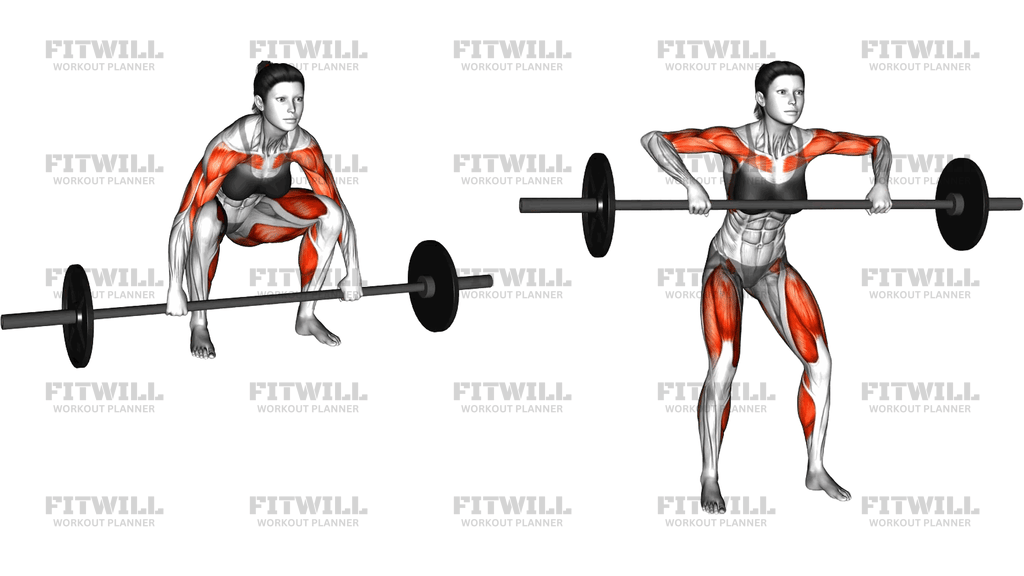
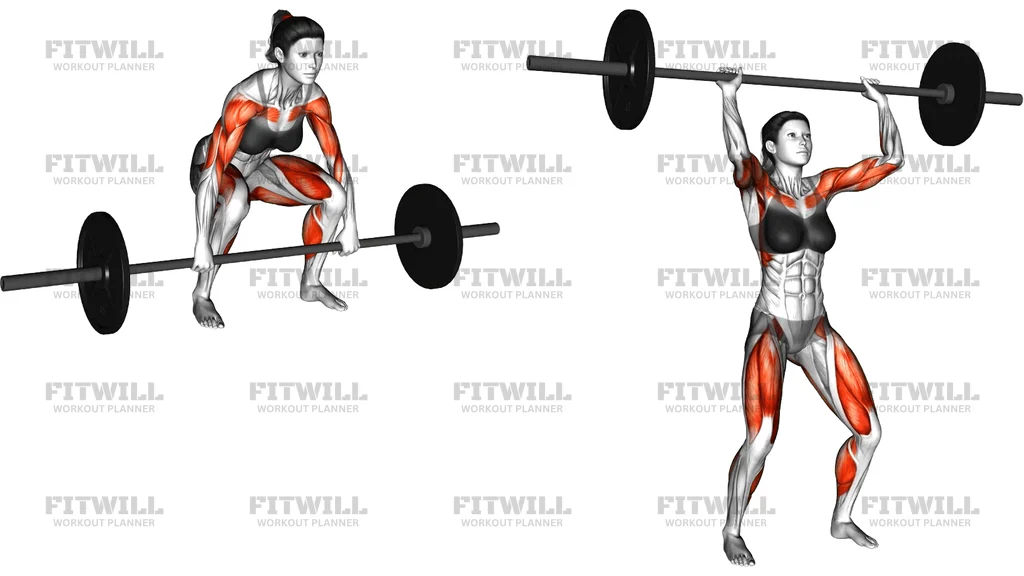
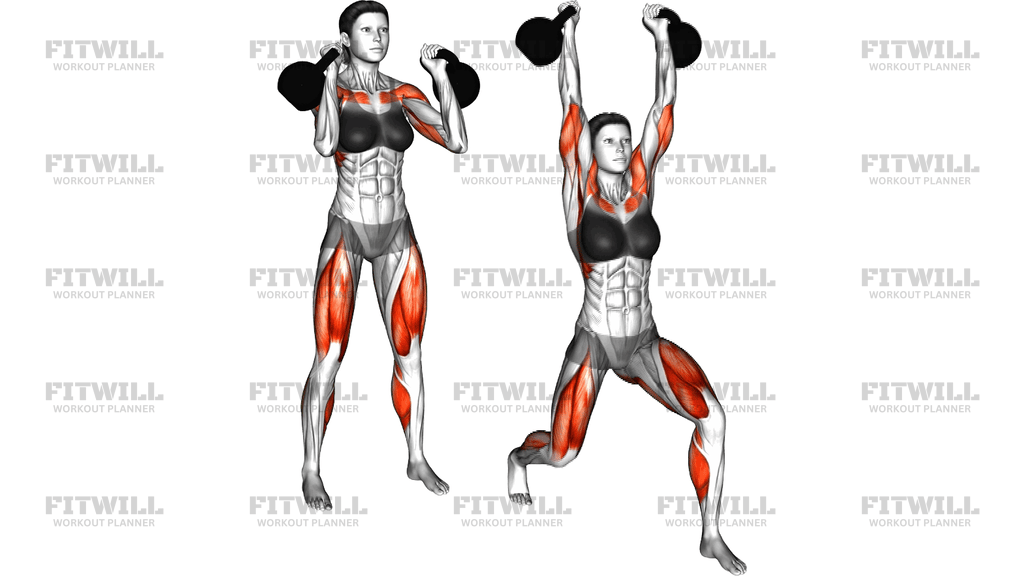
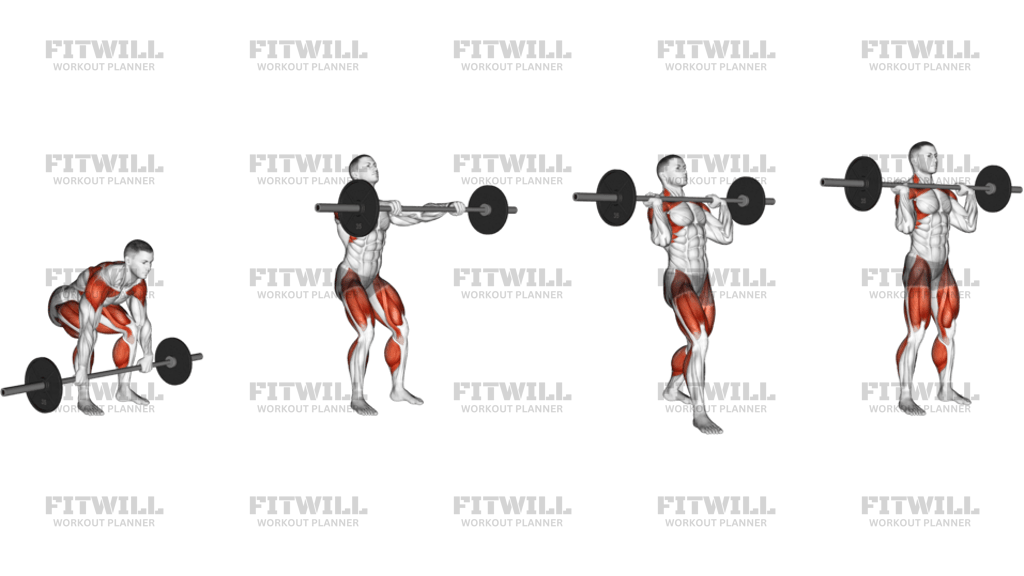
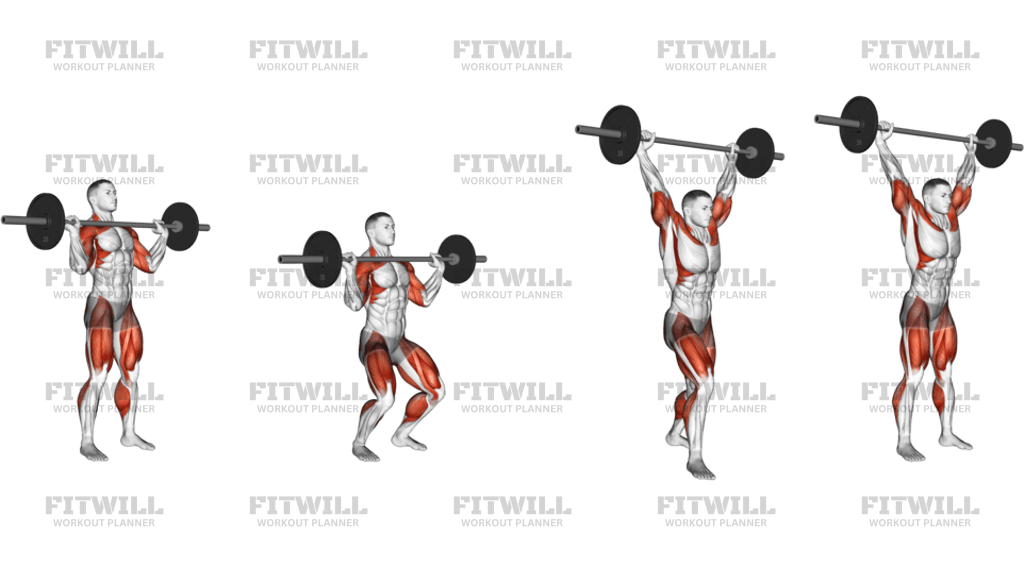
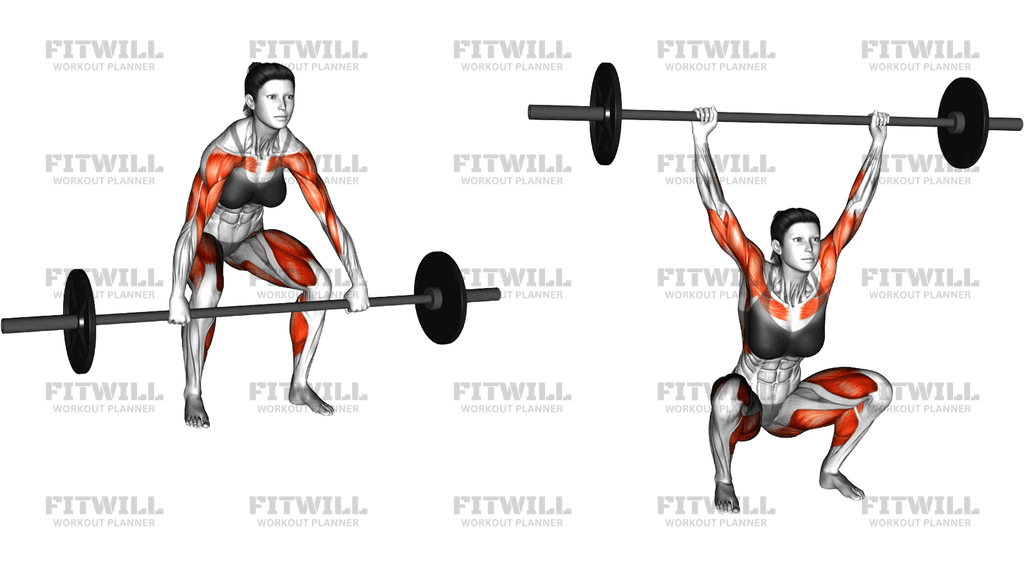
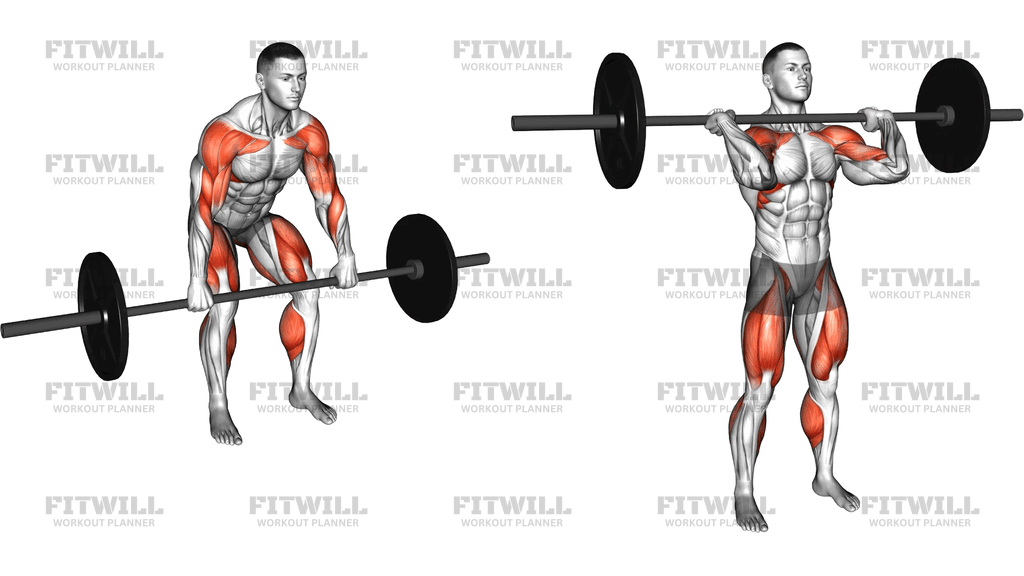
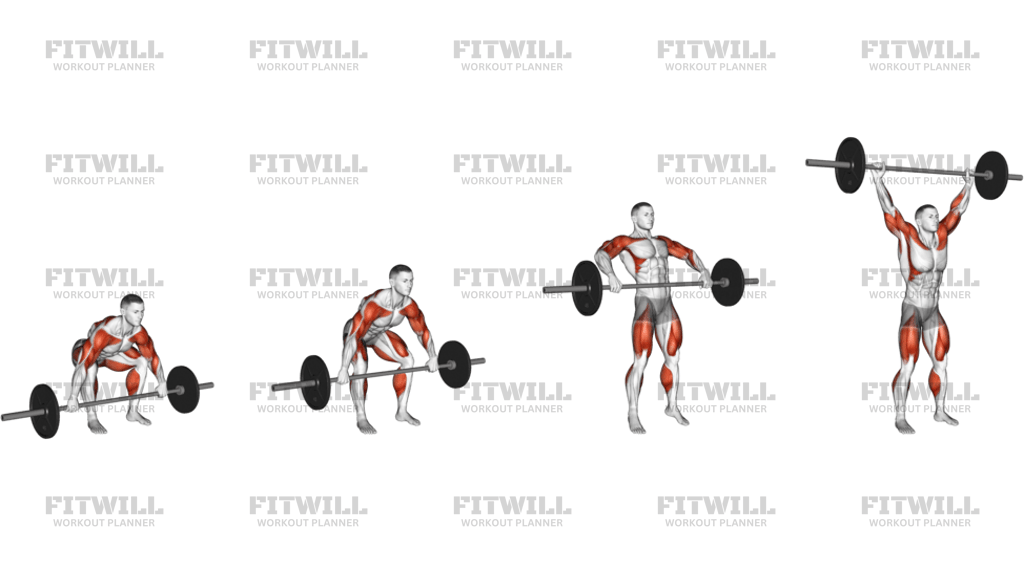
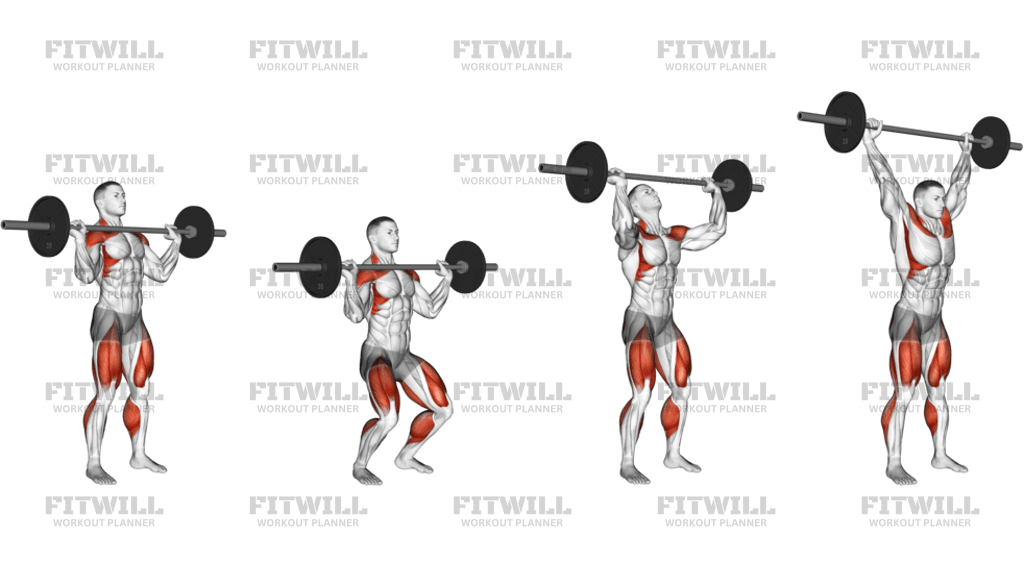
Barbell Power Jerk is an Olympic-style overhead lift that uses a quick dip, explosive leg drive, and a second knee bend to catch the bar overhead with the feet reset under the hips. It is a power-oriented variation of the jerk: the bar starts in the front rack, the legs do the work, and the arms finish the lockout after the body has already launched the bar upward. The image shows the classic sequence clearly, with the bar racked at the shoulders, a vertical dip, a forceful drive, and an overhead catch in a quarter squat.
This movement trains full-body power, especially the quadriceps, glutes, calves, shoulders, triceps, upper back, and trunk. The front rack position matters because it keeps the torso tall and lets the legs transfer force directly into the bar. If the elbows drop, the chest caves, or the bar drifts forward, the lift becomes harder to drive and harder to catch. A clean jerk is less about pressing the bar and more about timing the leg drive, the foot reset, and the overhead lockout so the bar finishes stacked over the midfoot.
Set your hands just outside shoulder width, bring the bar to the front rack, and stand with your feet about hip to shoulder width. From there, dip straight down a few inches by bending the knees while keeping the torso vertical and the heels planted. Drive hard through the floor, then use a fast second dip to drop under the bar as it rises. Catch it overhead with straight elbows, active shoulders, and the feet back under you in a stable stance. The bar should finish directly over the shoulders, hips, and midfoot, not behind the head or forward in front of the face.
Use the power jerk when you want to build leg-driven overhead power without the deeper split catch of a split jerk. It works well in strength sessions, technical weightlifting work, and athletic power blocks, but it demands honest load selection. Too much weight usually shows up as a forward torso lean, a soft overhead lockout, or a noisy, unstable catch. Keep the reps crisp, reset between lifts, and lower the bar under control if your program allows it. The best set looks fast, balanced, and repeatable from the first dip to the final stand.
[ Workout Log & Planner ]
Put your next workout in Fitwill
Keep your plan and training log ready when you are.


Instructions
- Clean or rack the bar across the front of your shoulders with your elbows slightly forward and your chest tall.
- Stand with your feet about hip to shoulder width and grip the bar just outside your shoulders.
- Set your weight through the middle of the foot, relax your neck, and brace your trunk before each rep.
- Dip straight down a few inches by bending the knees while keeping your torso vertical and your heels down.
- Reverse direction immediately and drive hard through the floor so the bar accelerates off the shoulders.
- As the bar rises, re-bend the knees and drop under it into a small quarter squat.
- Punch the bar overhead with straight elbows and active shoulders as your feet reset to a stable stance.
- Finish with the bar stacked over the shoulders, hips, and midfoot, then stand tall to complete the rep.
- Lower the bar back to the front rack with control before the next rep or safely return it to the platform.
Tips & Tricks
- Keep the dip vertical. If your knees drift forward or your torso tips, the bar will shoot away from your midline.
- Use only a short dip. A power jerk should feel like a quick spring, not a deep squat before the drive.
- Drive through the whole foot and finish on the toes only after the bar has already left the shoulders.
- Lock the elbows hard and shrug the shoulders up under the bar so the overhead position feels stacked, not pressed out.
- Catch with the feet about hip to shoulder width; landing too narrow makes the overhead balance unstable.
- Keep the bar close to your face on the way up by moving your head slightly back, then let it pass through to lockout.
- Choose a load you can catch without bending the arms or chasing the bar forward.
- Reset between reps if needed. Sloppy rebends and rushed footwork usually show up once fatigue starts.
- If your front rack is limited, use lighter weight and focus on the upright torso before adding load.
Frequently Asked Questions
What does the barbell power jerk train?
It builds leg-driven overhead power, especially through the quadriceps, glutes, shoulders, triceps, upper back, and trunk.
How is a power jerk different from a split jerk?
The power jerk catches with the feet reset under the hips instead of stepping into a split stance.
What should the front rack feel like before I dip?
The bar should rest on the front of the shoulders with the elbows slightly forward and the chest tall enough to stay upright in the dip.
How deep should the dip be?
Only a few inches. The goal is to load the legs quickly, not turn the movement into a squat.
Why do I keep missing the bar forward?
That usually comes from a forward dip, weak leg drive, or trying to press the bar instead of dropping under it fast enough.
Do I need to re-bend the knees under the bar?
Yes. The second dip is what lets you receive the bar overhead without pressing it all the way up.
Is this exercise suitable for beginners?
Yes, if they start very light and learn the front rack, vertical dip, and overhead catch before adding speed or load.
Can I lower the bar to my shoulders after each rep?
Yes, as long as you control the descent and your program allows it. For heavier sets, many lifters reset after each repetition.