Barbell Snatch
The Barbell Snatch is a fast, technical Olympic lifting movement that takes the bar from the floor to a locked-out overhead position in one continuous rep. It demands speed, timing, and mobility from the ankles, hips, shoulders, and upper back, so the setup matters just as much as the pull. When it is done well, the bar stays close to the body, the turnover is sharp, and the catch is solid enough to absorb force without chasing the weight forward.
This exercise trains total-body power rather than one isolated muscle group. The legs and hips create the drive, the back and traps help accelerate the bar, and the shoulders and core stabilize the overhead catch. Because the bar must travel efficiently from the floor, through the finish of the pull, and into a secure overhead squat or power catch, the Barbell Snatch is especially useful for athletes and experienced lifters who want explosive force, coordination, and strong positional control.
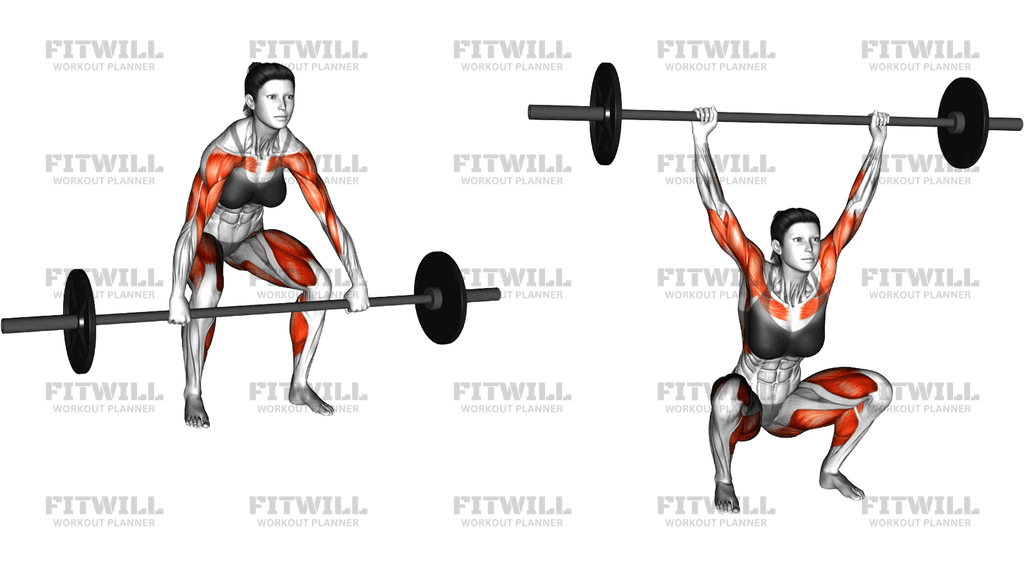
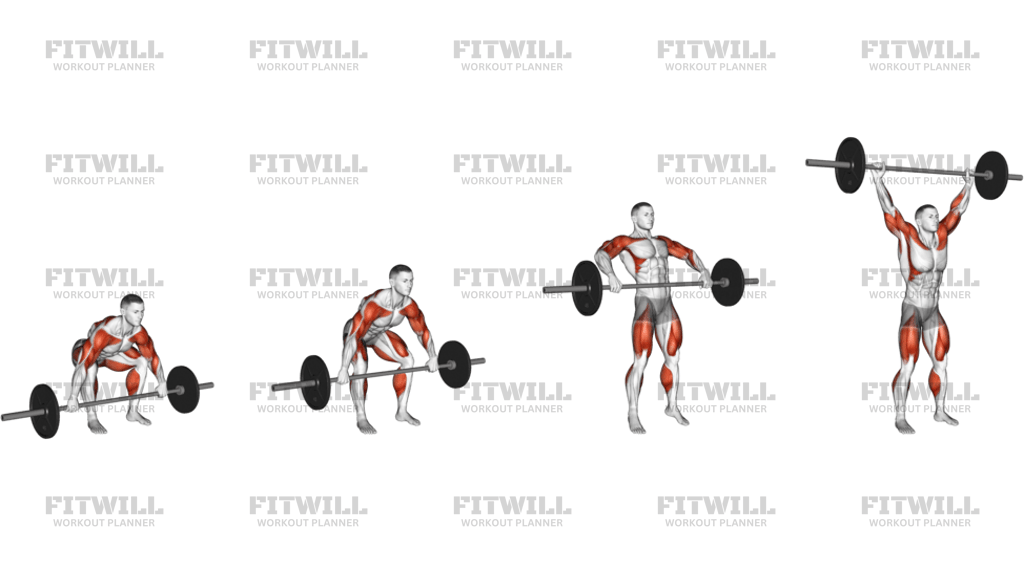
Start by placing your feet about hip-width apart with the bar over the midfoot, shins close to the bar, and your chest lifted enough to keep a flat back. The hands take a wide grip, usually near the bar’s rings, so the bar can finish overhead with straight arms. Before the bar breaks from the floor, tighten your lats, brace your trunk, and build pressure through the whole foot so the first pull does not drift away from your body.
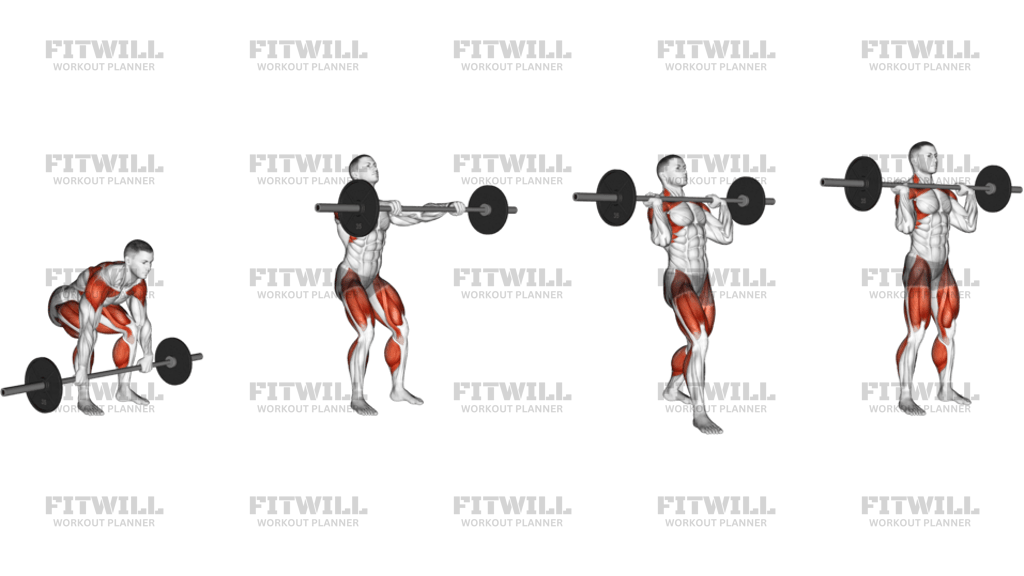
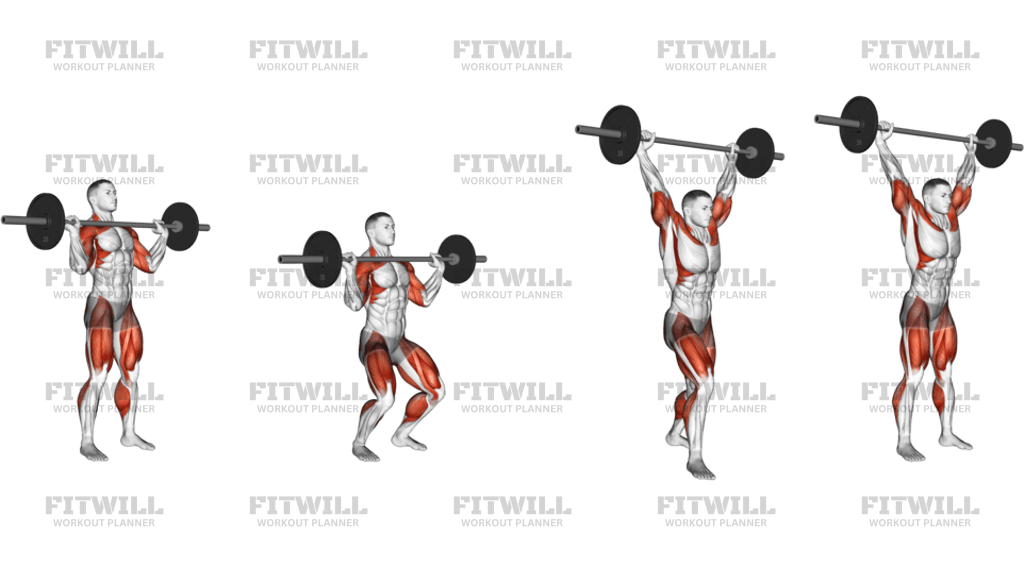
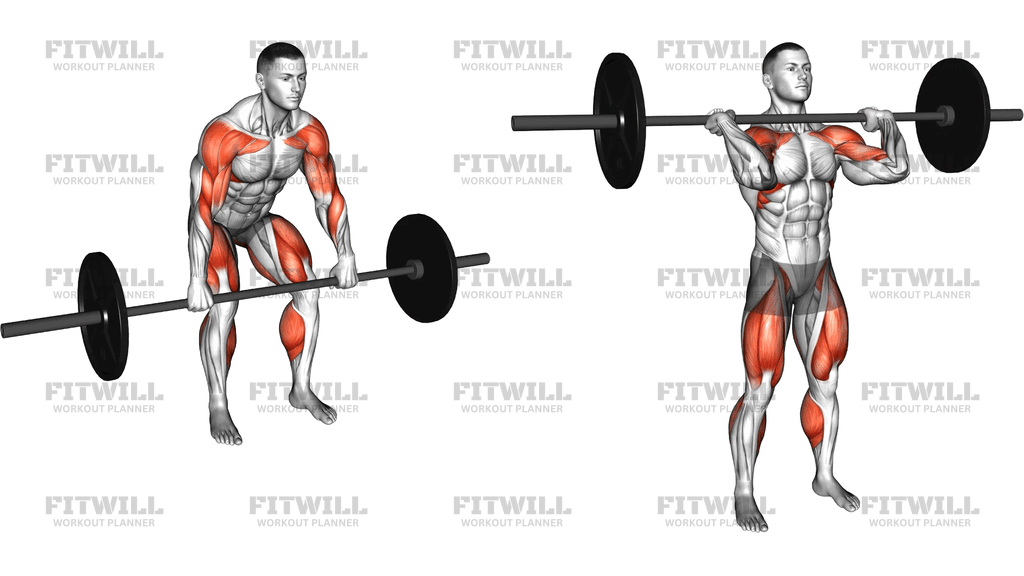
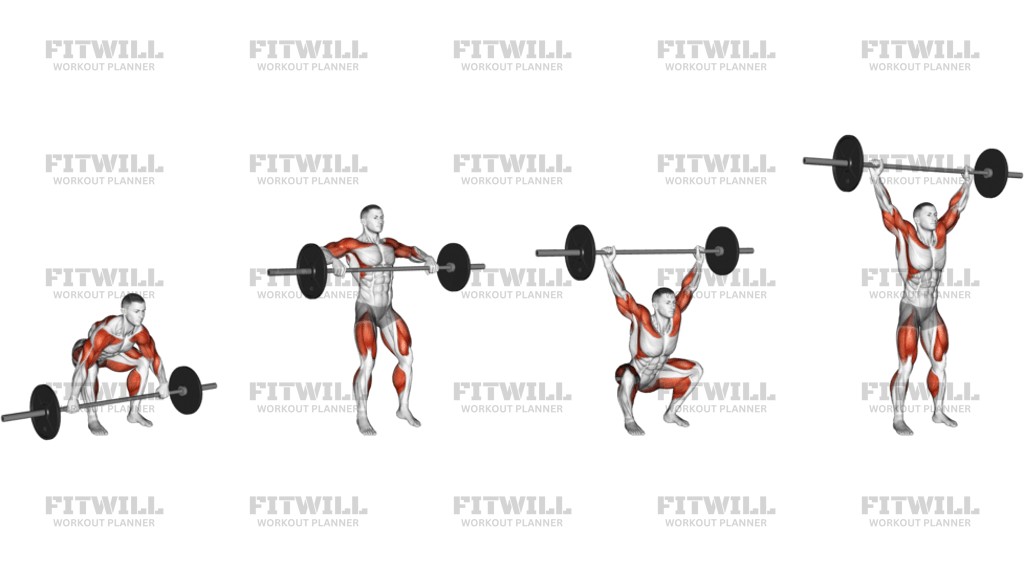
From the floor, the bar should rise smoothly past the knees before you re-bend slightly into the power position and explode through the hips, knees, and ankles. Keep the bar close as you shrug and pull yourself under it, then punch the arms to full lockout while receiving the bar overhead. In the full version, settle into a deep squat with the bar stacked over the shoulders, ribs, and hips; in a power snatch, catch it higher but still with control and balance over midfoot.
The return is not a shrugging dump of the bar. Lower the bar under control to the thighs or floor with a safe hinge, reset your feet, and restore your starting position before the next rep. Because this lift rewards precision more than brute force, it is best used with crisp singles or very low reps, plenty of rest, and loads that never force you to press the bar out or chase it forward. If the overhead catch is unstable, reduce the load and clean up the pull path before adding speed or weight.
[ Workout Log & Planner ]
Put your next workout in Fitwill
Keep your plan and training log ready when you are.


Instructions
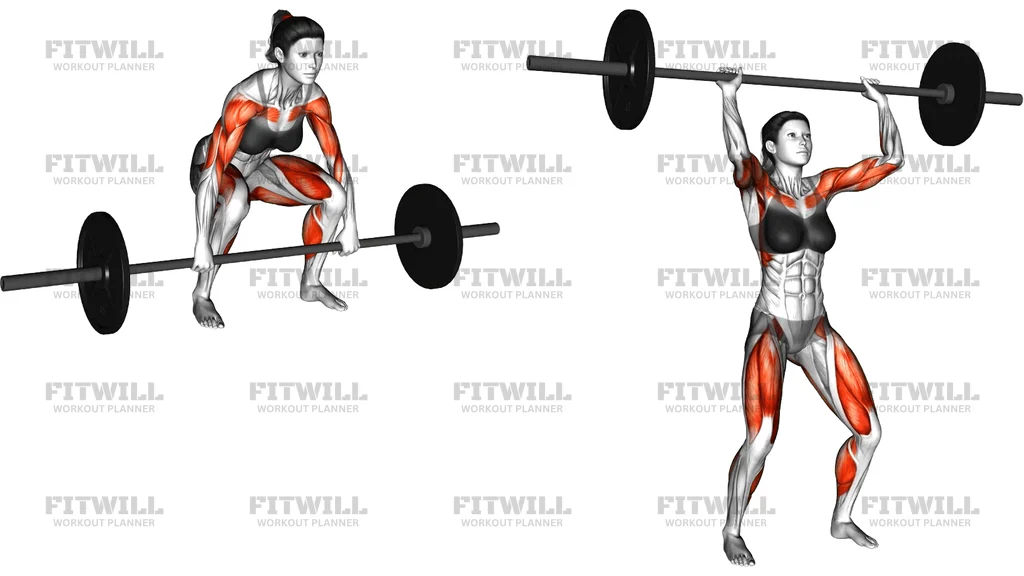
- Stand with the bar over your midfoot, feet about hip-width apart, and a wide snatch grip on the barbell.
- Set your shins close to the bar, hinge at the hips, bend your knees, and keep your chest lifted with a flat back.
- Tighten your lats, spread the floor with your feet, and brace your trunk before the bar leaves the ground.
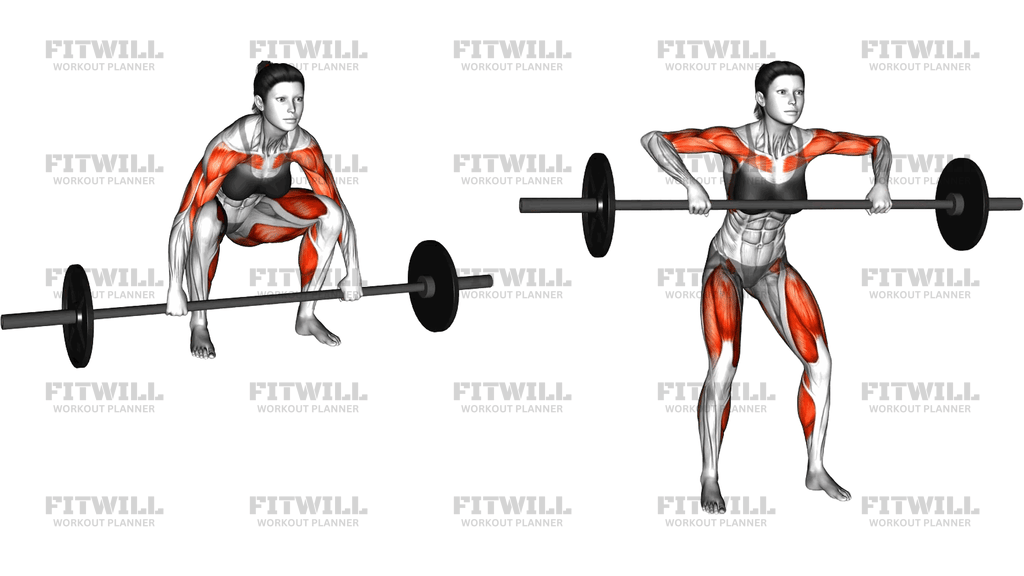
- Pull the bar from the floor so it stays close to your shins and thighs instead of swinging away from you.
- As the bar passes the knees, keep it controlled and bring it into the power position just above mid-thigh.
- Explode through the hips, knees, and ankles, then shrug and pull yourself under the bar as it rises.
- Punch your arms to full lockout and receive the bar overhead with the weight stacked over midfoot.
- Sit into the overhead squat if you are catching deep, or hold the power snatch position if you are catching high.
- Stand tall to finish the rep, then lower the bar with control and reset your feet before the next repetition.
Tips & Tricks
- Keep the bar close enough to brush the thighs, but do not loop it away from the body on the second pull.
- If the bar drifts forward off the floor, start with your hips slightly higher and your shoulders a little farther over the bar.
- Think of jumping the bar up, then pulling yourself down under it rather than muscling it overhead with the arms.
- Catch with active shoulders and elbows straight; a soft overhead position usually means the bar was not fixed overhead fast enough.
- Use chalk and a hook grip if your hands slip during the turnover or the catch.
- If you are losing the bottom position, catch higher as a power snatch before trying a full squat snatch.
- Keep the bar over midfoot in the catch; if you land on your toes, the bar was probably pulled too far forward.
- Use singles or low-rep sets so every rep starts from a clean reset instead of a tired, rushed pull.
Frequently Asked Questions
What does the Barbell Snatch train most?
It trains total-body power, with a big demand on the legs, hips, upper back, shoulders, and core during the pull and overhead catch.
Is the Barbell Snatch good for beginners?
Usually only with very light weight, coaching, and simple progressions like a snatch high pull or power snatch. The full lift is technical and punishes rushed setup.
Should I catch the Barbell Snatch in a squat or standing position?
Either is valid. Catching in a deep squat is a full snatch, while catching higher is a power snatch; choose the version you can stabilize over midfoot.
Why do my arms bend early in the Barbell Snatch?
Early arm bend usually means you are trying to lift the bar with the arms instead of finishing the leg and hip drive first. Keep the arms long until the bar reaches the power position.
What grip should I use on the barbell?
Use a wide snatch grip, often near the bar’s rings, so the bar can finish overhead without forcing the shoulders into an awkward position.
Why is the bar bumping away from my body?
That usually happens when the first pull is loose or the second pull is too far out in front. Keep the bar close from the floor and stay tall through the finish.
Do I need to squat deeply in the Barbell Snatch?
Not always. A deep catch is required for a full snatch, but a power snatch uses a higher catch and is a useful variation if mobility or skill is limited.
How should I program the Barbell Snatch?
Use low reps, plenty of rest, and crisp technique. This lift is usually better for singles or small sets than for high-rep fatigue work.