Barbell Snatch From Blocks
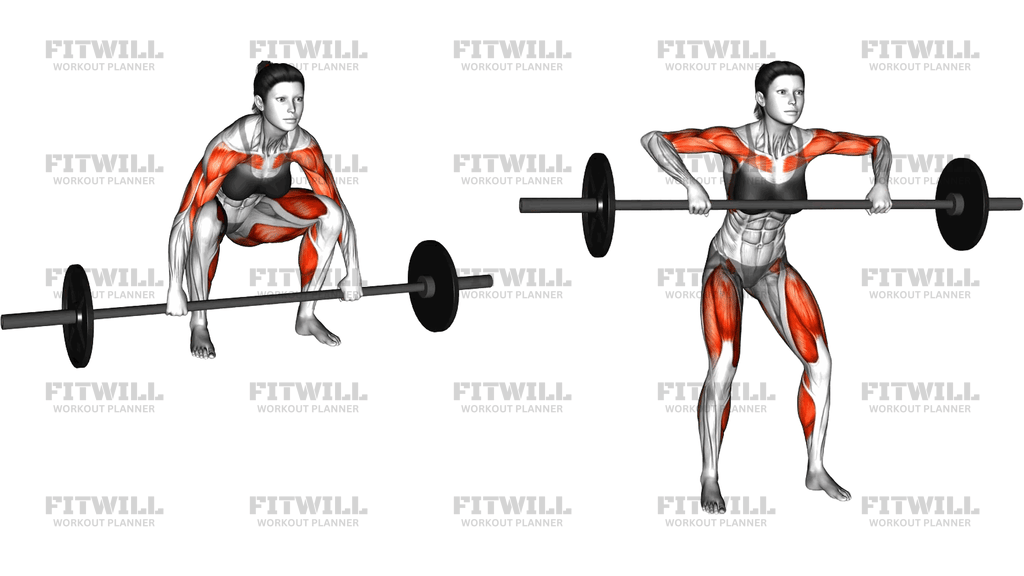
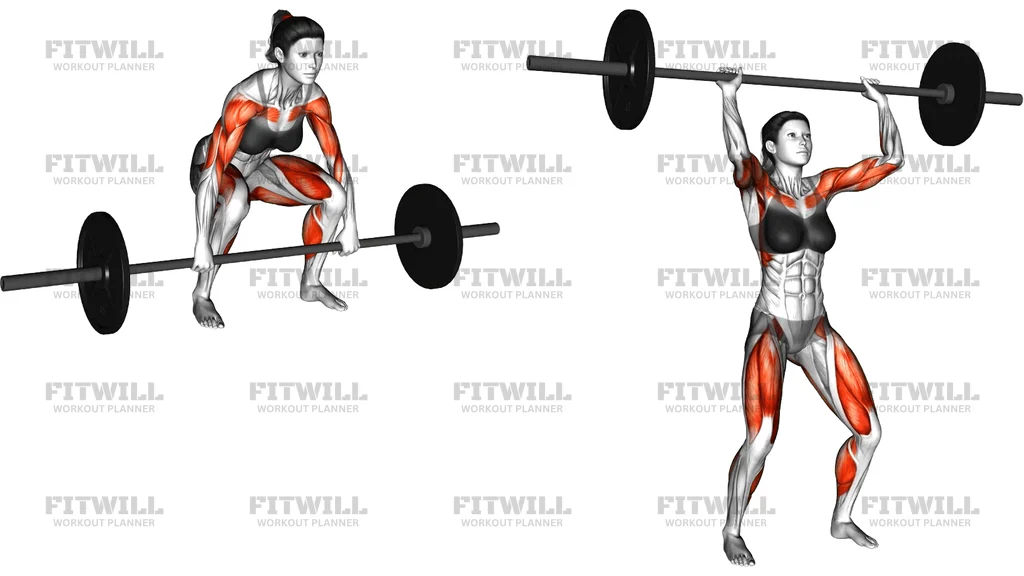
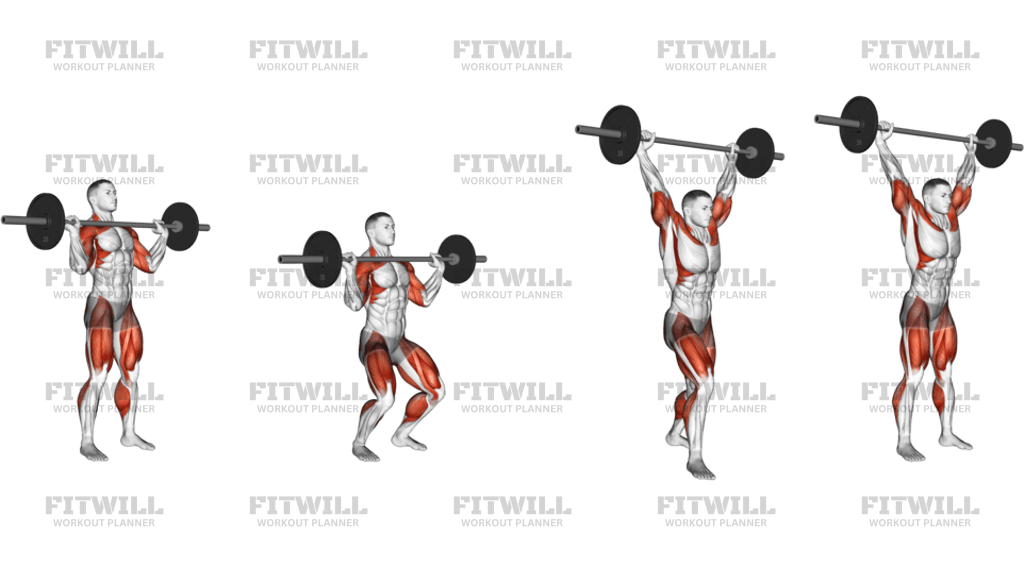
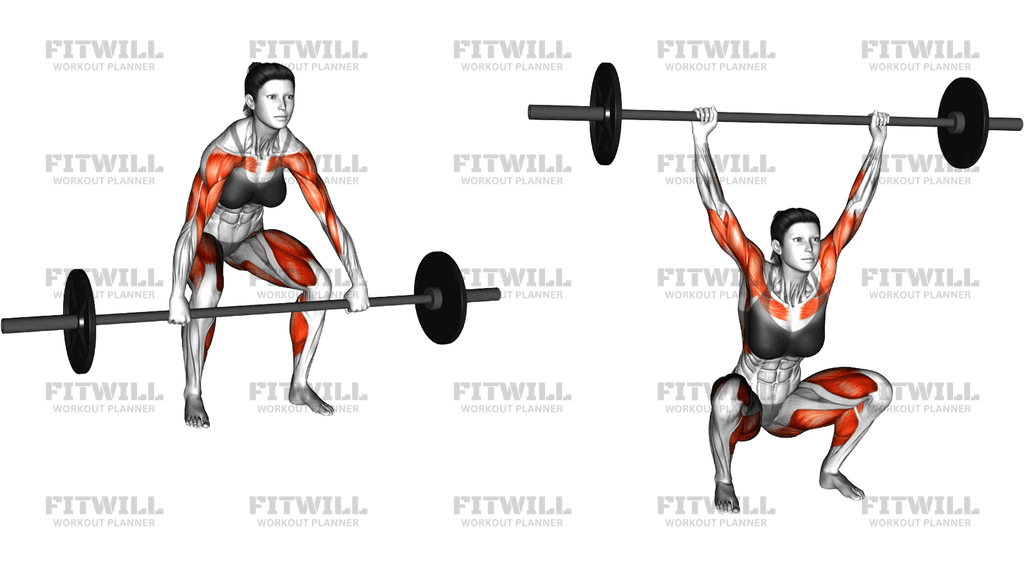
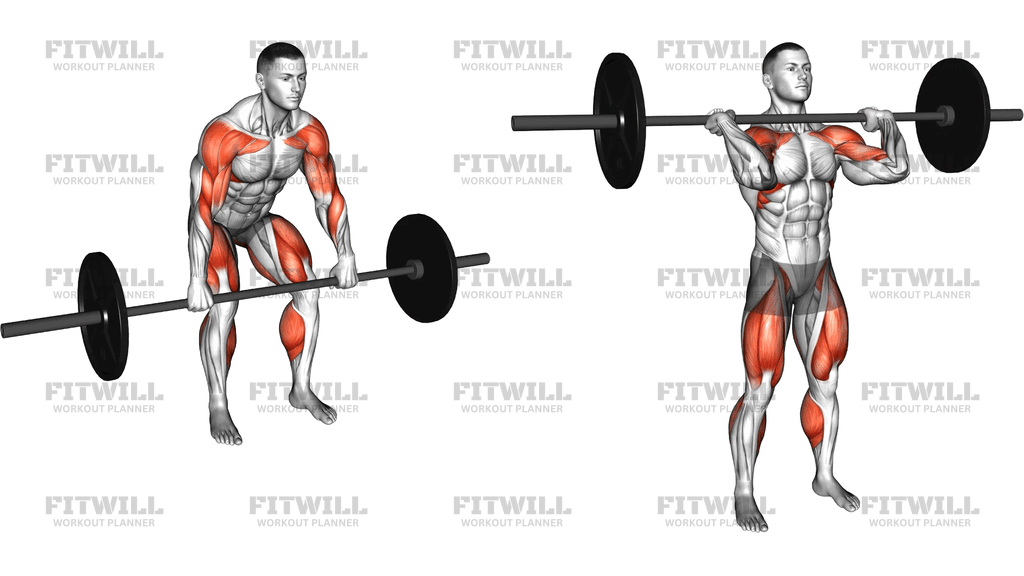
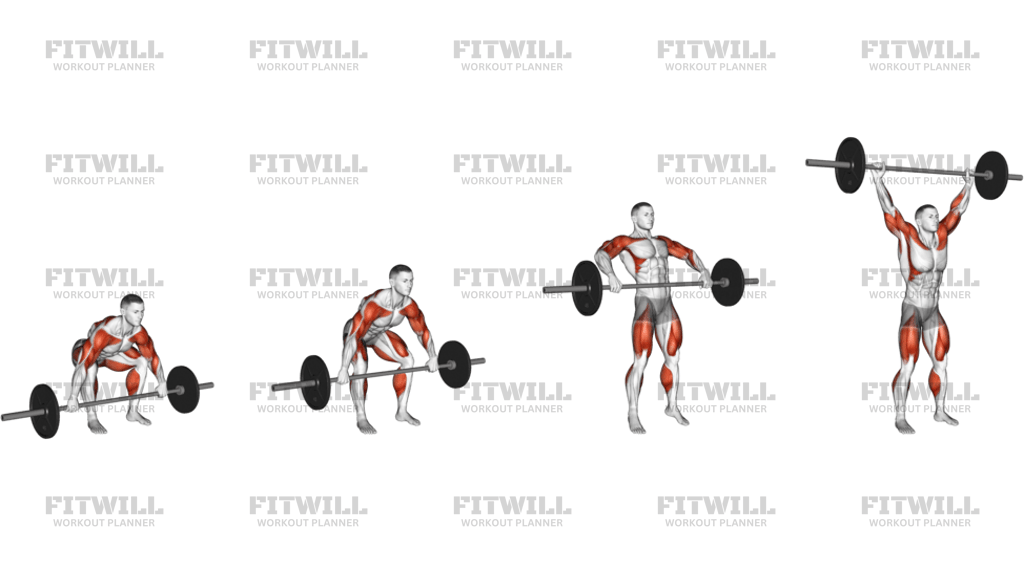
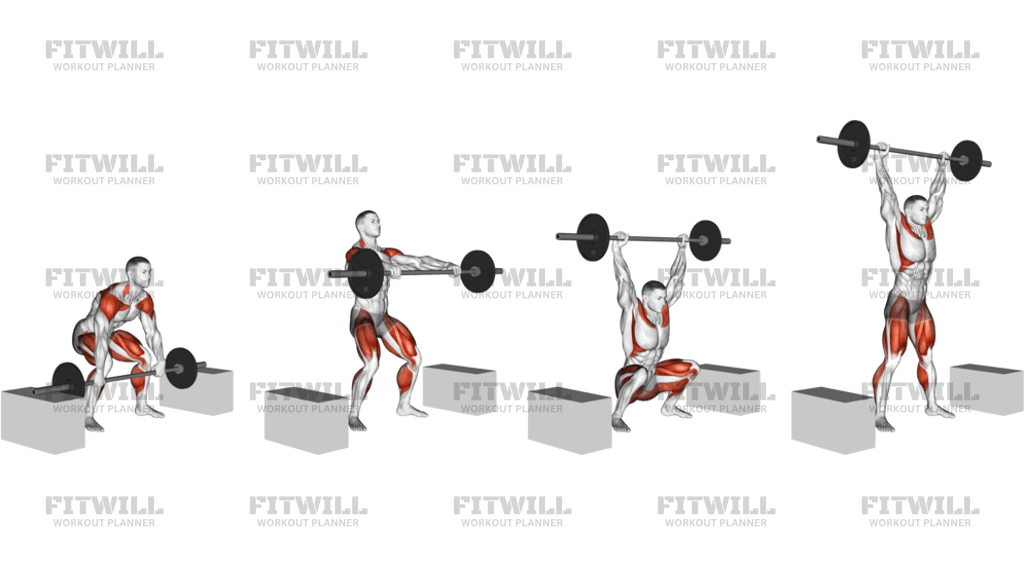
Barbell Snatch from Blocks is a weightlifting drill that starts with the bar raised on blocks instead of on the floor. That elevated start shortens the first pull and lets you focus on the positions that matter most: a stable setup, a close bar path, a powerful finish, and a fast turnover into a locked-out overhead catch. In the image, the bar begins just below knee height, the feet stay under the hips, and the grip is wide enough to receive the bar in a snatch position.
This movement is best thought of as a speed and technique lift, not a grind. It trains full-body force production through the legs, hips, upper back, shoulders, and trunk while teaching you to keep the bar close and stay patient off the blocks. The elevated start makes it easier to feel where the bar should travel as it passes the knees and moves into the explosive second pull.
Setup quality matters because a snatch from blocks punishes rushed positions. The blocks should place the bar at a repeatable height, usually around mid-shin to just below the knee depending on your goal and mobility. You need enough shoulder width in the grip to catch overhead, a flat back, pressure through the whole foot, and a torso angle that keeps the bar over the midfoot before the pull begins.
When the rep is done well, the bar rises smoothly off the blocks, stays close through the thighs, and then moves vertically as you extend hard through the hips, knees, and ankles. The catch should feel active and crisp, with the elbows locked, shoulders turned on, and ribs controlled so the bar does not drift behind or in front of your base. The lift should look fast, but the positions should feel deliberate.
Use barbell snatch from blocks when you want to build overhead power, refine timing, or take some stress off the floor pull while still training the full snatch pattern. It also works well as a technical primer before heavier snatch work or as a lighter power movement in a weightlifting session. Keep the load honest: if the bar slows, loops away from you, or forces a soft catch, the weight is too high for the purpose of this exercise.
Fitwill
Log Workouts, Track Progress & Build Strength.
Achieve more with Fitwill: explore over 9600 exercises with images and videos, access built-in and custom workouts, perfect for both gym and home sessions, and see real results.
Start your journey. Download today!




Instructions
- Set the blocks so the bar starts around mid-shin to just below knee height, then stand with feet hip-width, shins close to the bar, a flat back, and a wide snatch grip.
- Take your breath, brace your trunk, and load pressure through the whole foot before the bar leaves the blocks.
- Push the floor away and lift the bar smoothly, keeping your shoulders over the bar and the bar path tight to your legs.
- As the bar passes the knees, sweep it back toward the thighs and keep your chest set so the bar does not drift forward.
- Drive hard through the hips, knees, and ankles, then shrug and keep the elbows high and outside as the bar reaches full extension.
- Pull yourself under quickly and punch the bar overhead instead of curling it up with the arms.
- Catch with straight elbows, active shoulders, and a controlled partial squat or power catch position depending on the load.
- Stand to full height under the bar, stabilize overhead for a brief moment, then lower the bar with control and reset on the blocks for the next rep.
Tips & Tricks
- Use a weight you can move fast from the blocks; if the pull turns into a slow deadlift, the load is too heavy for this drill.
- Set the block height consistently so each rep starts from the same bar position instead of changing the first pull every set.
- Keep the bar close through the knees and thighs; a looping bar usually means the hips are opening too early or the bar is drifting away from you.
- Do not start bending the arms early. The lift should be driven by leg and hip extension first, then by a fast pull-under.
- Keep the shoulders stacked and active in the catch so the bar does not crash overhead or force your torso to lean back.
- If you lose balance in the catch, check whether the bar is finishing too far in front of your midfoot.
- For heavier technical work, use shorter sets and full resets on the blocks so each rep stays sharp and repeatable.
- A hook grip often helps keep the bar secure during the fast turnover, especially once the weight gets challenging.
- Stop the set when the turnover slows or the overhead position softens; this lift rewards crisp speed, not fatigue.
- Lower the bar deliberately after each rep so you can re-find the same start position instead of rushing into the next pull.
Frequently Asked Questions
What does barbell snatch from blocks train most?
It trains explosive full-body power, with strong demand on the legs, glutes, upper back, shoulders, and trunk.
Why use blocks instead of pulling from the floor?
Blocks remove part of the first pull so you can focus on the transition, finish, and overhead catch without as much work from the floor.
Where should the bar start on the blocks?
A common start is mid-shin to just below knee height, which matches the position shown in the image and keeps the first pull repeatable.
Should I catch the bar in a full squat?
Not always. Many lifters use a power catch or a shallow squat here, especially when the goal is speed and position rather than a maximal snatch.
What is the biggest mistake in this lift?
Letting the bar drift away from the body or pulling with the arms too early usually ruins the timing and makes the overhead catch unstable.
Can beginners practice this movement?
Yes, but they should start very light and earn the overhead catch with good positions, speed, and confidence before adding load.
How is this different from a hang snatch?
A hang snatch starts from the thighs or hip area, while this version begins from blocks and includes a more deliberate first pull from a fixed raised start.
What should I feel in the catch?
You should feel the shoulders and upper back supporting the bar overhead, with the trunk braced and the feet planted under you.