Exercise Ball Wall Squat
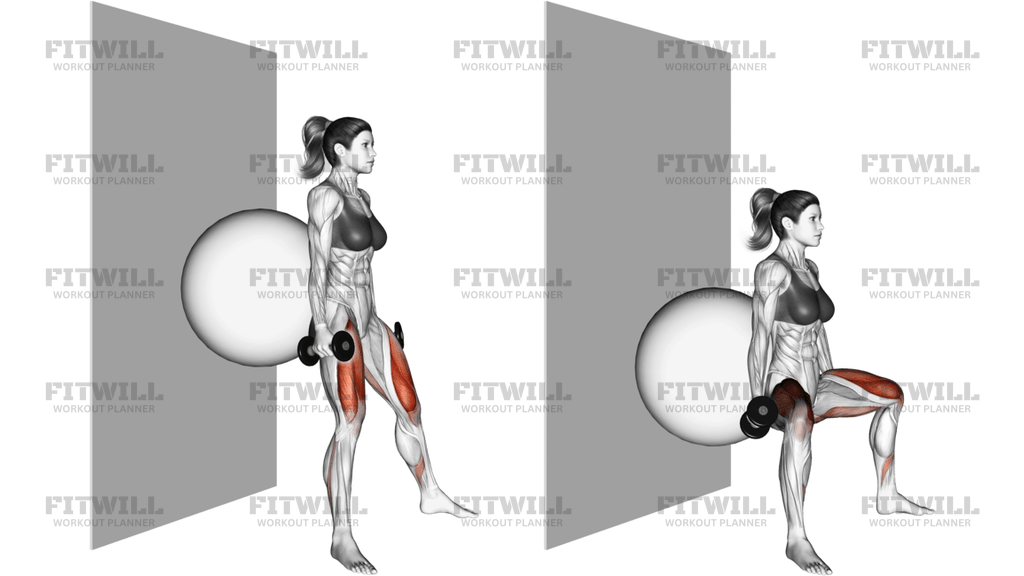
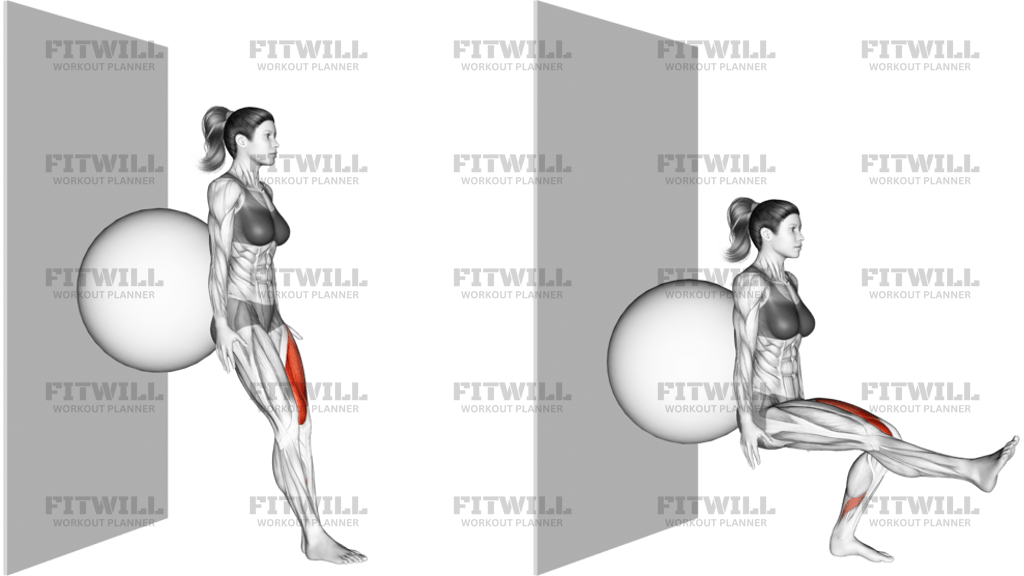
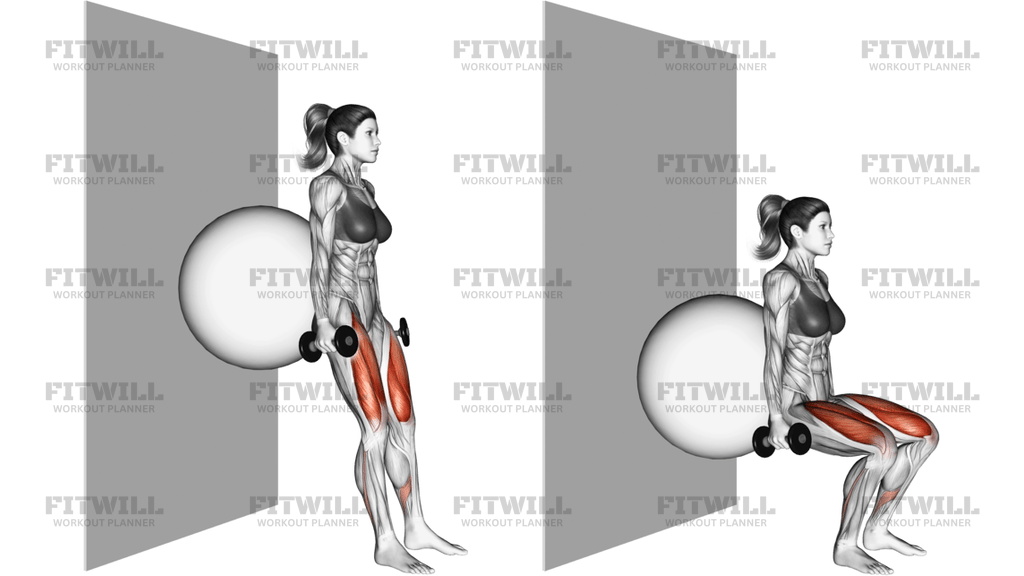
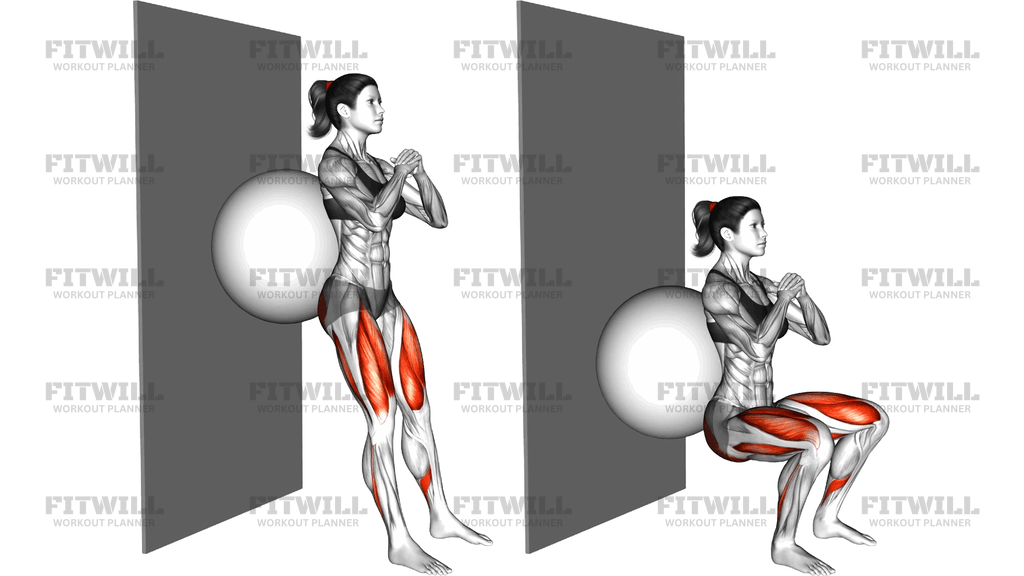
Exercise Ball Wall Squat is a wall-supported squat that uses a stability ball between your lower back and the wall to make the descent smoother and easier to control. It trains the quads most strongly, with the glutes, adductors, calves, and trunk helping you stay balanced while the ball keeps your torso guided against the wall.
The setup matters because the ball changes the line of travel. When your feet are far enough forward and the ball stays pinned to the wall, you can sit straight down instead of pitching forward. That keeps the knees tracking cleanly over the toes, lets the heels stay rooted, and helps you load the thighs without turning the rep into a balance drill.
A good repetition starts by standing tall with the ball centered at your low back, feet about hip- to shoulder-width apart, and arms crossed or held in front for balance. From there, bend the knees and hips together, roll the ball down the wall, and keep your chest lifted as you descend. Lower until the thighs are near parallel or to the deepest pain-free depth you can control, then drive back up through the midfoot and heels while the ball travels back up the wall.
This exercise is useful when you want quad-focused leg work with less spinal loading than a free squat and a more controlled path than a machine setup. It fits well in warm-ups, rehab-friendly lower-body training, higher-rep strength work, or beginner programs that need a simple squat pattern. Keep the motion smooth, keep the ball in contact with the wall, and stop the set if the knees cave inward, the lower back loses position, or the feet start sliding.
Fitwill
Log Workouts, Track Progress & Build Strength.
Achieve more with Fitwill: explore over 9600 exercises with images and videos, access built-in and custom workouts, perfect for both gym and home sessions, and see real results.
Start your journey. Download today!




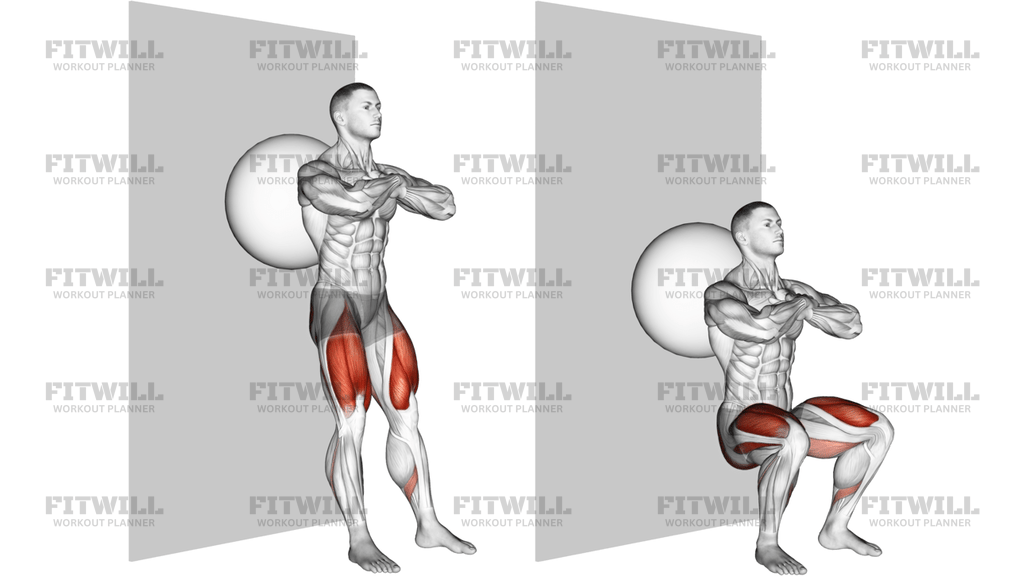
Instructions
- Place a stability ball between your lower back and a wall, then stand with your feet about hip- to shoulder-width apart and a little forward from the wall.
- Set your feet so you can keep your heels down as you squat and the ball stays centered against your low back.
- Cross your arms over your chest or hold them lightly in front for balance, and brace your torso before you move.
- Inhale, then bend your knees and hips together to roll the ball down the wall as you sit into the squat.
- Keep your knees tracking in line with your toes and your chest tall as you descend.
- Lower until your thighs are near parallel or until you reach the deepest pain-free depth you can control.
- Pause briefly at the bottom without losing pressure on the ball or shifting onto your toes.
- Exhale as you drive through your heels and midfoot to stand back up and roll the ball up the wall.
- Reset your stance after each rep and repeat for the planned number of repetitions.
Tips & Tricks
- Set your feet slightly forward if the knees feel crowded at the bottom; more distance usually makes the squat path smoother.
- Keep the ball pinned to the wall with steady pressure so it does not slide down your back as you descend.
- Let the knees travel forward naturally, but do not let them collapse inward on the way up.
- If your heels lift, shorten the depth before you try to force a deeper squat.
- A narrow stance puts more emphasis on the quads, while a slightly wider stance often feels better for hip comfort.
- Keep your ribs stacked over your pelvis instead of arching your low back against the ball.
- Use a controlled tempo and pause only long enough to own the bottom position, not to bounce out of it.
- Choose a depth you can repeat evenly for every rep; chasing a lower squat with a shaky pelvis defeats the setup.
Frequently Asked Questions
What does the stability ball do in this wall squat?
The ball supports your lower back and guides the path down the wall, which makes the squat feel smoother and more controlled than a free-standing version.
What muscles work hardest in the Exercise Ball Wall Squat?
The quads do most of the work, with the glutes and adductors helping you stand back up and the trunk helping keep you stable.
How far from the wall should my feet be?
Start with your feet far enough forward that you can keep your heels down and the ball pressed into the wall for the whole rep. If the bottom position feels cramped, move them a little farther out.
Should my back stay flat against the ball?
Keep the ball in contact with your low back, but do not force your spine into the wall. Stay tall through the torso and let the ball follow your natural squat path.
How low should I squat on the ball?
Lower until your thighs are near parallel or until your knees, hips, and ankles can still stay in good alignment. Use the deepest pain-free range you can repeat cleanly.
Can I use my arms for balance?
Yes. Crossing the arms over the chest or holding them lightly in front is common and helps keep the movement focused on the legs instead of the upper body.
What is the most common mistake?
Letting the knees cave in or letting the ball slide while trying to force a deeper squat are the most common problems.
Is this a good beginner squat variation?
Yes. The wall and ball give clear feedback and make it easier to learn the squat pattern before moving to a free squat.