Weighted Exercise Ball Wall Squat
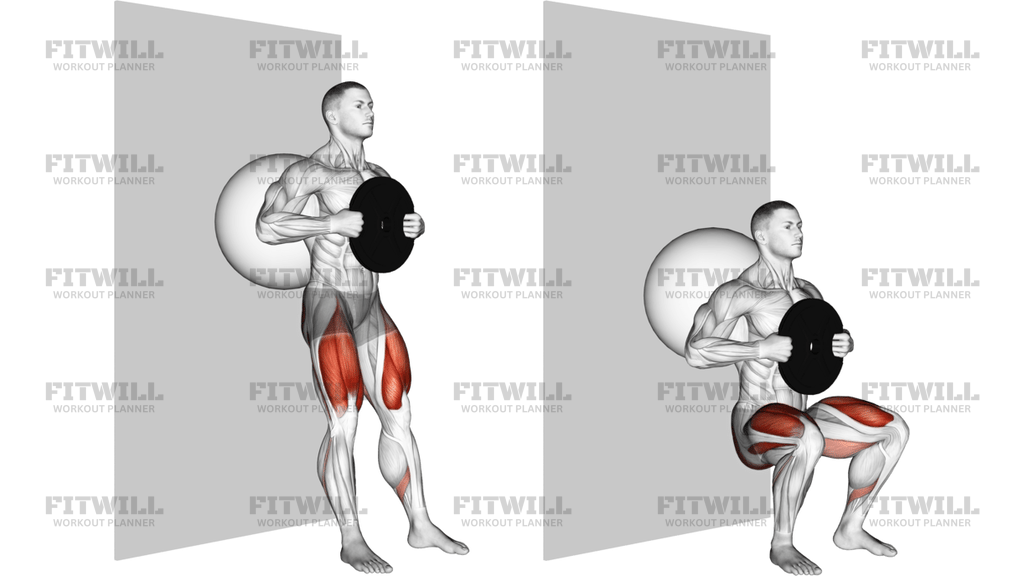
Weighted Exercise Ball Wall Squat is a wall-supported squat that lets you train the thighs hard while keeping the torso more upright and the path more repeatable. The ball presses between your upper back and the wall, while the load is held at the chest. That combination gives you a stable back reference, encourages a controlled descent, and makes it easier to stay honest about depth and knee tracking.
The exercise is mainly a quad builder, but it also asks the glutes, adductors, calves, and trunk to keep the legs and pelvis organized as you lower and stand. Because the wall and ball reduce balance demands, the set can focus on leg tension, posture, and tempo instead of fighting for stability. That makes it useful for beginners, lifters returning from a layoff, or anyone who wants more knee-dominant work without turning the squat into a balance drill.
Setup matters here. Place the ball against the wall at upper-back height, stand with feet slightly forward from the wall, and hold the weight close to the chest with both hands. As you descend, let the ball roll smoothly up and down your back while the feet stay flat and the knees track in line with the toes. Keep the chest lifted without flaring the ribs, and stop the descent when you can still keep the heels planted and the pelvis under control.
On the way up, drive through the whole foot and stand without letting the knees cave or the weight drift away from the chest. A brief pause at the bottom can clean up sloppy reps and make the quads work harder, but the pause should not collapse the lower back or bounce off the wall. Use a range of motion you can repeat cleanly, and choose a load that keeps the torso steady rather than forcing you to lean, twist, or shrug the weight.
This movement fits well in lower-body strength blocks, accessory work, or higher-rep quad-focused sessions. It is also a practical option when you want a squat pattern with less axial loading than a barbell back squat. If your knees or hips feel pinched, shorten the range and refine stance first. If the ball slides or the plate pulls you forward, lighten the load and rebuild the pattern before adding more resistance.
[ Workout Log & Planner ]
Put your next workout in Fitwill
Keep your plan and training log ready when you are.


Instructions
- Place the exercise ball between your upper back and the wall, and stand with your feet about shoulder-width apart, slightly forward from the wall.
- Hold the weight plate at chest height with both hands and keep your elbows tucked under the load.
- Set your feet flat, brace your trunk, and keep your head and ribs stacked over your pelvis before you descend.
- Lower into the squat by letting the ball roll down your back while your hips move back and down.
- Keep your knees tracking over your toes and your heels planted as you approach the bottom position.
- Pause briefly near thigh-parallel or your deepest pain-free depth without bouncing off the wall.
- Drive through the whole foot to stand, keeping the plate close to your chest and the torso steady.
- Exhale as you rise, then reset your breath before the next repetition.
Tips & Tricks
- Set the ball high enough that it supports the shoulder blades, not the lower back.
- Keep the weight plate pressed lightly into the chest so it does not pull your torso forward.
- Take a small step away from the wall; if you are too close, the knees will jam forward and the heels may lift.
- Let the hips travel down between the heels instead of collapsing straight down onto the knees.
- Keep pressure through the midfoot and heel so the ascent starts from the legs rather than the toes.
- A short pause at the bottom makes the quads work harder, but only if the pelvis stays controlled.
- Choose a stance width that lets both knees track smoothly without caving inward.
- If the ball shifts or the lower back arches, reduce depth or load before adding more reps.
Frequently Asked Questions
What muscle does Weighted Exercise Ball Wall Squat target most?
The quads are the main focus, with the glutes, adductors, calves, and core helping stabilize the squat.
Can beginners perform this exercise?
Yes. The wall and ball make it easier to learn squat depth and posture, especially with a light plate or no added load at first.
Where should the ball sit during the squat?
It should stay between your upper back and the wall so it supports the shoulder blades while the spine stays tall.
How low should I go on the wall squat?
Lower until your thighs are near parallel or as deep as you can go without your heels lifting, knees collapsing inward, or the pelvis tucking hard under.
Should the weight stay in front of the chest the whole time?
Yes. Keeping the load close to the sternum helps you stay upright and prevents the torso from tipping forward.
What is the most common mistake with this exercise?
Leaning into the wall, letting the knees cave, or letting the weight drift away from the chest are the biggest form breakdowns.
Is this better than a regular squat for beginners?
It can be easier to learn because the ball gives a back reference and reduces balance demands, but it still trains a real squat pattern.
How do I make the set harder without changing the exercise?
Use a slower lowering phase, add a brief pause at the bottom, or increase the chest-held load while keeping the same stance and depth.