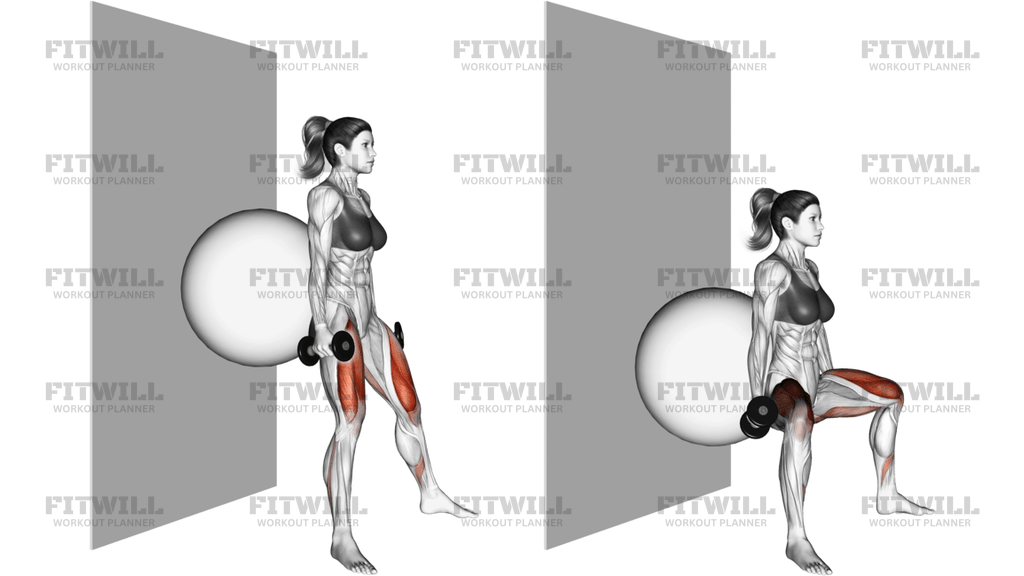
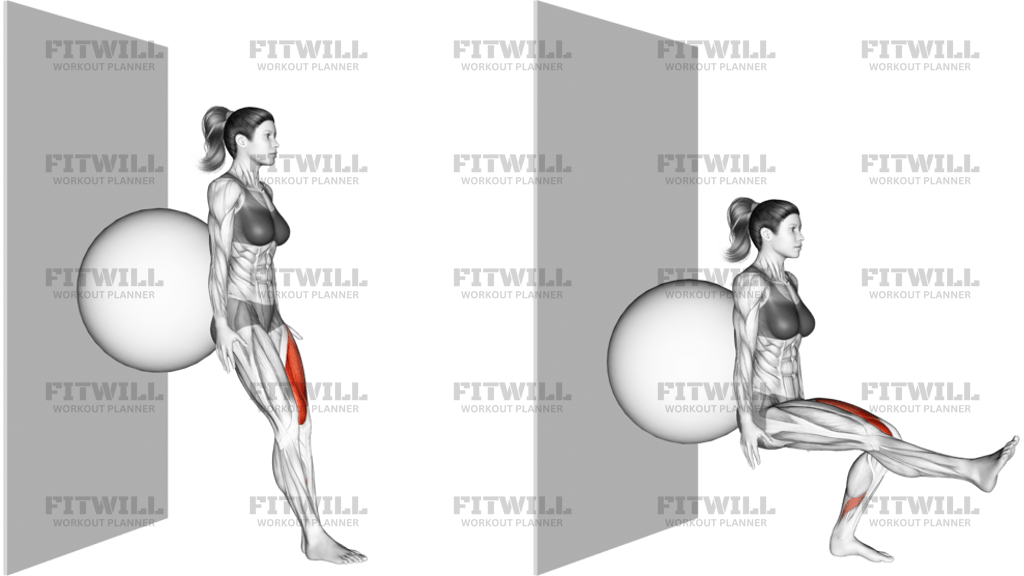
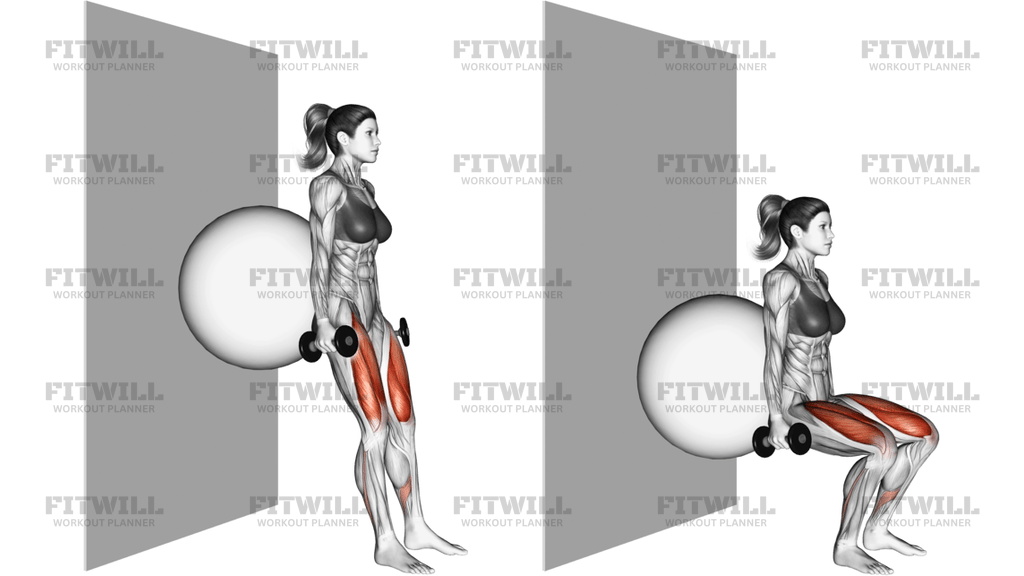
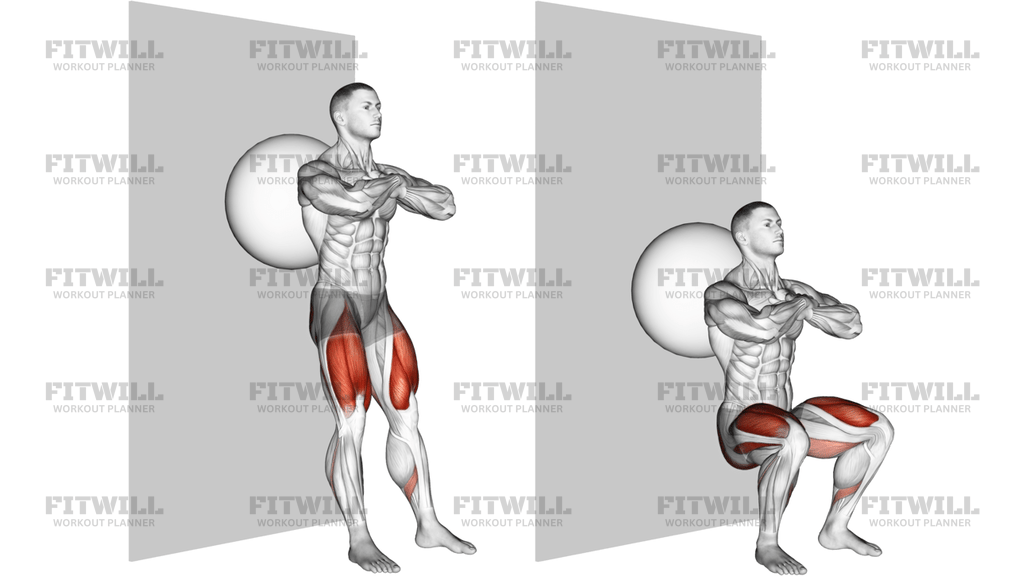
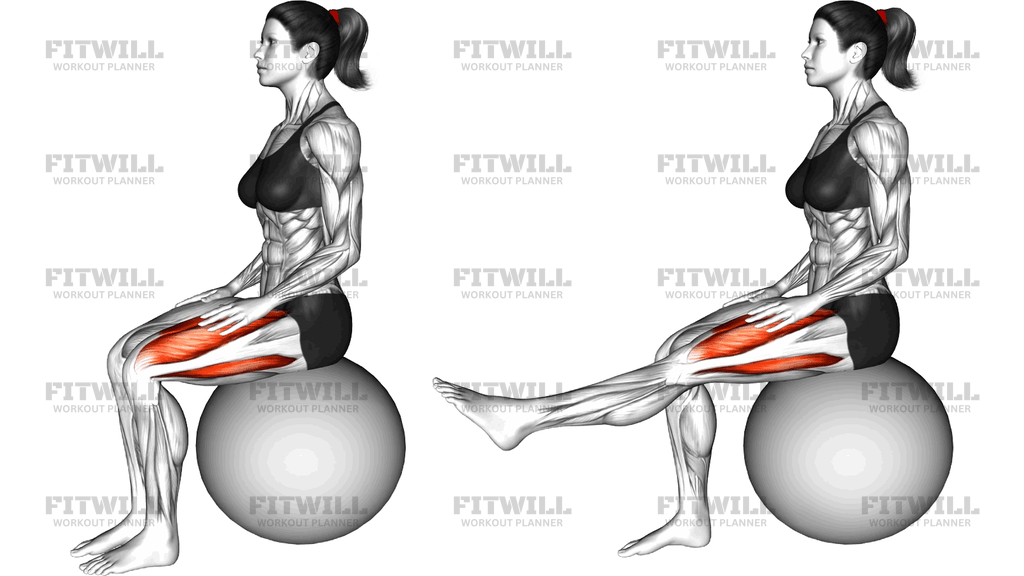
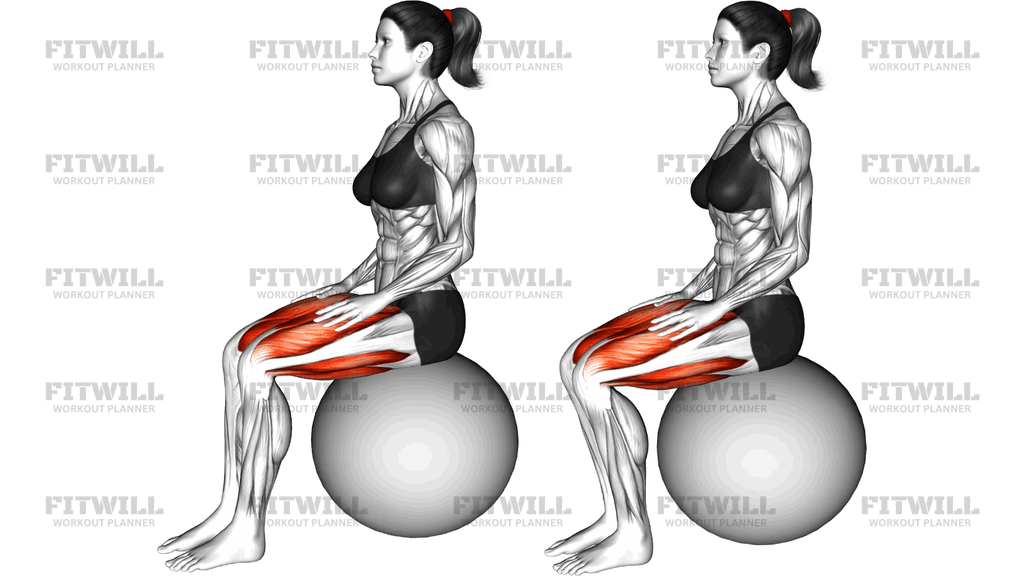
Leg Extension Crunch With Stability Ball
Leg Extension Crunch With Stability Ball is a supine core-and-thigh exercise that combines a crunch with a controlled leg-extension pattern while the feet or ankles keep the ball pinned in place. The movement is simple, but the setup matters: the ball has to stay centered, the ribs have to stay down, and the low back has to stay heavy enough on the floor that the legs can extend without the torso arching.
The primary emphasis is on the quads, with the core and other stabilizers helping you control the pelvis, rib cage, and ball position. That is why the exercise looks small at first glance: the training effect comes from coordinated tension, not from swinging the legs or yanking the shoulders off the floor. If the ball drifts or the hips twist, the work shifts away from the intended pattern.
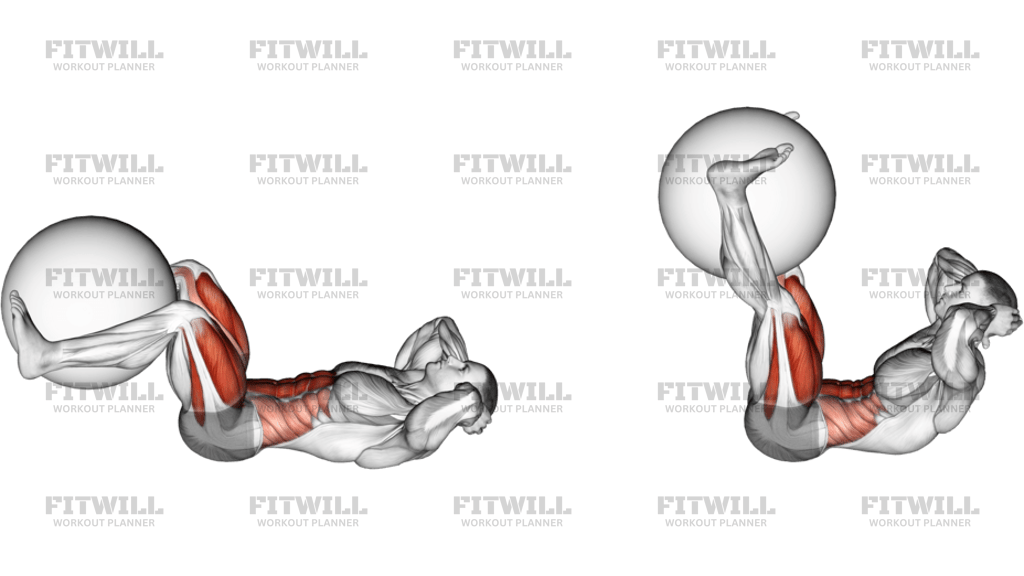
Start by lying on your back with the ball secured between the feet or lower legs as shown, knees bent, and the torso relaxed but ready. As you exhale, curl the rib cage toward the pelvis and extend the legs with control. The goal is a smooth, organized reach through the knees while the trunk stays braced and the neck stays quiet.
On the return, let the knees bend again under control and lower the shoulders without collapsing the spine. Keep the ball pressed evenly so both sides of the body contribute the same amount. A clean repetition should feel deliberate and repeatable, with no popping of the hips, no excessive neck tension, and no loss of pressure on the ball.
Use this exercise as accessory work, core training, or a coordination drill when you want the thighs and trunk to work together. It is best performed with light to moderate resistance and a range you can own from the first rep to the last. If your lower back starts to arch or the ball becomes unstable, shorten the leg extension and keep the set strict.
[ Workout Log & Planner ]
Put your next workout in Fitwill
Keep your plan and training log ready when you are.


Instructions
- Lie on your back and place the stability ball between your feet or lower legs, then bend your knees so the thighs start close to your torso.
- Keep your arms beside your head or lightly supporting it, and press your low back into the floor before the first rep.
- Squeeze the ball evenly so it stays centered and does not drift to one side.
- Exhale and curl your rib cage toward your pelvis as you lift your shoulder blades off the floor.
- Extend your legs with control, keeping the knees aligned and the ball pinned in place.
- Stop the extension before your lower back arches or your hips start to rock.
- Inhale as you bend the knees back in and lower the torso under control.
- Repeat for the planned number of reps without letting the neck or ball position collapse.
Tips & Tricks
- Keep even pressure through both feet or ankles so the ball does not slide out of alignment.
- A smaller leg extension is better than letting the lower back pop off the floor.
- Think about curling the ribs down first, then straightening the knees, instead of kicking the legs up.
- If the neck feels strained, reduce the crunch height and keep the chin gently tucked.
- Move slowly enough that the ball stays quiet; wobbling usually means the set is too fast.
- Keep the elbows wide or the hands light so the head is never being yanked forward.
- Exhale through the hardest part of the rep to help the trunk stay braced.
- End the set as soon as the pelvis starts to tilt or the ball starts drifting side to side.
Frequently Asked Questions
What muscle does Leg Extension Crunch (with Stability Ball) target most?
The quads are the primary target, with the core helping stabilize the torso and pelvis through the crunch and leg extension.
Can beginners perform this exercise?
Yes, but beginners should keep the range small and focus on keeping the ball centered before trying bigger leg extensions.
Where should the stability ball sit during the rep?
Keep it pinned between the feet or lower legs, as long as you can maintain even pressure and control.
What is the most common mistake with this movement?
Letting the low back arch while the legs extend is the biggest problem, because it shifts tension away from the intended pattern.
Should my shoulders stay on the floor the whole time?
No. The crunch lifts the shoulder blades slightly, but the movement should stay controlled and never become a full sit-up.
Why do my hips want to rock side to side?
That usually means the ball is shifting or the legs are extending too fast. Slow the rep down and keep the pressure even.
Can I do this without the ball if I do not have one?
Yes. A reverse crunch or bent-knee crunch is a practical substitute if you need a simpler floor variation.
What should I do if I feel it mostly in my neck?
Keep the hands light, reduce the crunch height, and focus on curling the ribs down instead of pulling the head forward.