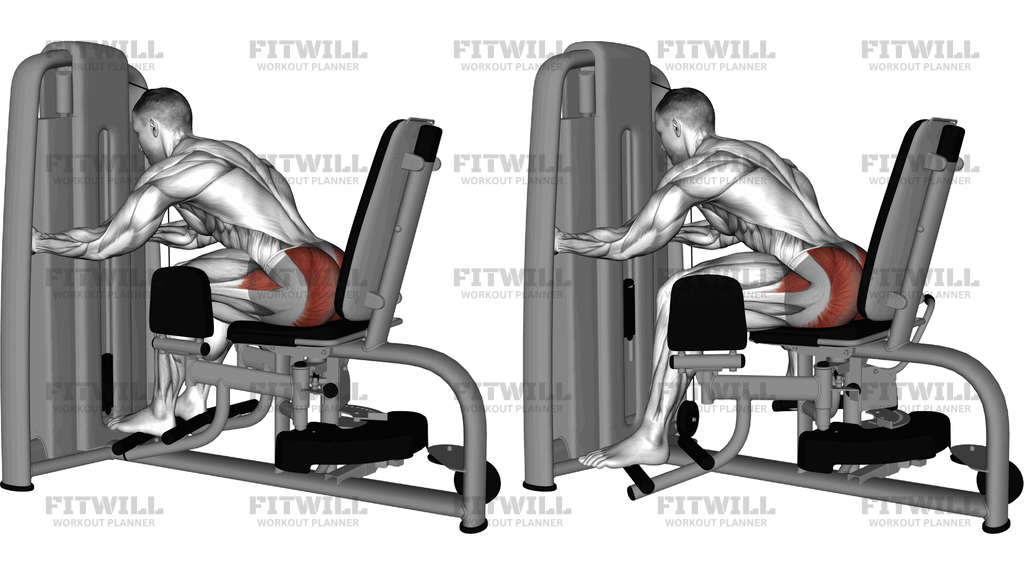
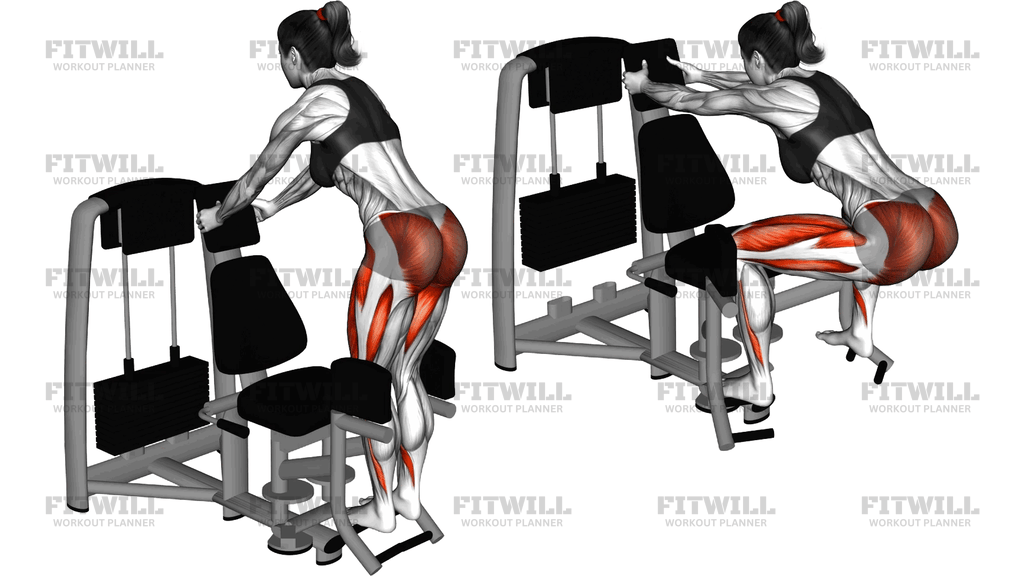
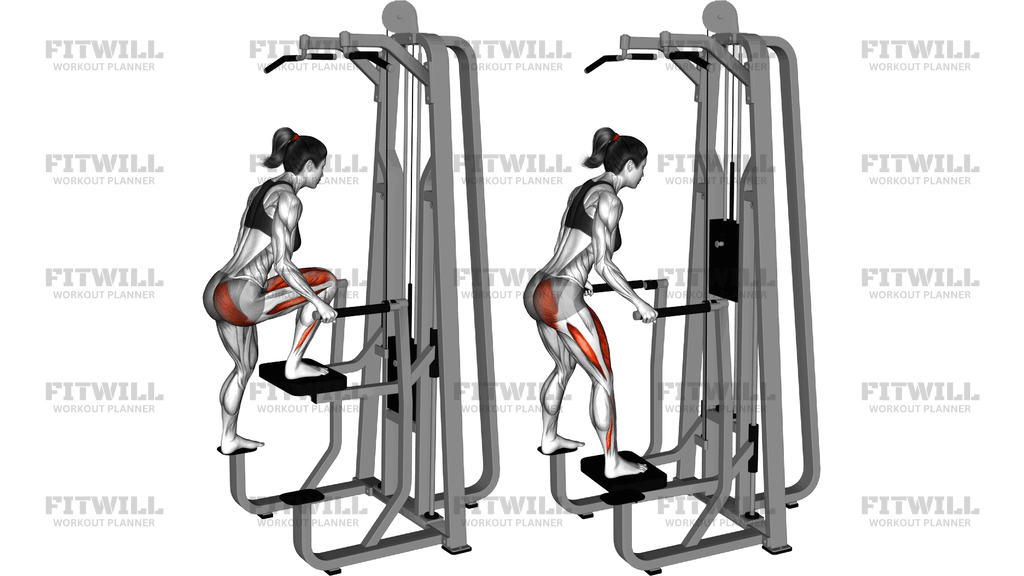
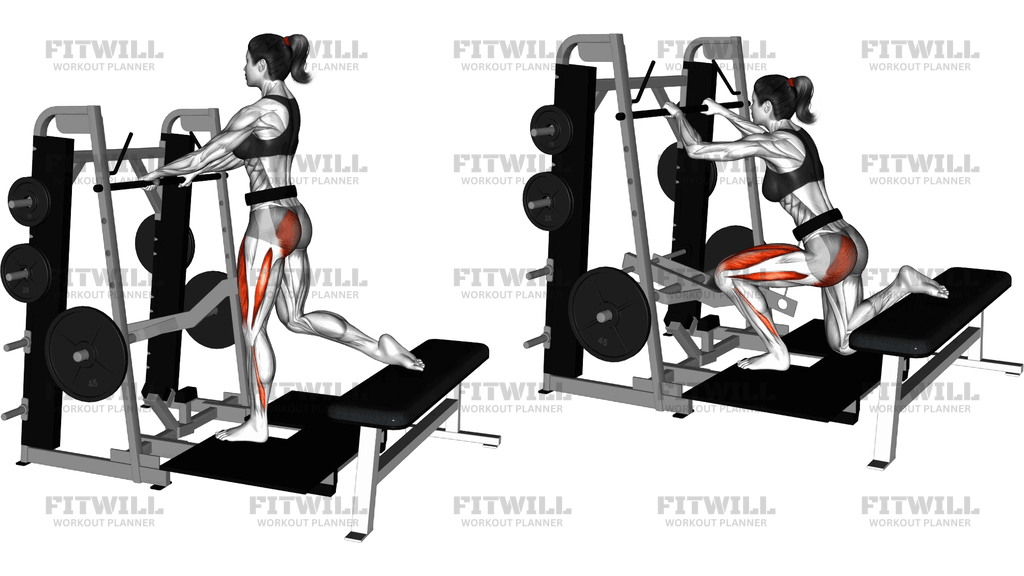
Lever Seated Horizontal Leg Press
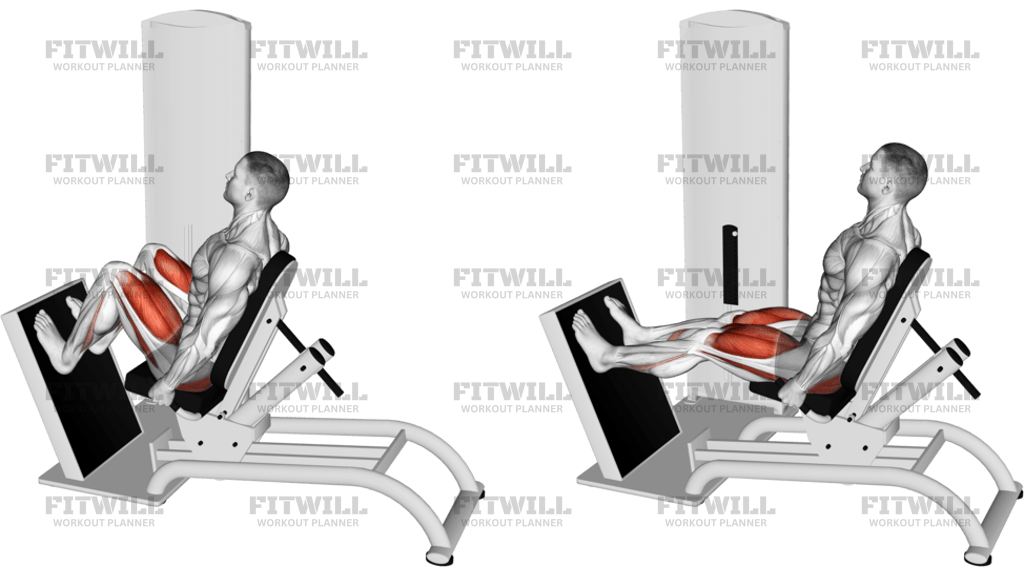
Lever Seated Horizontal Leg Press is a supported lower-body press performed on a leverage machine with your back against a pad and your feet on a fixed platform. The machine guides the load on a horizontal path, so you can push hard without having to balance a free weight or stabilize your torso against a moving bar.
The setup matters because it decides where the work goes. A slightly higher foot placement usually shifts more demand toward the hips and glutes, while a lower stance tends to make the quads work harder. In this version, the glutes are listed as the primary focus, with the thighs and hamstrings assisting, so the goal is to drive the platform without letting the pelvis roll off the seat or the knees cave inward.
A good rep starts with the body locked into the pad before the first push. Sit deep into the backrest, place both feet evenly on the platform, and keep the hands on the handles so the upper body stays quiet. From there, lower the platform only as far as you can while keeping your hips planted, your knees tracking over your toes, and your heels heavy on the footplate.
Press the platform away in a smooth line, using the midfoot and heel to finish the rep instead of snapping the knees straight. Keep tension through the legs all the way back to the start, and breathe steadily so the brace stays organized from one repetition to the next. The movement should feel controlled on the way in and forceful on the way out, never bouncy or rushed.
This exercise is useful when you want a strong machine-based leg builder with back support, such as in a glute-focused lower-body session, accessory work after squats or hinges, or higher-volume strength work when spinal loading is not the priority. It is also a practical option for beginners because the track is fixed and the seat gives clear feedback when the hips start to lift. Clean reps, consistent foot pressure, and a controlled depth matter more than chasing a huge range or a hard lockout.
[ Workout Log & Planner ]
Put your next workout in Fitwill
Keep your plan and training log ready when you are.


Instructions
- Sit deep into the back pad with your hips and lower back fully supported, then place both feet flat and even on the platform.
- Set your feet about shoulder-width apart with a slight toe-out position, and keep your knees bent before you start the first press.
- Grip the handles lightly so your torso stays still, then unlock the carriage only when you are ready to move.
- Inhale, brace your midsection, and lower the platform toward you under control by bending at the knees and hips.
- Keep your heels heavy and your knees tracking in line with your toes as the platform comes back toward you.
- Stop the descent when your hips are still pinned to the seat and you have a comfortable depth without your lower back curling up.
- Exhale and press the platform away through the midfoot and heel, driving the movement smoothly rather than bouncing it.
- Finish with soft knees and steady tension, then control the return for the next rep without letting the stack slam or the hips shift.
Tips & Tricks
- Place your feet higher on the platform if you want more hip and glute involvement; move them lower only if your knees tolerate the extra quad emphasis.
- Keep both heels planted. If the heels come up, the load is shifting away from the strongest part of the foot.
- Do not let your knees collapse inward near the bottom. Think about tracking them over the second and third toes.
- If your pelvis starts to tuck or your low back rounds, shorten the depth before you add more load.
- Use the handles to keep your upper body quiet, not to yank yourself deeper into the rep.
- Control the lowering phase for a couple of seconds so the platform does not crash into the start position.
- Stop short of a hard lockout if your knees feel snappy or if the hips want to leave the pad.
- A slower, cleaner set is usually more useful here than trying to turn the movement into a bounce or a partial-rep grind.
- If one leg always does more work, reduce the load and check that both feet are pressing evenly through the platform.
Frequently Asked Questions
What does the Lever Seated Horizontal Leg Press train most?
It trains the glutes and thighs with support from the hamstrings and core, all while the back stays braced against the pad.
Where should my feet go on the footplate?
Start about shoulder-width apart with a slight toe-out angle. A higher foot placement usually feels more hip-dominant, while a lower placement makes the quads work harder.
How deep should I lower the platform?
Lower only until your hips stay planted and your lower back stays flat against the seat. Depth is useful only if you can keep that position.
Should I lock my knees at the top?
Finish the rep with strong but soft knees. A hard snap into lockout can take tension off the legs and irritate the joints.
Why do I feel this in my lower back?
That usually means the seat depth is too deep or the pelvis is curling under. Reduce the range of motion and keep your hips pinned to the pad.
Is this a good exercise for beginners?
Yes. The back support and fixed track make it easier to learn leg drive without balancing a bar or stabilizing a free sled.
Why do my knees cave inward on this machine?
The load is often too heavy or the stance is too narrow. Lighten the weight and think about pressing the knees in line with the toes.
Can I use this after squats or deadlifts?
Yes. It works well as accessory volume after compound lifts because it adds leg work without asking your spine to carry the load.
How can I make this more glute-focused?
Use a slightly higher foot position, keep pressure through the heels and midfoot, and stop the rep before the hips start to round.