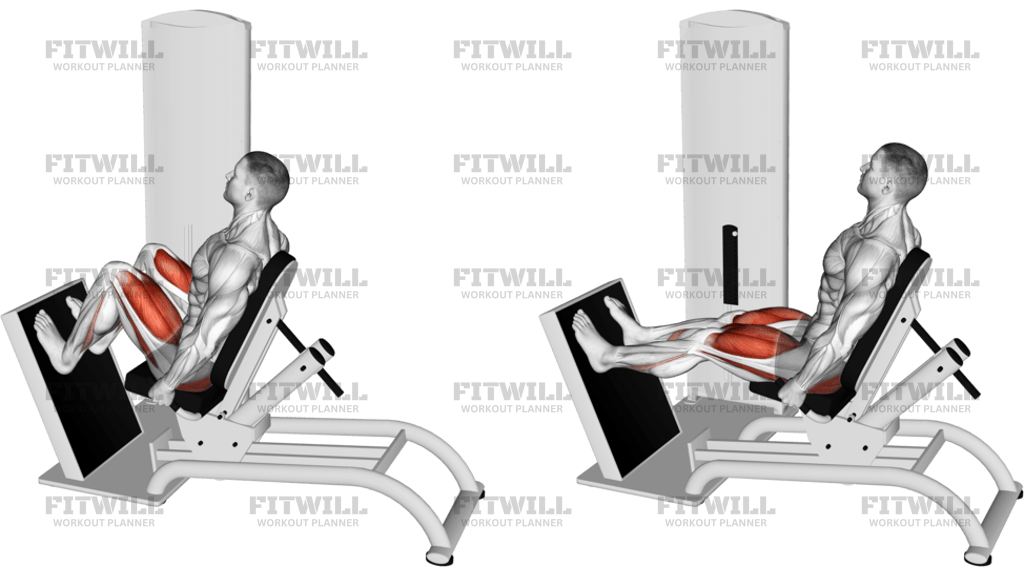
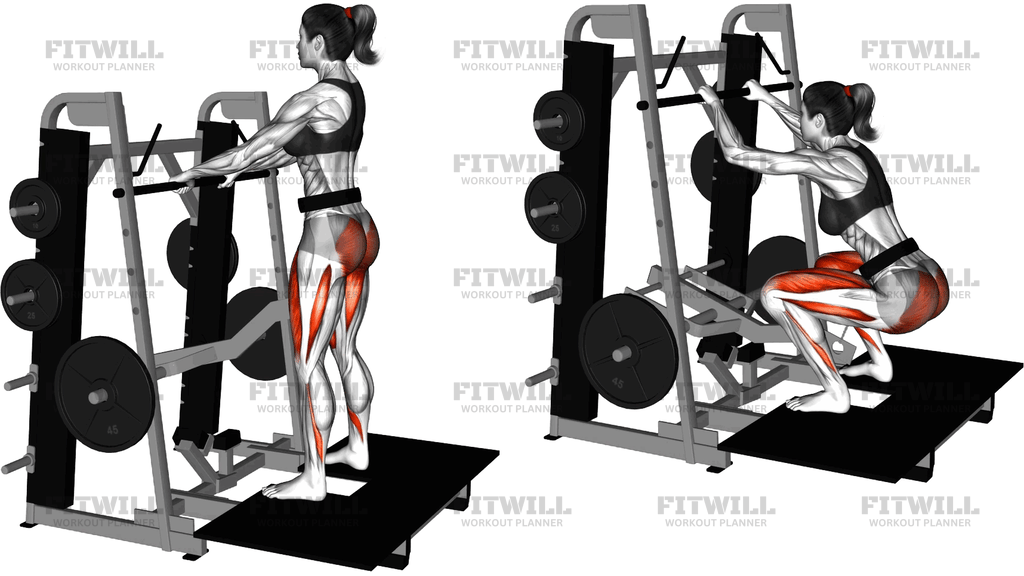
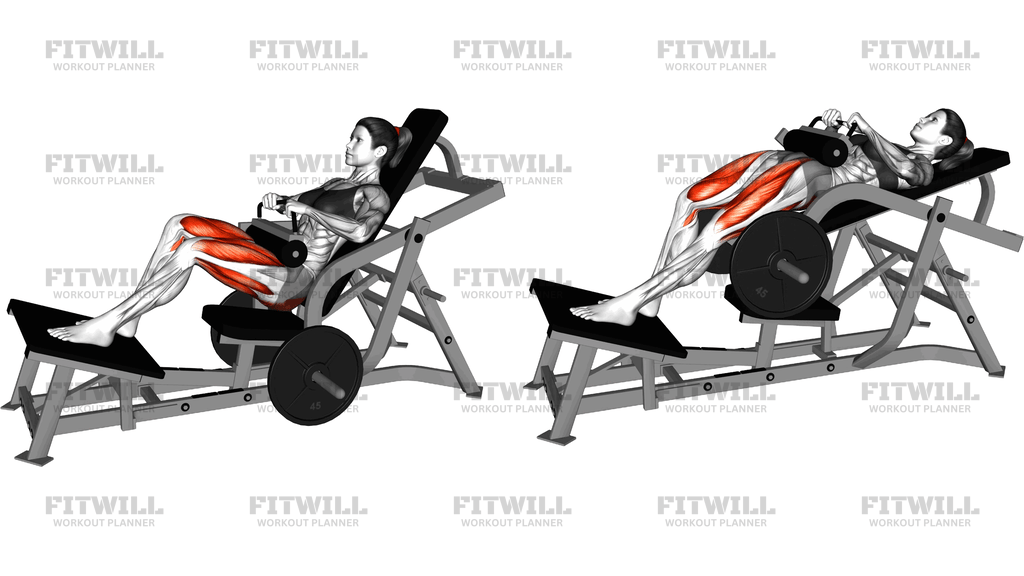
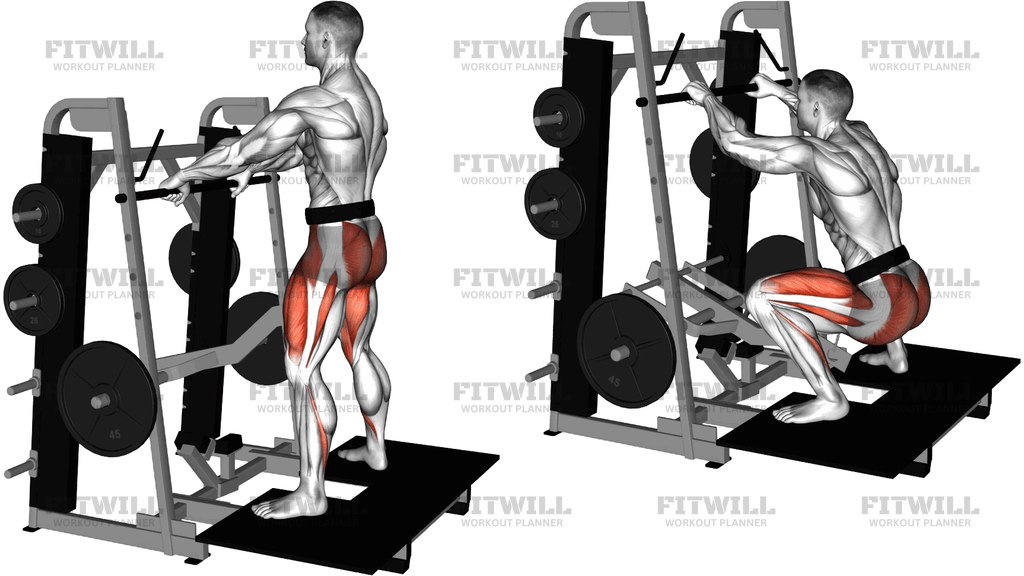
Lever Single Leg Extension Plate Loaded
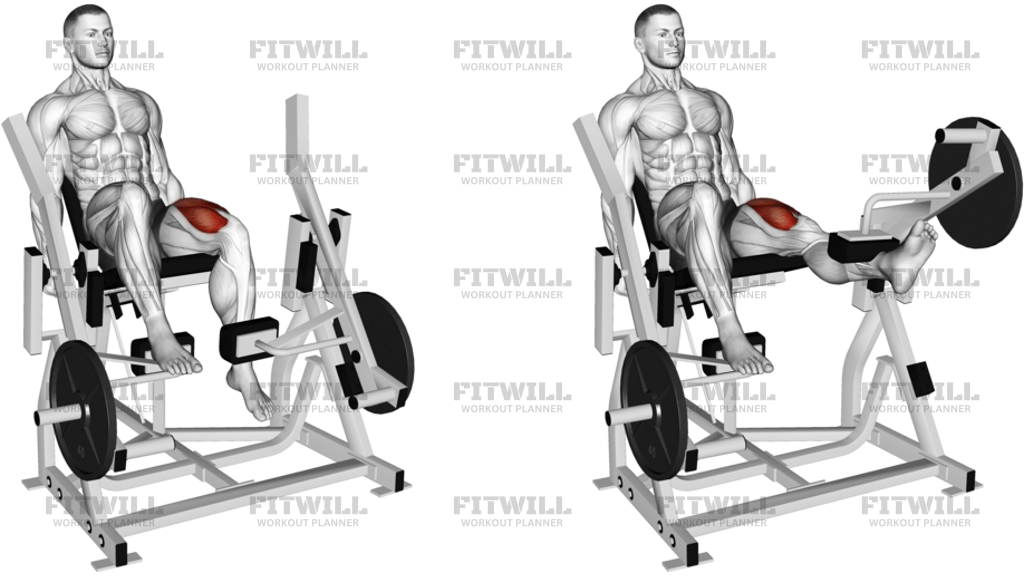
Lever Single Leg Extension Plate Loaded is a unilateral knee-extension exercise that places the quadriceps under direct tension through a guided machine path. Because each leg works on its own, it is especially useful when you want to clean up side-to-side strength differences, give one leg extra attention, or finish a leg session with focused quad work instead of a free-weight balance challenge.
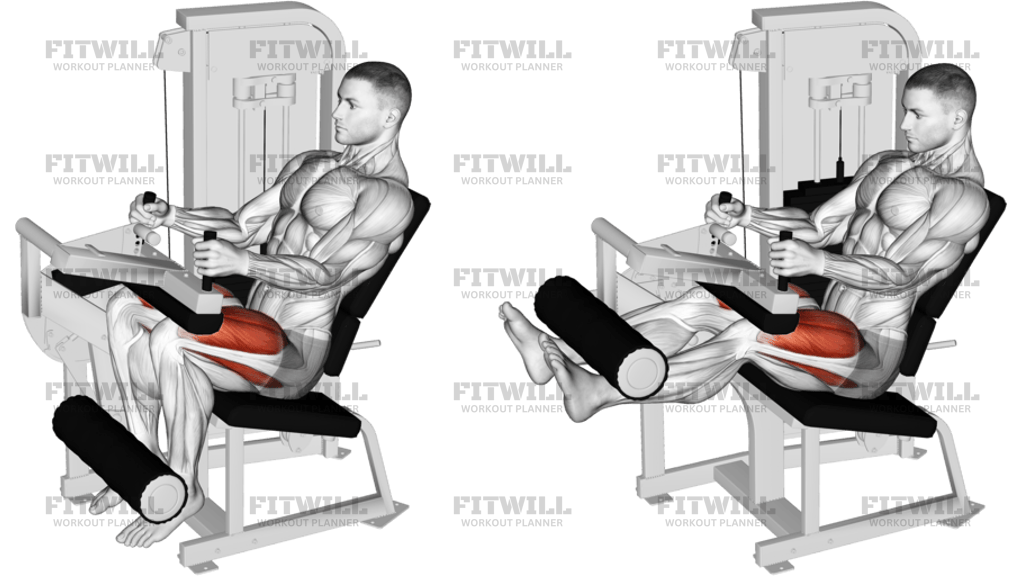
The setup matters more than it looks. On a plate-loaded leverage machine, the working shin should sit securely against the lever pad just above the ankle, and the knee should line up with the machine pivot so the rep feels smooth rather than jammed. The torso stays back against the seat, the hips stay square, and the non-working leg should stay quiet so the machine does the work instead of trunk motion or a hip shift.
At the top of the repetition, the movement is pure knee extension: drive the lower leg forward until the quadriceps are fully shortened, then lower under control until the knee bends back to the start position. A short squeeze at the top is useful, but the goal is not to snap into lockout or kick the weight. The best reps keep the thigh anchored to the pad, the foot path steady, and the tempo consistent from side to side.
This exercise fits well after squats, leg presses, split squats, or other compound lower-body work when you want more direct quad volume without adding spinal loading. It can also be a practical accessory on days when you want to bias one leg, slow the tempo, or use lighter loading for clean knee extension strength. Because the machine guides the arc, it is easier to control than many free-weight leg drills, but it still rewards careful setup and a deliberate range of motion.
As with any knee-extension movement, comfort matters. If the machine feels like it is forcing the knee into an awkward angle, adjust the seat before loading it heavier. Use a range that stays smooth and pain-free, keep the pelvis from lifting, and let each rep finish with control instead of momentum. Done well, Lever Single Leg Extension Plate Loaded is a straightforward way to challenge the quads with precision.
Fitwill
Log Workouts, Track Progress & Build Strength.
Achieve more with Fitwill: explore over 9600 exercises with images and videos, access built-in and custom workouts, perfect for both gym and home sessions, and see real results.
Start your journey. Download today!




Instructions
- Sit on the leverage machine with your back against the pad and line the working knee up with the machine pivot.
- Place the lever pad just above the ankle on one shin and keep the other leg relaxed and out of the way.
- Grip the side handles, settle your hips into the seat, and keep your torso tall without leaning back.
- Start with the working knee bent and the lower leg tucked under the pad.
- Exhale and drive the lower leg forward until the knee is nearly straight and the quadriceps are fully contracted.
- Pause briefly at the top without snapping the knee into a hard lockout.
- Inhale and lower the pad back down under control until the knee returns to the bent starting position.
- Finish the set on one side before switching legs, then reset your seat position if the next side feels different.
Tips & Tricks
- If the pad sits on your ankle bone instead of the lower shin, move the seat before adding weight.
- Keep the knee joint lined up with the machine pivot so the lever does not feel like it is scraping through the rep.
- Use a slower lowering phase than lifting phase; the quad gets more work when the pad returns under control.
- Do not let the hip on the working side lift off the seat when the lever gets heavy.
- Stop just short of a violent knee snap at the top; a clean squeeze is better than a hard lockout.
- If one leg is weaker, match the stronger side to the weaker side instead of chasing extra reps on the strong side.
- Choose a load that lets you keep the thigh pinned to the pad instead of rocking your torso for help.
- Keep the foot and toes relaxed rather than aggressively pointing or twisting them to finish the rep.
Frequently Asked Questions
What muscles does Lever Single Leg Extension Plate Loaded work?
It mainly trains the quadriceps on the working leg, with the seat and trunk position asking the hips and core to stay steady.
Where should the pad sit on Lever Single Leg Extension Plate Loaded?
The pad should rest on the lower shin just above the ankle, not directly on the ankle bone. That keeps the lever path smooth and reduces unnecessary joint pressure.
How far should I straighten my knee on each rep?
Extend until the leg is nearly straight and the quad is fully contracted, then stop before you slam into a hard lockout. A controlled finish is better than forcing an extra few degrees.
Is Lever Single Leg Extension Plate Loaded good for beginners?
Yes, if the seat is adjusted well and the weight is light enough to keep the shin path smooth. Beginners often benefit from using one leg at a time because it makes side-to-side differences easier to notice.
Why does my hip lift during Lever Single Leg Extension Plate Loaded?
That usually means the load is too heavy or the seat is set too far back. Reset the machine so your thigh stays planted and reduce the weight until the pelvis stays down.
Can I use Lever Single Leg Extension Plate Loaded after squats or leg presses?
Yes, it works well as a finishing exercise after compound leg work because it adds direct quad volume without requiring balance or a lot of setup complexity.
How heavy should Lever Single Leg Extension Plate Loaded be?
Use a load that lets you lift and lower the lever without rocking your torso or snapping into lockout. If the rep gets jerky, the weight is too high.
What if one leg feels much stronger than the other?
Train the weaker side first and match the stronger side to the same reps and tempo. That keeps the machine work honest and helps reduce side-to-side imbalance.