Single Leg Push Off
Single Leg Push Off is a bodyweight plyometric drill that trains one leg to produce force quickly while the rest of the body stays organized. The movement is useful for athletes and general trainees who want better single-leg power, knee control, and balance without needing heavy equipment. Because the exercise happens from a staggered stance beside a low bench, the quality of the setup matters as much as the jump itself.
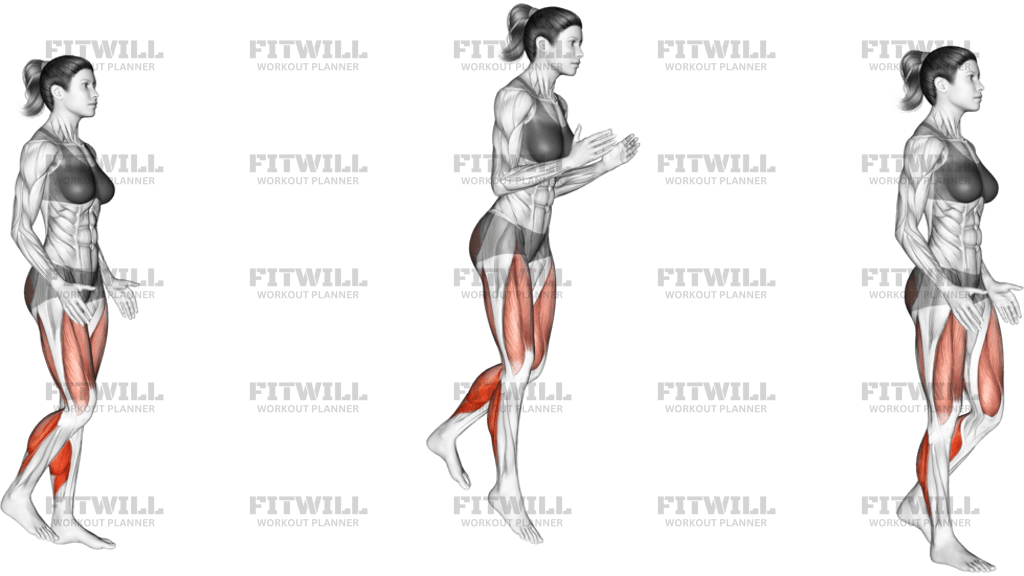
The working leg usually takes most of the load while the hips, trunk, and ankle stabilizers keep the body from twisting or drifting. That makes this a good option for developing thigh strength in a more athletic pattern than a slow strength lift. You should feel the quad and glute of the support leg working together, with the calf and foot helping finish the push and the core keeping the torso stacked.
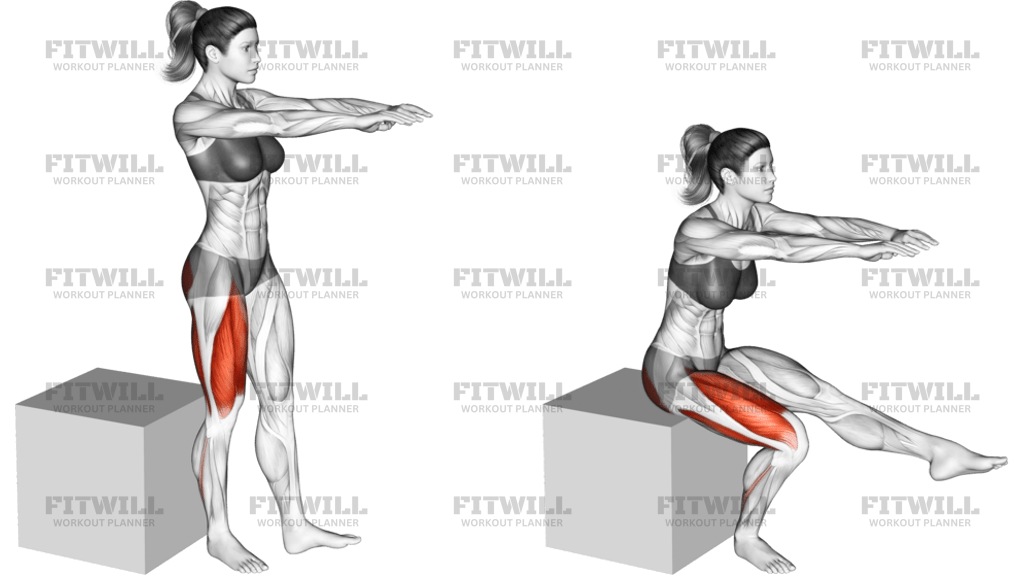
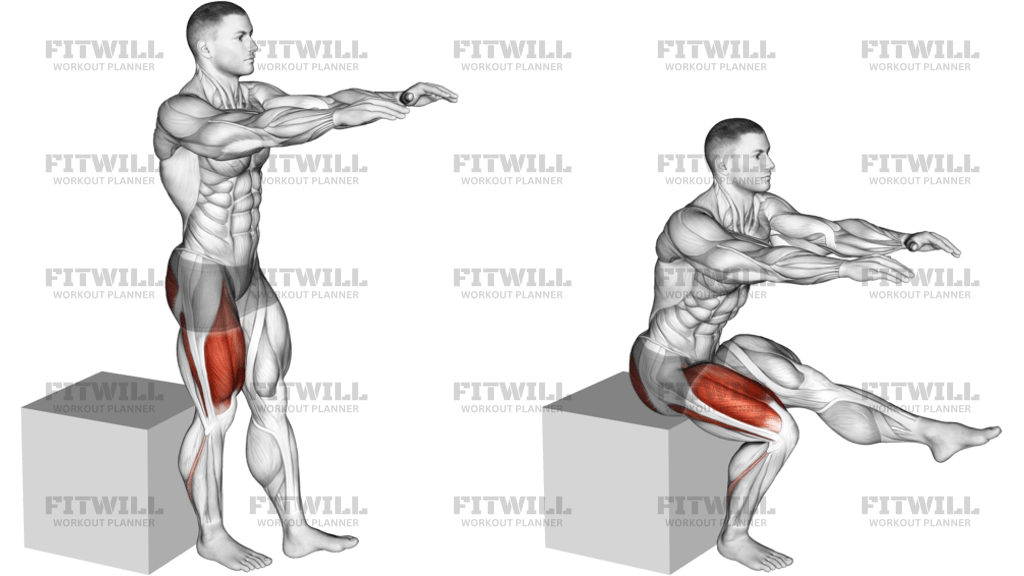
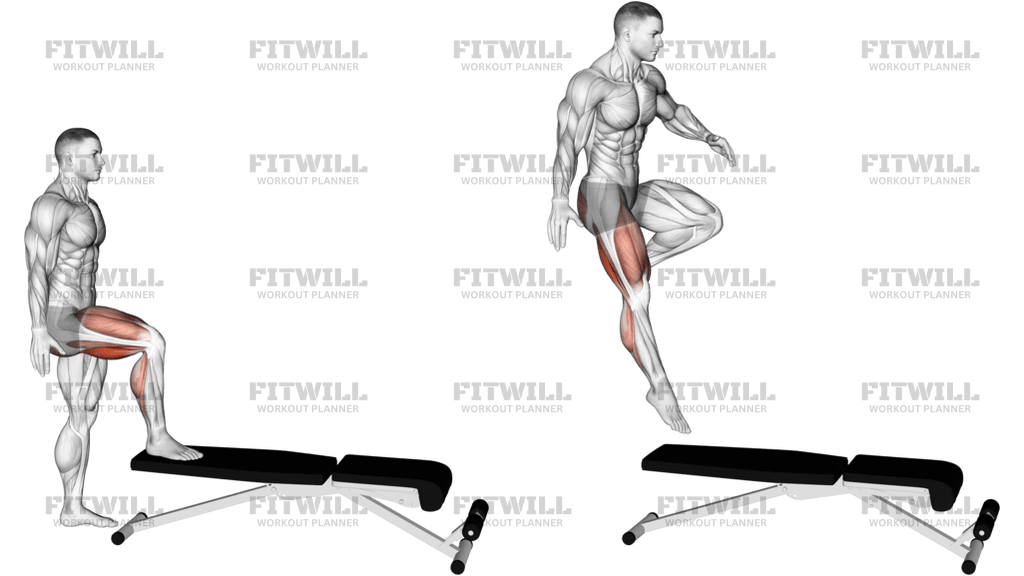
Start with one foot placed flat on a low bench or step and the other foot on the floor for balance. Keep the hips square, chest tall, and pressure spread across the whole foot on the bench instead of collapsing onto the toes. From there, dip only as far as you can keep the knee tracking cleanly over the toes, then drive forcefully through the bench foot to spring upward.
The rep should look crisp rather than rushed or exaggerated. Push the ground away, let the free knee rise naturally, and land softly with control if you are repeating hops. The return should be quiet and stable, not a hard drop onto the joint. If the bench height, speed, or body angle forces you to wobble, reduce the challenge until the push-off feels explosive but controlled.
This exercise fits well in an athletic warm-up, lower-body power block, or accessory session after strength work. It is not a max-effort lift, so the goal is clean force production, a stable torso, and repeatable landings. Beginners can use it if the bench is low and the tempo stays deliberate, but the movement should stop if the knee caves inward, the pelvis shifts, or the landing becomes noisy.
[ Workout Log & Planner ]
Put your next workout in Fitwill
Keep your plan and training log ready when you are.


Instructions
- Place a low bench or step in front of you and stand with one foot flat on top and the other foot on the floor for balance.
- Keep your hips square, chest tall, and eyes forward while the full foot on the bench stays planted.
- Shift your weight into the bench foot and bend that knee and ankle slightly to preload the leg.
- Brace your trunk so the torso does not twist or fold as you begin the push.
- Drive forcefully through the bench foot, extending the ankle, knee, and hip in one smooth push-off.
- Let the free knee rise naturally as you leave the platform, rather than swinging it aggressively.
- Land softly with the same working leg or reset into the staggered stance with control, depending on the rep style.
- Absorb the landing quietly, then repeat for the planned number of reps before switching legs.
Tips & Tricks
- Use a low bench or step first; a higher platform makes it harder to keep the knee and pelvis aligned.
- Press through the whole foot on the bench, not just the toes, so the push comes from the leg instead of the ankle alone.
- Keep the knee tracking over the second or third toe as you preload and take off.
- Make the push vertical and explosive instead of lunging forward off the bench.
- Let the arms help balance, but do not swing them so hard that the torso rotates.
- Land quietly; a loud landing usually means you are dropping too fast or losing tension.
- Stop the set when the support hip drops or the knee caves inward, even if you have reps left.
- Use short sets and full recovery so every rep stays powerful rather than turning into cardio.
Frequently Asked Questions
What does Single Leg Push Off train most?
It mainly trains the thigh of the working leg, with strong help from the glute, calf, foot, and core for balance and force transfer.
How should my foot be placed on the bench?
Set the whole foot flat on a low bench or step so the heel stays down during the preload and the push comes through a stable base.
Should this feel like a jump or a step-up?
It should feel like a quick single-leg push-off with an explosive takeoff, not a slow step-up and not a wild broad jump.
What is the biggest form mistake?
The most common fault is letting the knee cave inward or letting the pelvis shift because the bench is too high or the rep is too fast.
Can beginners do this exercise?
Yes, but only with a low step, slow setup, and small sets so they can control the landing before adding speed.
Where should I feel the work?
You should feel the quad and glute of the support leg doing the main work, with the calf and core stabilizing the push-off.
How many reps should I use?
Use low reps per leg and keep each rep crisp; once the push-off gets slow or noisy, the set is finished.
How do I make it harder without changing the movement?
Progress by slightly increasing the bench height, improving the takeoff speed, or adding a cleaner pause in the landing before the next rep.