Barbell Weighted Front Chest Squat
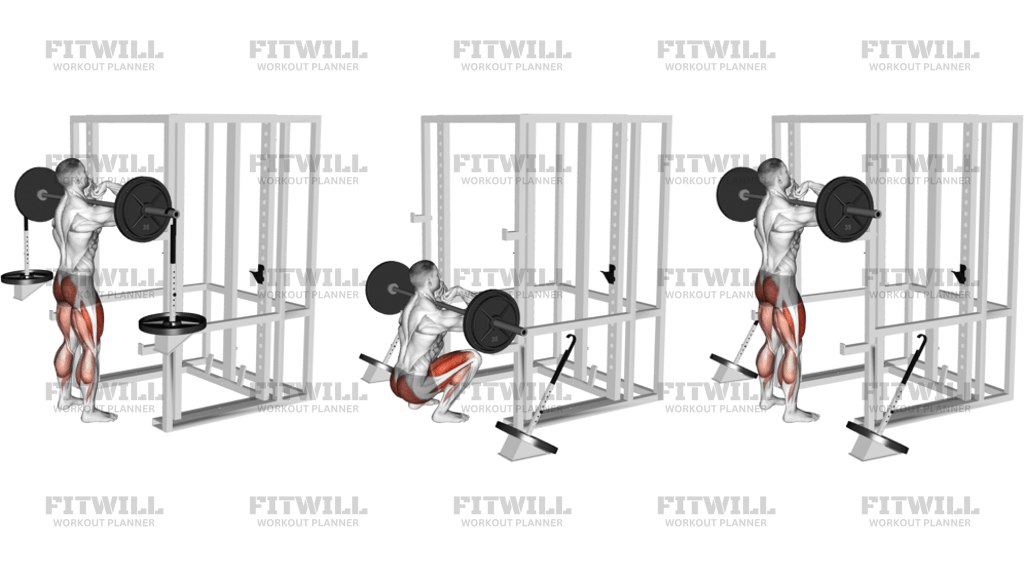
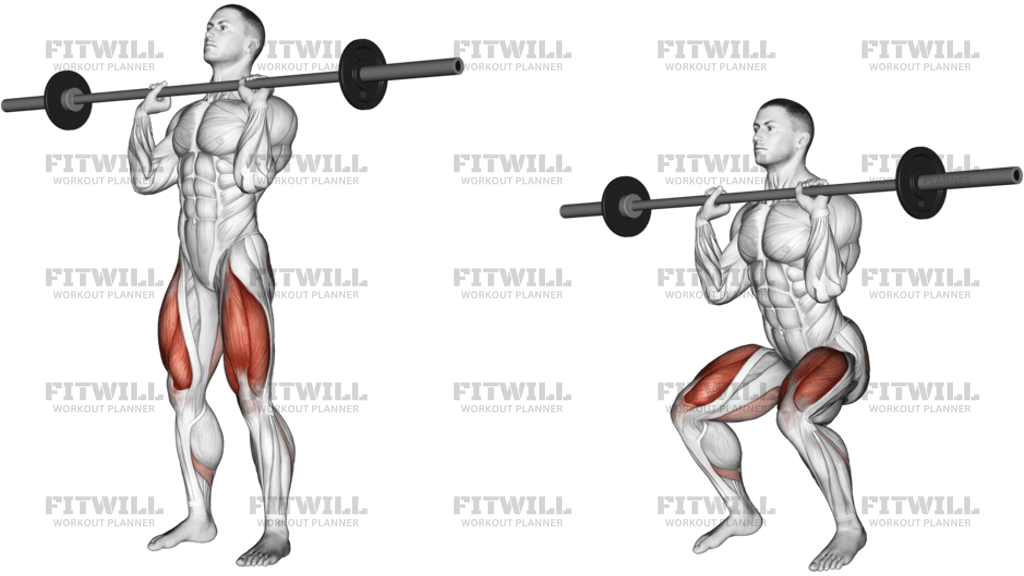
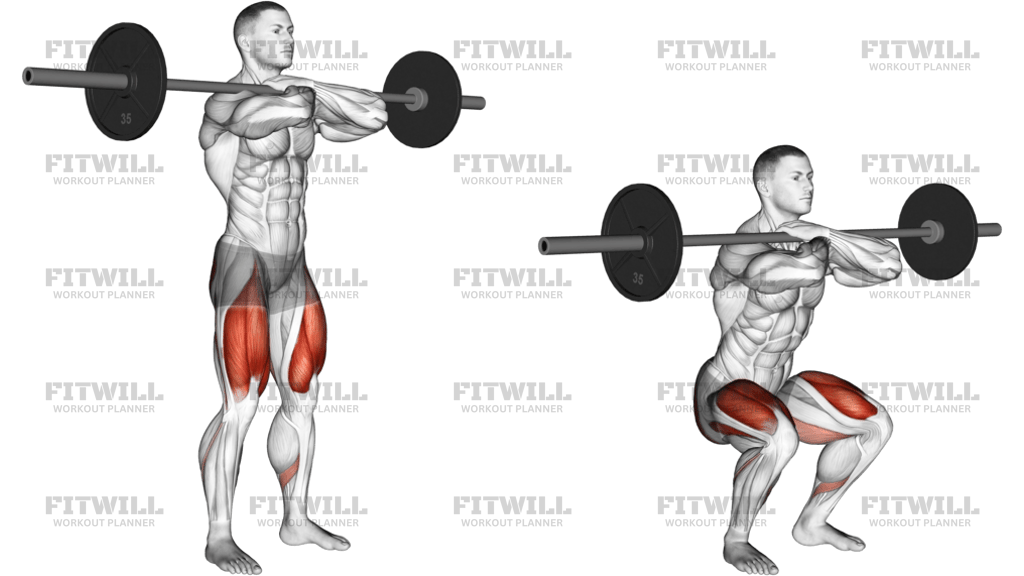
Barbell Weighted Front Chest Squat is a front-rack squat that places the barbell across the front of the shoulders so the torso stays more upright and the knees can travel forward in a controlled way. It is a strong choice for building leg strength, especially through the thighs and glutes, while also demanding the upper back, core, and breathing control needed to keep the bar stable. The front-loaded position changes the feel of the squat immediately: you have to stay tall, keep the elbows up, and own the descent instead of dumping forward.
This movement is useful when you want squat training that emphasizes posture, front-body stability, and clean leg drive rather than a heavy hip hinge. Because the load sits in front of you, the exercise asks the midsection to resist collapse and the upper back to keep the chest lifted. That makes it valuable for lifters who want stronger quads and glutes, but also for anyone trying to improve rack position, trunk stiffness, and squat mechanics.
The setup matters more here than with many lower-body exercises. The bar should rest on the front delts and upper chest area, not in the hands, and the elbows should stay pointed forward enough that the torso can remain tall through the whole rep. Take a stance about shoulder width apart, brace before you descend, and let the knees travel in the direction of the toes while the heels stay planted. A controlled descent helps you find depth without collapsing the chest or letting the bar roll forward.
On the way up, drive the floor away while keeping pressure through the whole foot and keeping the elbows from dropping. Think about standing up out of the bottom rather than throwing the hips back first. Finish each rep by re-locking the torso under the bar, then reset your breath before the next squat. If wrist or rack position is a limitation, use a lighter load, a cleaner front rack, or straps around the bar so you can focus on the squat pattern without losing the upper-body position.
[ Workout Log & Planner ]
Put your next workout in Fitwill
Keep your plan and training log ready when you are.


Instructions
- Set the bar in a rack at about shoulder height, step under it, and place it across the front of your shoulders with your elbows lifted forward.
- Stand up to unrack the bar, take a small step back, and place your feet about shoulder width apart with toes slightly turned out.
- Stack the bar over the midfoot, keep your chest tall, and squeeze your upper back so the bar does not roll forward.
- Inhale and brace your midsection before you bend your knees and hips.
- Lower yourself straight down between your legs, letting the knees track over the toes while keeping the heels flat.
- Descend until your thighs reach a comfortable depth without losing the front-rack position or letting your chest collapse.
- Drive up by pushing the floor away, keeping the elbows high and the bar balanced over the center of the foot.
- Stand tall at the top, reset your breath, and re-brace before the next rep.
- When the set is finished, walk the bar back into the rack and set it down with control.
Tips & Tricks
- If the bar starts sliding forward, raise your elbows and think about keeping the upper arms parallel to the floor on the way down.
- Keep the bar on the front delts, not in the fingertips; the hands only guide the rack position.
- Let the knees travel forward as you descend so the torso can stay upright instead of turning the squat into a forward-leaning hinge.
- Use a shoulder-width stance first; going too wide usually makes the front-rack position feel unstable and shallow.
- A paused rep at the bottom is useful if you tend to bounce out of depth or lose position as soon as you reverse.
- If your wrists ache, open the grip a little wider or use lifting straps looped around the bar to support the rack.
- Keep the heels heavy and the whole foot rooted so the weight does not shift onto the toes at the bottom.
- Choose a load that lets you keep the elbows up for every rep; once the front rack collapses, the set is too heavy.
- Exhale only after you pass the hardest part of the ascent, then take a fresh breath at the top before the next rep.
Frequently Asked Questions
What muscles does Barbell Weighted Front Chest Squat work most?
It heavily trains the thighs and glutes, with the core and upper back working hard to keep the front rack upright.
Why do my elbows need to stay up in Barbell Weighted Front Chest Squat?
High elbows help keep the bar stacked over the midfoot and stop the chest from folding forward as you descend.
Can beginners do Barbell Weighted Front Chest Squat?
Yes, but they should start light and learn the front-rack position first. Many beginners do better with an empty bar or lifting straps around the bar until the rack feels natural.
How deep should I squat in Barbell Weighted Front Chest Squat?
Descend as low as you can while keeping the heels down, the elbows up, and the bar balanced over the center of the foot.
What is the most common mistake in Barbell Weighted Front Chest Squat?
The usual mistake is letting the elbows drop, which sends the bar forward and makes the squat turn into a good morning.
Can I use straps with Barbell Weighted Front Chest Squat?
Yes. Looping straps around the bar can make the front rack easier if your wrists or shoulders limit your position.
Should my knees go past my toes in Barbell Weighted Front Chest Squat?
They can, as long as your heels stay planted and the knees track in line with the toes while the torso stays braced.
How is Barbell Weighted Front Chest Squat different from a back squat?
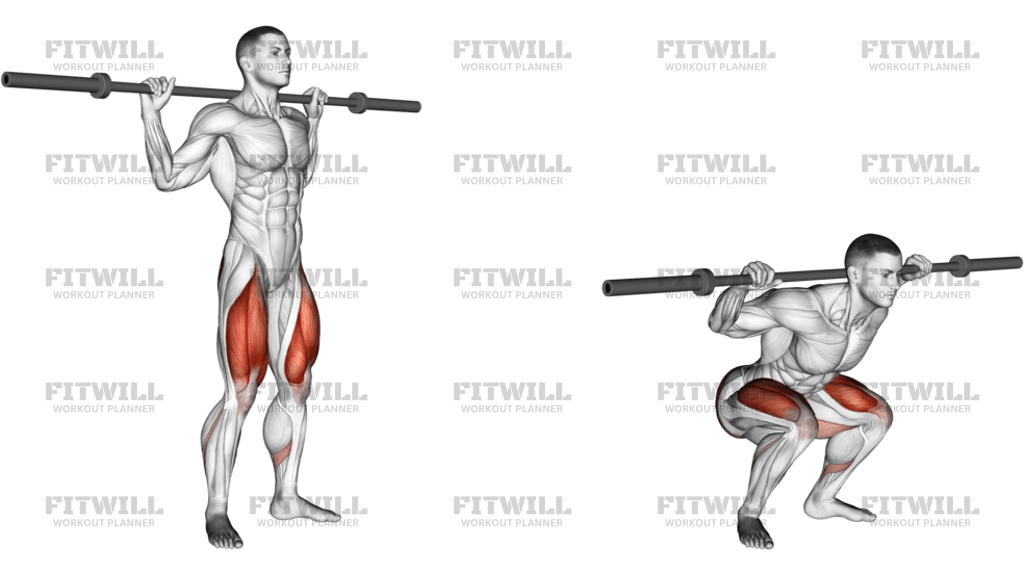
The front-rack position keeps the torso more upright and places more demand on the quads, upper back, and core than a typical back squat.