Bottle Weighted Rear Lunge
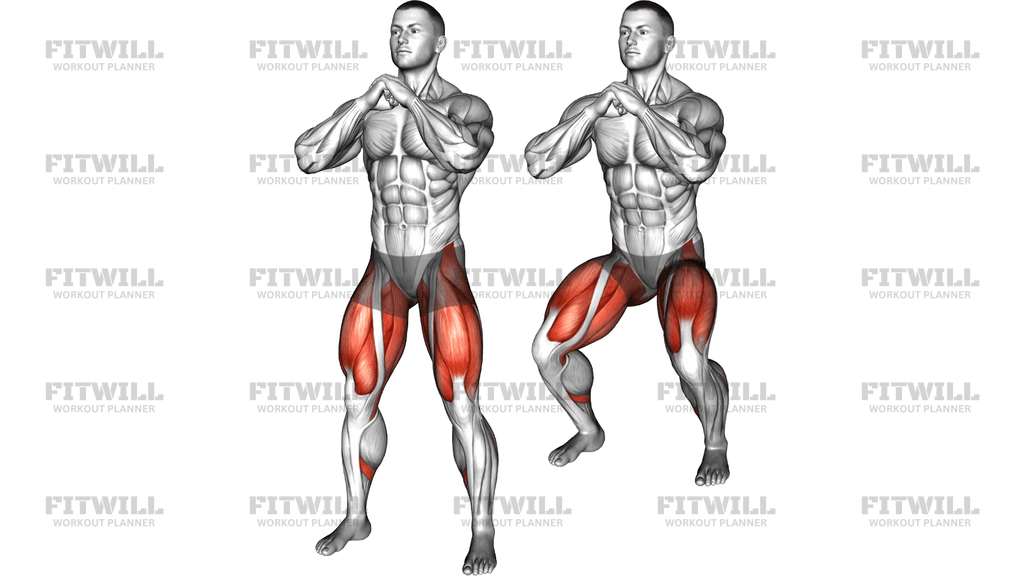
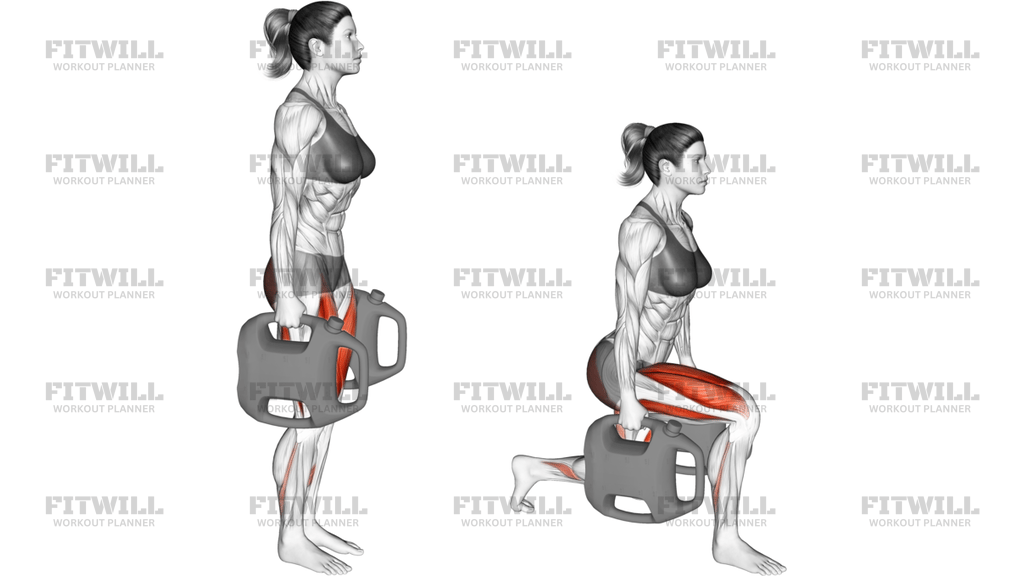
Bottle Weighted Rear Lunge is a unilateral lower-body exercise where you hold weighted bottles or can-shaped handles at your sides and step one leg back into a reverse lunge. The front leg does most of the work, so the movement is useful for building thigh strength, hip control, balance, and the ability to keep the torso upright while one leg is under load.
The setup matters because the rear step has to be long enough for the front foot to stay flat and the front knee to track cleanly. With the weights hanging beside the legs, the shoulders stay down and the torso can stay stacked over the hips instead of tipping forward. That makes the exercise feel more like a controlled leg drill than a balance scramble.
At the bottom of the rep, the front knee and hip bend together while the rear knee drops toward the floor. The front shin can lean slightly, but the heel should stay planted and the knee should not cave inward. Drive back up by pushing through the front heel and midfoot, then return to the start with the same control you used on the way down.
This is a good choice for accessory leg training, warm-ups that prepare the knees and hips, or strength blocks where you want single-leg work without a machine. It also fits well when you want to train coordination between the glutes, quads, and core while keeping the loading simple. Use a load that lets you stay tall, step cleanly, and repeat each rep without bouncing off the back leg.
If the torso folds, the front knee collapses, or the rear foot is doing too much of the push, the load or step length is usually too aggressive. Lower the resistance and shorten the set before technique gets sloppy. Controlled reverse lunges are most useful when every rep looks nearly the same, from the first step back to the final stand-up.
[ Workout Log & Planner ]
Put your next workout in Fitwill
Keep your plan and training log ready when you are.


Instructions
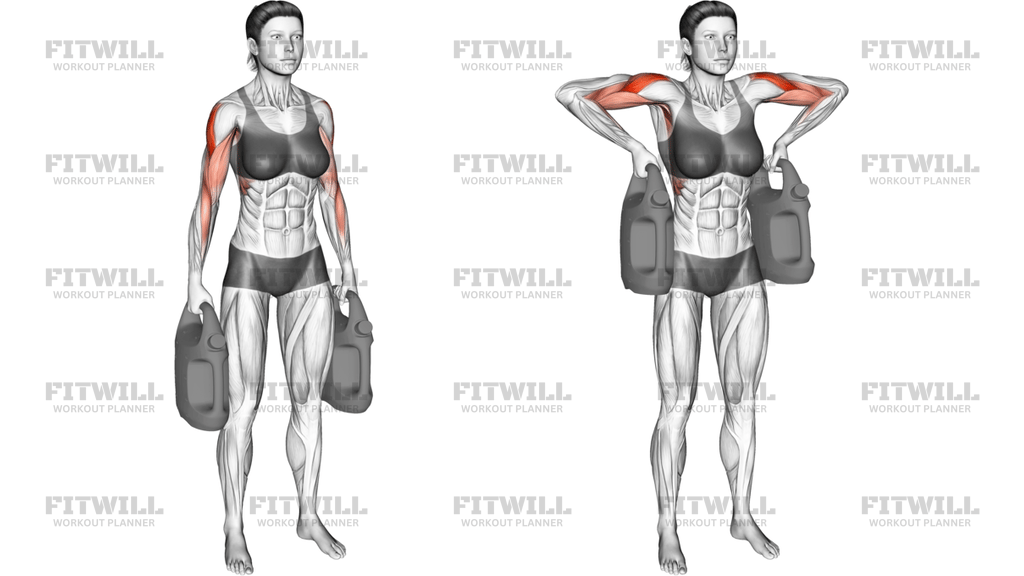
- Stand tall holding the bottle weights at your sides with your feet about hip-width apart and your ribs stacked over your pelvis.
- Brace your abdomen, look straight ahead, and keep your shoulders relaxed before you move.
- Take one leg straight back into a reverse lunge while keeping most of your weight over the front foot.
- Lower under control until the front knee and hip are bent and the rear knee is close to the floor.
- Keep the front heel down and let the front knee track in line with the middle toes.
- Pause briefly at the bottom without bouncing or shifting onto the back leg.
- Drive through the front heel and midfoot to stand back up to the start.
- Bring the rear leg back under control and reset your stance before the next repetition.
- Alternate legs or complete all reps on one side as your program calls for.
Tips & Tricks
- Choose a step-back distance that lets the front shin stay fairly controlled instead of drifting far past the toes.
- Keep the bottle weights hanging beside the outer thighs so they do not swing across the body.
- Let the torso stay tall and avoid folding at the waist when you lower into the lunge.
- Think about dropping the rear knee straight down instead of reaching it far behind you.
- Keep the front foot planted from heel to toe; if the heel pops up, the step is usually too short or too deep.
- Use a slower lowering phase to feel the front quad and glute do the work.
- If the front knee caves inward, reduce the load and focus on tracking it over the middle toes.
- Exhale as you drive back up and inhale before each descent.
- Stop the set when the rear leg starts pushing you back up more than the front leg.
Frequently Asked Questions
What muscles does Bottle Weighted Rear Lunge work?
It mainly trains the thighs, especially the front leg quads, while the glutes, adductors, calves, and core help stabilize the movement.
Is Bottle Weighted Rear Lunge the same as a split squat?
It is similar, but the reverse lunge is more dynamic because the back leg steps away and returns each rep. A split squat keeps the feet planted in a fixed stance.
Should the rear knee touch the floor?
No. It can hover just above the floor if that keeps the rep controlled, or lightly tap down if your mobility and balance are solid.
How far should I step back in the lunge?
Step back far enough that the front heel stays down and the front knee can bend without collapsing inward. If the front foot feels cramped, lengthen the step.
Can I hold one bottle instead of two?
Yes, but holding one load changes the balance demand and increases the anti-rotation challenge. Two equal weights at your sides are the most straightforward setup.
Why do I feel this mostly in the front leg?
That is expected. The front leg does most of the braking and driving, while the back leg mainly helps you balance and return to standing.
What are the most common mistakes with the bottle weights?
The usual problems are swinging the weights, leaning the torso forward, and letting the front knee cave inward as you lower.
Is this a good beginner leg exercise?
Yes, as long as you start with light bottles or bodyweight and focus on balance, knee tracking, and a controlled step-back.