Sissy Squat
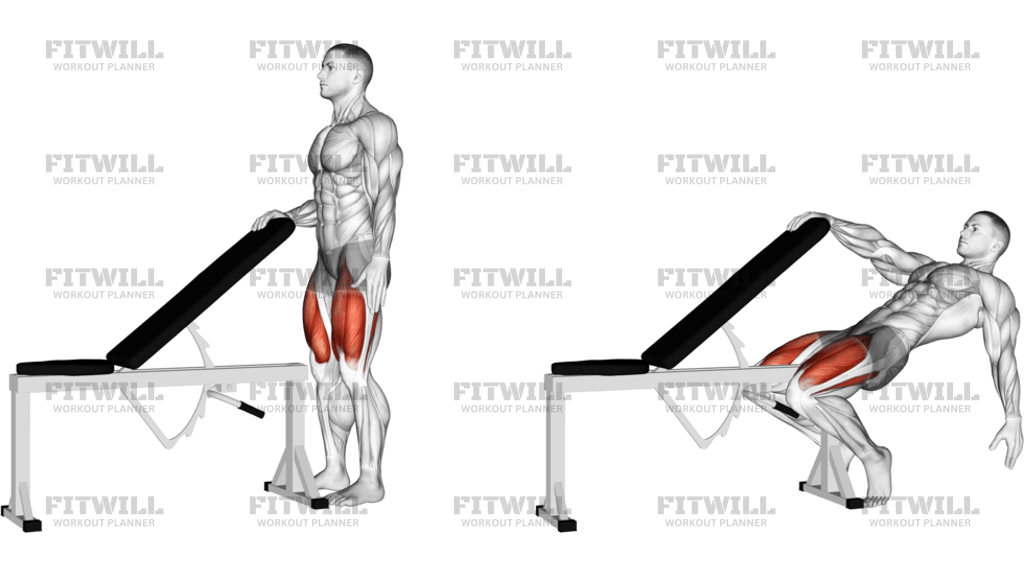
Sissy Squat is a bodyweight quad-focused exercise performed with a fixed support behind or beside you, such as the top pad of a sissy squat bench. The setup shown here keeps the feet close together, the heels light, and the torso tall while the knees travel far forward. That forward knee travel is the point of the movement: it shifts the work onto the thighs and especially the quads instead of turning the rep into a hip-dominant squat.
This exercise is useful when you want direct quad tension, a strong bodyweight finisher, or a knee-dominant accessory movement that does not require a barbell. Because the body leans back as you lower, the support and foot position matter more than they would in a standard squat. If the stance is too wide or the knees stay back, the exercise loses its signature loading pattern and becomes less specific to the quads.
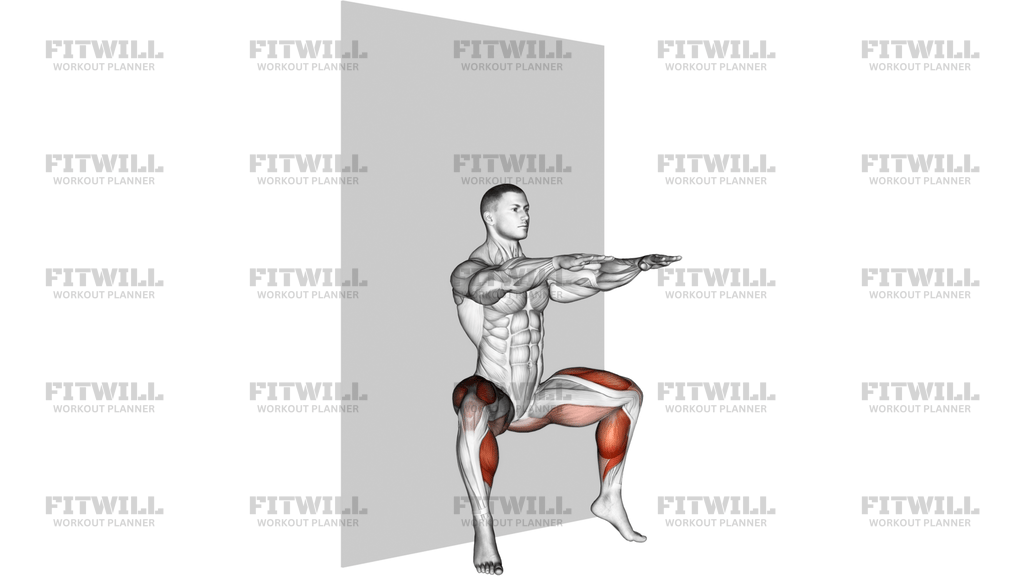
The image shows a controlled backward lean with one hand on the support for balance. That is the safest way to learn the pattern. Keep the hips extended, brace through the trunk, and let the knees bend and move forward together while the torso stays long. The lower body should do the work while the support keeps the rep organized and reduces the chance of tipping backward.
Lower only as far as you can keep the knees tracking cleanly and the heels from collapsing. At the bottom, reverse smoothly by pressing the knees forward and extending them under control rather than throwing the hips back. The rep should feel like a smooth arc around the knees, with the quads staying loaded the entire time.
Use Sissy Squat as a quad isolation drill, a warm-up for knee-dominant work, or a high-rep accessory exercise at the end of a leg session. Start conservatively, because the leverage is intense even with body weight only. The safest repetitions are the ones that stay strict, balanced, and pain-free from the first inch of the descent to the last inch of the return.
[ Workout Log & Planner ]
Put your next workout in Fitwill
Keep your plan and training log ready when you are.


Instructions
- Stand close to the sissy squat bench or fixed support and place one hand on the top pad for balance.
- Bring your feet close together so your heels are under your hips and your weight stays over the forefeet.
- Keep your torso tall, chest lifted, and hips extended before you start the descent.
- Brace your trunk, then let both knees bend forward together as your body leans back in one controlled line.
- Lower only until you can keep the knees tracking forward and the torso from collapsing.
- Pause briefly at the deepest position if you can stay balanced and keep tension in the quads.
- Drive the knees forward and extend them to stand back up, keeping the hips from hinging or swinging forward.
- Exhale through the hardest part of the lift and reset your footing before the next rep.
Tips & Tricks
- Keep the support hand light; if you are pulling hard on the pad, the legs are not doing enough of the work.
- Let the knees travel forward on purpose. This movement is supposed to be knee-dominant, not hip-dominant.
- Stay on the balls of the feet or very light heels as the body leans back, but do not let the feet slide.
- A short range with perfect control is better than forcing a deep rep that makes you twist or lose balance.
- Keep the ribs down and the trunk rigid so the low back does not arch as the knees bend.
- If the knees drift inward, reduce the depth and slow the descent until the tracking stays clean.
- Use a slow lowering phase to keep tension on the quads instead of bouncing out of the bottom.
- Stop the set if the support becomes a crutch and the rep turns into a pull from the arms.
Frequently Asked Questions
What muscles does Sissy Squat train most?
It primarily targets the quadriceps, with the trunk and calves helping to keep the body balanced and controlled.
Why do my knees travel so far forward in this exercise?
That forward knee travel is the point of the movement. It increases quad loading and makes the exercise much more knee-dominant than a standard squat.
Do I need the support pad or can I do it free-standing?
The support pad or rail makes the movement safer and easier to learn. A free-standing version is much harder because the lean-back position is less stable.
Should my heels stay flat on the floor?
Heels usually get light as you lean back and bend the knees. Keep the feet planted and balanced, but do not force the heels flat if that changes the movement path.
What is the most common mistake on the sissy squat bench?
Most people either hinge at the hips or yank on the support with the arms. Both reduce quad tension and make the rep less specific.
Is this exercise suitable for beginners?
Yes, if they use the support, keep the range modest, and work only in a pain-free range of motion.
How deep should I go on each rep?
Go as deep as you can while the knees track cleanly and you stay in control. Depth is useful only when you can keep the same body position.
Can I use this as a finisher after leg day?
Yes, it works well as a high-rep quad finisher because body weight alone can create a strong local burn.