Lever Reverse-Grip Preacher Curl
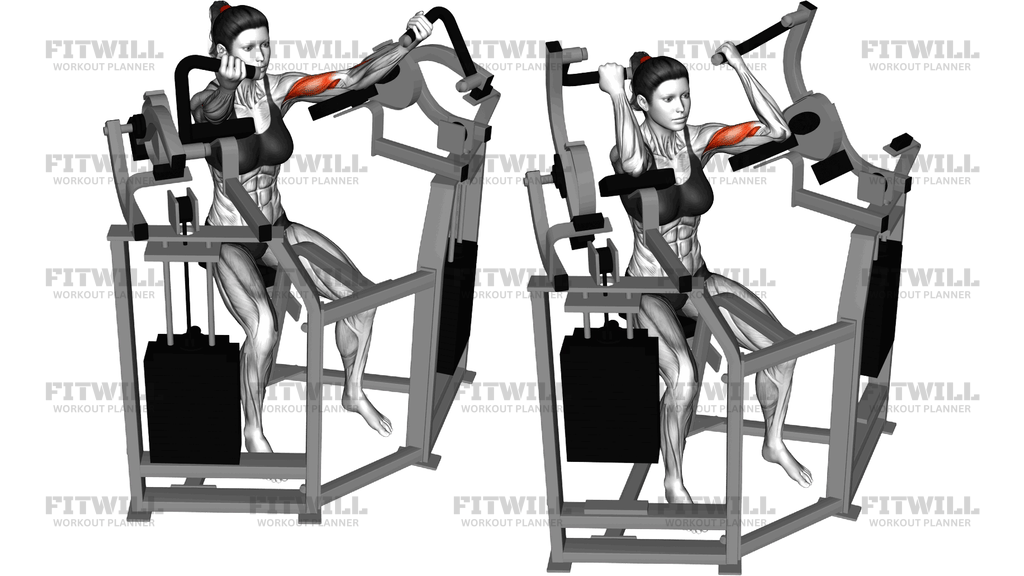
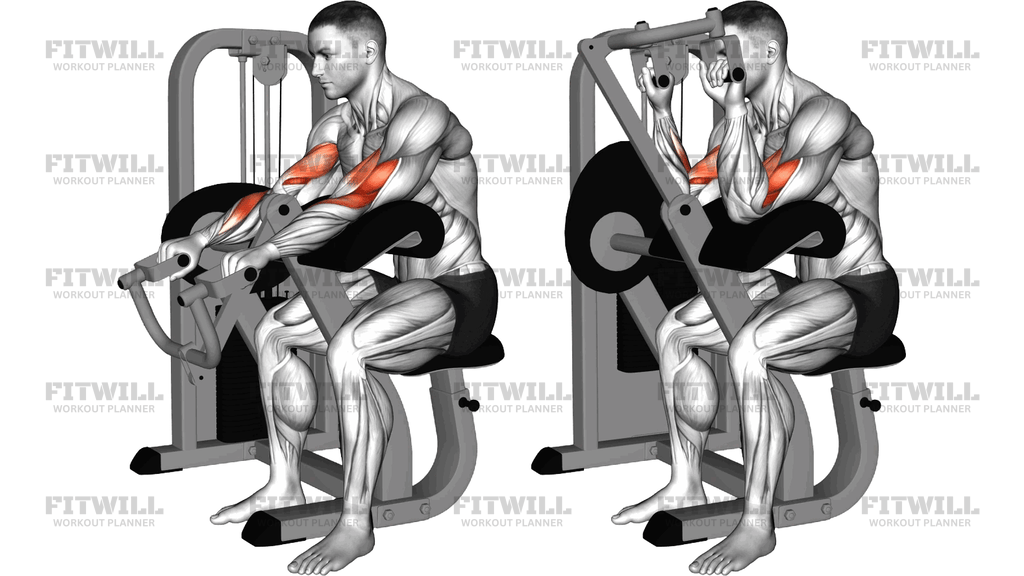
Lever Reverse-Grip Preacher Curl is a strict arm exercise built around a fixed lever path, a preacher pad, and an underhand grip. Because your upper arms are supported, the machine takes away most of the body swing and makes the elbow flexors do the work. That makes this movement especially useful when you want focused arm tension instead of a full-body lift.
The reverse grip shifts the emphasis toward the biceps, brachialis, brachioradialis, and forearm flexors. Compared with a standard preacher curl, the underhand position usually feels more demanding through the lower forearm and the top of the curl, so lighter loading is often a smarter choice. Lever Reverse-Grip Preacher Curl is a good accessory movement for building arm size, improving elbow flexor strength, or adding strict volume without relying on momentum.
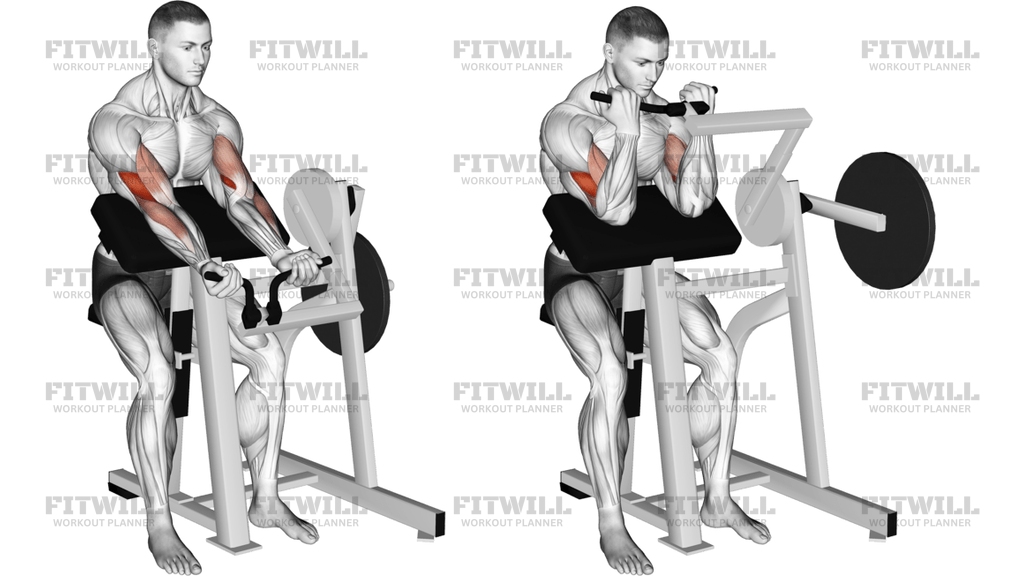
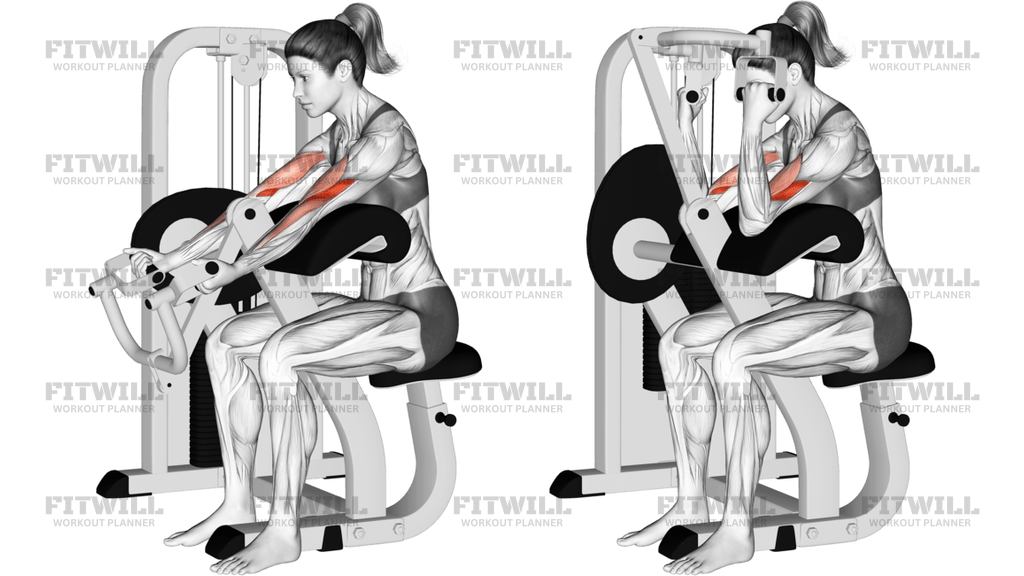
Start by setting the seat so your chest can press into the preacher pad and your upper arms rest firmly on the angled support. Your armpits should sit near the top of the pad, feet flat on the floor, and shoulders relaxed instead of creeping forward. The handles should sit in a true underhand grip with your wrists stacked over your forearms, not bent back toward the face of the handle.
As you curl, keep the upper arms glued to the pad and bend only at the elbows. Drive the handles upward in the machine’s arc until the forearms approach your biceps, then squeeze briefly without shrugging or letting the chest leave the pad. Lower the handles slowly until the elbows are nearly straight and tension is still present, then reset your grip and shoulder position before the next rep.
This exercise works best when the rep speed stays smooth and the range stays honest. A hard bounce at the bottom, a loose wrist at the top, or a chest lift off the pad usually means the load is too heavy. Used well, Lever Reverse-Grip Preacher Curl is a clean way to train arm flexion with a fixed path that keeps the work concentrated where it belongs.
Fitwill
Log Workouts, Track Progress & Build Strength.
Achieve more with Fitwill: explore over 9600 exercises with images and videos, access built-in and custom workouts, perfect for both gym and home sessions, and see real results.
Start your journey. Download today!




Instructions
- Adjust the seat so your chest and upper arms can press firmly into the preacher pad, with your feet flat and your armpits near the top edge of the support.
- Take the handles with an underhand grip and stack your wrists straight over your forearms before you start the first rep.
- Keep your upper arms glued to the pad and let the elbows begin near full extension without locking out hard.
- Brace your torso, keep your shoulders down, and curl the handles upward through the machine's fixed arc.
- Drive the handles toward your upper chest by bending only at the elbows while the pad keeps your upper arms from drifting forward.
- Squeeze briefly near the top without shrugging or letting your wrists fold back.
- Lower the handles slowly until your elbows are almost straight and the biceps stay under tension.
- Reset your grip and shoulder position between reps, then repeat for the planned set before carefully releasing the handles.
Tips & Tricks
- Use less weight than you would on a standard preacher curl; the reverse grip loads the forearms and brachialis hard.
- Keep your knuckles stacked over your forearms so the wrists do not bend back at the top of the curl.
- If your chest starts lifting off the pad, the set is too heavy for a strict preacher pattern.
- Lower the handles for a full three-count to keep tension on the biceps and prevent the stack from dropping.
- Stop just short of a hard elbow lockout at the bottom to avoid banging the joint into the end of the lever path.
- Let the elbows stay planted on the pad; if they slide forward, the shoulders are taking over the rep.
- Keep the seat height consistent from set to set so the handles meet your forearms in the same line every time.
- Expect the forearms to feel this more than a regular curl, and judge the load by control instead of by the weight number.
- If the top position feels cramped, shorten the range slightly rather than letting your wrists or shoulders compensate.
Frequently Asked Questions
What does Lever Reverse-Grip Preacher Curl train most?
It mainly trains the biceps, with a strong assist from the brachialis, brachioradialis, and forearm flexors.
Why use Lever Reverse-Grip Preacher Curl instead of a regular preacher curl?
The underhand grip shifts more of the work into the lower arm and brachialis while still keeping the biceps under strict tension.
How should my arms sit on the preacher pad?
Your chest and upper arms should stay pressed into the pad with the elbows supported, so the machine can guide the curl without shoulder swing.
How low should I lower the handles?
Lower until your elbows are almost straight and the tension is still active, but do not slam into a hard lockout at the bottom.
Is Lever Reverse-Grip Preacher Curl good for beginners?
Yes, if the load is light enough to keep the wrists straight and the chest planted on the pad throughout the set.
Why do my wrists feel the top of this curl so much?
The reverse grip asks the wrists and forearms to stabilize harder, so keep the knuckles in line with the forearms and reduce the load if they start bending back.
What is the most common mistake on Lever Reverse-Grip Preacher Curl?
The usual error is lifting the chest off the pad or letting the elbows slide forward, which turns the movement into a partial cheat curl.
Can I use Lever Reverse-Grip Preacher Curl as a finisher?
Yes, it works well as a strict arm finisher because the fixed path makes controlled high-rep work easier to maintain than a free curl.
What should I do if the machine path feels awkward?
Adjust the seat height first; the handles should travel in line with your forearms, not force your shoulders up or your wrists back.