Stability Ball Front Plank
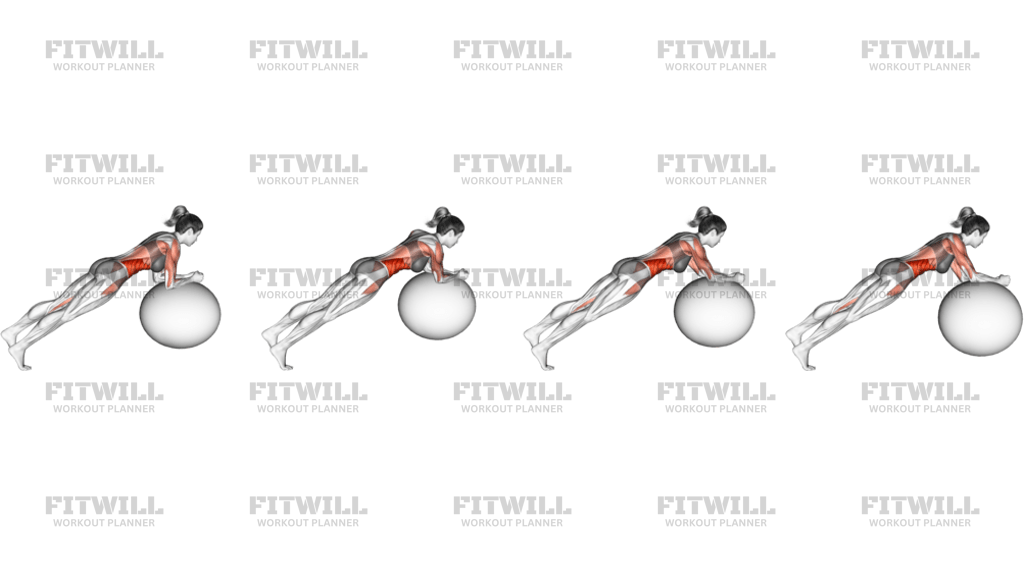
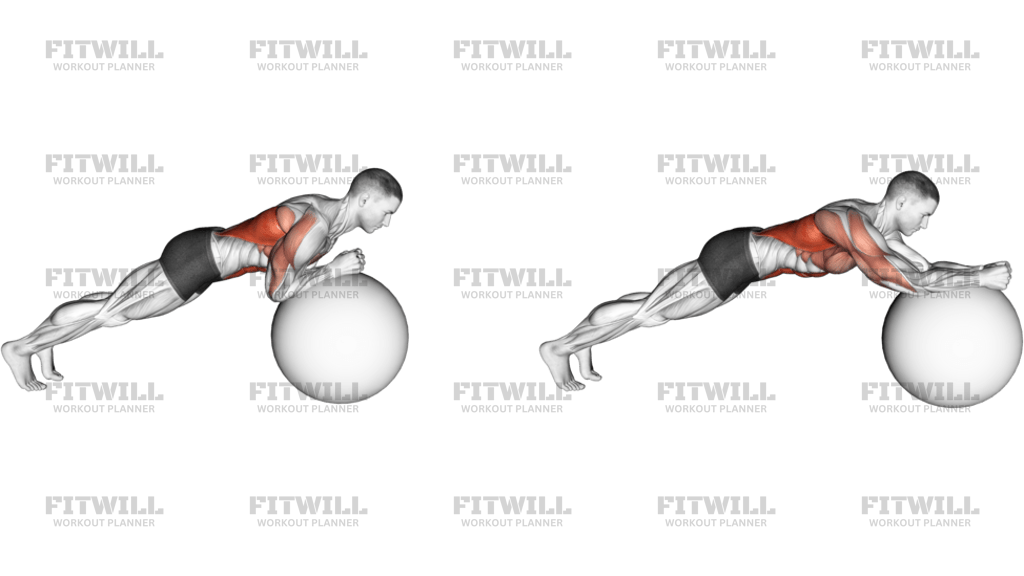
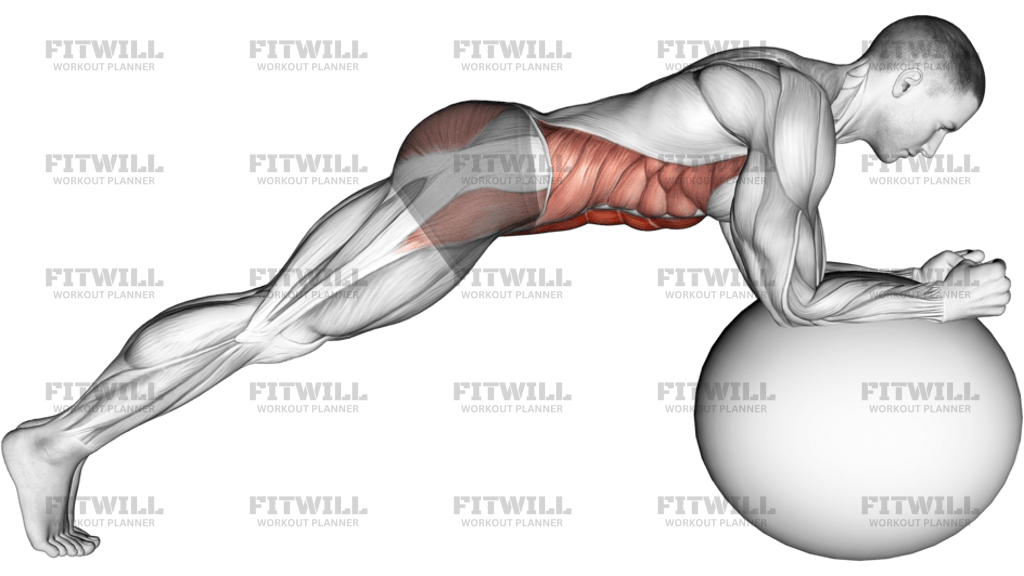
Stability Ball Front Plank is a forearm plank performed with the forearms supported on a stability ball and the toes anchored on the floor. The exercise challenges the rectus abdominis first, but it also demands a coordinated brace from the obliques, transverse abdominis, glutes, shoulders, and hip stabilizers so the torso does not twist, sag, or pike as the ball shifts under you.
The unstable support is the main reason this variation matters. A stable floor plank already asks the trunk to resist extension; placing the forearms on a ball adds a constant need to control small forward, backward, and side-to-side corrections. That makes body position more important than effort. If the elbows drift too far in front of the shoulders, or if the hips rise to chase balance, the plank becomes easier in the wrong places and less useful for the core.
Set the forearms across the top of the ball, keep the elbows roughly under the shoulders, and walk the feet back until the body forms a straight line from head to heels. The ribs should stay down, the pelvis should stay level, and the glutes should stay engaged so the low back does not take over. Think about reaching long through the crown of the head while pushing the forearms gently into the ball to keep it from rolling away.
This exercise is usually used for core training, warm-ups, accessory work, or as a controlled finisher when you want trunk endurance without loading the spine directly. It is not a speed exercise. Short holds with high-quality posture are more valuable than long holds done with a collapsing back or shaky shoulders. Breathe behind the brace and keep the neck neutral so the tension stays in the trunk rather than creeping into the jaw or upper traps.
Because the ball can move unexpectedly, use a clear floor area and start with a short hold if you are new to the variation. If the shoulders feel unstable, shorten the lever by moving the feet slightly wider apart or using a more forgiving plank variation first. The goal is a steady line, quiet hips, and consistent abdominal tension while the ball stays controlled under the forearms.
Fitwill
Log Workouts, Track Progress & Build Strength.
Achieve more with Fitwill: explore over 9600 exercises with images and videos, access built-in and custom workouts, perfect for both gym and home sessions, and see real results.
Start your journey. Download today!




Instructions
- Place a stability ball on a non-slip surface and kneel behind it with your forearms resting across the top of the ball.
- Position your elbows under your shoulders, clasp your hands or keep them parallel, and keep your shoulders away from your ears.
- Walk your feet back until your body makes a straight line from head to heels with your toes planted firmly on the floor.
- Brace your abs, squeeze your glutes, and tuck your pelvis slightly so your lower back does not arch.
- Press your forearms gently into the ball to steady it while keeping the ribs down and the neck long.
- Hold the plank without letting the hips sag, rotate, or pike as the ball shifts under you.
- Breathe in small controlled breaths through the brace instead of holding your breath the entire time.
- When the hold is finished, lower your knees to the floor and reset before the next rep or set.
Tips & Tricks
- Keep the elbows stacked close to the shoulders; if they slide too far forward, the low back usually starts to sag.
- Treat the ball like a moving support, not a place to lean and relax into. Light pressure through the forearms is enough to control it.
- Keep the feet about hip width apart at first; a narrower stance makes the ball drift more and usually exposes weak anti-rotation control.
- Squeeze the glutes hard enough that the pelvis stays level. If the hips are soft, the plank will dump into the lumbar spine.
- Think about pulling the sternum away from the ball while keeping the ribs knitted down to avoid overextending.
- Do not let the head lead the position. A forward chin or craned neck usually comes with a broken trunk line.
- Stop the set as soon as the ball starts wobbling side to side faster than you can correct it.
- Use shorter holds and perfect alignment before chasing longer time under tension.
Frequently Asked Questions
What does the stability ball front plank train most?
It mainly trains the abs and deep core to resist extension, with the shoulders and glutes helping keep the body rigid.
Where should my forearms go on the ball?
Place both forearms across the top of the ball with the elbows roughly under the shoulders so you can hold a straight line without reaching too far forward.
Should my hands grip the ball or stay relaxed?
Keep the forearms pressing into the ball and the hands relaxed or lightly clasped. A hard grip usually adds tension without improving the plank.
How do I keep my lower back from arching?
Tighten the glutes, draw the ribs down, and keep a small posterior pelvic tilt so the trunk stays stacked instead of hanging into the lumbar spine.
Is this harder than a floor forearm plank?
Usually yes. The ball forces constant small corrections, so the core and shoulders have to stabilize more aggressively than they do on the floor.
Can beginners use this version safely?
Yes, but start with short holds and a wider foot stance. If the ball feels too unstable, build up with a floor plank first.
What is the most common mistake in this exercise?
Letting the hips sag or pike while trying to balance the ball. The hold should stay level from shoulders through heels.
How should I breathe during the hold?
Take short, controlled breaths behind the brace. Holding your breath for the entire plank usually causes extra neck and shoulder tension.