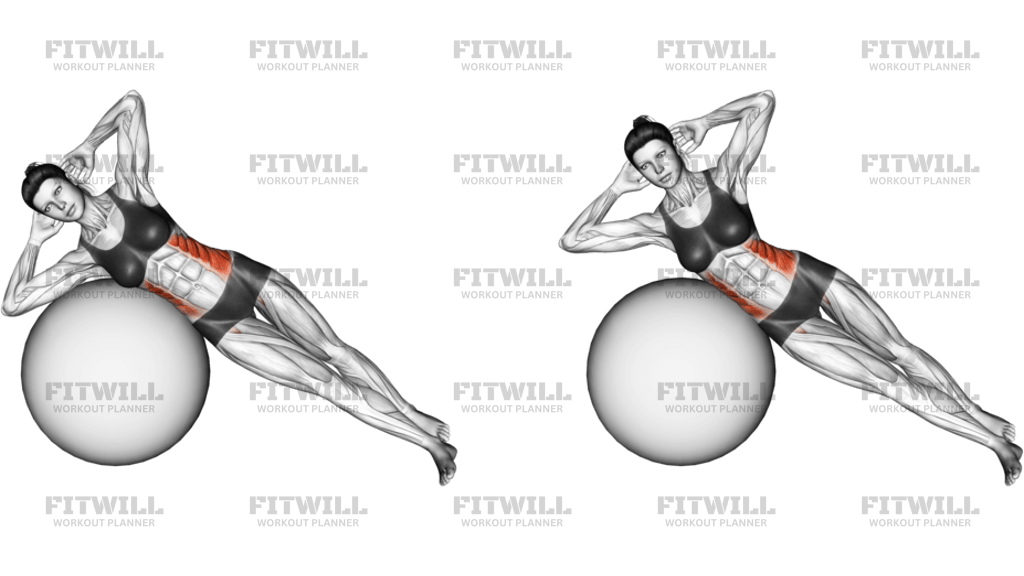
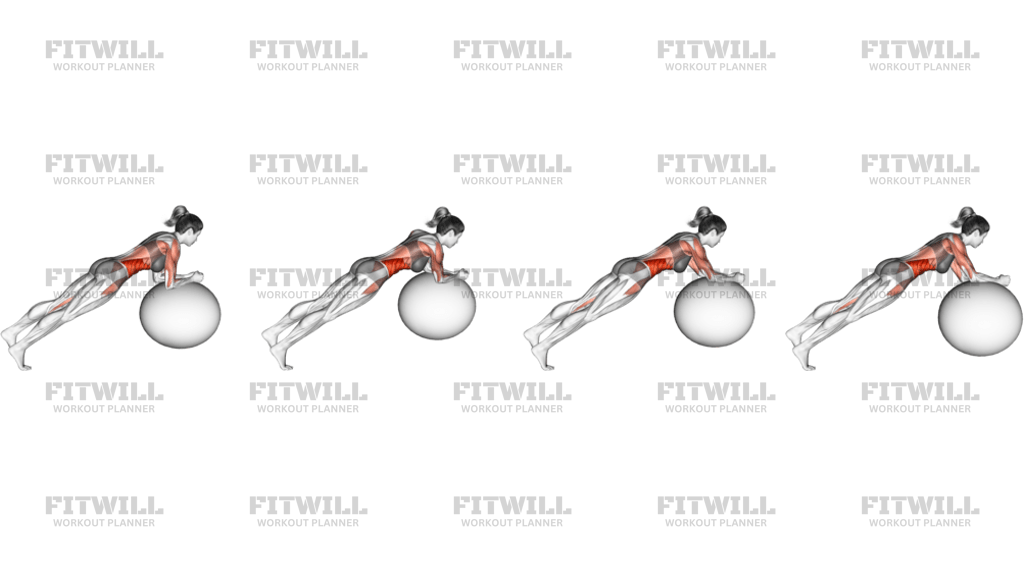
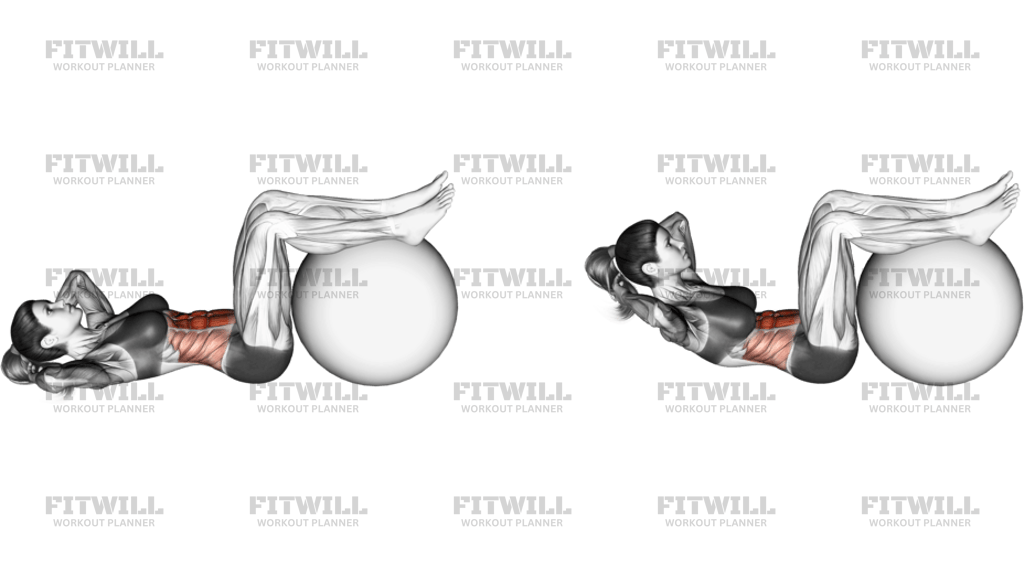
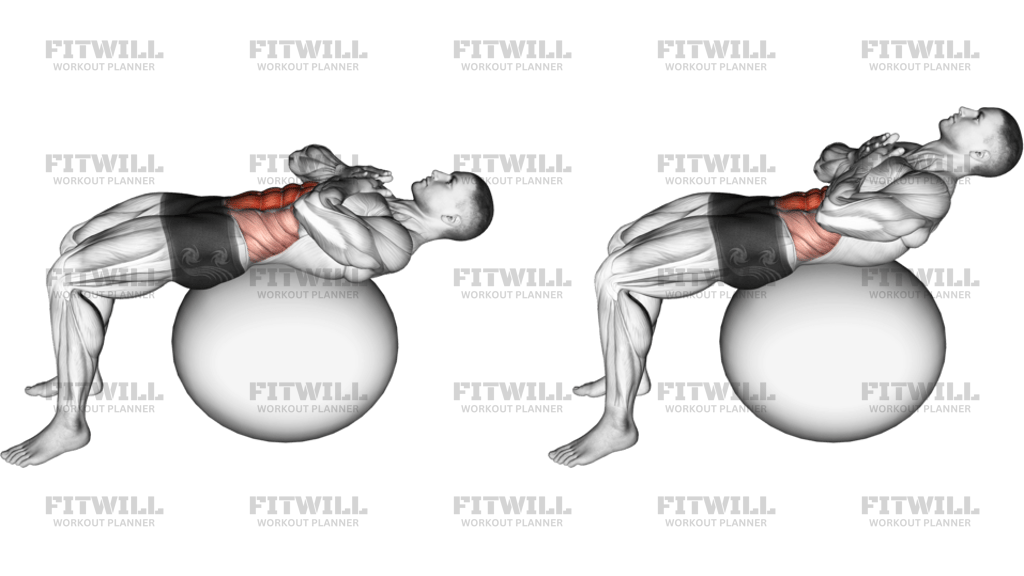
Prone Twist On Stability Ball
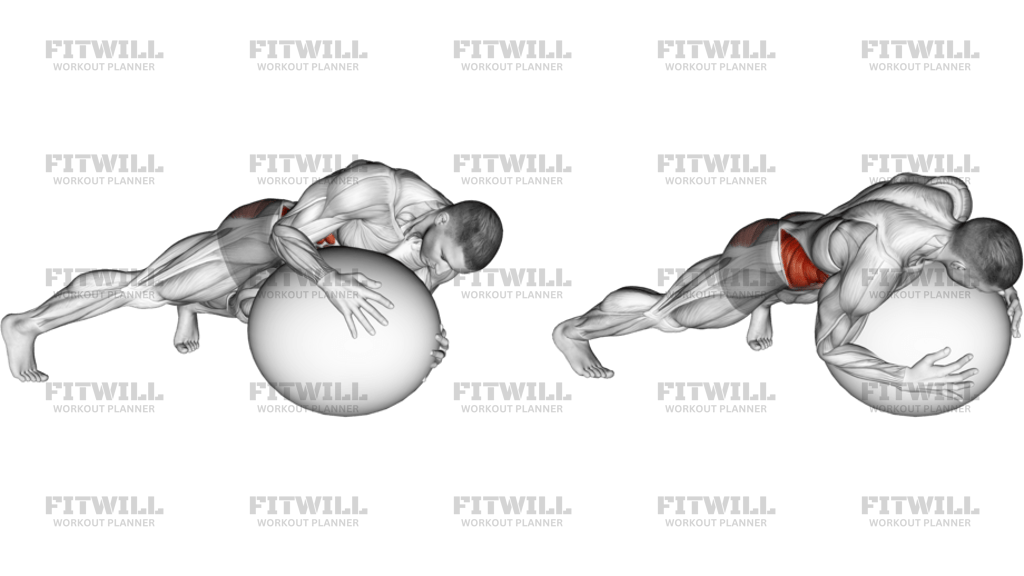
Prone Twist On Stability Ball is a controlled core exercise built around small, deliberate trunk rotation while your torso stays supported on a stability ball. The ball makes the movement more demanding because your midsection has to resist rolling, sliding, and overextending while you twist. That makes the exercise useful for training rotational control rather than chasing a big range of motion.
The main muscles involved are the abs, with the obliques and deep core working to keep the torso organized as you rotate. Your hips and shoulder girdle help stabilize the position, but they should not take over the movement. When the setup is correct, the exercise feels like the ribcage turns over a steady base while the pelvis stays quiet.
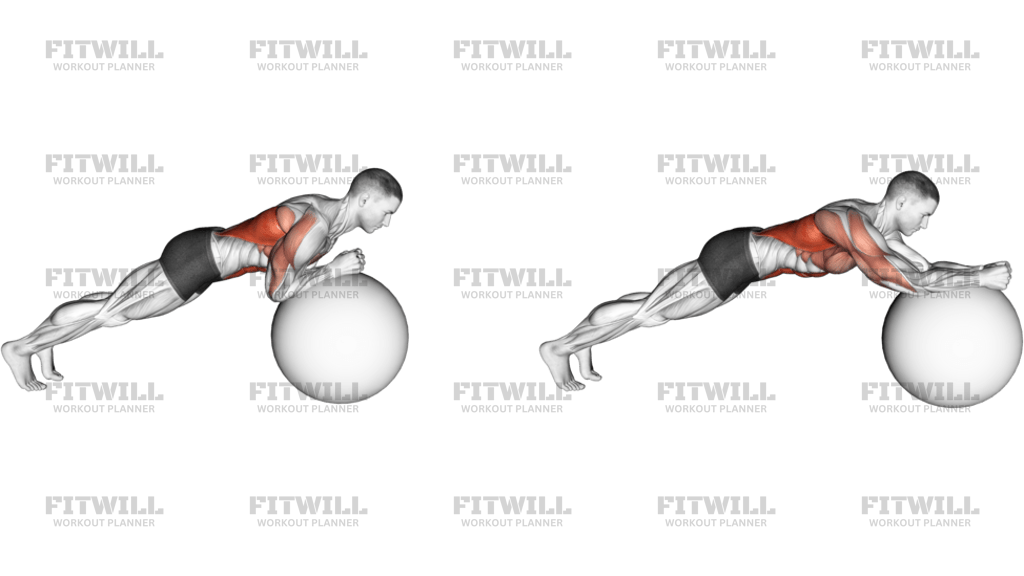
Set the ball under the lower ribs and stomach so your chest is supported without collapsing onto it. Walk your feet back until you can stay long through the legs with your toes on the floor, then place your hands where they give you the most control, either braced on the ball or lightly on the floor. The exact support matters because if the ball sits too high or too low, the twist becomes harder to control and the lower back tends to arch.
Each repetition should be slow and deliberate. Rotate the chest and shoulders a few inches to one side, keep the hips as level as possible, and feel the side of the waist shorten at the end of the turn. Return to center under control, then repeat to the other side without bouncing or letting the ball roll away from you. The range is usually smaller than people expect, and that is normal for this exercise.
Prone Twist On Stability Ball fits well in a core block, a warm-up for rotational training, or a lighter accessory slot when you want to challenge stability without heavy loading. It is especially useful for anyone who needs better trunk control for sports, lifting, or general movement quality. If the set starts to feel like a shoulder hold or a low-back arch instead of a waist exercise, shorten the twist, widen the feet, or lower the ball slightly until you can keep the body line steady.
[ Workout Log & Planner ]
Put your next workout in Fitwill
Keep your plan and training log ready when you are.


Instructions
- Kneel beside the stability ball, drape your lower ribs and stomach over the top, and walk your feet back until your toes can support you behind the ball.
- Set your hands on the ball just in front of your shoulders or brace lightly on the floor if that is steadier, and keep your head aligned with your spine.
- Straighten your legs and form a long line from head to heels, with the ball under your midsection and your weight shared between the ball and your toes.
- Draw your ribs down, tighten your abs, and keep your pelvis level before you start the twist.
- Rotate your chest and shoulders a few inches to one side while keeping your hips mostly facing the floor.
- Squeeze the side of your waist at the end of the twist, then exhale as you return to center without bouncing off the ball.
- Repeat to the other side with the same range and tempo, keeping the movement slow enough that the ball never rolls away.
- Lower your knees to the floor and reset if your low back starts to arch, your neck tenses, or you can no longer keep the torso controlled.
Tips & Tricks
- Place the ball under your lower ribs, not high on the chest, so the twist comes from the waist instead of the shoulders.
- Keep your feet slightly wider if the ball wobbles when you rotate.
- Make the rotation small; this is a control drill, not a maximal spinal twist.
- Think ribcage turns over the ball instead of swinging the hips.
- Keep a soft bend in the elbows if your hands are on the ball so your shoulders do not jam forward.
- Exhale into the twist and finish each rep with the abs tight, not the lower back arched.
- If the front of the hips cramp, move the ball a little lower and reduce the twist range.
- Stop the set when the ball starts sliding or your chest drops out of position.
Frequently Asked Questions
What muscles does Prone Twist On Stability Ball work most?
It mainly trains the abs and obliques, with the deep core and shoulders helping to stabilize the ball.
Should my hands stay on the ball or on the floor in Prone Twist On Stability Ball?
Use whichever support lets you keep the torso stable; hands on the ball make the exercise more challenging, while the floor gives you more balance.
How far should I twist in Prone Twist On Stability Ball?
Only rotate far enough that your ribcage turns and the waist tightens; if your hips are rolling all over, the range is too large.
Is Prone Twist On Stability Ball good for beginners?
Yes, if you keep the twist small and move slowly. Beginners should focus on staying balanced on the ball before chasing more range.
Why do I feel Prone Twist On Stability Ball in my lower back?
Usually the ball is too high, the ribs are flared, or the twist is too aggressive. Reposition the ball lower and shorten the rotation.
Can I add weight to Prone Twist On Stability Ball?
A light dumbbell or plate can make it harder, but only after you can keep the ball and pelvis stable without wobbling.
What is the biggest mistake on Prone Twist On Stability Ball?
Letting the hips spin while the shoulders move separately. Keep the torso organized so the rotation comes from the midsection.
Where should I use Prone Twist On Stability Ball in a workout?
It works well in a core block, on a light accessory day, or as a warm-up for sports that involve rotation and trunk control.