Assisted Lying Gastrocnemius Stretch
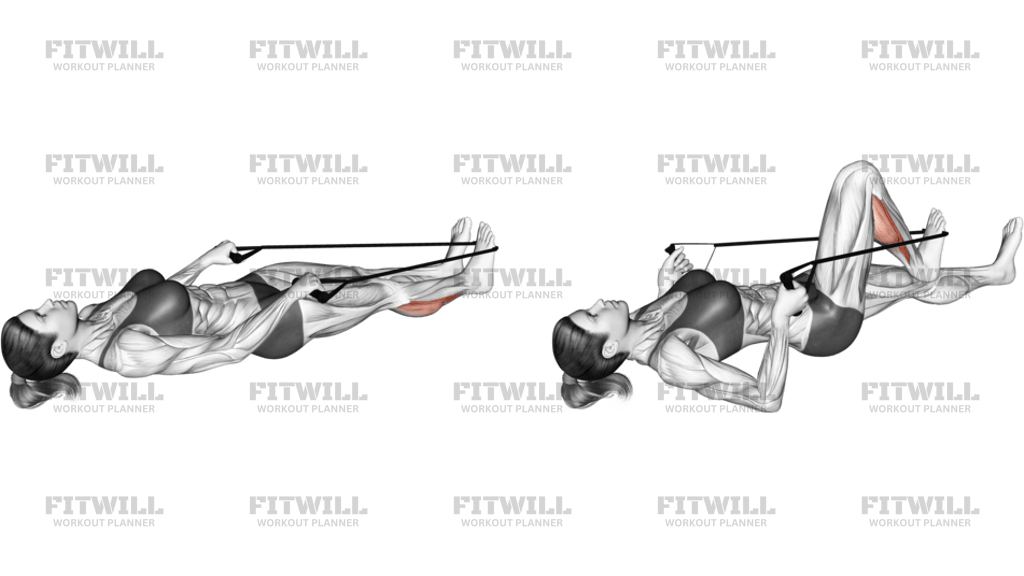
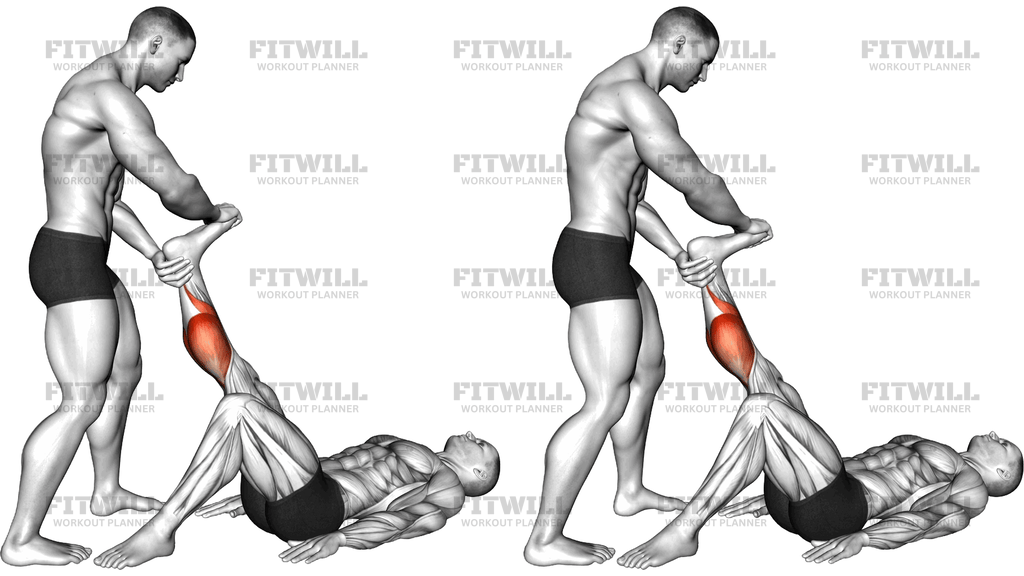
Assisted Lying Gastrocnemius Stretch is a partner-assisted calf stretch performed while you lie on your back on a mat. The working leg is lifted with the knee straight, and the helper guides the foot into dorsiflexion so the upper calf, especially the gastrocnemius, gets a direct stretch. Because the knee stays extended, this version targets the gastrocnemius more than a bent-knee calf stretch would.
The setup matters because the stretch changes quickly if the ankle twists or the hip lifts. A good rep starts with the pelvis relaxed on the floor, the leg line stacked, and the foot held in a neutral path so the pressure stays on the calf instead of the knee or lower back. The partner should apply a steady pull through the forefoot or arch, not a sudden yank on the toes.
Use a smooth range that feels intense but still controllable. As the foot comes back toward the shin, the calf should lengthen without cramping or forcing pain. Hold the position while breathing slowly, then release with the same control you used to enter it. If the heel turns in, the knee bends, or the pelvis lifts, the stretch becomes less specific and usually less comfortable.
This exercise is commonly used after running, jumping, calf training, or any session where the ankles feel tight and you want to restore length before moving on. It also works well in warm-ups and mobility blocks when the goal is to open the lower leg without loading the spine. The movement is simple, but the quality of the partner’s assistance and the calmness of the setup determine how useful the stretch feels.
Treat it as a precise mobility drill rather than a contest for maximum range. A lighter, cleaner stretch with even breathing is usually more effective than forcing the foot farther back. If you feel sharp pain in the Achilles, ankle, or knee, back off immediately and shorten the range.
Fitwill
Log Workouts, Track Progress & Build Strength.
Achieve more with Fitwill: explore over 9600 exercises with images and videos, access built-in and custom workouts, perfect for both gym and home sessions, and see real results.
Start your journey. Download today!




Instructions
- Lie on your back on an exercise mat and keep your arms relaxed at your sides.
- Lift one leg toward the ceiling with the knee straight and the opposite leg resting comfortably on the floor.
- Have your partner stand at the foot end and support the forefoot or arch, not the toes.
- Keep the heel, ankle, and knee in one line while the partner slowly draws the foot toward the shin.
- Let the upper calf lengthen until you feel a firm gastrocnemius stretch, but do not let the ankle twist.
- Keep the pelvis heavy on the mat and avoid arching the low back as the stretch gets deeper.
- Hold the end position and breathe slowly and evenly through the stretch.
- Release the foot with control, lower the leg if needed, and repeat on the other side.
Tips & Tricks
- Keep the working knee straight if you want the gastrocnemius to take the stretch, because bending the knee shifts emphasis away from it.
- Ask the partner to pull through the sole or arch instead of cranking on the toes, which gives a cleaner line of force.
- If the foot turns inward or outward, reset the ankle before holding the stretch.
- A small amount of tension is enough; forcing a bigger range usually makes the Achilles and foot tense up.
- Use a long exhale to soften the calf rather than bouncing into a deeper position.
- If the hamstring or low back starts lifting the leg, reduce the angle and keep the pelvis heavy on the mat.
- Warm calves usually respond better than cold calves, so this works well after walking, cycling, or leg training.
- Stop the stretch if you feel sharp pain, numbness, or a cramping sensation that does not ease when the pressure is reduced.
Frequently Asked Questions
What muscle does Assisted Lying Gastrocnemius Stretch target most?
It primarily targets the gastrocnemius, the larger upper calf muscle that crosses the knee and ankle.
Can beginners perform this exercise?
Yes. Beginners usually do well with gentle partner pressure and a shorter hold until they learn the right stretch intensity.
Where should the partner hold my foot?
The best grip is across the forefoot or arch so the partner can pull the ankle into dorsiflexion without twisting the toes.
Why does the knee need to stay straight?
The gastrocnemius crosses the knee joint, so keeping the knee extended puts it on a more direct stretch.
Should I feel this in the Achilles tendon?
You should feel a strong calf stretch, not sharp tendon pain. Back off if the pressure shifts into the Achilles or ankle joint.
How long should I hold the stretch?
Hold it long enough to feel the calf relax, usually in a controlled static hold rather than repeated bouncing.
Can I do this without a partner?
Yes, a strap or towel can substitute for the partner, but the assisted version gives finer control over the ankle angle.
What is a common mistake to avoid?
The most common mistake is letting the foot twist or the low back arch, which reduces the stretch quality and can irritate the joint.