Resistance Band Assisted Nordic Hamstring Curl
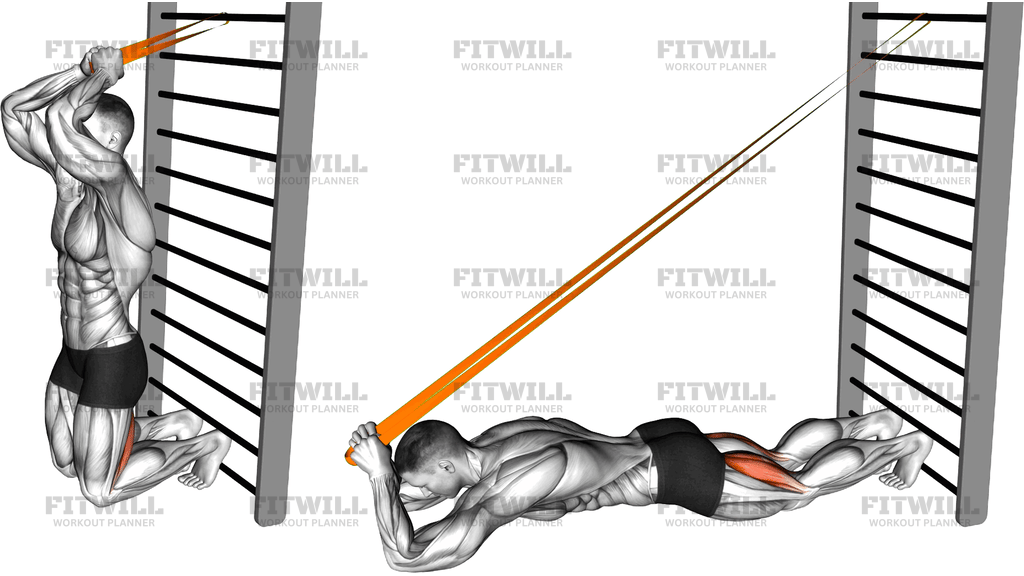
Resistance Band Assisted Nordic Hamstring Curl is a demanding hamstring-strength exercise built around one job: control a slow forward fall from a tall kneeling position and then use your hamstrings to resist the drop. The resistance band reduces the load at the hardest part of the rep, which makes the movement more accessible while still demanding serious posterior-chain control. It is a useful choice for athletes, lifters, and anyone training eccentric hamstring strength, knee-flexion control, and trunk stiffness.
The setup matters more here than in many bodyweight moves. Your knees need a padded surface, your ankles must be locked in securely, and the band has to pull you from the correct angle so it assists the return without yanking your torso out of position. When the line of pull is right, you can hinge from the knees with your hips extended and your ribs stacked over your pelvis instead of collapsing at the waist.
During the lowering phase, stay tall from the knees down and resist the descent as long as possible. Keep your glutes lightly engaged, your hips extended, and your hands ready to catch you near the floor when the hamstrings can no longer hold the line. The return should be smooth and assisted by the band, not a violent snap back to vertical. The goal is a controlled eccentric and an organized reset for each repetition.
Resistance Band Assisted Nordic Hamstring Curl is especially useful as accessory work for sprinting, jumping, and any program that needs stronger hamstrings under lengthened tension. It also works well in strength blocks when you want to build hamstring capacity without jumping straight to full unassisted Nordics. Because the movement is so specific, quality beats quantity: crisp body position, patient lowering, and a clean assisted return matter more than chasing a high rep count.
Keep the neck neutral and the chin slightly tucked so the upper body stays long instead of folding at the throat. If the band feels too strong or too loose, adjust the anchor point before you start the set. A good rep should feel like a controlled hinge from the knees, with the hamstrings doing most of the braking and the band only helping you get back to the start.
[ Workout Log & Planner ]
Put your next workout in Fitwill
Keep your plan and training log ready when you are.


Instructions
- Kneel on a padded surface with your ankles secured under a sturdy anchor or partner hold, and loop the resistance band high across your chest or under your arms so it can assist you from the front.
- Stack your hips over your knees, keep your torso tall, and set your hands at your chest or shoulders so you can catch yourself when the descent gets too hard to control.
- Brace your abs, squeeze your glutes lightly, and keep your ribs down before you leave the tall kneeling position.
- Lean forward from the knees only, lowering your body as one long line instead of bending at the hips.
- Resist the fall as long as you can, keeping your hamstrings loaded and your neck neutral while the band supports some of your bodyweight.
- Reach forward with your hands and catch yourself near the floor once you can no longer hold the descent.
- Use the band to help you pull back to tall kneeling in a smooth line instead of jerking your torso upright.
- Reset with full body tension, re-check your ankle anchor and band position, and repeat for the planned reps.
Tips & Tricks
- Move the band anchor higher or lower until it helps most at the bottom of the rep without pulling your chest forward early.
- Keep your hips extended; if your butt breaks back toward your heels, you are turning the Nordic into a hip hinge.
- Lower only as far as you can keep the thighs and torso in one long line, then catch yourself before the torso folds.
- Use your hands as a safety catch, not a push-off point, so the hamstrings still control the negative phase.
- A softer band makes the movement harder; a stronger band makes it easier. Pick the lightest assistance that still lets you keep position.
- If your knees slide, add more padding or a grippier mat under them before starting the set.
- Keep the descent slow enough that you can feel the hamstrings lengthen instead of dropping into the bottom position.
- Stop the set when you can no longer return smoothly with the band and start leaning back by momentum.
Frequently Asked Questions
What muscle does Resistance Band Assisted Nordic Hamstring Curl target most?
It primarily targets the hamstrings, especially during the slow lowering phase.
Where should the resistance band sit during Resistance Band Assisted Nordic Hamstring Curl?
It should sit high on the torso, usually across the chest or under the arms, so it can help you return without changing the kneeling line.
How far should I lower on Resistance Band Assisted Nordic Hamstring Curl?
Lower as far as you can keep the body long from knees to shoulders. If the hips fold or you drop suddenly, the range is too deep for that set.
Is Resistance Band Assisted Nordic Hamstring Curl good for beginners?
Yes, if the band provides enough help and you start with a very small range. Beginners should practice a slow descent and a smooth assisted return before trying full-range reps.
What is the biggest mistake in Resistance Band Assisted Nordic Hamstring Curl?
The most common error is bending at the hips and turning it into a partial hinge. The movement should stay centered at the knees while the torso stays long.
Should my hands push me up on Resistance Band Assisted Nordic Hamstring Curl?
No. Use your hands only to catch yourself once the eccentric is over, then let the band assist the return to tall kneeling.
What equipment do I need for Resistance Band Assisted Nordic Hamstring Curl?
You need a padded kneeling surface, a secure ankle anchor or partner hold, and a resistance band anchored in front of you.
How can I make Resistance Band Assisted Nordic Hamstring Curl harder over time?
Use a lighter band, reduce the amount of hand catch you rely on, and slow the lowering phase while keeping the same body line.
What should I do if my knees hurt during Resistance Band Assisted Nordic Hamstring Curl?
Add thicker padding, check that your ankles are anchored evenly, and shorten the range until the pressure is tolerable.
What makes Resistance Band Assisted Nordic Hamstring Curl useful in training?
It builds eccentric hamstring strength and control, which carries over well to sprinting, jumping, and posterior-chain work.