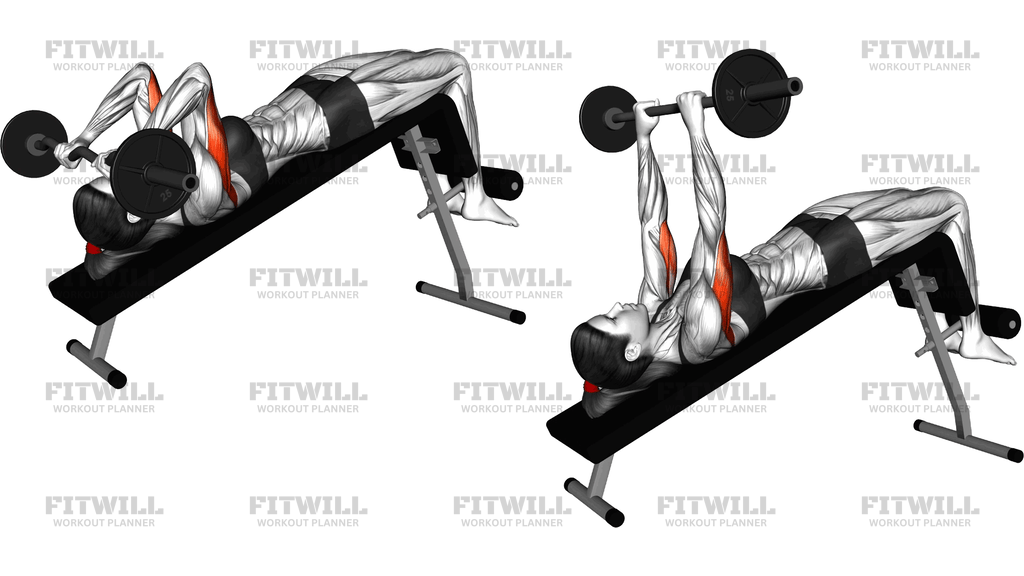
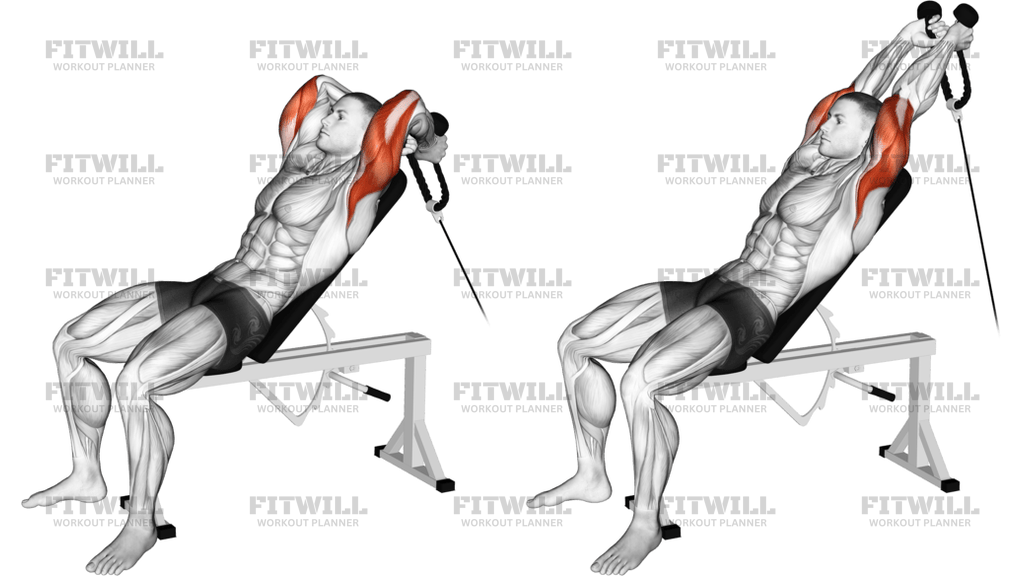
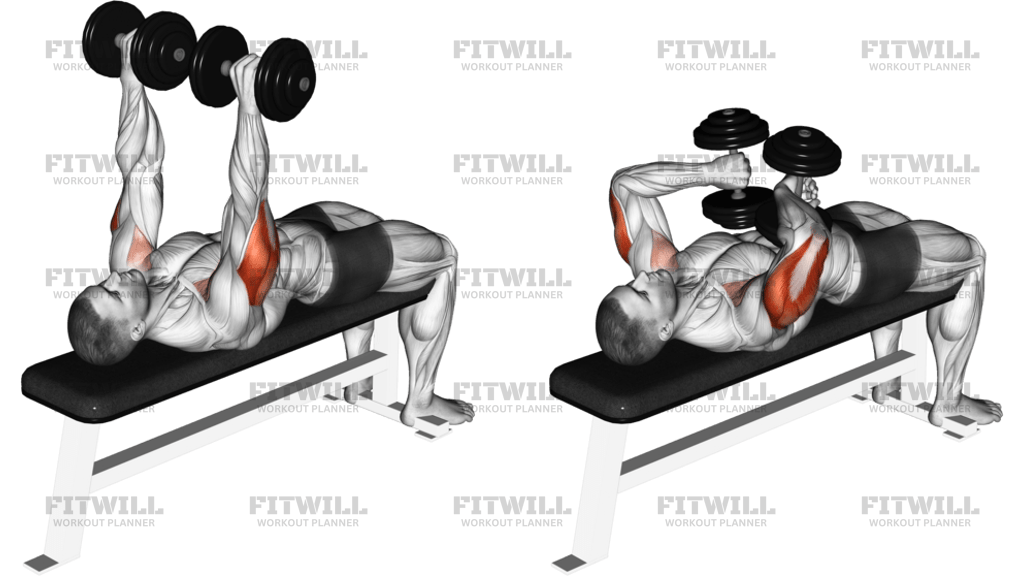
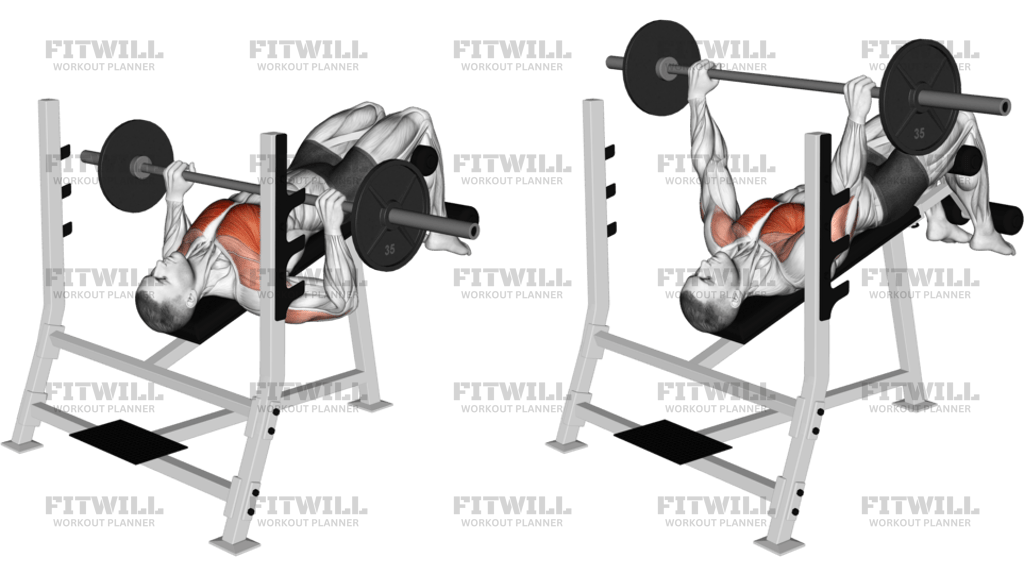
Barbell Seated Close-Grip Behind Neck Triceps Extension
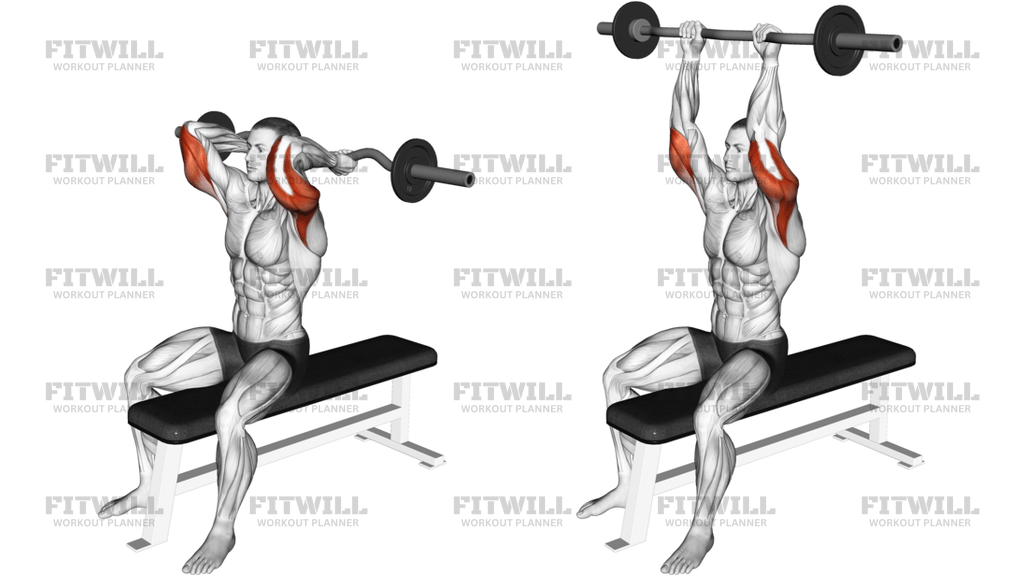
Barbell Seated Close-Grip Behind Neck Triceps Extension is a seated overhead triceps movement that keeps the upper arms working through a long, controlled range. You sit on a flat bench, hold a barbell with a narrow grip, and lower it behind the head before extending it back to the overhead lockout. The exercise is built around elbow extension, so the triceps do most of the work while the forearms, shoulders, and trunk help keep the bar and torso stable.
The behind-neck start matters because it puts the triceps under tension before the rep begins and encourages a deeper stretch at the elbow joint. That setup also demands better shoulder position than a standard standing pressdown-style movement, so the load should stay honest and the torso should stay tall. In this variation, the image shows a flat bench setup with no back support, which means the bench, feet, and trunk all help you stay stacked while the elbows move.
Good reps are smooth and deliberate. The bar should travel from just behind the head to directly overhead without turning into a press, a body swing, or a flare-heavy shoulder movement. Keep the elbows relatively close together and pointed upward, let the forearms follow the bar, and avoid letting the upper arms drift so far forward that the shoulders take over. A controlled descent is important here because it preserves the line of pull and keeps the bar path repeatable.
This is a useful accessory movement when you want direct triceps work with a long range of motion and a seated posture that limits cheating. It fits better as a focused assistance exercise than as a max-load lift. Beginners can use it if they start light, keep the range pain-free, and avoid forcing the shoulders into a position that feels cramped or unstable.
If the bar path feels awkward, reduce the load and shorten the range slightly until the elbows and shoulders move cleanly together. The goal is not to crank the bar as far behind the neck as possible, but to maintain tension on the triceps through a controlled overhead extension. When done well, it is a precise triceps builder with a strong stretch at the bottom and a clear lockout at the top.
[ Workout Log & Planner ]
Put your next workout in Fitwill
Keep your plan and training log ready when you are.


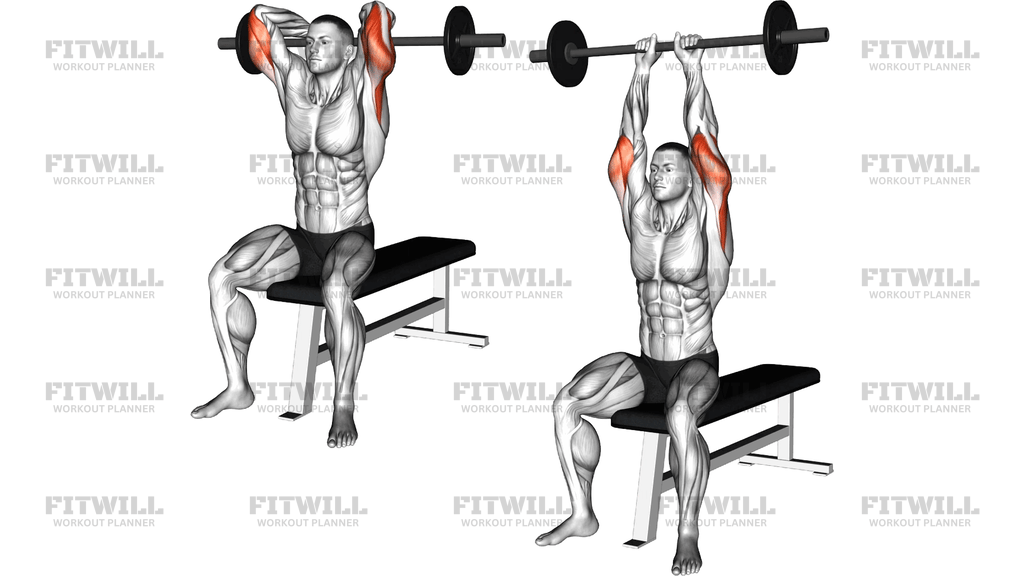
Instructions
- Sit on a flat bench with your feet planted firmly and your torso tall, then hold the barbell with a close grip behind your head.
- Brace your midsection, keep your chest lifted, and point your elbows upward instead of letting them drift wide.
- Start with the bar just behind the crown of your head and the forearms close to vertical.
- Press the bar upward by extending your elbows until your arms are straight overhead.
- Squeeze the triceps at the top without locking the shoulders forward or leaning back.
- Lower the bar under control back behind your head until the triceps are stretched but the shoulders stay comfortable.
- Keep your neck relaxed and breathe out as you extend, then inhale as you lower.
- Finish the set by bringing the bar to a stable rack position or to a safe pause above the bench.
Tips & Tricks
- Keep the bar path tight; if it drifts too far behind the head, the shoulders usually take over.
- A narrower grip usually makes the triceps work harder, but don't bring the hands so close that the wrists collapse inward.
- Stay seated tall instead of arching back to turn the lift into a seated press.
- Lower the bar slowly enough that you can feel the triceps lengthen, not bounce off the bottom.
- If your elbows flare hard to the sides, the movement often shifts away from clean triceps extension.
- Choose a load that lets you keep the upper arms nearly fixed while only the elbows move.
- Stop a rep short of any shoulder pinch or neck strain; this variation should feel controlled, not jammed.
- Use smooth breathing so you do not lose trunk position when the bar leaves the bottom.
Frequently Asked Questions
What muscle does Barbell Seated Close Grip Behind Neck Triceps Extension target most?
The triceps do the primary work, especially through elbow extension from the behind-neck starting position.
Can beginners perform this exercise?
Yes, but beginners should keep the load light, sit tall on the bench, and use a pain-free range before adding weight.
Where should the bar start for the seated behind-neck version?
It should start just behind the head with the elbows bent and pointing upward, not drifting far back behind the shoulders.
Should my elbows stay tucked in or flare out?
Keep them relatively close together and pointed up. A little natural motion is fine, but wide flaring usually shifts stress away from the triceps.
How heavy should I train this movement?
Use a weight that lets you control the bar through the full lower-and-lift path without leaning back or losing the elbow position.
Why is a flat bench helpful here?
The bench gives you a stable seated base so the torso can stay stacked while the elbows do the work overhead.
What should I avoid if my shoulders feel crowded behind my head?
Shorten the range slightly, lighten the bar, and stop before the bottom position turns into a shoulder pinch.
Is this more of a strength or accessory exercise?
It usually works best as accessory triceps work, where strict control and a solid stretch matter more than maximal load.
How should I breathe during each repetition?
Inhale as the bar lowers behind your head, then exhale as you extend to the overhead lockout.