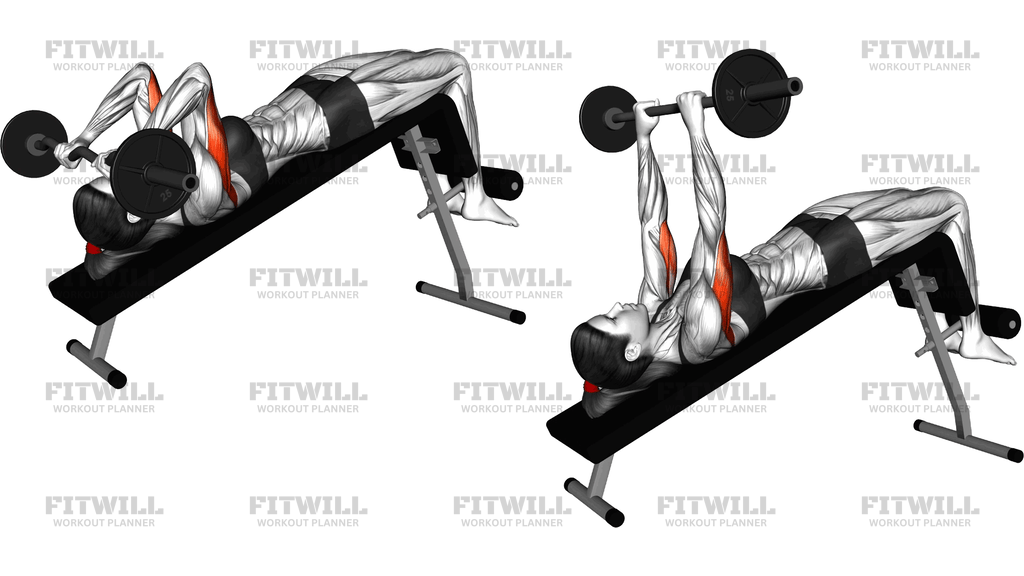
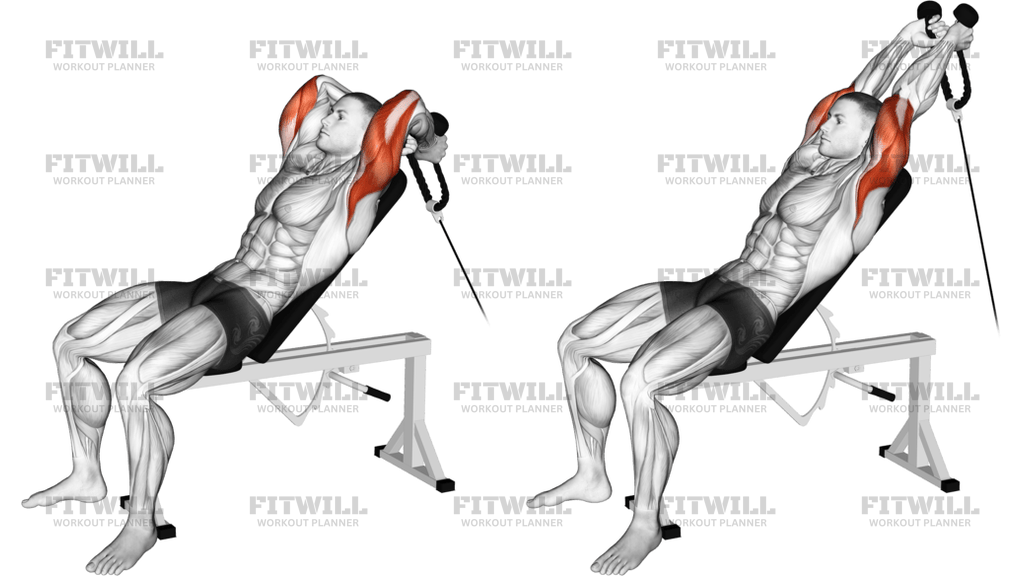
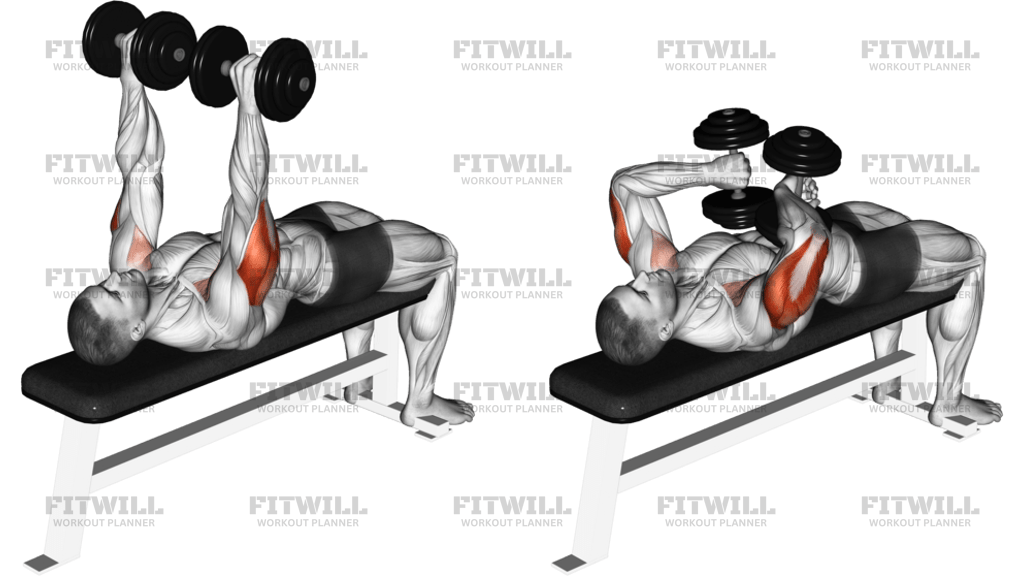
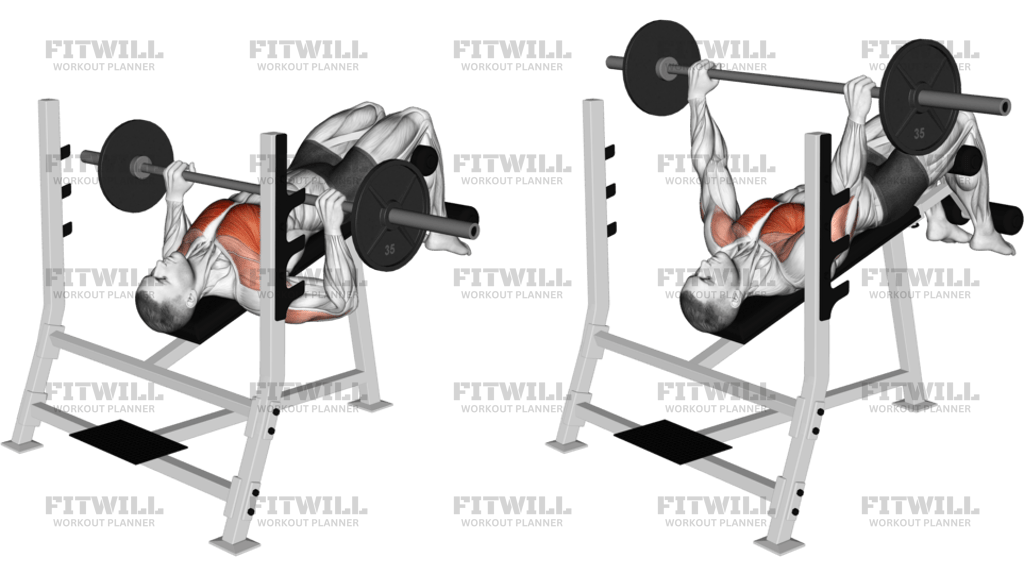
Barbell Incline Close-Grip Bench Press
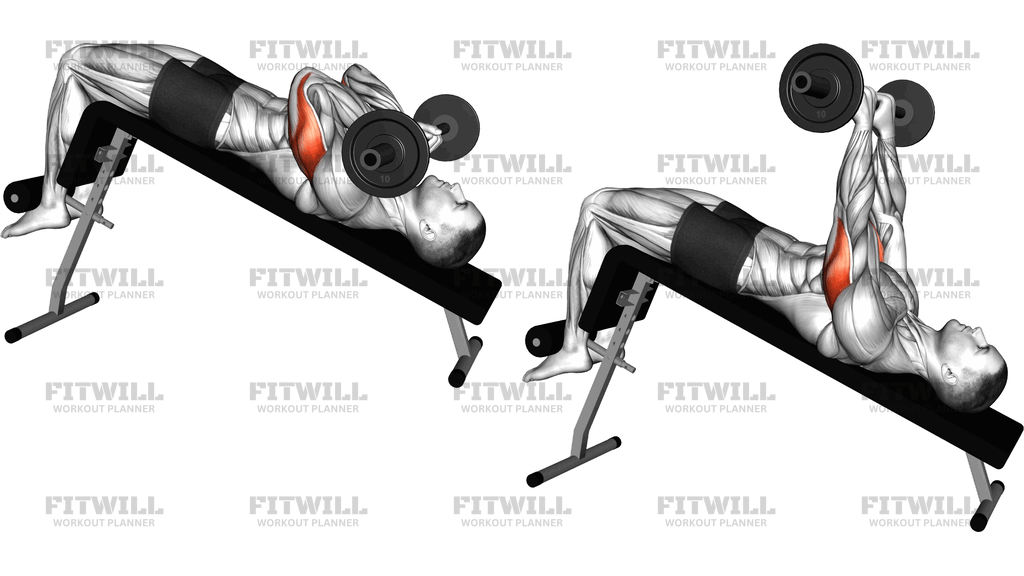
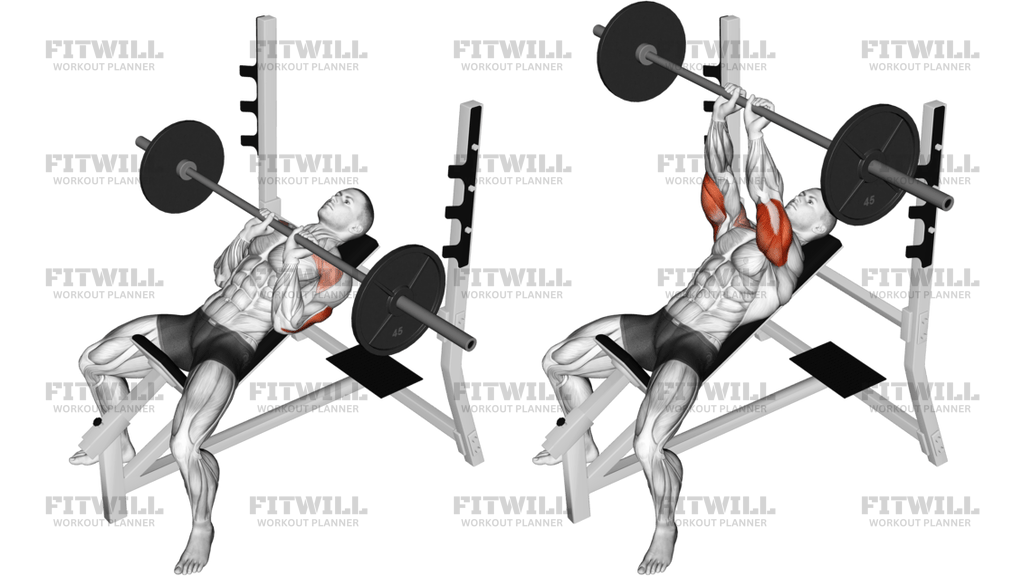
Barbell Incline Close-Grip Bench Press is a pressing variation built around a narrow barbell grip and an inclined bench. The setup shifts more work toward the triceps while still involving the upper chest and front shoulders, so it is useful when you want a pressing movement that feels more elbow-driven than a standard incline bench press.
Barbell Incline Close-Grip Bench Press is especially helpful for lifters who want stronger lockout strength, more triceps size, or a pressing accessory that carries over to bench pressing. The incline angle changes the line of force enough that the bar travels toward the upper chest rather than straight across the mid-chest, which makes the upper torso setup and elbow position matter from the very first rep.
The best version starts with a bench angle that is moderate rather than extreme, usually around 30 to 45 degrees. Lie back with your eyes under the bar, feet planted firmly, and your shoulder blades pulled back and down into the pad. Grip the bar just inside shoulder width so your forearms stay close to vertical when the bar reaches your chest, and stack your wrists over the bar instead of letting them bend back.
During each rep, lower the bar in a controlled line to the upper chest or the base of the collarbone, keeping the elbows tucked enough that the shoulders stay settled on the bench. Touch lightly without bouncing, then press the bar up and slightly back so it finishes over the shoulder line. That small back-and-up path keeps the rep strong and helps you finish without the bar drifting forward or the elbows flaring out.
Barbell Incline Close-Grip Bench Press works well as a main assistance lift after a heavier chest press, or as a triceps-focused movement in a push session. Beginners can use it successfully with an empty bar or light loading as long as the bench, grip, and shoulder position stay consistent. If the wrists start folding back, the elbows flare wide, or the shoulders slide forward at the bottom, the load is too heavy or the grip is too narrow for clean reps.
[ Workout Log & Planner ]
Put your next workout in Fitwill
Keep your plan and training log ready when you are.


Instructions
- Set the bench to a moderate incline of about 30 to 45 degrees and lie back with your eyes under the bar.
- Plant both feet flat on the floor, squeeze your shoulder blades back and down into the pad, and keep your chest high against the bench.
- Grip the bar just inside shoulder width so your wrists stay stacked over your forearms when the bar reaches the bottom.
- Unrack the bar to arm's length above your upper chest with your elbows extended but not hyperlocked.
- Inhale and lower the bar slowly toward the upper chest or lower collarbone while keeping your elbows tucked slightly toward your ribs.
- Pause or lightly touch the bar to the upper chest without bouncing it off the sternum.
- Press the bar up and slightly back toward the shoulder line, driving the triceps to finish the rep.
- Keep your wrists straight and your shoulder blades pinned to the bench as you complete the top position.
- Exhale through the press, then control the next descent with the same bar path and tempo.
- Rack the bar carefully into the hooks before relaxing your upper body.
Tips & Tricks
- Keep the grip only slightly inside shoulder width; if your hands crowd together, the wrists and elbows usually feel it before the triceps do.
- Think about lowering the bar to the upper chest, not the mid-chest, so the incline angle and close grip stay aligned.
- If your elbows flare hard on the way down, widen the grip a little and keep the upper arms closer to a 30 to 45 degree angle from the torso.
- Drive your feet into the floor so your upper back stays pinned to the bench instead of sliding around on the pad.
- Let the bar travel up and slightly back, not straight up, so the finish stays over the shoulder line and the lockout feels stronger.
- Stop the descent when the bar reaches the point where your wrists can stay stacked; forcing a deeper touch often turns into shoulder roll-forward.
- A smaller load is better if the bar speed makes you lose the narrow pressing path or you have to bounce off the chest.
- Keep your neck long and your chin slightly tucked so you do not crank your head up while pressing.
- Use a spotter or set the safety arms high enough that you can re-rack or dump the bar without twisting out of position.
Frequently Asked Questions
What does Barbell Incline Close-Grip Bench Press target most?
It mainly targets the triceps, with the upper chest and front shoulders helping during the press.
How close should my hands be on the bar for Barbell Incline Close-Grip Bench Press?
Use a grip just inside shoulder width. That keeps the triceps as the focus without forcing your wrists and elbows into an overly cramped position.
Where should the bar touch on Barbell Incline Close-Grip Bench Press?
The bar should come down to the upper chest or lower collarbone area, not the lower chest. That matches the incline angle and helps keep the shoulders organized.
Is Barbell Incline Close-Grip Bench Press more for chest or triceps?
It is more of a triceps movement than a chest press, although the upper chest still contributes, especially near the bottom of the rep.
Can beginners do Barbell Incline Close-Grip Bench Press?
Yes, as long as they start light and keep the grip, bench angle, and bar path controlled. An empty bar or light load is usually the right place to begin.
Why do my wrists hurt during Barbell Incline Close-Grip Bench Press?
The grip may be too narrow or the wrists may be bending back under the bar. Stack the bar over the forearms and widen the grip slightly if needed.
How is Barbell Incline Close-Grip Bench Press different from a flat close-grip bench press?
The incline shifts more load toward the upper chest and front shoulders, while the close grip still keeps the triceps as the main driver.
Do I need a spotter for Barbell Incline Close-Grip Bench Press?
A spotter is a good idea for heavier sets because the narrow grip and incline bench make the unrack and re-rack less forgiving.