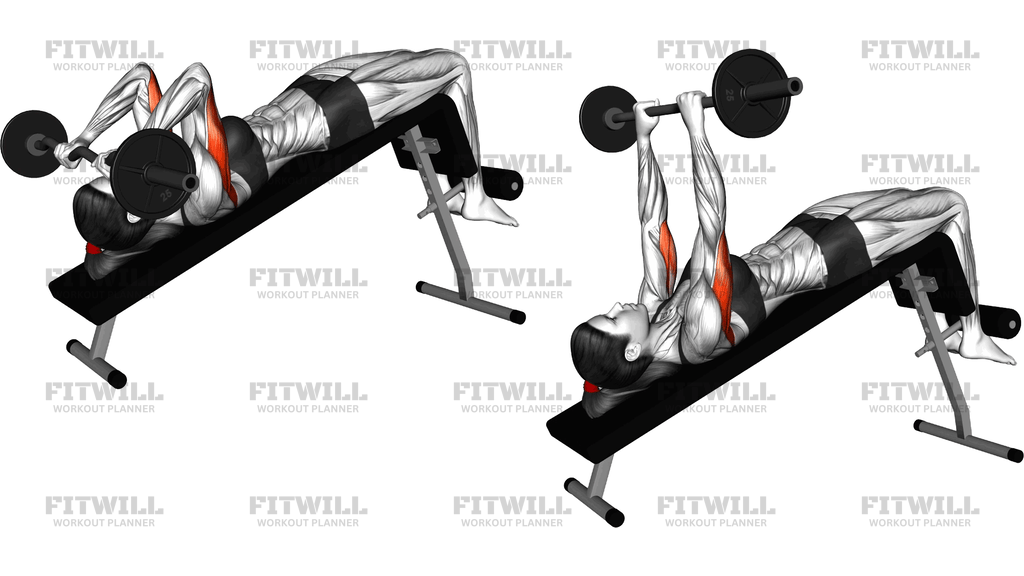
Barbell Lying Triceps Extension
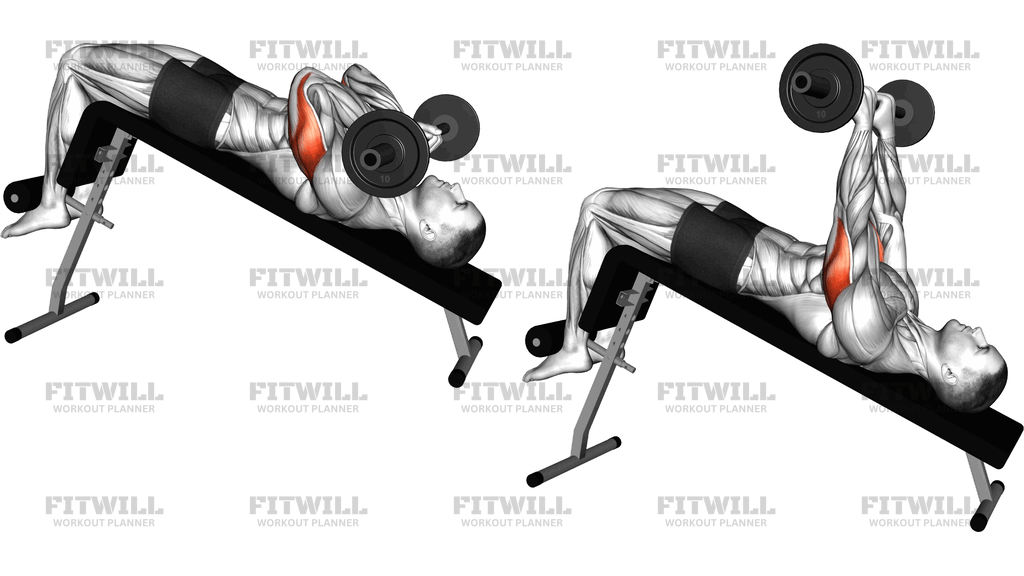
Barbell Lying Triceps Extension is a flat-bench triceps exercise built around elbow extension, not a pressing pattern. You lie back with the bar over your upper chest or face, then lower it in a controlled arc toward your forehead or just behind the head before extending the elbows to return to lockout. That long lever makes the movement feel simple on paper but demanding in practice, because the triceps have to control both the lowering phase and the drive back to the top.
The exercise is especially useful when you want direct triceps work without needing a cable stack or machine. The long head of the triceps is challenged hard because the shoulder stays flexed while the elbow bends and straightens, and the forearms help stabilize the bar so it tracks cleanly. The setup matters because once the upper arms drift, the lift turns into a shoulder movement or a loose bench press instead of a focused elbow extension.
A good rep starts with a solid bench position: feet planted, shoulders set, wrists stacked over the forearms, and the bar path established before you bend the elbows. From there, the elbows stay mostly fixed while the bar travels in a small arc, usually ending near the forehead, hairline, or slightly behind the head depending on shoulder comfort and arm length. The goal is not to slam the bar to the face or push it into a chest press pattern, but to keep tension on the triceps from the top position all the way through the return.
Because the leverage is long, load selection matters more here than on many other arm exercises. A weight that looks moderate can become heavy fast if the elbows flare, the ribs pop up, or the bar drifts too far toward the chest. Controlled tempo, a steady grip, and a calm lower back make the movement feel more stable and help you keep the elbows honest.
Barbell Lying Triceps Extension fits well in an upper-body strength session, an arm-focused accessory block, or any workout where you want direct triceps loading after your main presses. It can be a very effective builder for pressing strength and arm size, but only if the bar path stays smooth and the joints stay organized. Treat it as a precise assistance lift, not a momentum exercise, and use a spotter when the load gets close to your limit.
[ Workout Log & Planner ]
Put your next workout in Fitwill
Keep your plan and training log ready when you are.


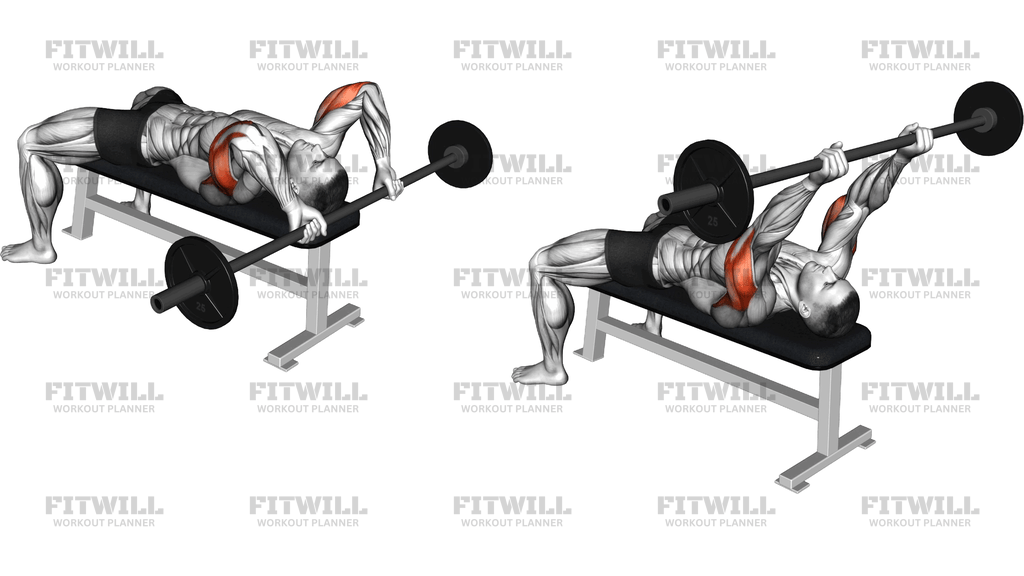
Instructions
- Lie on a flat bench with your eyes under the bar and your feet planted firmly on the floor.
- Grip the bar about shoulder-width apart, wrap your thumbs around it, and stack your wrists over your forearms.
- Unrack or start with the bar held above your upper chest, then lock out the elbows without letting the shoulders roll forward.
- Set your upper arms at a slight angle back from vertical so the bar can travel behind the forehead without drifting into a chest press.
- Lower the bar in a controlled arc by bending only the elbows, keeping the upper arms as still as you can.
- Bring the bar toward your forehead, hairline, or just behind the head, stopping before the shoulders take over or the wrists collapse.
- Press the bar back up by extending the elbows until the arms are straight again, then finish with the bar over the upper chest or face.
- Keep your ribs down, breathe in on the way down, exhale as you extend, and re-rack the bar with locked elbows and steady control.
Tips & Tricks
- Use less load than you would for a bench press; this lift punishes sloppy elbow position quickly.
- If the bar keeps drifting toward your chest, move your upper arms slightly back and make the path more of an arc behind the head.
- Keep your elbows pointed mostly up instead of flaring wide, or the shoulders will steal tension from the triceps.
- Stack the bar over the forearms at the top so the wrists do not bend back as the set gets harder.
- A slower lowering phase helps keep tension on the triceps and makes the bar path easier to repeat.
- If your elbows feel better with a slightly smaller range, stop just above the forehead instead of forcing the bar deeper.
- A spotter is useful when you are benching heavier loads because the bar starts and ends over the face.
- Treat the movement like an isolation lift: no bouncing, no hip drive, and no turning the rep into a press.
Frequently Asked Questions
What does Barbell Lying Triceps Extension train most?
It targets the triceps most, especially the long head, while the forearms stabilize the bar and the shoulders help hold the upper arms in position.
Is Barbell Lying Triceps Extension the same as a skull crusher?
Yes, this is the barbell version of a skull crusher-style triceps extension. The main difference is how far behind the head you lower the bar and how much shoulder angle you use.
How wide should my grip be on Barbell Lying Triceps Extension?
A shoulder-width grip is the usual starting point. Go slightly narrower if your wrists feel unstable, but do not bring the hands so close that the elbows flare or the bar feels cramped.
Should the bar touch my forehead or go behind my head?
Either can work, but lowering to the forehead or just behind it is the safest starting range for most lifters. Going a little farther behind the head can increase the triceps stretch if your elbows and shoulders tolerate it.
What are the most common mistakes in Barbell Lying Triceps Extension?
The biggest errors are letting the elbows flare, turning the movement into a bench press, and bending the wrists back under the bar. Keep the upper arms steady and the bar moving in a small arc.
Can beginners do Barbell Lying Triceps Extension?
Yes, but it should start very light so you can learn the elbow path and bar control. Many beginners do better with a shorter range or a lighter bar before loading it heavily.
Why do my elbows hurt during Barbell Lying Triceps Extension?
Elbow discomfort usually means the load is too heavy, the range is too deep for your current tolerance, or the wrists are collapsing back. Reduce the load first and shorten the lowering range if needed.
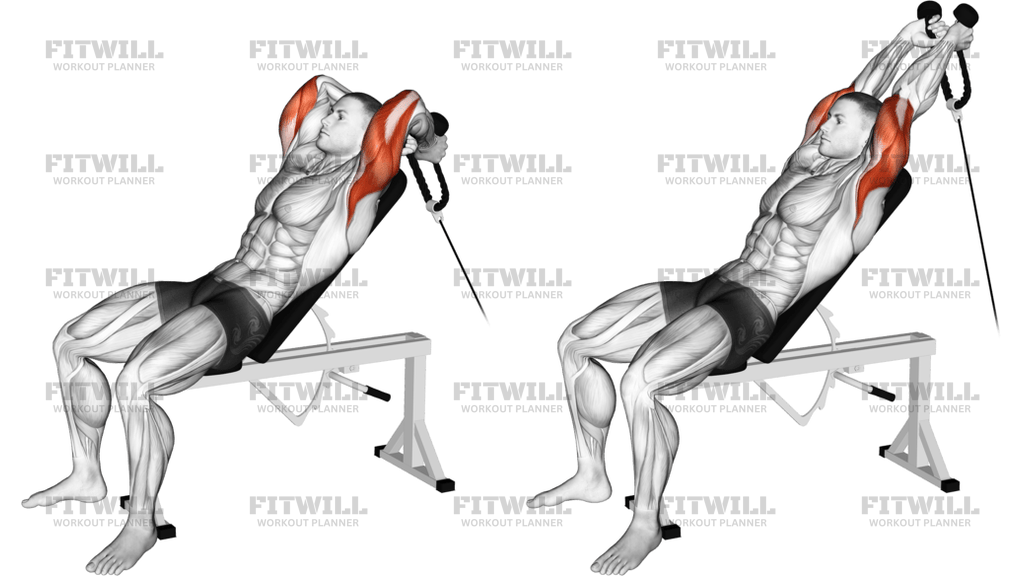
Can I use an incline bench instead of a flat bench?
Yes, but the angle changes the stress and makes the upper arms sit differently. A flat bench is the standard version shown here, so use incline only if you want that variation and it feels better on your shoulders.