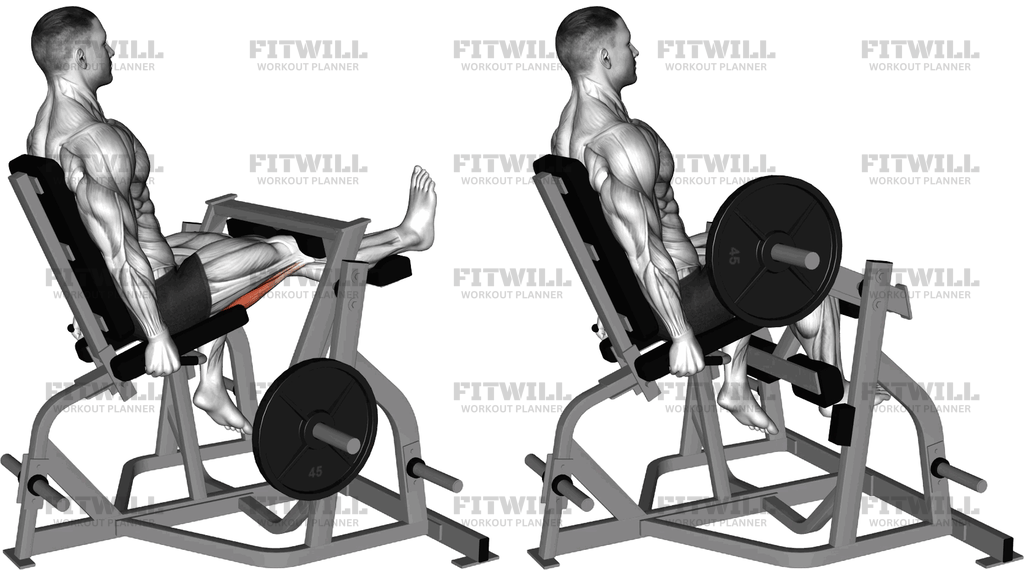
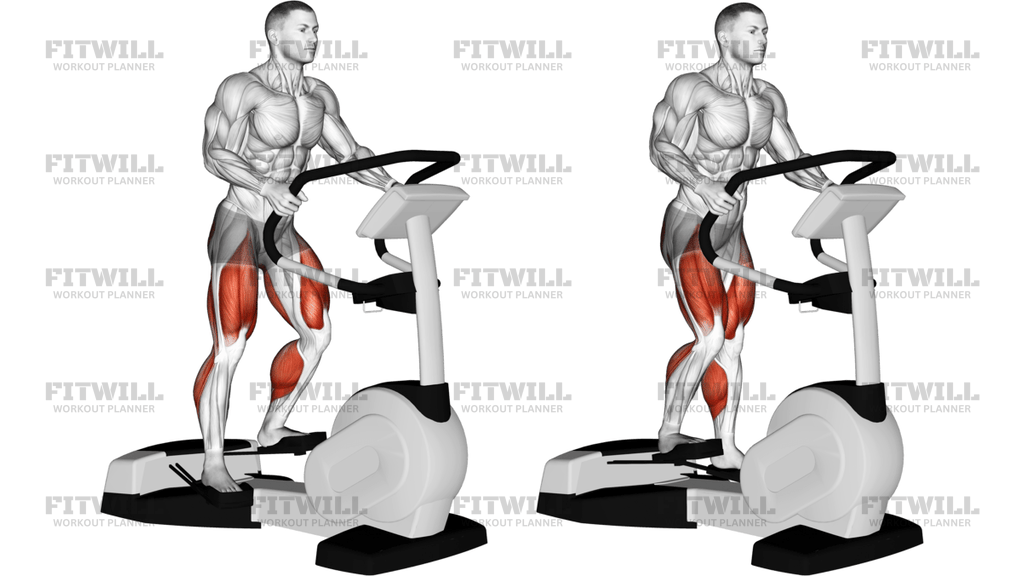
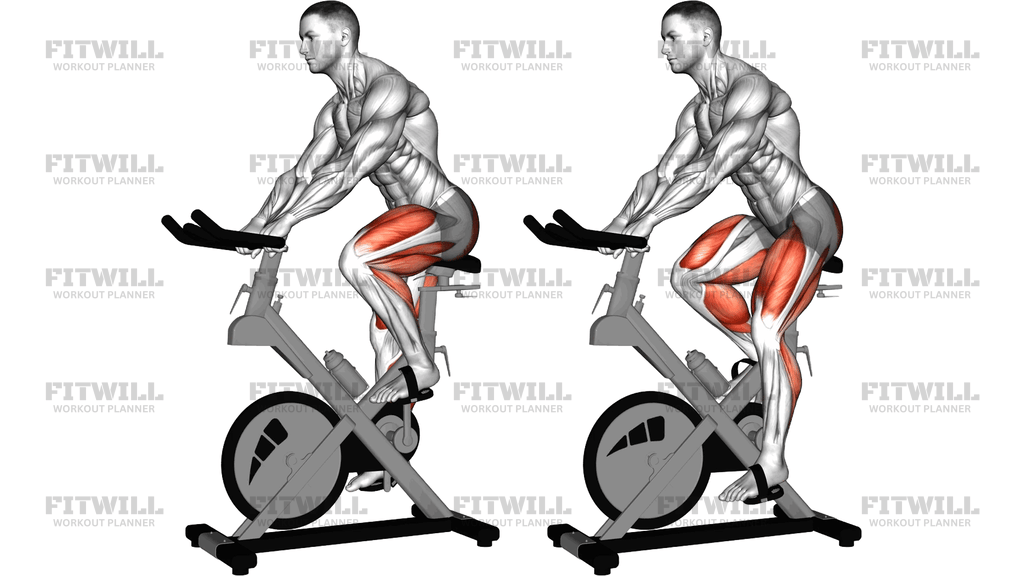
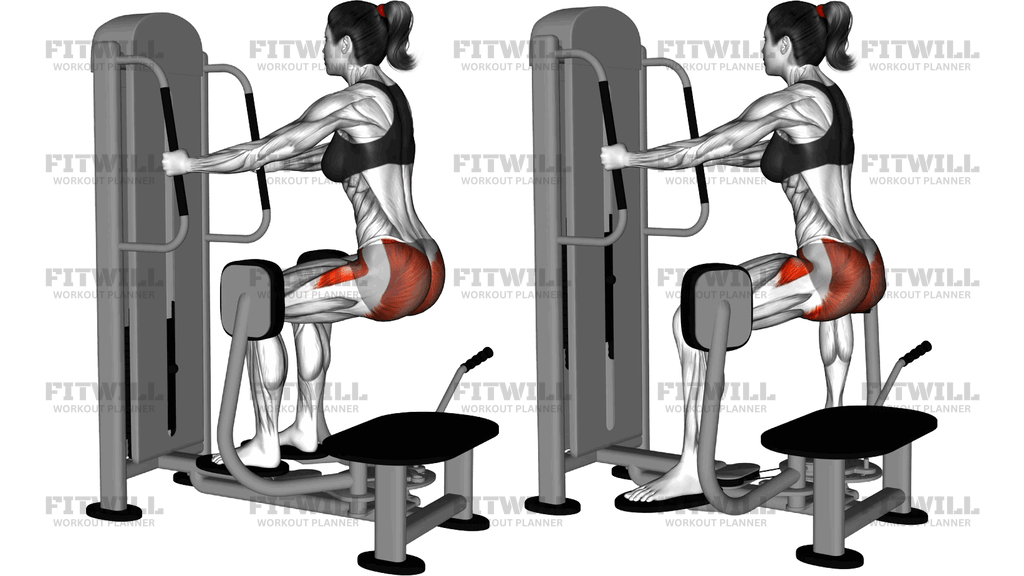
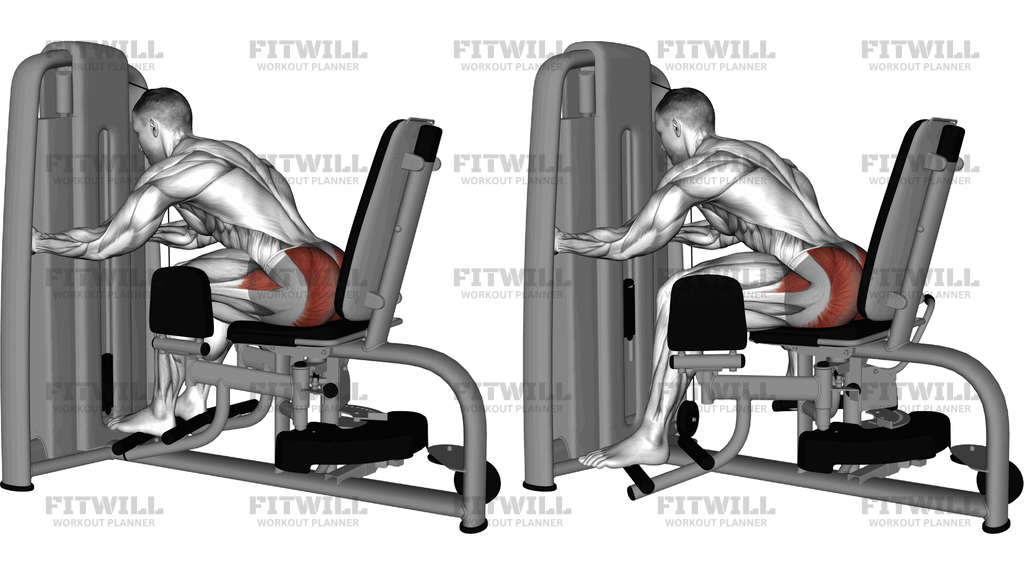
Lever Alternate Leg Extension
Lever Alternate Leg Extension is a unilateral machine exercise for the quadriceps. One leg extends the lever arm while the other leg stays parked, which makes it useful for building knee-extension strength side to side and for exposing differences in control, timing, or range between legs. The leverage machine keeps the path fixed, but the exercise still depends on precise seat position, knee alignment, and a controlled finish on each rep.
The setup matters because the machine pivot and the roller pad need to line up with the working knee. If the seat is too far forward or back, the load shifts and the movement turns into a hip-driven kick instead of a clean leg extension. A good rep starts with the thigh supported on the seat, the torso braced against the backrest, and the ankle tucked firmly behind the pad on the working side while the opposite leg stays relaxed.
During each repetition, drive the roller upward by straightening the knee, not by swinging the hip or lifting the pelvis. The working leg should travel smoothly to near-full extension, then return under control until the knee bends back to the same starting angle. Alternating legs can help keep the set balanced and makes it easier to notice one side taking over or shortening the range.
This movement is often used for accessory quad work, prehab-style unilateral training, or as a lower-load finisher after heavier squatting and pressing. It can be a good option for beginners because the machine supports the body and limits balance demands, but the load should stay light enough to avoid knee snap, hip rocking, or twisting through the seat.
Keep the reps honest: the target is a smooth, repeatable knee extension with steady breathing and no pain at the joint. If the front of the knee feels irritated, shorten the range slightly, slow the lowering phase, and reduce load before the form starts to compensate. The exercise should feel focused in the working thigh, not rushed through the hips or lower back.
[ Workout Log & Planner ]
Put your next workout in Fitwill
Keep your plan and training log ready when you are.


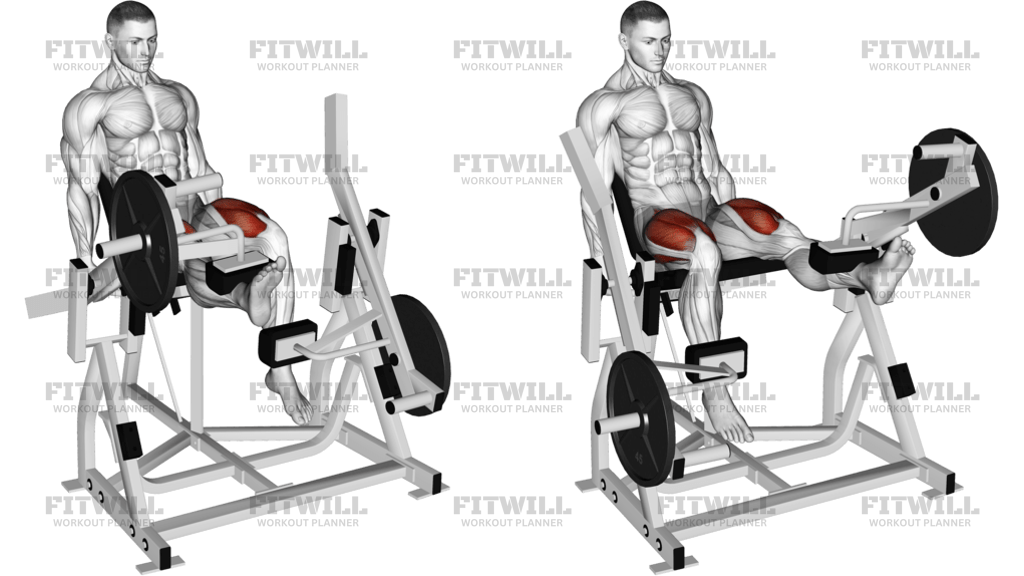
Instructions
- Adjust the seat so the machine pivot lines up with your working knee and your lower leg pad sits just above the ankle.
- Sit back against the pad with your hips square, hold the handles, and let the non-working leg rest relaxed beside the machine.
- Set the working ankle behind the roller with the knee bent to the start position and your thigh fully supported on the seat.
- Brace your torso and keep your pelvis down before you move the lever.
- Exhale and straighten the working knee until the lower leg reaches near-full extension without snapping the joint shut.
- Squeeze the quadriceps briefly at the top while keeping the hip and thigh pressed into the seat.
- Lower the roller slowly until the knee returns to the same bent start position and the stack settles under control.
- Alternate sides for the planned reps or sets, then reset both legs before starting the next round.
Tips & Tricks
- Keep the machine pivot aligned with the working knee so the lever follows the joint instead of dragging the leg off line.
- Press your low back and hips into the pad; if you have to lift off the seat, the load is too heavy.
- Use a smooth finish rather than a hard kick at the top, especially if your knees dislike abrupt lockout.
- Let the non-working leg stay quiet instead of helping the rep or swinging for momentum.
- A slightly slower lowering phase usually makes the unilateral control more obvious and keeps the set honest.
- If one side is weaker, match the stronger leg to the weaker side's range before adding load.
- Keep your toes neutral or slightly lifted if that helps you feel the quadriceps without driving from the ankle.
- Shorten the range if the front of the knee feels sharp; this exercise should challenge the thigh, not irritate the joint.
Frequently Asked Questions
What does Lever Alternate Leg Extension train?
It mainly trains the quadriceps of the working leg, with the lever machine helping you isolate knee extension.
Why do I alternate legs instead of using both at once?
Alternating lets you focus on one knee extension at a time, which helps with side-to-side control and makes weak points easier to spot.
How do I know the seat is set correctly?
The machine pivot should line up with your knee and the roller should sit just above the ankle on the working leg.
Should the other leg help during the rep?
No. The non-working leg should stay relaxed while the working leg does all the lifting and lowering.
Is this a good beginner leg exercise?
Yes. The machine supports your body and removes balance demands, so it is beginner-friendly with light load and controlled reps.
What is a common form mistake?
The biggest mistake is kicking from the hip or lifting the pelvis instead of extending the knee.
How heavy should I go on this machine?
Use a load that lets you extend and lower each leg smoothly without snapping the knee or twisting the seat.
What should I do if my knees feel irritated?
Shorten the range a little, slow the lowering phase, and reduce the load until the rep feels smooth and pain-free.