Single Heel Drop Achilles Stretch
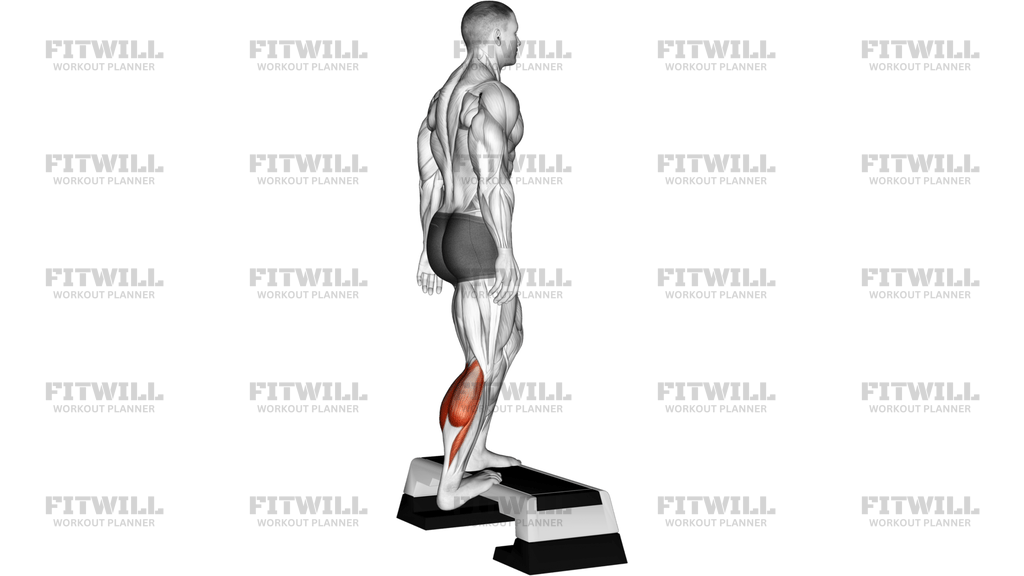
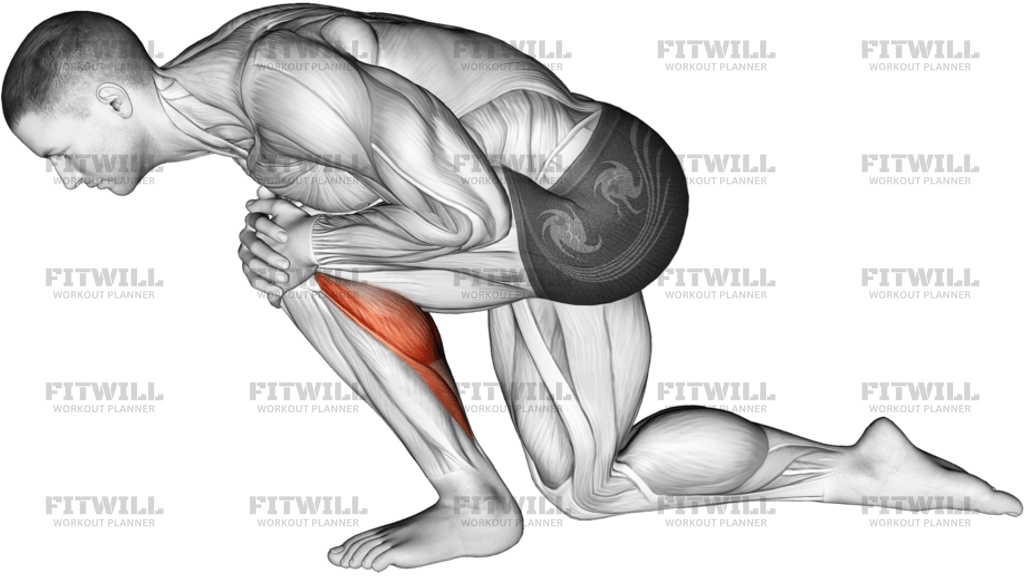
Single Heel Drop Achilles Stretch is a single-sided calf and ankle mobility drill performed from a raised edge, usually a step or platform, with the ball of one foot supported and the heel allowed to drop below the surface. It is useful when the lower calf, ankle, and Achilles tendon feel stiff before or after running, jumping, squatting, or any session that asks for good ankle bend.
The setup matters because the stretch is controlled by your foot position and how evenly you load the standing side. Keeping the forefoot anchored on the edge gives you a clear line of pull through the calf, while the dropped heel increases the stretch through the Achilles and lower calf. The free leg should stay quiet so the working side gets a clean, honest stretch instead of help from momentum or twisting.
Single Heel Drop Achilles Stretch is usually done with the knee straight to emphasize the upper calf, then with a slight knee bend if you want a bit more bend through the soleus and ankle. In both cases, the goal is a firm stretch, not a sharp pull. If the heel is forced too far down too quickly, the stretch can turn into strain at the back of the ankle or make the arch collapse.
This movement is especially useful when one side feels tighter than the other, since it lets you compare left and right ankle motion and spend extra time on the restricted side. It also works well as part of a warm-up when you need better ankle freedom before lower-body training, or as a cooldown when the calves feel loaded after a run or leg session. The best reps stay smooth, even, and easy to repeat.
Treat Single Heel Drop Achilles Stretch as a precision mobility drill rather than a max-effort stretch. Keep the foot tripod grounded, the knee tracking over the middle toes, and the torso tall enough that the stretch stays in the lower leg instead of turning into a forward fold. When done well, it helps improve ankle comfort and calf length without losing balance or irritating the Achilles.
[ Workout Log & Planner ]
Put your next workout in Fitwill
Keep your plan and training log ready when you are.


Instructions
- Stand with the ball of one foot on the edge of a sturdy step or platform and let the heel hang off so it can drop below the surface.
- Keep the other leg lightly bent and relaxed, or place it close by for balance without taking weight away from the working leg.
- Hold onto a wall, rail, or upright support if needed so the working foot can stay still while you set your balance.
- Brace gently through your midsection, stand tall through your torso, and keep your weight centered over the ball of the working foot.
- Let the heel sink down slowly until you feel a firm stretch through the calf and Achilles, then pause without bouncing.
- Keep the knee mostly straight to emphasize the calf, or soften it slightly if you want the stretch lower in the ankle and soleus.
- Breathe out as you settle into the bottom position, then breathe normally while you hold the stretch for a controlled count.
- Press the forefoot into the step and lift the heel back to level in a smooth line, avoiding any twisting or snapping up.
- Reset your balance at the top before the next rep, then repeat the same pattern on the other side if you are training both legs.
Tips & Tricks
- Keep the ball of the foot on the step edge, not the arch, so the heel can drop without the foot sliding forward.
- A straight knee biases the gastrocnemius; a small knee bend shifts more tension toward the soleus and Achilles.
- Keep the heel moving straight down instead of letting the ankle roll outward onto the pinky-toe side.
- If the stretch feels pinchy at the back of the ankle, shorten the drop and use a smaller range until it feels smooth.
- Use the hand support more for balance than for pulling yourself deeper into the stretch.
- Keep the toes relaxed and long so you do not claw the step and turn the movement into a foot grip drill.
- Hold the top position between reps long enough to re-stack the ankle before dropping again.
- A slower descent usually gives a better calf stretch than trying to sink quickly into the bottom position.
- Stop if the Achilles feels sharp or angry; this should feel like a strong lower-leg stretch, not a joint jab.
Frequently Asked Questions
What does Single Heel Drop Achilles Stretch work?
It mainly targets the calves and the Achilles tendon, with the exact feel shifting depending on whether the knee is straight or slightly bent.
Should the ball of my foot or my whole foot be on the step?
Place only the ball of the foot on the edge so the heel can drop below the surface and create a clear lower-leg stretch.
Do I keep my knee straight in Single Heel Drop Achilles Stretch?
A straighter knee emphasizes the calf more, while a small bend usually moves more of the stretch toward the soleus and lower Achilles.
Can beginners use Single Heel Drop Achilles Stretch?
Yes. Beginners should use a low step, light hand support, and a smaller heel drop until balance and ankle motion feel predictable.
Why does my Achilles feel tight before my calf does?
That usually means the lower ankle is the limiting factor. Reduce the drop, slow the descent, and avoid forcing the heel lower than your ankle can comfortably handle.
Should I hold the bottom position?
Yes, a short pause at the bottom helps you feel the stretch, but it should stay smooth and controlled rather than bouncing into the end range.
Can I do Single Heel Drop Achilles Stretch with one hand on a wall?
Yes, light support from a wall or rail is helpful if balance keeps you from keeping the working foot steady on the step.
What is the most common mistake with this stretch?
Letting the heel fall too fast or letting the ankle roll outward. The drop should be straight down with the foot staying square on the step.
When should I use Single Heel Drop Achilles Stretch?
It fits well before running or lower-body training if the ankles feel stiff, or after training as a cooldown when the calves feel loaded.