Recumbent Knee Flexor Stretch With Towel
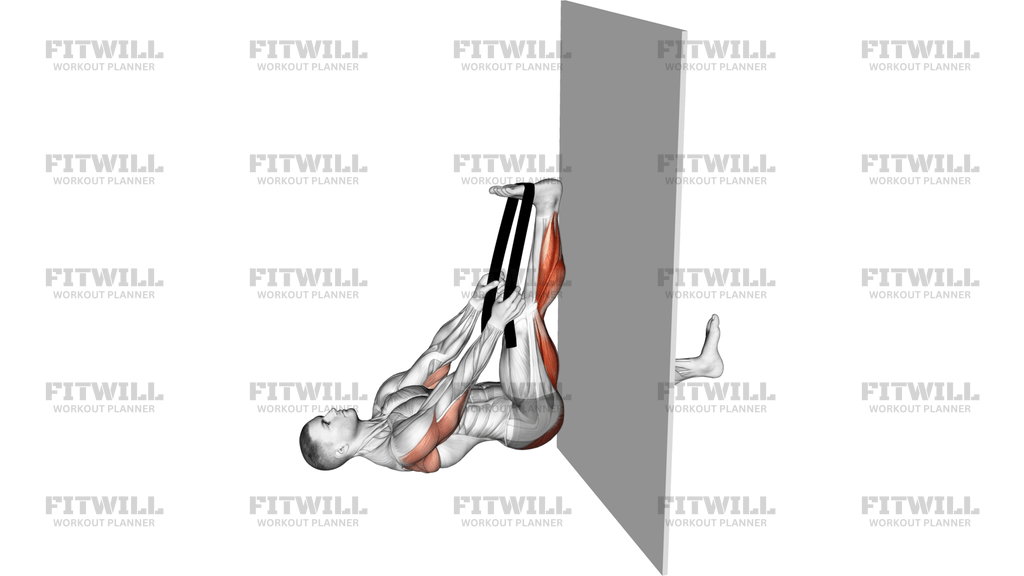
Recumbent Knee Flexor Stretch With Towel is a supine hamstring stretch that uses a towel or strap to help lift and hold one leg while the other leg stays relaxed. The wall gives the working leg a clear reference point, so you can keep the knee extended and the pelvis quiet instead of turning the stretch into a crooked tug-of-war. It is a mobility drill, not a strength exercise, and the quality of the position matters more than how hard you pull.
The main target is the back of the thigh, especially the hamstrings, with the calf and hip stabilizers helping maintain the leg line. Because the knee flexors are being lengthened with the leg elevated, small changes in foot angle, knee lockout, and pelvis position can make the stretch feel either smooth or overly aggressive. The towel allows you to fine-tune that tension instead of forcing the leg higher than your hamstrings will tolerate.
Set the hips close enough to the wall that the lifted leg can reach a mostly vertical line without rounding the low back. Keep the opposite leg long and relaxed on the floor, then use the towel to guide the raised leg into a steady stretch. A good rep feels like a clear pull through the back of the thigh with no pinching in the hip, no cramping in the calf, and no need to yank on the strap.
This stretch is useful after training, during mobility work, or whenever your hamstrings feel short from sitting, running, or lower-body lifting. The safest approach is a calm, pain-free hold with slow breathing and a controlled release. If you feel sharp pain, nerve-like tingling, or your pelvis keeps rolling off the floor, reduce the range and reset the position before going deeper.
[ Workout Log & Planner ]
Put your next workout in Fitwill
Keep your plan and training log ready when you are.


Instructions
- Lie on your back beside a wall and place one leg up so the heel or foot can rest against it while the other leg stays extended on the floor.
- Loop a towel or strap around the arch of the raised foot and hold both ends with your hands.
- Square your hips and keep your low back gently on the floor before you start pulling.
- Straighten the raised knee as much as you can without locking the joint forcefully.
- Use the towel to guide the leg toward a longer hamstring stretch, not to yank it upward.
- Keep the toes relaxed and the thigh aligned so the leg does not drift inward or outward.
- Breathe slowly and let the exhale soften the back of the thigh as you hold the stretch.
- Release the tension gradually, then switch sides and repeat with the same controlled setup.
Tips & Tricks
- If the hamstring feels tight high near the sit bone, move the hips a little farther from the wall and shorten the stretch.
- Keep the knee as straight as comfort allows; bending it too much turns the drill into a weaker, less specific stretch.
- Pull through the towel with the hands instead of lifting the shoulder blades off the floor.
- A slight ankle flex often makes the back-of-thigh stretch clearer, but do not force the foot into an extreme position if the calf starts to cramp.
- Keep the opposite leg relaxed on the floor so the pelvis does not twist to fake more range.
- Use a long exhale to reduce guarding, especially if your hamstrings normally tighten when you try to hold still.
- If the back of the knee feels sharp or nervy, back off the range and keep the leg a little lower.
- The wall should support the position; if you are fighting the wall, move closer or farther away until the angle feels workable.
Frequently Asked Questions
What does the towel do in Recumbent Knee Flexor Stretch With Towel?
It lets you hold the raised leg at a controlled angle so you can stretch the hamstrings without gripping the foot hard or losing position.
What muscles are stretched most in this position?
The hamstrings take most of the stretch, with the calf and the tissue behind the knee often helping if the ankle is flexed.
How close should I be to the wall?
Close enough that the raised leg can stay tall without rounding the low back. If your pelvis keeps tucking or twisting, adjust your distance from the wall.
Should the raised knee be perfectly straight?
It should be as straight as you can hold comfortably, but do not lock it so hard that the back of the knee feels strained or the calf starts to cramp.
Why is the opposite leg kept on the floor?
It helps anchor the pelvis so the stretch stays in the hamstrings instead of turning into a twist through the lower back and hips.
Can beginners do this stretch safely?
Yes, if they stay gentle, keep the low back down, and stop short of any sharp pain or nerve-like tingling.
What is a common mistake with the towel?
Pulling hard enough to lift the shoulders or rotate the hips. The towel should guide the leg, not force the whole body out of position.
When should I use this stretch?
It works well after lower-body training, after sitting for long periods, or during a mobility session when the hamstrings feel short and guarded.