Tibial Flexion Stretch On Wall Bar
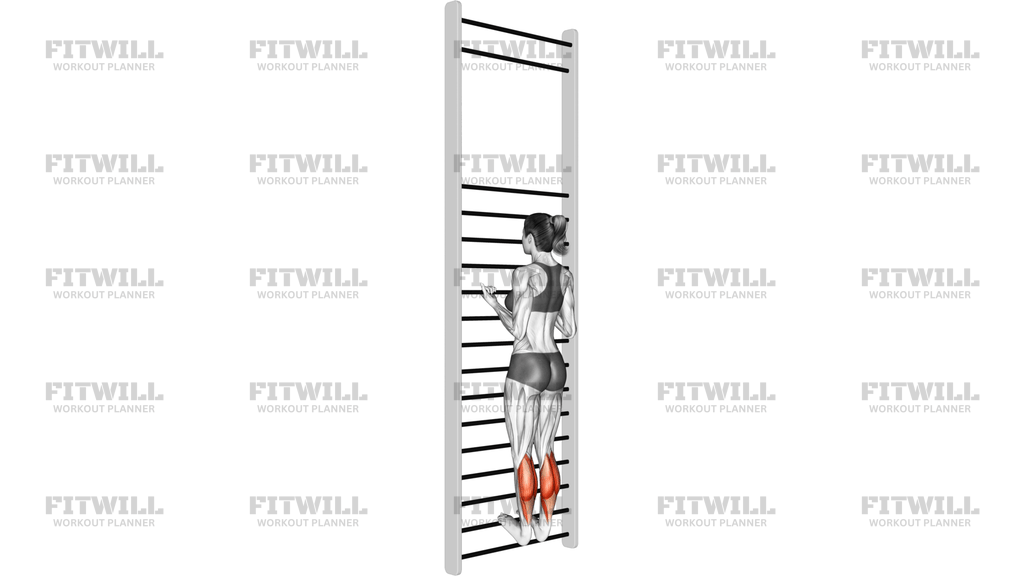
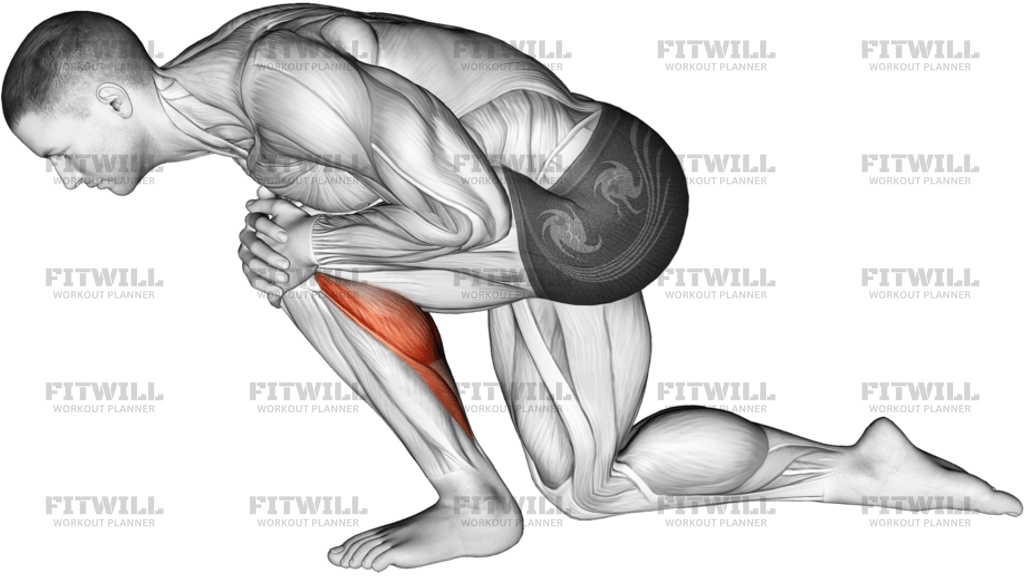
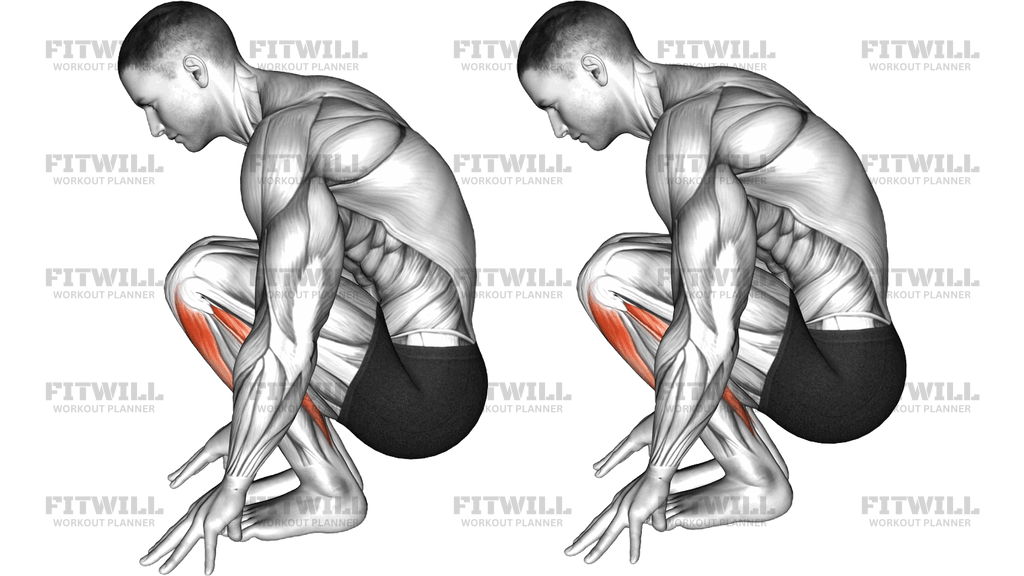
Tibial Flexion Stretch On Wall Bar is a supported calf and ankle mobility stretch done facing the wall bars with body weight and a mat for comfort. The setup is simple, but the details matter: the hands use the bars for balance, the feet stay planted, and the ankles do the real work as the knees travel forward. That makes it useful when you want a clear calf stretch without having to fight for position or balance.
The main focus is the calf complex, especially the gastrocnemius and soleus, with the feet and trunk helping you stay organized. In practice, this is less about forcing a big stretch and more about controlling how the lower leg loads. If the arches collapse, the heels lift, or the torso folds forward, the stretch spreads away from the calves and becomes harder to control.
Set the exercise up so you can keep the spine long, the ribs stacked over the pelvis, and the weight spread evenly through the foot. From there, the knees move forward over the toes while the heels stay heavy on the floor. That forward knee travel is what increases ankle dorsiflexion and creates the stretch through the back of the lower leg. The wall bars let you make that motion gradually instead of bouncing or lunging into it.
This movement is a good fit for warmups, recovery work, or accessory mobility after lower-body training. It can also help lifters who need better ankle range for squats, lunges, or step-ups. Use a calm breathing rhythm, hold only as long as the stretch stays smooth, and back off immediately if the Achilles tendon or the front of the ankle feels sharp instead of simply tight.
Beginners can use it easily because the wall bars provide support, but the stretch should still feel deliberate and controlled. If one side is tighter, you can pause longer on that side or work one leg at a time. The goal is a repeatable calf stretch with clean foot pressure, a stable torso, and a range you can own from rep to rep.
[ Workout Log & Planner ]
Put your next workout in Fitwill
Keep your plan and training log ready when you are.


Instructions
- Stand facing the wall bars and hold a rung at about chest height with both hands.
- Place one or both feet flat on the mat just in front of the bars, with the toes pointing forward.
- Set your feet about hip-width apart and keep pressure spread across the big toe, little toe, and heel.
- Stack your ribs over your pelvis and keep a soft bend in the knees before you start the stretch.
- Slowly drive both knees forward over the toes while keeping both heels glued to the floor.
- Stop when you feel a strong but comfortable stretch through the calves and ankles.
- Hold the end position for one to three slow breaths without bouncing or twisting.
- Ease the knees back, relax the stretch, and repeat; work one side at a time if one ankle is tighter.
Tips & Tricks
- Use the bars for balance only; do not pull your body forward with your arms.
- Keep even pressure under the foot so the arch does not collapse as the knees move forward.
- If a heel starts to lift, shorten the knee travel or step a little closer to the bars.
- A small knee bend shifts more of the stretch toward the soleus, while straighter knees bias the upper calf.
- Exhale as the knees travel forward so the torso stays relaxed instead of braced.
- Keep both knees tracking in the same direction; do not let one knee cave inward.
- A clean stretch should feel like tension in the calf, not a pinch in the Achilles tendon or front of the ankle.
- Once you can hold the position without losing heel contact, you can add very small pulsing reps.
Frequently Asked Questions
What does Tibial Flexion Stretch On Wall Bar work?
It mainly targets the calf complex, especially the gastrocnemius and soleus, while the feet and trunk help you stay stable.
Is this a strength exercise or a mobility stretch?
It is primarily a mobility drill, although the calves and foot muscles still work to hold position.
Why use the wall bar instead of a free-standing calf stretch?
The wall bars give you a stable handhold so you can focus on ankle motion and heel pressure instead of balance.
Should both heels stay down the whole time?
Yes. If a heel comes up, shorten the range or move your feet closer so the stretch stays controlled.
Can I keep my knees straight during this stretch?
Yes, but a small knee bend often feels better on the wall bars and gives you more control over the calf stretch.
What should I feel if the setup is right?
You should feel a clear stretch in the calves and around the ankle, not sharp pain in the Achilles or cramping in the foot.
Is this okay before lifting?
Yes. Used gently, it can prepare the ankles for squats, lunges, and other lower-body work.
How long should I hold each rep?
One to three slow breaths is usually enough; longer holds are fine if the heels stay grounded and the stretch stays smooth.