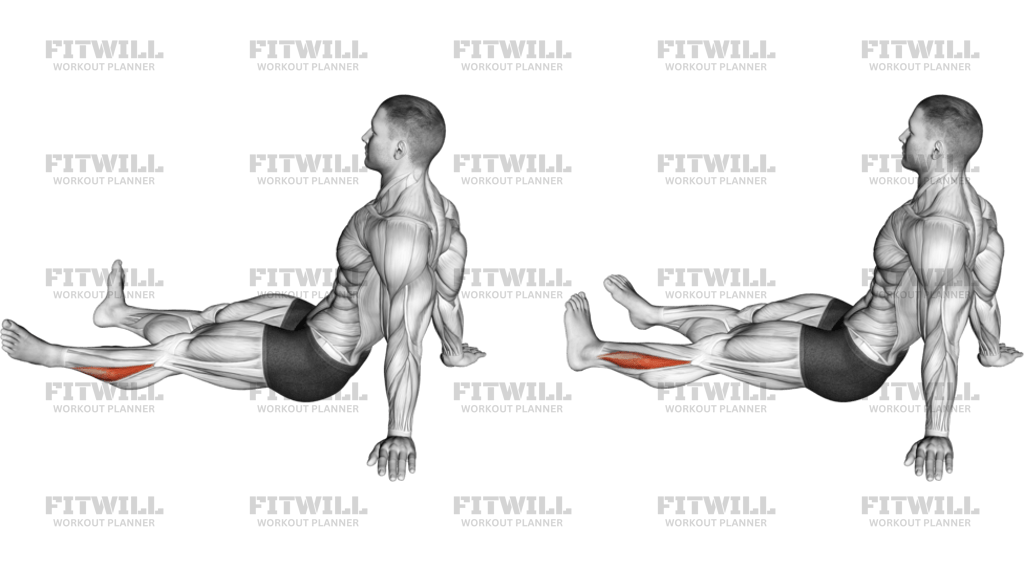
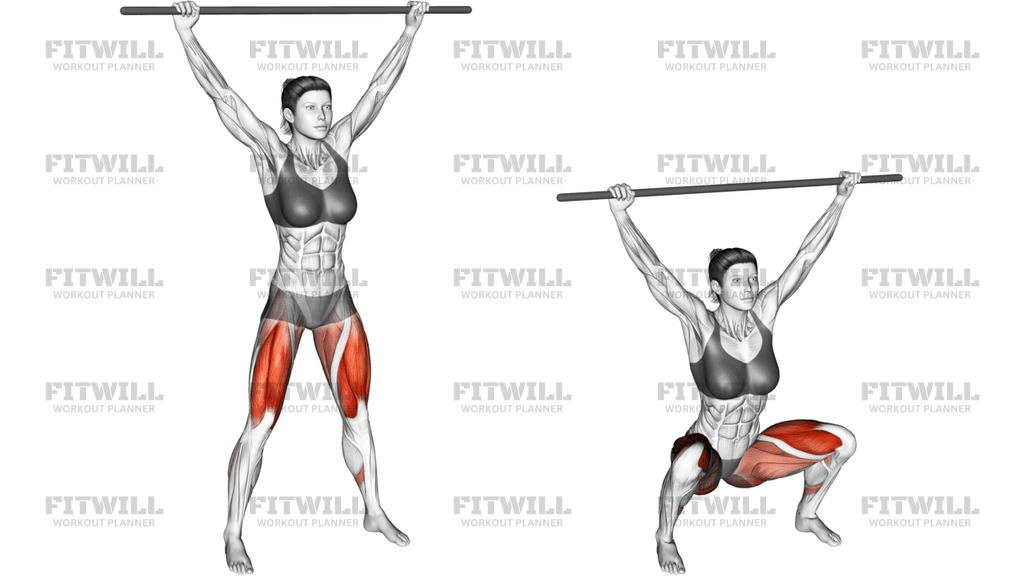
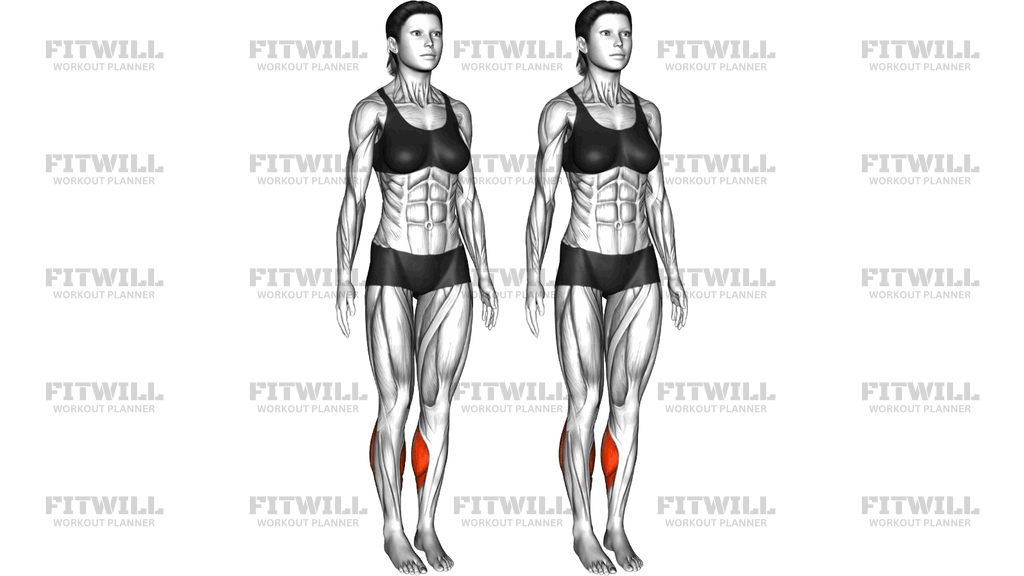
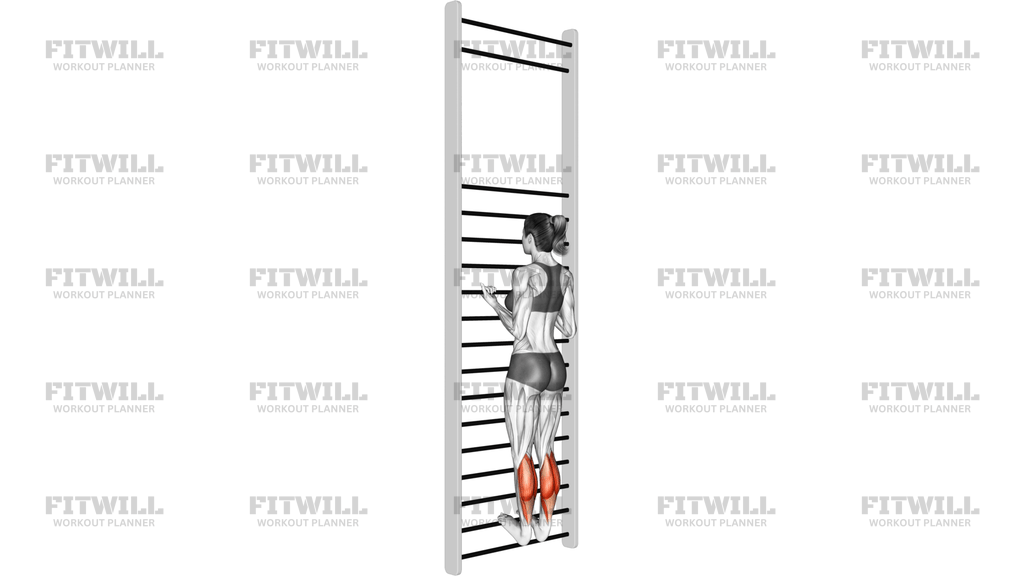
Standing Toe Extensor Stretch
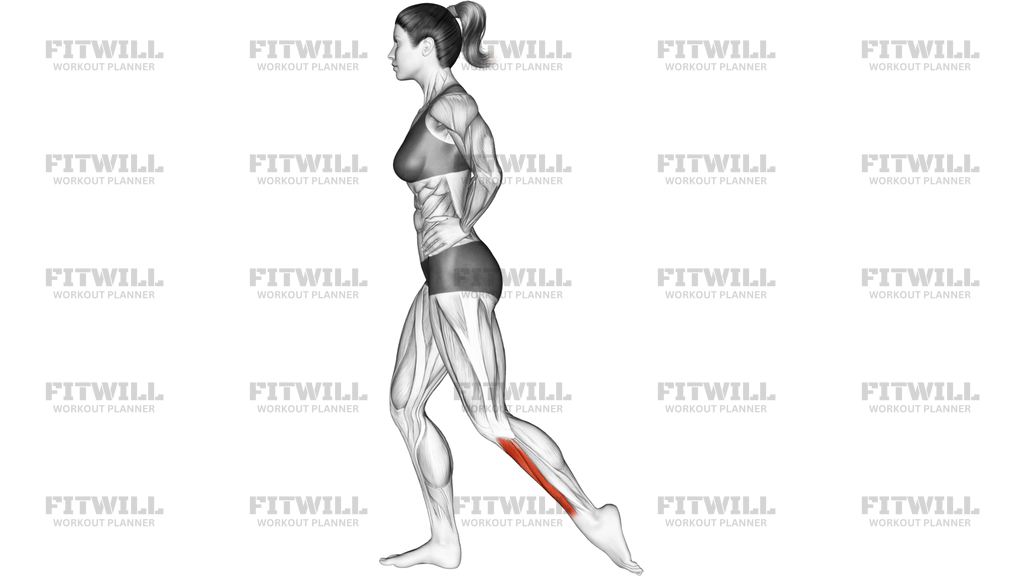
This standing calf stretch lengthens the back of the lower leg and helps restore ankle motion after running, jumping, calf raises, or any workout that leaves the calves feeling tight. It is a simple body-weight stretch, but the setup matters because the line from the heel through the ankle to the hip determines whether you actually feel the calf lengthen or just dump tension into the low back.
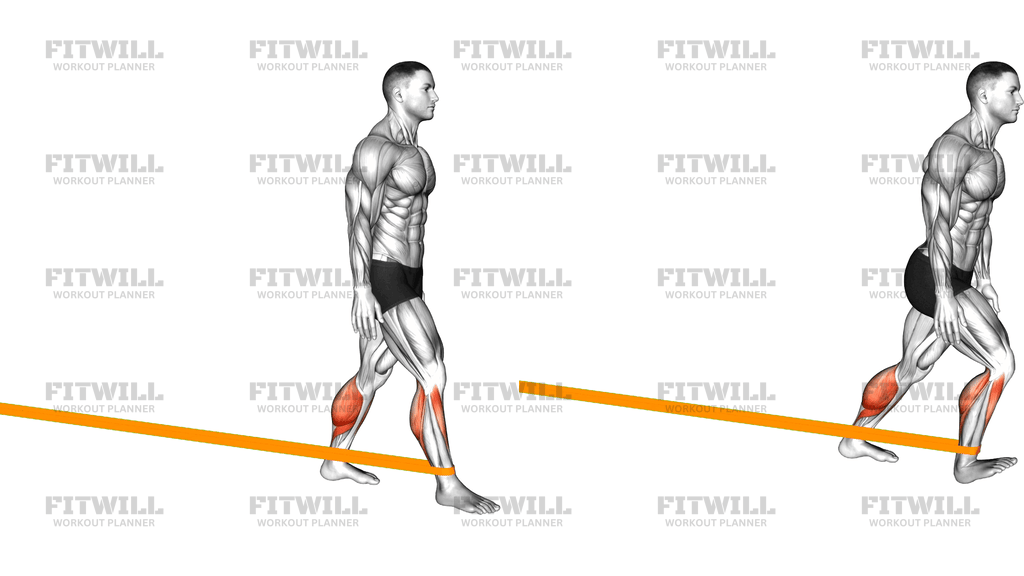
Start with one foot forward and the other foot stepped back on a flat surface or mat. Keep the back heel planted, point the toes mostly forward, and square the hips so the rear leg can take the stretch without the torso twisting away. A tall upper body and a quiet rib cage help keep the stretch in the calf complex instead of turning it into a back-lean or a balance drill.
As you shift the hips forward, think about moving your whole body as one unit rather than reaching with the chest. The rear knee stays straight for a stronger upper-calf stretch, while the front knee stays soft so you can glide forward without bouncing. Breathe out slowly as you settle into the position, then keep the stretch gentle enough that you can hold it without clawing at the floor or lifting the back heel.
If you need more balance, lightly touch a wall or rack with your fingertips, but avoid leaning your weight into the support. To bias the lower calf a little more, bend the back knee slightly while keeping the heel down. To emphasize the upper calf, keep the back knee straight and shorten the stance until the stretch is strong but still comfortable.
This is a practical cool-down stretch for runners, lifters, and anyone who spends time on the balls of the feet. It can also be used between lower-body sets if the calves are limiting squat depth, split squat comfort, or ankle mobility. The goal is a steady, repeatable hold on each side, not forcing a deeper position every time.
[ Workout Log & Planner ]
Put your next workout in Fitwill
Keep your plan and training log ready when you are.


Instructions
- Stand on a flat floor or mat with one foot forward and the other foot stepped back, keeping both feet pointed mostly straight ahead.
- Place your hands on your hips or lightly on a wall for balance, and keep your chest tall over your pelvis.
- Press the back heel into the floor and straighten the back knee so the rear calf can lengthen.
- Shift your hips forward a few inches until you feel a clear stretch high in the back calf and around the lower Achilles area.
- Keep the front knee softly bent so you can move forward without bouncing or arching your lower back.
- Hold the stretch and breathe slowly for 20 to 30 seconds, keeping the rear heel heavy the entire time.
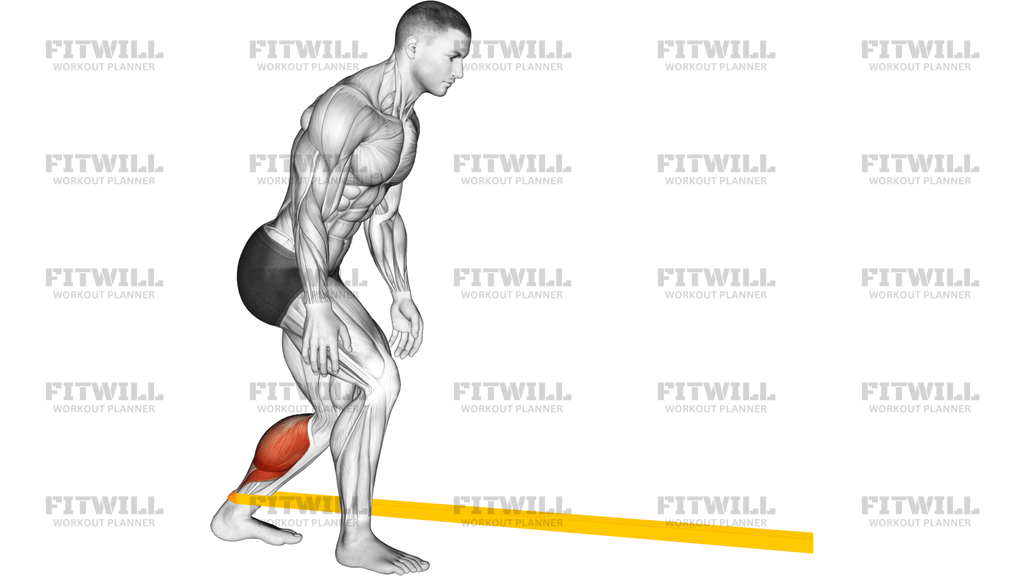
- If you want more stretch in the lower calf, slightly bend the back knee while keeping the heel down and the hips square.
- Step the back foot forward, reset your stance, and repeat on the other side.
Tips & Tricks
- If the back heel lifts, shorten the stance before you push deeper into the stretch.
- Keep the rear toes mostly forward; turning them out usually makes the calf stretch feel weaker and less direct.
- Move the hips forward instead of dropping the chest toward the floor.
- A straight back knee emphasizes the upper calf, while a soft bend shifts more of the stretch lower.
- Keep the front foot flat so you do not cheat the stretch by rocking onto the toes.
- Use a wall for balance only; do not lean enough that the support starts holding the stretch for you.
- Exhale as you settle into the end range instead of forcing the position with your breath held.
- Stop if you feel sharp Achilles pain or pinching in the front ankle rather than a steady calf stretch.
Frequently Asked Questions
What does Standing Toe Extensor Stretch work most?
The main target is the calf complex, especially the gastrocnemius when the back knee stays straight. A slight knee bend shifts more of the stretch toward the soleus.
Should my back heel stay on the floor during Standing Toe Extensor Stretch?
Yes. The back heel should stay rooted so the calf can lengthen; if it keeps lifting, shorten your stance.
What is the difference between a straight and bent back knee?
A straight back knee puts more stretch into the upper calf. A small bend reduces that and moves the sensation lower toward the soleus and Achilles area.
Do I need a wall or rack for Standing Toe Extensor Stretch?
No, but a light fingertip touch can help with balance. Keep the support light so the stretch still comes from your stance, not from leaning on the wall.
Why do I feel this in my Achilles instead of my calf?
You may be stepping too far or pushing too hard. Shorten the stance and keep the stretch gentle so the sensation stays in the calf and not as a sharp pull at the Achilles.
Can beginners do Standing Toe Extensor Stretch?
Yes. It is beginner-friendly as long as the stance is short enough to keep the back heel down and the body upright.
How long should I hold each side?
A 20 to 30 second hold works well for most people, and you can repeat it for a few rounds after training or during mobility work.
Is Standing Toe Extensor Stretch better before or after training?
It is usually better after training or as part of a cool-down. Before training, use it briefly and keep the intensity light so it does not dull your calf tension.