Recumbent Hip External Rotator And Hip Extensor Stretch Crossed Leg
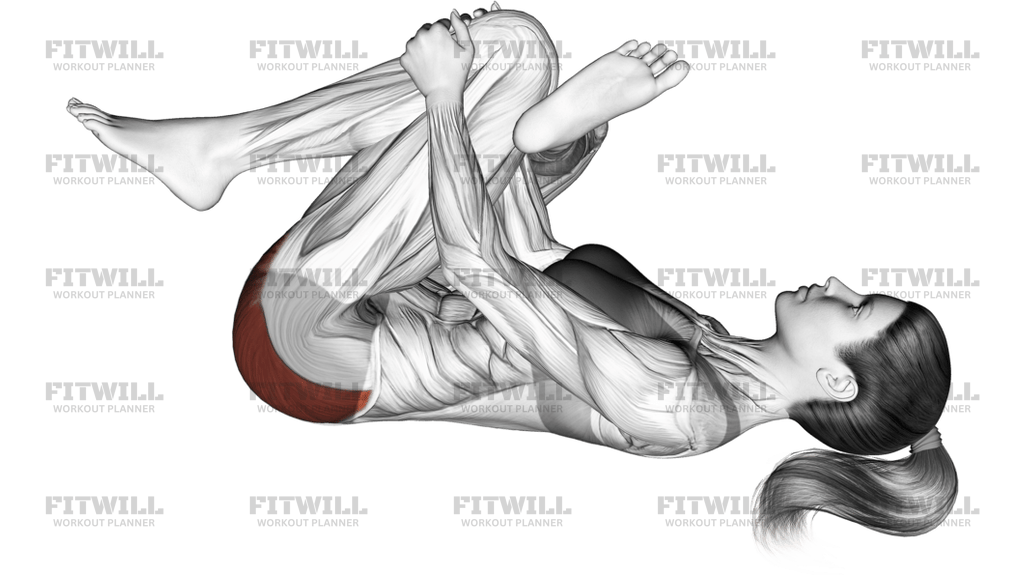
Recumbent Hip External Rotator And Hip Extensor Stretch Crossed Leg is a floor-based hip mobility drill that opens the outside of the hip while also creating a gentle stretch through the glute and deep external rotators. It is typically done on an exercise mat in a supine position, with one ankle crossed over the opposite thigh and the legs brought in close enough to feel the stretch without forcing the knee or lower back.
This stretch is useful when the hips feel tight after sitting, squatting, running, deadlifting, or any session that leaves the glutes and hip rotators feeling guarded. The crossed-leg position changes the angle at the hip so you can target the piriformis, glute medius, and related external rotators more directly than a straight-leg hamstring stretch. The bottom leg also gets a mild hip extensor stretch as you draw it toward the torso.
Setup matters because the stretch should come from the hip, not from twisting the spine or yanking the knee. Keep the sacrum and lower back settled on the mat, then use your hands to guide the supporting leg in until you find a firm but tolerable sensation in the outer hip. The crossed ankle should stay relaxed, and the knee should be allowed to open naturally instead of being pushed down aggressively.
A clean rep is slow and quiet. Breathe out as you draw the legs in, pause where the stretch is strongest, and let the exhale help the hip soften without bouncing. If the stretch starts to shift into pinching in the front of the hip, pressure in the knee, or pulling in the lower back, back off the range and keep the position smaller.
Recumbent Hip External Rotator And Hip Extensor Stretch Crossed Leg fits well in a warm-up, cooldown, recovery block, or any session where hip rotation and pelvic control matter. It is especially helpful for people who sit for long periods or whose workouts are limited by stiff outer hips. Done correctly, it should feel like a controlled release in the glutes and deep hip rotators, not a strain through the knee or lumbar spine.
[ Workout Log & Planner ]
Put your next workout in Fitwill
Keep your plan and training log ready when you are.


Instructions
- Lie on your back on an exercise mat with both knees bent and your feet relaxed on the floor.
- Cross one ankle over the opposite thigh, just above the knee, so the lifted leg forms a figure-four shape.
- Keep the crossed-leg knee relaxed and let it open naturally instead of pressing it down.
- Thread your hands behind the supporting thigh or shin and keep your shoulders heavy on the mat.
- Draw the supporting leg toward your chest until you feel a clear stretch in the outer hip and glute of the crossed side.
- Keep your low back and tailbone settled on the mat as you breathe out and soften into the stretch.
- Hold the end position without bouncing, then ease slightly deeper only if the knee and hip feel comfortable.
- Lower the supporting leg back to the floor with control and uncross the ankle to reset.
- Repeat on the other side and match the hold time so both hips get even work.
Tips & Tricks
- Keep the crossed ankle just above the opposite knee; if it slips lower onto the thigh, the hip angle changes and the stretch becomes less precise.
- Draw the supporting leg in until the stretch hits the outer glute, not until your pelvis rolls up off the mat.
- Let the crossed-side knee open on its own; forcing it down can irritate the knee instead of loosening the hip.
- If your lower back rounds hard, shorten the range and keep the tailbone heavier on the mat.
- A long exhale usually lets the deep hip rotators relax better than holding your breath at the end position.
- Use your hands behind the thigh if you want more control, or behind the shin if you need a slightly stronger stretch.
- If the stretch feels more like hamstrings than hips, slide the supporting knee a little closer to your chest and re-check the ankle-crossed position.
- Stop short of any sharp knee pinch; this movement should create a deep hip sensation, not joint pain.
Frequently Asked Questions
What does Recumbent Hip External Rotator And Hip Extensor Stretch Crossed Leg target most?
It mainly targets the outer hip and glute area on the crossed side, especially the deep external rotators.
Where should I feel Recumbent Hip External Rotator And Hip Extensor Stretch Crossed Leg?
You should feel it mostly in the glute and outside of the hip on the crossed leg side, with a milder stretch in the supporting leg.
Why does the crossed ankle matter in this stretch?
Crossing the ankle over the opposite thigh puts the hip into more external rotation, which is what makes the stretch specific to the glutes and deep rotators.
Should I push my knee down to make it stronger?
No. Let the knee open naturally and use your hands to pull the supporting leg in; forcing the knee down can stress the joint.
Can beginners do this stretch safely?
Yes, if they keep the range small and avoid pulling hard on the knee. The stretch should feel controlled and comfortable, not forced.
What if I feel this more in my lower back than my hip?
Shorten the range and keep the tailbone heavier on the mat. If the back keeps taking over, pull less on the supporting leg.
Is this the same as a figure-four stretch?
Yes, this is a recumbent figure-four variation. The crossed-leg setup is what targets the outer hip and glutes.
Should I hold the stretch or pulse it?
Hold it steadily and breathe out into the position. Pulsing usually makes the hip guard up and can reduce the effect.