Single Straight Leg Glute Bridge Hold
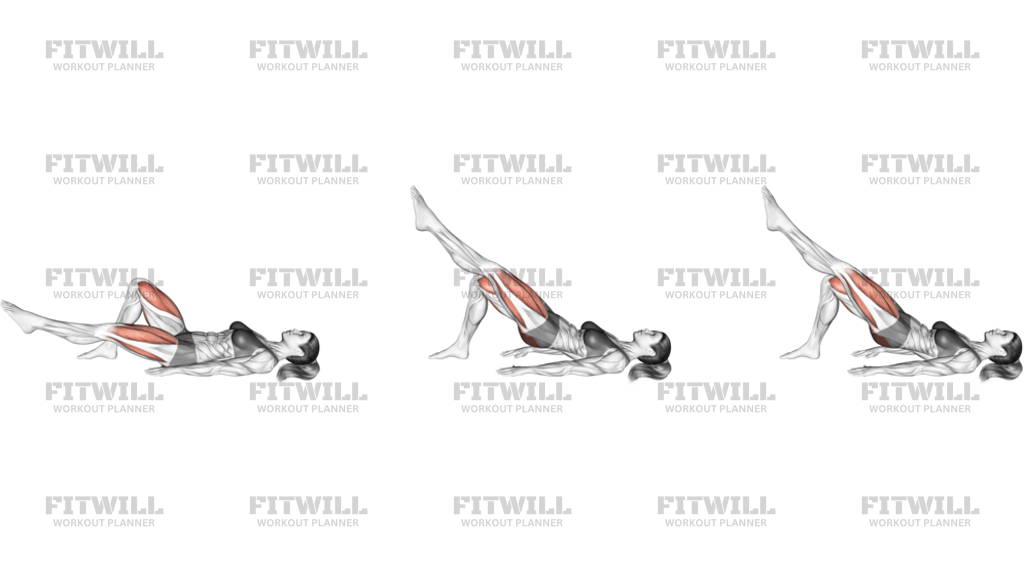
Single Straight Leg Glute Bridge Hold is a floor-based isometric bridge that asks one leg to support your hips while the other leg stays straight and lifted. It is a simple-looking bodyweight exercise, but the hold demands real control from the glutes, hamstrings, and core of the working side. The goal is not to swing the pelvis up and down; the goal is to keep the hips high, level, and steady while the support leg does the work.
The setup matters because the bridge is only as good as the angle of the planted foot and the position of the free leg. When the planted heel is too far away, the movement shifts toward the hamstrings and the low back can take over. When the heel is too close, you lose leverage and cannot keep the hips elevated for long. The straight leg should stay long and active so the pelvis does not rotate toward the lifted side.
Single Straight Leg Glute Bridge Hold is useful when you want unilateral glute work without external load, especially for warmups, accessory work, and home training. It teaches the body to hold extension at the hip without over-arching the lumbar spine. Because the hold is static, it also reveals side-to-side differences quickly: one hip may shake, drop, or cramp sooner than the other, which is useful information when you are rebuilding control or balancing a program.
The best repetitions come from a strong lift, then a quiet hold. Press through the planted heel, squeeze the glute to bring the hips up, and keep the ribs down so the lift comes from the hip rather than a flare in the lower back. The straight leg should stay in line with the torso, not drifting low toward the floor or curling toward the chest. A short, honest hold with level hips is better than a longer hold with a twisted pelvis.
Because this is an isometric exercise, it is easy to turn it into a fatigue test and let form collapse. Stop the set if the hips drop, the pelvis twists, or the hamstring starts cramping hard enough to change the pattern. Beginners can use shorter holds and a smaller range of motion at first, while more advanced lifters can extend the hold time, slow the lower, or add pauses without losing the bridge shape. Used well, Single Straight Leg Glute Bridge Hold builds cleaner hip extension and better pelvic control for squats, lunges, running, and general lower-body stability.
[ Workout Log & Planner ]
Put your next workout in Fitwill
Keep your plan and training log ready when you are.


Instructions
- Lie on your back with one knee bent and that foot planted flat on the floor, and extend the other leg straight so it stays off the ground.
- Place the planted foot far enough from your hips that your shin can stay close to vertical when you bridge, then let your arms rest long beside your body for support.
- Keep the straight leg active with the thigh in line with your torso and the toes gently pulled up so the pelvis stays square.
- Brace your ribs down before you lift so your lower back does not arch when the hips come up.
- Press through the planted heel and squeeze that glute to raise your hips until your knee, hip, and shoulder form a straight line.
- Hold the top position with level hips and a long straight leg, keeping your neck relaxed and your chin slightly tucked.
- Take small breaths while you hold the bridge and keep the pelvis from dropping or rotating toward the lifted-leg side.
- Lower your hips slowly back to the floor, reset your foot position if needed, and switch sides after the planned hold or set.
Tips & Tricks
- If your hamstring dominates, bring the planted heel a little closer and think about squeezing the glute before you lift the hips.
- Keep the straight leg no lower than the line of your torso; letting it sink often twists the pelvis and shortens the hold.
- A small posterior pelvic tilt at the top helps keep the low back out of the bridge and shifts the work into the glute.
- Press through the heel and outer edge of the planted foot instead of pushing from the toes.
- Use short holds of 5 to 20 seconds if your hips start wobbling before the glute fatigue shows up.
- If the planted-side hamstring cramps, lower out, reset the foot, and try again with less hip height.
- Keep the shoulders heavy on the floor so the bridge stays anchored instead of sliding toward the neck.
- Stop each hold the moment the pelvis starts to tip toward the raised leg; that is the first sign the set has turned sloppy.
Frequently Asked Questions
What does Single Straight Leg Glute Bridge Hold work?
It mainly trains the glute on the planted side, with the hamstrings and core helping keep the hips lifted and level.
How should my planted foot be positioned in Single Straight Leg Glute Bridge Hold?
Set the foot far enough from your hips that the shin stays close to vertical at the top. That usually gives you better glute leverage and less hamstring cramping.
Should the straight leg stay high during Single Straight Leg Glute Bridge Hold?
Yes. Keep it long and active so the pelvis does not rotate, but do not force it so high that your lower back arches.
Why do I feel Single Straight Leg Glute Bridge Hold more in my hamstring than my glute?
The planted foot is usually too far from your hips, or you are lifting with your back instead of driving through the heel and squeezing the glute first.
Can beginners do Single Straight Leg Glute Bridge Hold?
Yes, but shorter holds are smarter at first. Start with a clean 5 to 10 second hold per side and build time only if the hips stay level.
How high should my hips be in Single Straight Leg Glute Bridge Hold?
High enough to make a straight line from shoulder to hip to knee on the working side, but not so high that the ribs flare or the lower back takes over.
What is a good regression for Single Straight Leg Glute Bridge Hold?
Use a regular two-leg glute bridge hold first, or keep the lifted leg bent instead of straight until you can hold the pelvis steady.
What should I do if my hips twist during Single Straight Leg Glute Bridge Hold?
Lower out, reset the straight leg, and bring the planted heel closer or shorten the hold. Twisting usually means the set is too hard for your current control.