Kneeling Abdominal Stretch
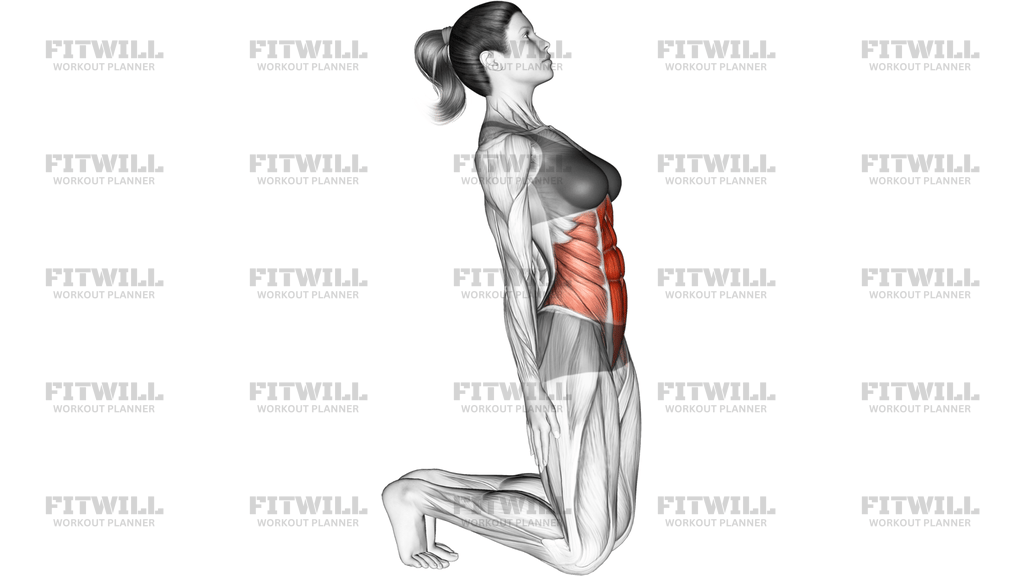
Kneeling Abdominal Stretch is a floor-based stretch that opens the front of the body from the thighs through the hips, abs, and lower rib cage. In the pictured position, you kneel on a mat with the lower legs resting behind you, then shift the hips forward and lean the torso back to create a long line through the abdominal wall. It is useful when the hip flexors, rectus abdominis, and chest feel tight from sitting, sprinting, heavy lifting, or repeated trunk flexion.
The setup matters because a small change in pelvis position changes the stretch completely. If the hips stay behind the knees, the pressure stays on the quads and the front of the thighs. If the hips move forward with control and the glutes stay lightly engaged, the stretch spreads through the abdominals and the front of the hips instead of collapsing into the low back. The image shows a tall kneeling posture with the rib cage lifted and the neck long, which is the cleanest way to keep the position organized.
This stretch should feel like a controlled opening through the front line, not a hard pinch in the lumbar spine. Let the pelvis glide forward gradually, keep the torso long, and use calm breathing to let the abs lengthen. A slight backward lean is part of the movement, but the goal is not to fold backward aggressively or dump the weight into the spine. The end range should feel firm yet tolerable, with the breath staying smooth.
Use a mat or padded surface so the knees can stay down comfortably while you hold the position. The exercise works well after leg training, core work, or long periods of sitting, and it can also serve as part of a warmup when the trunk feels stiff. The most useful reps are slow, symmetrical, and easy to repeat, with each side of the body staying square rather than twisting to one side.
If the low back takes over, shorten the range and re-stack the ribs over the pelvis before you lean farther back. If the knees are sensitive, add padding or reduce the hold time. Beginners can usually do this movement well because the control demands are simple, but only if the stretch stays gentle and the pelvis stays organized. The best result is a clear opening through the abdominals and hips without losing posture or forcing the range.
[ Workout Log & Planner ]
Put your next workout in Fitwill
Keep your plan and training log ready when you are.


Instructions
- Place a mat under your knees and kneel with your knees hip-width apart and the tops of your feet resting on the floor.
- Stack your torso tall, point your pelvis forward, and lightly brace your glutes before you move.
- Keep your hands by your sides or on your thighs and avoid letting the ribs flare hard at the start.
- Slowly drive the hips forward a few inches while keeping the knees down and the shins in contact with the mat.
- Lean the torso back only as far as you can without pinching the low back or losing balance.
- Lift the sternum and breathe into the front of the ribs so the abdominal wall can lengthen.
- Hold the end position for the intended stretch, keeping the neck long and the chin neutral.
- Return to a tall kneeling position with control, then repeat for the planned hold time or reps.
Tips & Tricks
- Think of the stretch as a forward glide of the hips, not a big backward bend through the lumbar spine.
- A light glute squeeze helps keep the pelvis organized and makes the front-of-body stretch easier to feel.
- If the stretch lands mostly in the quads, move the hips forward a little more and re-check that the torso stays tall.
- If your low back feels compressed, shorten the range and keep the ribs from flaring upward.
- Use a thicker mat or folded towel if kneeling pressure is the first thing that limits the hold.
- Keep the motion symmetrical; drifting to one side usually means one hip is taking over.
- Slow breathing matters here because a long exhale often lets the abdominal wall soften into the stretch.
- Stop the rep if you feel a sharp lumbar pinch, knee pain, or a cramping sensation in the front of the hips.
Frequently Asked Questions
What does the kneeling abdominal stretch target most?
It mainly lengthens the abdominal wall and the hip flexors, especially when you drive the hips forward and keep the torso tall.
How should my knees and feet be positioned on the mat?
Kneel with the knees about hip-width apart and the tops of the feet resting on the floor or mat so the base stays stable.
Why does my low back feel it more than my abs?
You are probably leaning back too far or letting the ribs flare. Shorten the range and keep the pelvis moving forward instead of hinging hard through the spine.
Should I squeeze my glutes during the stretch?
A light glute squeeze is helpful because it keeps the pelvis from tipping forward too much and shifts the stretch toward the abdominals and hip flexors.
Can I keep my hands on my thighs while doing this?
Yes. Keeping the hands on the thighs can help you control the backward lean and stop the chest from collapsing.
What is the most common mistake with this movement?
The biggest mistake is turning it into an uncontrolled backbend. The hips should glide forward first, then the torso opens only as far as you can keep control.
Is this a good stretch after leg day or ab work?
Yes. It is especially useful after workouts that tighten the hip flexors, abdominals, or front of the pelvis.
How long should I hold the position?
Hold it long enough to feel a steady stretch without pain or breath-holding, then come back up and repeat if needed.