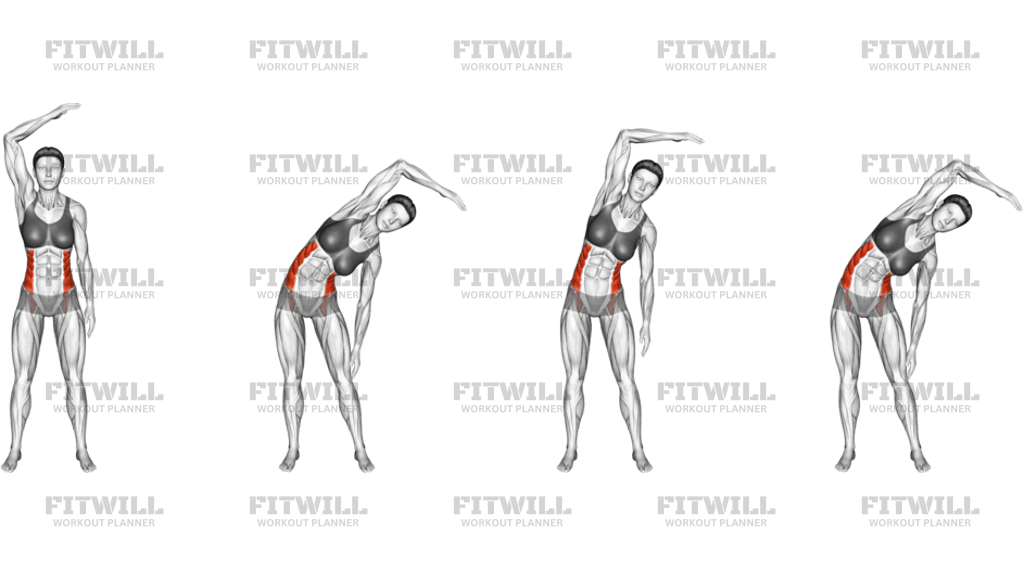
Standing Lower Trunk Lateral Flexor Stretch
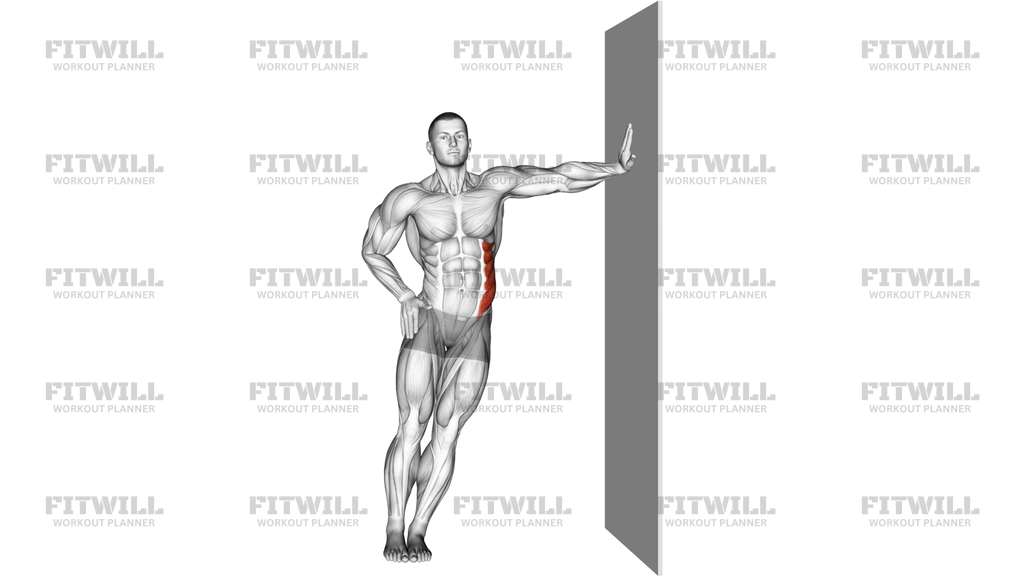
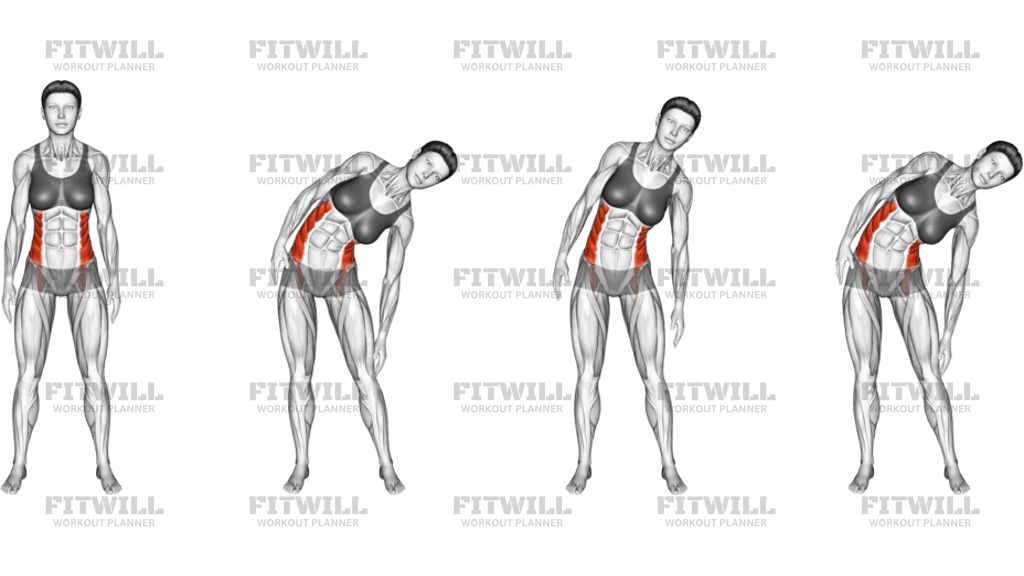
Standing Lower Trunk Lateral Flexor Stretch is a standing wall-assisted stretch for the side of the trunk, especially the waist, obliques, and the muscles between the ribs. It is useful when you want to open up a tight side body after lifting, desk work, overhead training, or any session that leaves the rib cage and pelvis feeling compressed. The movement is small, but the setup matters because the wall gives you a fixed point to reach toward while the rest of the body lengthens away.
This stretch is most effective when you stay tall through the spine and let the rib cage drift away from the wall instead of cranking the low back. The wall-side hand acts as a guide, not a push-off point, and the hips should stay mostly square so the stretch stays on the side waist rather than turning into a forward bend or a twist. The goal is a clean line from the supporting hand through the side body, not a dramatic lean.
The working side should feel a gradual opening from the lower ribs down toward the hip. Keep the shoulder on the wall side relaxed and avoid shrugging it up toward the ear, because that usually shortens the very area you are trying to lengthen. A soft knee bend can make the position easier to hold, especially if tight hamstrings or a rigid lower back make it hard to keep the pelvis steady.
Use slow breathing to help the rib cage expand into the stretched side. Exhale first, then ease a little farther away from the wall without forcing a big jump in range. That makes the stretch feel more controlled and usually less pinchy around the low back or shoulder. If the sensation shifts from a side-body stretch into joint pain, shorten the range immediately and reset the stance.
Standing Lower Trunk Lateral Flexor Stretch fits well in a warm-up, between heavier lifts, or during cooldown work when you want to restore side-body length and trunk freedom. It is also a good choice for beginners because it does not require load, speed, or complex coordination. Keep the movement smooth, repeat it on both sides, and stop the set as soon as the torso starts to rotate, the shoulder hikes up, or the stretch loses its clear line through the waist.
[ Workout Log & Planner ]
Put your next workout in Fitwill
Keep your plan and training log ready when you are.


Instructions
- Stand side-on to a wall and place the hand closest to the wall flat on it at shoulder height, with the elbow slightly soft and the fingers pointing up.
- Set your feet together or slightly staggered, keep both toes pointing forward, and square your hips and chest before you start the reach.
- Press the wall lightly with the working hand while the free hand rests on the hip or hangs by your side.
- Exhale, then let the rib cage drift away from the wall as you lengthen the side of the trunk.
- Keep the wall-side shoulder down and slightly away from the ear so the stretch stays in the waist instead of the neck.
- Reach the outside hip a little farther away from the wall while keeping the pelvis mostly level and the torso from twisting open.
- Hold the end position for a brief, steady breath and feel the stretch run from the lower ribs toward the hip.
- Inhale to ease a fraction farther if it feels smooth, or reduce the angle if the low back starts to take over.
- Return to an upright stance under control, lower the wall hand, and repeat on the other side before releasing the stretch.
Tips & Tricks
- Keep the wall-side hand light; if you push hard, the shoulder often creeps up and steals the stretch from the side waist.
- Think about moving the rib cage away from the wall more than leaning the whole body sideways.
- A small bend in both knees makes it easier to keep the pelvis square and prevents the stretch from becoming a low-back hinge.
- If the stretch shows up in your shoulder instead of your trunk, move the hand slightly lower or soften the elbow a little.
- Keep the front of the pelvis facing forward; turning the hips opens the lower back and reduces the side-body line.
- Long exhales usually let you gain a little more range than forcing the lean deeper with one big push.
- Do not chase a huge side bend if the lower ribs start to flare; the best reps feel long, not collapsed.
- Repeat both sides evenly, because this stretch is often used to compare one tighter side waist against the other.
Frequently Asked Questions
What does Standing Lower Trunk Lateral Flexor Stretch target most?
It mainly targets the side of the trunk, especially the obliques and the muscles between the ribs on the wall side.
Do I need to push hard into the wall during Standing Lower Trunk Lateral Flexor Stretch?
No. The wall is only there for balance and a fixed reach point, so light contact is enough.
Should my hips stay square in Standing Lower Trunk Lateral Flexor Stretch?
Yes. Keep the pelvis mostly facing forward so the stretch stays on the side waist instead of turning into a twist.
Can beginners do Standing Lower Trunk Lateral Flexor Stretch?
Yes. It is beginner-friendly because the range is easy to control and you can shorten the lean whenever the side body starts to feel strained.
Why does my shoulder feel it more than my waist?
You are probably shrugging the wall-side shoulder or reaching too aggressively. Keep the shoulder down and let the rib cage move away from the wall instead.
How long should I hold each side?
A short, steady hold of about 15 to 30 seconds is usually enough to get a useful side-body stretch without losing position.
What is a good substitute if I do not have a wall?
You can do a standing side-body reach with one hand overhead, but the wall version gives you a clearer line and better balance.
Why does the lower back take over sometimes?
That usually happens when you lean too far or flare the ribs. Shorten the range and think about lengthening the side ribs instead of arching backward.