Seated Lower Trunk Lateral Flexor Stretch
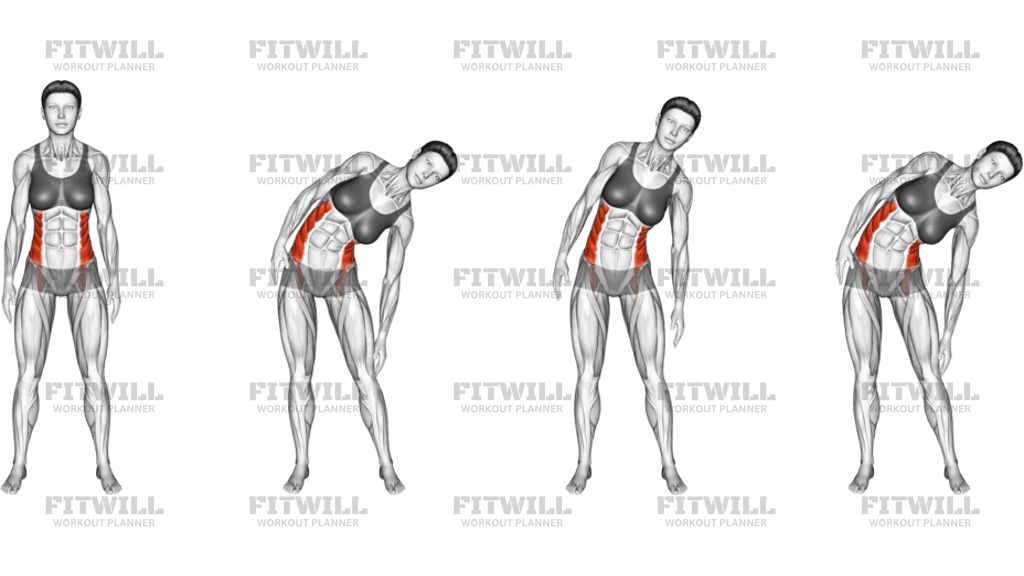
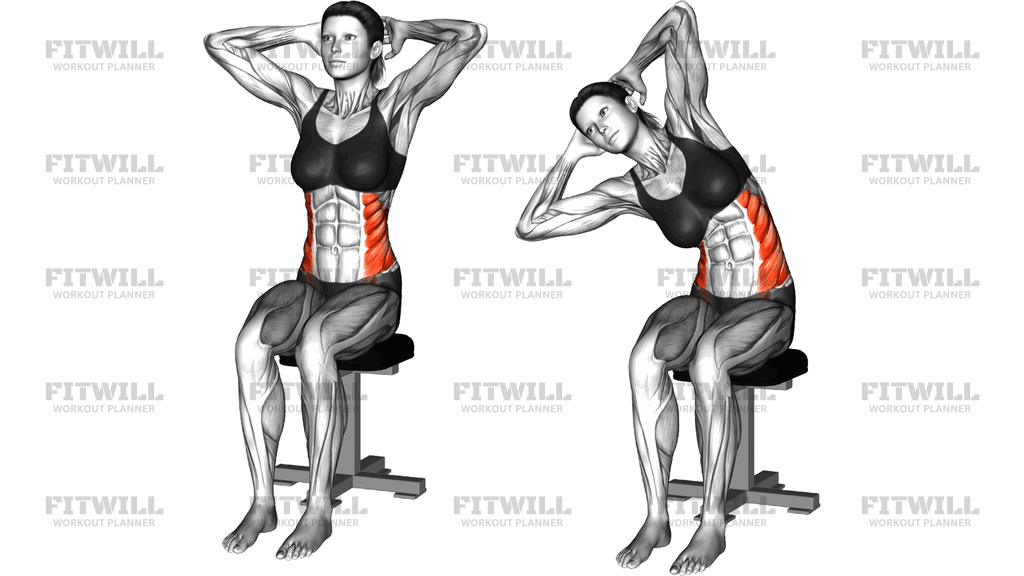
Seated Lower Trunk Lateral Flexor Stretch is a seated side-bending mobility exercise for the waist and lower ribs. The setup in the image matters: both sit bones stay grounded on the bench, the feet stay planted, and the hands lightly support the head so the neck can relax while the torso does the work. The goal is not to twist or crunch forward, but to create a clean lateral opening through the side of the trunk.
This stretch is useful when the lower ribs, obliques, and side waist feel stiff from lifting, running, overhead work, or long periods of sitting. The movement should feel like the rib cage is drifting away from the hip on one side while the opposite side shortens under control. When it is done well, the pelvis stays quiet and the spine bends smoothly from the mid and lower trunk instead of collapsing through the shoulders or low back.
A good rep starts tall. Sit upright on a bench or sturdy seat, brace lightly, and keep the chest facing forward as you side-bend to one side. The head should follow the torso without being pulled. Breathe into the open side as you reach the end range, then return to center with the same control you used to get there. If you feel pinching in the low back, neck strain, or unwanted rotation, the range is too large or the posture is drifting.
Use this stretch as part of a warmup, cool-down, or mobility block when you want to restore side-bending motion and reduce stiffness around the trunk. The useful range is usually smaller than people expect, and the best results come from staying relaxed, keeping the rib cage stacked, and repeating both sides evenly. It should feel like a controlled lengthening through the side waist, not a forced bend or a max-effort hold.
[ Workout Log & Planner ]
Put your next workout in Fitwill
Keep your plan and training log ready when you are.


Instructions
- Sit on a bench or sturdy seat with both feet flat and your knees about hip-width apart.
- Keep both sit bones grounded and place your hands lightly behind your head with the elbows open.
- Stack your ribs over your pelvis so the chest faces straight ahead before you move.
- Inhale to grow tall, then slowly side-bend your torso to one side without twisting forward.
- Let the elbow on the bending side move down while the opposite elbow arcs up naturally.
- Stop when you feel a stretch through the opposite side waist and lower ribs, not a pinch in the low back.
- Hold the position and breathe steadily, allowing the rib cage to open on the stretched side.
- Return to the center with control, reset your posture, and repeat to the other side.
- Keep the neck relaxed throughout and reduce the range if the shoulders start to shrug or rotate.
Tips & Tricks
- Keep both sit bones heavy on the bench so the pelvis does not slide toward the side you bend to.
- Think of the movement starting at the ribs, not by crunching the shoulder toward the hip.
- Keep the chest facing forward; if it turns, you are twisting instead of laterally flexing.
- Use only light hand pressure behind the head so you do not pull on the neck.
- A firm bench or box is better than a soft cushion because it makes the pelvis easier to control.
- Exhale gently as you settle into the stretch to help the side ribs relax.
- If the stretch shows up in the neck first, shorten the range and keep the elbows slightly more forward.
- Stop before the low back pinches; this should feel like a clean line of tension through the side waist.
Frequently Asked Questions
What does Seated Lower Trunk Lateral Flexor Stretch target?
It targets the side of the trunk, especially the lower ribs and waist on the lengthening side.
Why are the hands behind the head?
The hands support the head so the neck can stay relaxed while the torso side-bends.
Should I twist as I lean to the side?
No. Keep the chest facing forward and let the movement come from lateral flexion, not rotation.
Where should I feel the stretch most?
You should feel it along the opposite side waist and lower ribs, not as a pinch in the low back.
Is this stretch safe for beginners?
Yes, as long as the range is small, the pelvis stays planted, and the movement stays pain-free.
How long should I hold each side?
A short controlled hold is usually enough; follow your program, but avoid forcing the position.
What is the most common mistake with this stretch?
People usually pull hard on the head, twist the torso, or collapse the pelvis instead of side-bending cleanly.
Can I use this in a warmup or cooldown?
Yes. It works well in either place when you want to restore trunk side-bending motion.