Standing Side Stretch
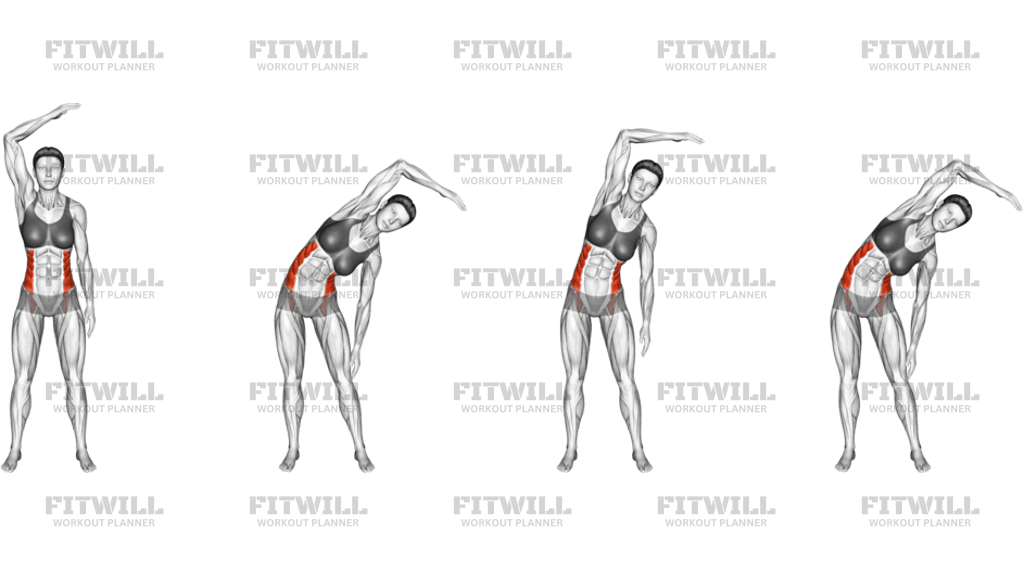
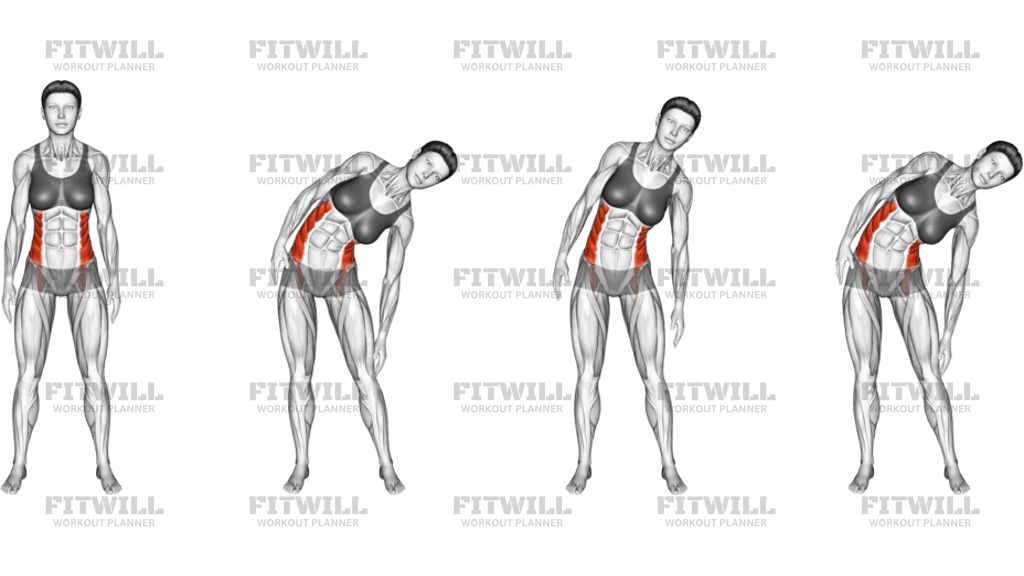
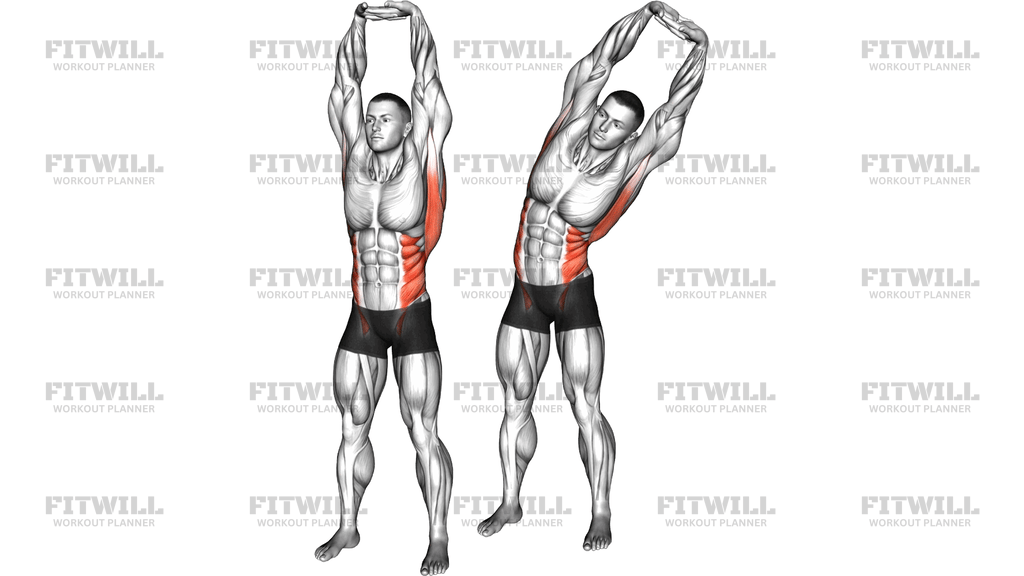
Standing Side Stretch is a standing overhead side-bend stretch that loads the outer trunk, lats, and obliques while teaching the rib cage and pelvis to stay organized through a long lateral line. The image shows a tall stance with both arms reaching overhead and the torso arcing to one side, so the goal is not to twist or collapse forward. It is a controlled lengthening drill for the side body, with the stretch increasing as you keep the hips stacked and the reach active.
Because this movement is built around posture, the setup matters more than the depth of the bend. Start tall with both feet planted, knees soft, and the arms extended overhead or the hands clasped above the head. Keep the shoulders elevated enough to create space through the rib cage, then side-bend only as far as you can while keeping the chest open and the pelvis mostly square. That clean line is what makes the stretch useful for the lats, quadratus lumborum, intercostals, and the outer abdominal wall.
The best repetition uses a smooth arc instead of a slump. As you lean, let the body travel in one plane, with the top ribs opening and the lower side of the torso lengthening. Avoid letting the elbow drift forward, the chest rotate down, or the hips push out to one side to fake extra range. If you are reaching for more stretch, think about lifting through the fingertips while lengthening the opposite side from the hip to the armpit.
This is commonly used during warm-ups, cool-downs, mobility sessions, or as an accessory drill between stronger sets when the trunk and shoulders need a reset. It can help lifters who feel tight through the lats after pulling work, or who want better overhead comfort without forcing end-range shoulder positions. The exercise should feel like a long, organized side-body stretch rather than a sharp pinch in the low back or shoulder.
Keep the motion pain-free and repeatable. A smaller range with steady breathing is better than a big bend that collapses the ribs or strains the lumbar spine. If one side feels noticeably tighter, work both sides deliberately and stop short of a hard end range. This movement is simple, but it only does its job when the stretch stays clean, tall, and controlled from start to finish.
Fitwill
Log Workouts, Track Progress & Build Strength.
Achieve more with Fitwill: explore over 9600 exercises with images and videos, access built-in and custom workouts, perfect for both gym and home sessions, and see real results.
Start your journey. Download today!




Instructions
- Stand tall with both feet flat and about hip-width apart, knees soft, ribs stacked over the pelvis.
- Reach both arms overhead or clasp the hands above the head so the biceps frame the ears.
- Keep the shoulders active and the chest open before you begin the side bend.
- Inhale to lengthen upward, then exhale and arc the torso to one side without rotating forward.
- Let the hip on the bending side stay long while the opposite side body opens from the hip to the armpit.
- Keep both feet rooted and avoid shifting the hips sideways to cheat the range.
- Pause briefly at the end range only if the stretch feels smooth and pain-free.
- Inhale again as you return to the center under control, then repeat on the other side.
- Finish each rep by regaining a tall stacked position before changing sides.
Tips & Tricks
- Think of reaching up first, then bending, so the stretch stays long instead of cramped.
- Keep the chest facing forward; if the sternum turns down, you are taking the stretch out of the side body.
- A small bend with the ribs stacked is more effective than a big lean with the low back compressed.
- Press both feet into the floor so the movement comes from the trunk, not a hip shift.
- Let the top arm stay active overhead instead of letting it drift forward.
- Move slowly enough that you can feel the difference between the lat, the obliques, and the low-back stretch.
- If one side feels tighter, shorten the range and breathe into the restricted side rather than forcing it.
- Stop if the stretch turns into pinching in the shoulder or a sharp tug in the lumbar spine.
Frequently Asked Questions
What does Standing Side Stretch work most?
It mainly targets the lats, obliques, intercostals, and the outer trunk on the side you are bending away from.
Why keep both arms overhead during this stretch?
The overhead reach lengthens the side body and increases tension through the lats and ribs before the side bend begins.
Should I bend at the waist or move the hips too?
The hips should stay mostly stacked while the torso arcs sideways; a big hip shift usually turns the stretch into a lean instead of a true side bend.
Can I do this if my shoulders feel tight overhead?
Yes, but keep the reach gentle and slightly lower the arms if full overhead position causes pinching or rib flare.
What is the most common mistake with this stretch?
People usually rotate the chest down, push the hips out, or collapse forward instead of staying tall through the ribs.
Is this a strength exercise or a mobility exercise?
It is mainly a mobility and positional-control drill, although it also teaches the trunk to hold tension in a stretched position.
How should I breathe during the side bend?
Inhale to grow tall, then exhale as you fold into the side stretch and use another breath to ease back to center.
When is this exercise useful in a workout?
It fits well in warm-ups, cool-downs, or between pulling and overhead work when the side body and lats need to open up.