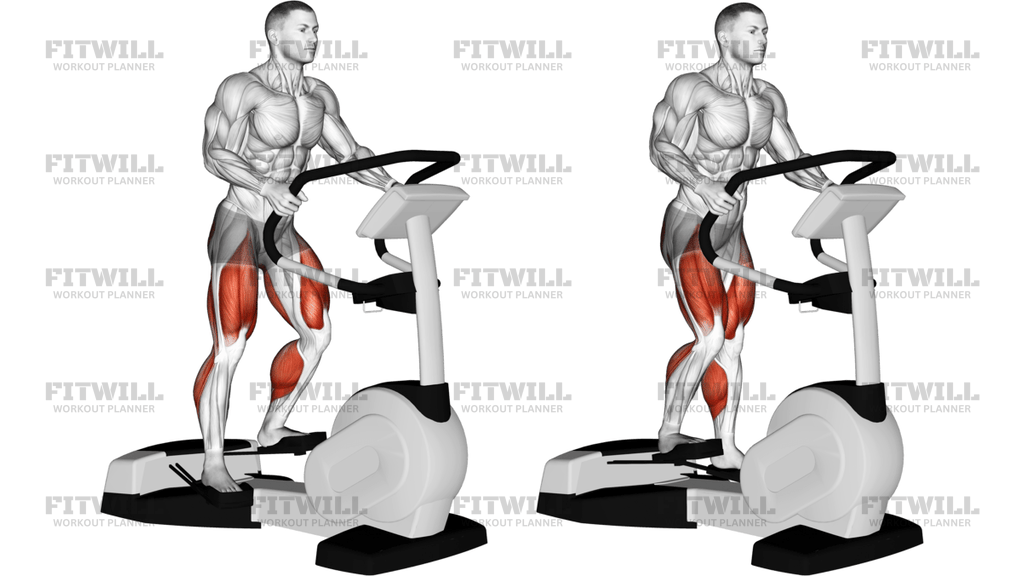
Stationary Bike Run Version 3
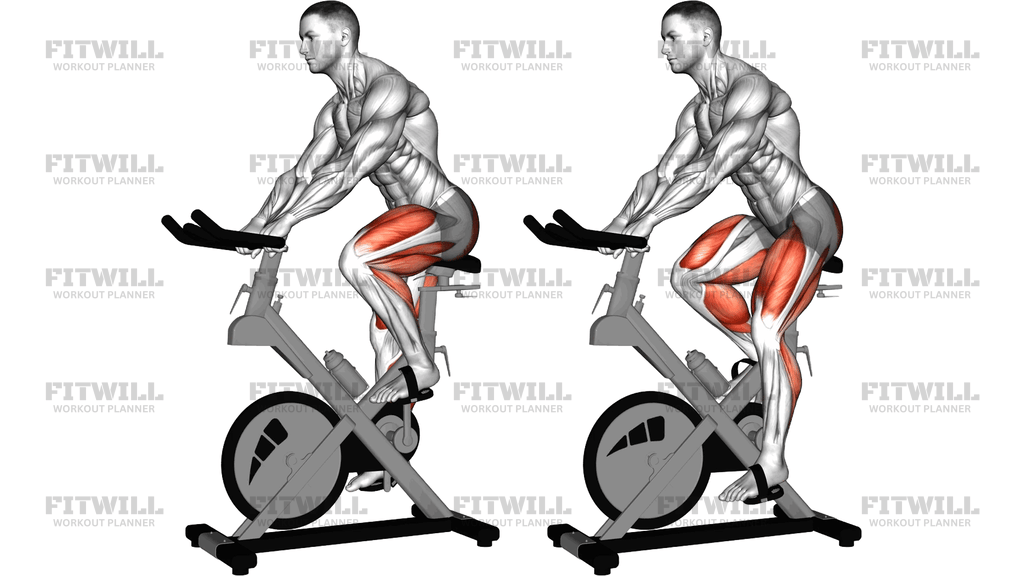
Stationary Bike Run Version 3 is a seated cycling drill on a stationary bike or leverage-bike style machine that mimics a fast running cadence while keeping constant pedal contact. The movement is built around smooth leg drive, steady breathing, and a stable torso rather than upper-body effort. It is most useful when you want to train the thighs with a high-repetition, low-impact pattern that can be repeated cleanly for intervals or conditioning blocks.
The setup matters because the seat, handle position, and foot placement determine whether the legs can work efficiently. The saddle should be high enough that the knee keeps a slight bend at the bottom of the pedal stroke, and the hips should stay level instead of rocking side to side. The hands rest on the bars with relaxed elbows, the chest stays long, and the pelvis stays centered over the seat so the legs can turn freely.
Once you start pedaling, the goal is a smooth circular drive through the full stroke. One leg presses down while the other rises, and the force should stay even through the top, bottom, and back of the rotation instead of turning into a stomp. The knees track forward, the shoulders stay quiet, and the ankles stay organized so the pedals keep spinning without bouncing or twisting the lower body.
This exercise is a practical choice for warmups, sprint intervals, aerobic conditioning, or a leg-focused finisher because you can adjust the challenge with cadence and resistance. Lower resistance and shorter intervals make it approachable for beginners, while harder resistance and longer work bouts increase the demand on the thighs and cardiovascular system. The machine should feel controlled from start to finish, not loose or rushed.
The main safety priorities are knee tracking, saddle height, and resistance choice. If the hips start to sway, the seat is usually too low or the load is too heavy. If the shoulders tense up, the rider is probably leaning too hard into the bars. Keep the motion deliberate enough that you can finish each interval with the same posture you started with, then ease the resistance before stepping off.
[ Workout Log & Planner ]
Put your next workout in Fitwill
Keep your plan and training log ready when you are.


Instructions
- Adjust the saddle so your knee keeps a slight bend at the bottom of the pedal stroke and your hips stay level.
- Place your hands on the handlebars with soft elbows, then hinge forward from the hips until your chest feels long and open.
- Set the balls of your feet over the pedal axle and fasten the straps or clips if the bike has them.
- Begin with an easy cadence and settle your pelvis before you add speed or resistance.
- Drive one foot down as the other rises, making the pedal stroke feel like a smooth circle rather than a stomp.
- Keep both knees tracking forward in line with your toes and avoid letting them flare outward.
- Hold your shoulders down and keep your grip light so the upper body does not take over the effort.
- Breathe in a steady rhythm through the work interval, then back the cadence and resistance down before you step off.
Tips & Tricks
- If your hips bounce, the saddle is usually too low or the resistance is too heavy.
- Keep enough bend in the elbows that you can support the torso without locking your arms straight.
- A small heel drop at the bottom of the stroke helps keep the ankle and knee lined up.
- Do not lean so hard on the bars that your shoulders shrug and your core stops working.
- Use resistance that keeps the pedals loaded through the full circle; too little load turns the movement into spinning without leg work.
- For knee comfort, keep the knees pointing forward instead of letting them drift wide on the drive phase.
- Short intervals are easier to control than long all-out efforts when you are still learning the rhythm.
- Increase difficulty by adding resistance first, then by lengthening the work interval or cadence target.
Frequently Asked Questions
What muscles work most during Stationary Bike Run Version 3?
The thighs do most of the work, especially the quadriceps, with help from the glutes, hamstrings, calves, hip flexors, and core stabilizers.
Is this a beginner-friendly bike exercise?
Yes. Start with low resistance and short intervals so you can learn the pedal rhythm without bouncing on the saddle.
How should the saddle be set for this movement?
Set it high enough that the knee still has a slight bend at the bottom of each stroke and the pelvis does not rock side to side.
Should my feet stay strapped into the pedals?
Yes, if the bike has straps or clips. That keeps the foot centered and helps you control both the push and the recovery part of the stroke.
Why do my knees feel stressed on this bike run?
The most common reasons are a seat that is too low, knees flaring outward, or resistance that is too heavy for the cadence you are holding.
Should I stay seated or stand up?
This version is meant to stay seated. Standing changes the load and turns it into a different cycling variation.
How fast should I pedal?
Fast enough to feel smooth and springy, but not so fast that you lose pedal contact or start bouncing on the seat.
How do I make this harder without ruining form?
Add resistance first, then extend the work interval or push the cadence slightly higher while keeping the hips steady and the shoulders relaxed.