Walk Elliptical Cross Trainer
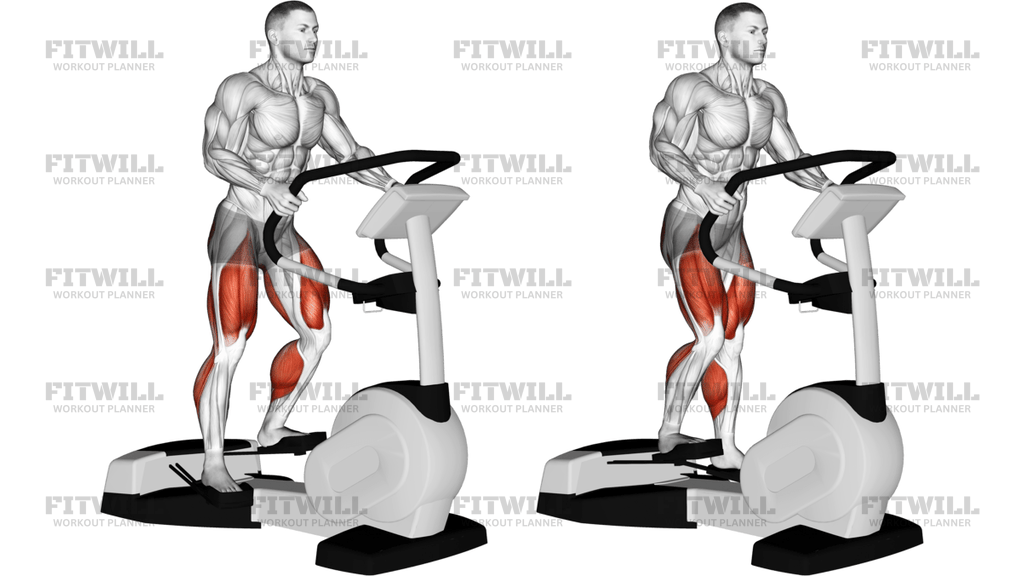
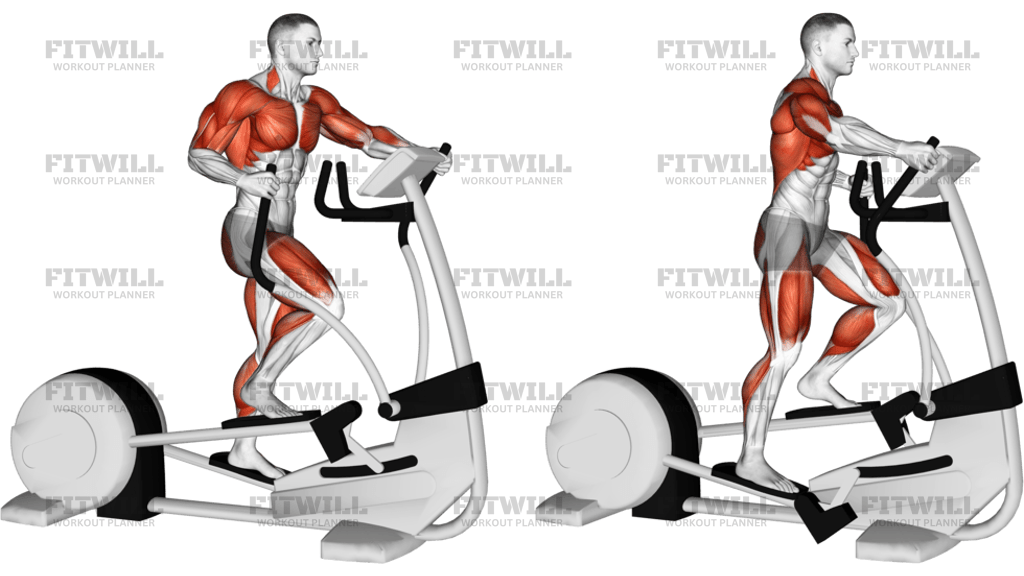
Walk Elliptical Cross Trainer is the walking-style use of an elliptical cross trainer, where the pedals and moving handles create a smooth, low-impact stride pattern. It is a machine-based cardiovascular exercise that keeps the feet supported while the legs cycle through a natural arc and the upper body helps drive the rhythm. That makes it useful when you want steady conditioning without the impact of running or the coordination demands of free walking on uneven ground.
This movement places the main emphasis on the thighs, with the glutes, calves, core, shoulders, back, and arms helping to keep the stride organized. The machine does most of the path control for you, but the quality of the set still depends on posture, resistance choice, and how evenly you share work between the pedals and handles. If you slump onto the console or let your stride get choppy, the exercise quickly turns into a leaning-and-pushing pattern instead of smooth cross-trainer work.
A good Walk Elliptical Cross Trainer setup starts with both feet centered on the pedals, light hands on the handles, and the chest stacked over the hips. Keep the ribs down, the gaze forward, and the knees softly bent before you start the first stride. From there, press one pedal down as the opposite side rises, letting the arms move in opposition without yanking the handles or locking the elbows.
The best reps feel even and repetitive. Breathe in as one side returns and breathe out as you drive through the next step, keeping the cadence smooth enough that the pedals do not slap or jerk. If the resistance is too high, the stride often shortens and the shoulders begin to shrug; if it is too low, the motion can become too casual to train much beyond a warmup. Adjust the machine until you can stay tall and keep the drive through the whole foot instead of bouncing on the toes.
Walk Elliptical Cross Trainer is a practical choice for warmups, steady-state cardio, recovery sessions, and interval work when you want to accumulate time without excess joint stress. Beginners can usually use it right away because the path is guided, but they should start with low resistance and a comfortable pace. More advanced users can add resistance, longer intervals, or reverse direction if the machine allows it, as long as the stride stays smooth and the body stays centered over the pedals.
[ Workout Log & Planner ]
Put your next workout in Fitwill
Keep your plan and training log ready when you are.


Instructions
- Step onto the pedals with each foot centered and take a light hold of the moving handles.
- Set the resistance low enough that you can keep a smooth stride and an upright torso.
- Stand tall with your chest over your hips, knees softly bent, and eyes forward before you start.
- Begin the stride by pressing one pedal down as the opposite pedal rises, letting the legs move in a natural walking rhythm.
- Move the handles in opposition to the legs with relaxed elbows and a light grip, not a death grip.
- Keep your hips level and your shoulders down so you are driving the machine instead of leaning onto it.
- Breathe out as you drive through the down-and-forward phase and breathe in as the pedals return.
- Maintain the same stride length and cadence for the full set, then slow the machine before stepping off.
Tips & Tricks
- Keep your whole foot on each pedal so the pressure stays even instead of living on your toes.
- Do not lean your chest into the console; that usually means the resistance is too high or your core is not doing enough work.
- Let the handles help you stay in rhythm, but avoid pulling hard enough that your arms take over the set.
- If your shoulders start to creep upward, soften your grip and shorten the stride slightly.
- Use a resistance level that lets your knees track smoothly without banging through the top or bottom of the cycle.
- A smoother, slightly slower cadence is usually better than a fast stride that makes the pedals slap or wobble.
- Keep the hips square; if you feel side-to-side rocking, reduce speed and re-center your weight over both pedals.
- If the machine allows reverse motion, use it occasionally to change the emphasis and reduce repetition fatigue.
- Stop increasing resistance once the stride gets choppy, because quality drops off before the cardio benefit does.
Frequently Asked Questions
What muscles does Walk Elliptical Cross Trainer work most?
It mainly trains the thighs while also involving the glutes, calves, core, shoulders, back, and arms through the moving pedal-and-handle pattern.
Is Walk Elliptical Cross Trainer good for beginners?
Yes. The guided path and low-impact stride make it beginner-friendly as long as the resistance stays light enough to keep the motion smooth.
Should I hold the moving handles on Walk Elliptical Cross Trainer?
Lightly, yes. The handles should help coordinate the stride, not become a place to hang your bodyweight.
How do I know if the resistance on the elliptical is too high?
If your stride shortens, your shoulders shrug, or you start leaning hard into the console, the resistance is probably too high.
Why do my knees feel awkward on the pedals?
That usually comes from overstriding, standing too high on the toes, or choosing a pace that is faster than your control can handle.
Can I use Walk Elliptical Cross Trainer for cardio intervals?
Yes. It works well for intervals because you can change resistance or pace without the impact that comes with running sprints.
What is the biggest form mistake on Walk Elliptical Cross Trainer?
Leaning on the handles and letting the machine carry you. The set should still feel like active leg drive with the upper body assisting the rhythm.
Can I go backward on the elliptical cross trainer?
If the machine allows it, yes. Reverse motion can shift the feel a bit and is useful for variety, but the same posture and smooth cadence still matter.