Resistance Band Side Plank
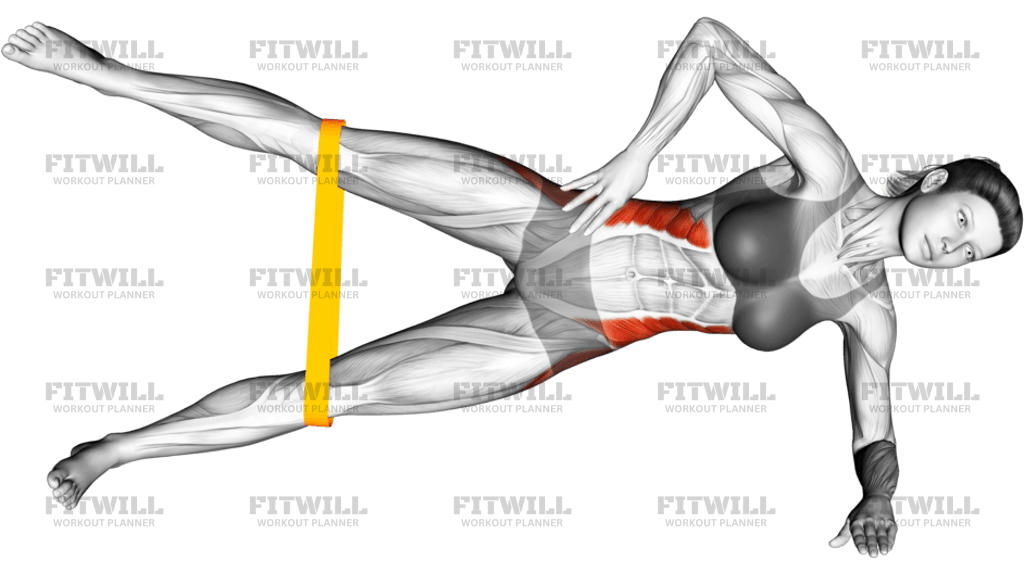
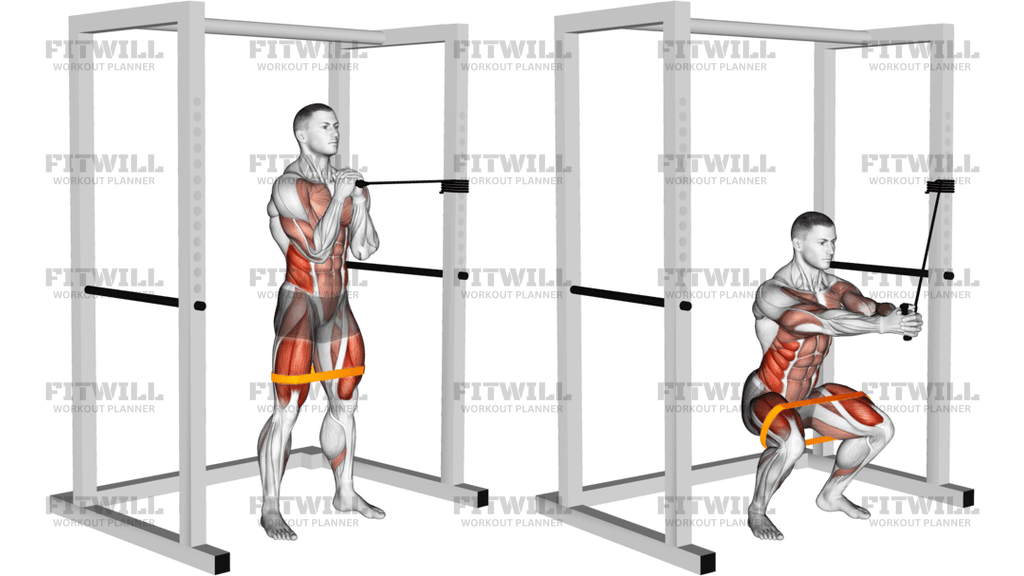
Resistance Band Side Plank is a side-core and hip stability exercise performed from a forearm side plank with a loop band around the thighs just above the knees, as shown in the image. It trains the trunk to stay stacked while the band adds extra demand on the hips and outer waist.
The main effect is anti-lateral flexion and pelvic control. The obliques do most of the work, with the transverse abdominis, quadratus lumborum, and other deep core muscles helping keep the ribs and pelvis from drifting out of line. The glute medius and surrounding hip stabilizers also have to stay active so the top leg and pelvis do not collapse into the band.
The setup matters because the shoulder, ribs, and pelvis have to share the load cleanly. Place the elbow directly under the shoulder, press the forearm into the floor, and stack the feet or stagger them if you need a wider base. Lift the hips until the body forms one long line from head to heels, then keep the rib cage down so the movement does not turn into a low-back arch.
If your version of the exercise includes a small leg press against the band, keep the knees gently driving apart without letting the top hip roll back. If it is being used as a pure side-plank hold, keep the same outward pressure and steady breathing for the full rep or hold. The goal is a quiet torso, level hips, and a shoulder that stays packed instead of shrugging toward the ear.
This exercise fits well in core circuits, lower-body warm-ups, and accessory blocks for athletes who need better lateral stability in running, squatting, lunging, and single-leg work. Use a light enough band that you can keep the pelvis square and the neck relaxed. Short, clean holds are more useful than long holds that turn into sagging or twisting.
[ Workout Log & Planner ]
Put your next workout in Fitwill
Keep your plan and training log ready when you are.


Instructions
- Lie on your side and set your lower forearm on the floor with the elbow directly under the shoulder.
- Place the loop band around your thighs just above the knees, then stack your feet or stagger them for more balance.
- Tighten your abs, squeeze your glutes, and keep your top hand on your hip or reach it upward if that is the version you are using.
- Press the forearm down and lift your hips until your body forms a straight line from head to heels.
- Keep your chest mostly forward, with the ribs tucked and the pelvis level, so you do not rotate open or sag at the waist.
- If the exercise calls for movement, gently press the knees apart against the band and keep the hips from shifting backward.
- Hold the top position while breathing under control, or lower the hips a few inches and drive back up if you are using repetitions.
- Reset the shoulder and pelvis before each new rep or hold, then repeat for the planned time or count.
Tips & Tricks
- Keep the elbow exactly under the shoulder; if it drifts forward, the shoulder has to fight unnecessary shear.
- A slightly staggered foot position gives more stability than perfectly stacked feet and is useful when the band makes balance sloppy.
- Do not let the top hip drift backward just to create more tension in the band; stay square and let the obliques do the work.
- Keep the bottom ribs pulled in so the set stays in the side waist instead of turning into a low-back arch.
- Choose band tension that challenges the hips without forcing the knees wide enough to twist the pelvis.
- If the neck starts to shorten or the shoulder creeps toward the ear, end the hold and reset before the next rep.
- Short, crisp holds usually build better side-core control than long holds that gradually collapse.
- Exhale slowly while bracing to make it easier to keep the rib cage down against the band tension.
Frequently Asked Questions
What muscle does Resistance Band Side Plank target most?
It primarily targets the obliques, with the outer hip and deep core muscles helping keep the body stacked.
Is this exercise a hold or a repetition?
Most people use it as an isometric hold, but it can also be done as small controlled hip lifts while staying in the side plank.
Where should the resistance band sit?
The image shows the loop band around the thighs just above the knees, which is a practical spot for keeping the hips active.
Should my feet be stacked?
Stacked feet make the exercise harder. Staggered feet give you a wider base if balance or hip control is the limiter.
What should I feel working first?
You should feel the side waist and outer hip on the support side doing most of the work, not the low back.
Can beginners do this movement?
Yes. Start with a light band, shorter holds, and a staggered foot position so you can keep the torso steady.
What is the most common mistake?
Letting the hips sag or twisting open to escape the band tension is the most common form breakdown.
How do I make it harder?
Use a stronger band, stack the feet, or hold the top position longer without losing shoulder and pelvic alignment.