Band Decline Sit-Up
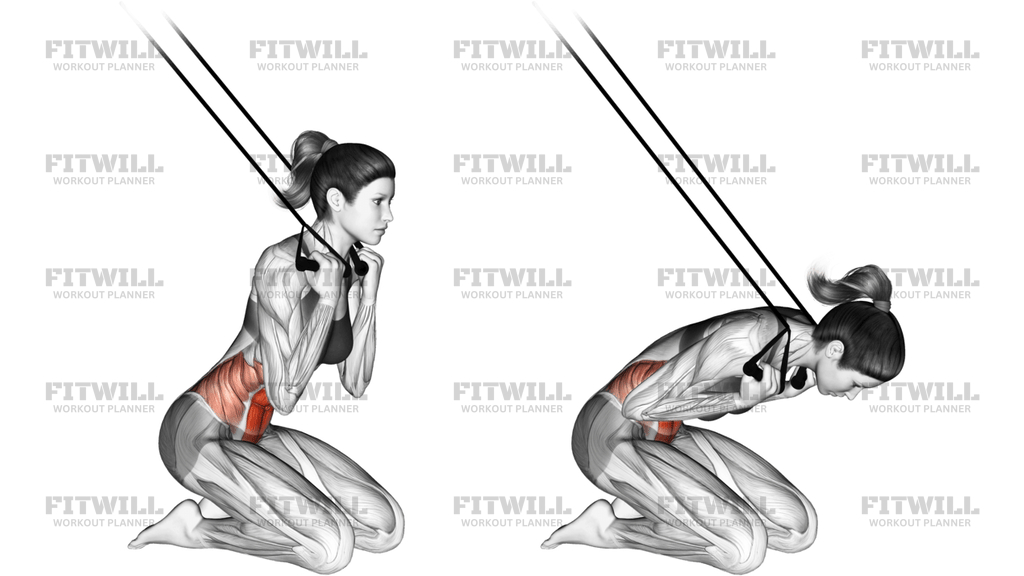
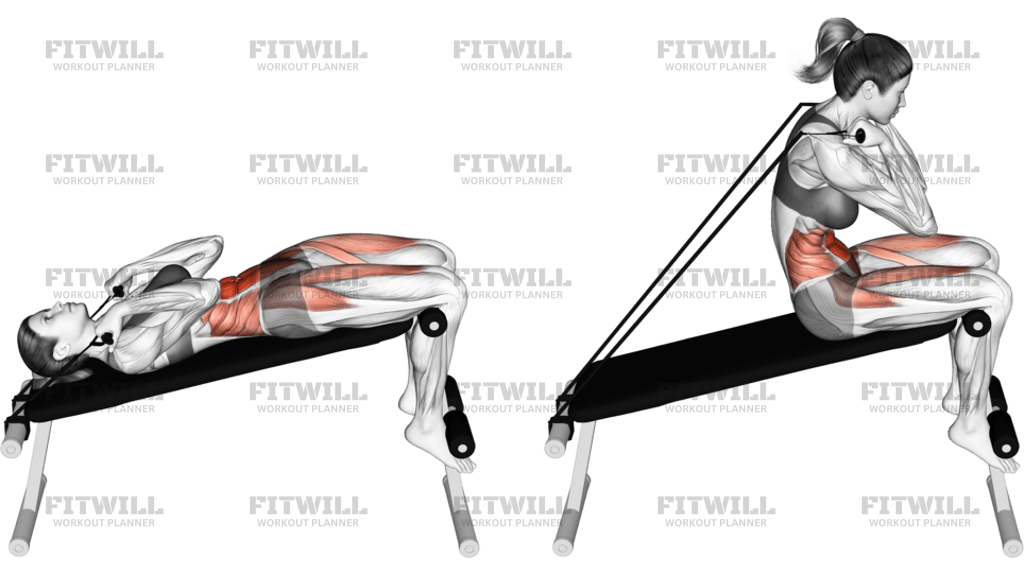
Band Decline Sit-Up is a resisted core exercise that combines the leverage of a decline bench with the extra challenge of band tension. The decline angle makes every rep longer and harder than a flat-floor sit-up, while the band increases resistance most noticeably as you come upright. That makes it a useful choice when you want the abs to do more of the work instead of letting the movement turn into a quick hip-driven crunch.
The main target is the rectus abdominis, with the obliques and deep abdominal wall helping control rotation and keep the torso organized. The hip flexors still assist, especially if you let the legs or pelvis take over, but the best reps come from curling the ribcage toward the pelvis instead of yanking yourself up. The band should add tension without pulling you out of position or forcing your shoulders to shrug.
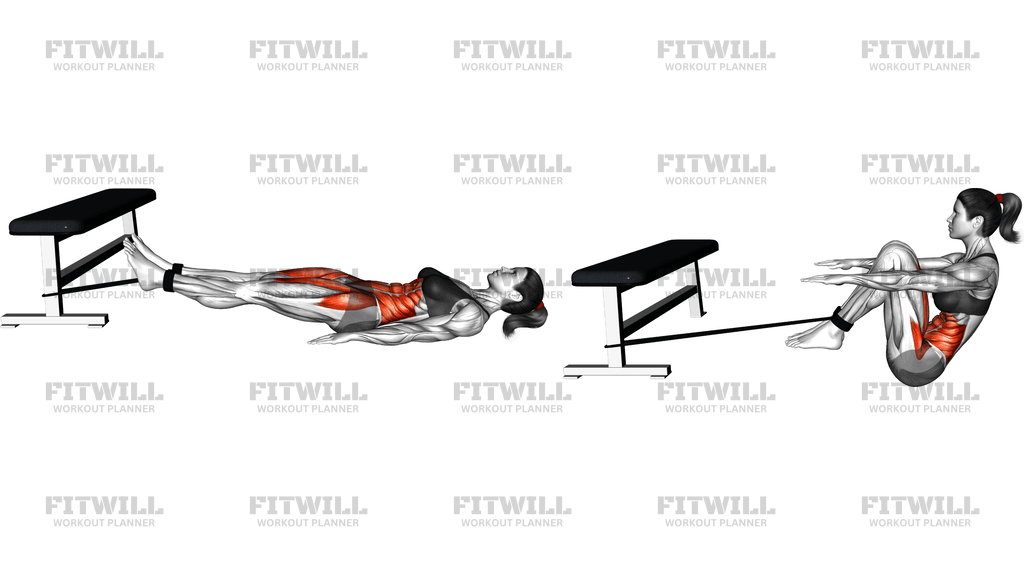
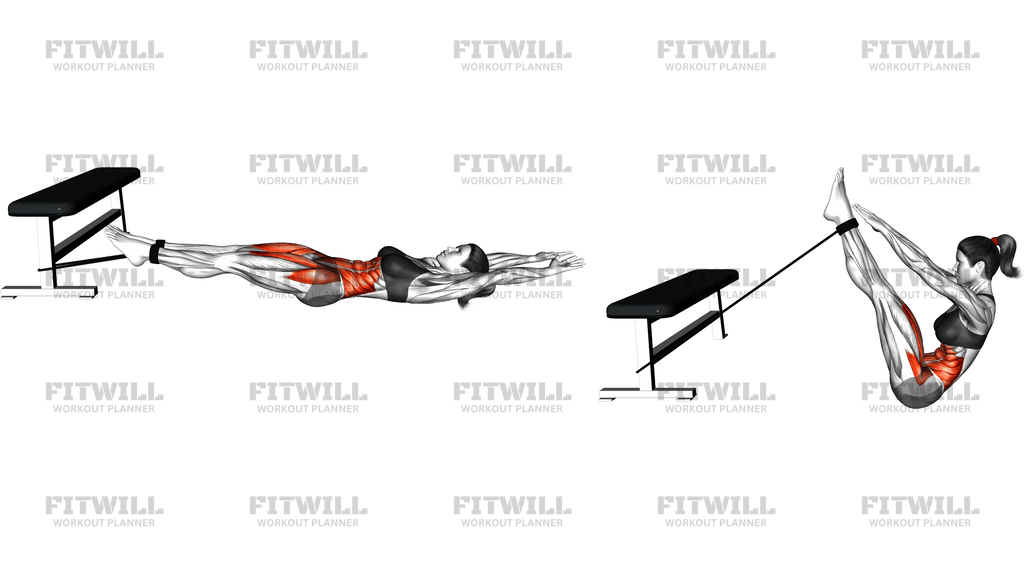
Setup matters a lot here because the bench angle, foot lock, and band path determine whether the rep feels smooth or awkward. Anchor or route the band behind the bench so it stays under tension through the sit-up, then lie back with your feet secured and your torso aligned on the pad. Keep the band across the upper torso or shoulders in a position that lets you start with control and finish without the band slipping or changing your posture.
On the way up, exhale and round the trunk just enough to lift the shoulders and upper back off the bench in one controlled arc. Avoid jerking the neck or swinging the arms to cheat the rep. The goal is a clean curl to a seated or near-seated position, then a slow descent back to the incline without losing tension or collapsing through the lower back. If the band is too aggressive, shorten the range before you sacrifice position.
Band Decline Sit-Up works well as a focused accessory movement for core strength, trunk flexion control, and progression from basic sit-ups or decline crunches. It can also fit into athletic training when you want harder abdominal work without loading the spine with a barbell. Keep the set honest: the moment the hips take over, the band loses its value and the exercise stops training the abs the way it should.
[ Workout Log & Planner ]
Put your next workout in Fitwill
Keep your plan and training log ready when you are.


Instructions
- Set the decline bench so your feet are locked in securely at the raised end and route the band behind the bench so it stays under tension.
- Lie back with the band positioned across your upper torso or shoulders and your hands helping keep it in place near the collarbone area.
- Plant your feet firmly, lightly tuck your chin, and brace your abs before you start the first rep.
- Begin by curling your upper back off the bench instead of yanking straight up with the hips.
- Keep the band tight as you sit up, bringing your ribcage toward your pelvis in one controlled arc.
- Finish tall without shrugging your shoulders or overextending your lower back at the top.
- Lower yourself slowly back onto the bench until your shoulder blades touch down and the abs are still engaged.
- Reset your breathing at the bottom, then repeat for the planned number of reps.
Tips & Tricks
- If the band slips on your shoulders, move it slightly higher across the upper back so it stays anchored through the sit-up.
- Keep the movement driven by spinal flexion; if your thighs are doing most of the work, the band is probably too heavy or the range is too long.
- A small pause at the top makes the band resistance harder without needing more load.
- Do not let the chin jut forward as you rise, or the neck will take over for the abs.
- A slower lowering phase makes the decline position much more effective than bouncing off the bench.
- If your low back arches hard at the bottom, shorten the range and keep the ribs down until the next rep starts.
- Keep your elbows and hands quiet so they do not turn the rep into a pulling motion.
- Choose a band tension that lets you sit up smoothly for all reps instead of fighting the first rep and collapsing on the last one.
Frequently Asked Questions
What does Band Decline Sit-Up train most?
It mainly trains the rectus abdominis, with the obliques and deep core helping control the curl and keep the torso steady against the band.
How is Band Decline Sit-Up different from a regular decline sit-up?
The band adds resistance as you rise, so the top half of the rep is much harder than a bodyweight version. That makes it a better overload option once basic decline sit-ups feel easy.
Where should the band sit during Band Decline Sit-Up?
It should stay anchored behind the bench and cross the upper torso or shoulders so it resists the sit-up without sliding into the neck or pulling at the hips.
Can beginners do Band Decline Sit-Up?
Yes, but start with very light tension and a short range of motion. Beginners usually do better learning the decline setup first, then adding band resistance later.
Why do my hip flexors feel Band Decline Sit-Up more than my abs?
That usually means you are pulling with the legs or sitting up too aggressively. Keep the ribcage curling toward the pelvis and make the descent slow so the abs stay in charge.
Should I hold the band or just let it sit on my shoulders?
Hold it just enough to keep it stable. Your hands should steady the band, not turn the rep into an arm pull.
What is the safest way to stop a set of Band Decline Sit-Up?
Finish the rep, then lower yourself all the way back to the bench before releasing the band tension. Do not let go halfway down while the band is still pulling you upright.
What can I use instead of Band Decline Sit-Up?
If the band setup feels awkward, try decline sit-ups without resistance or a band-resisted floor sit-up. Both let you keep the same trunk-flexion pattern with less setup complexity.