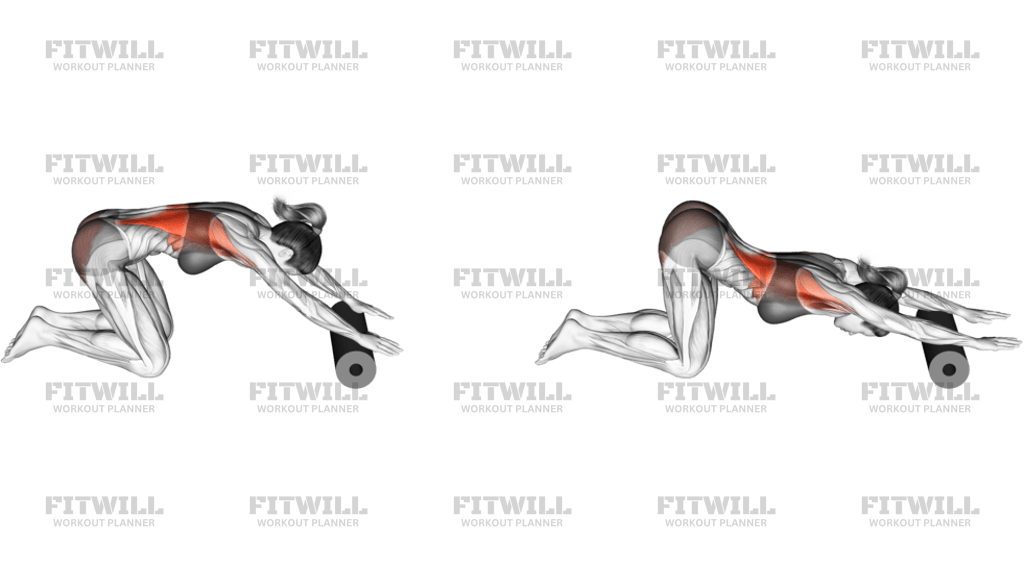
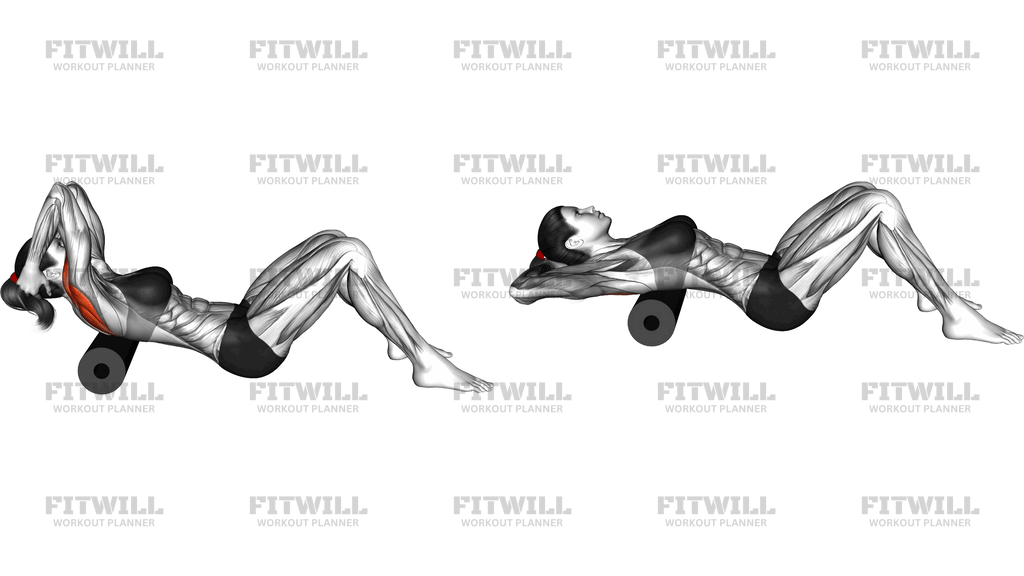
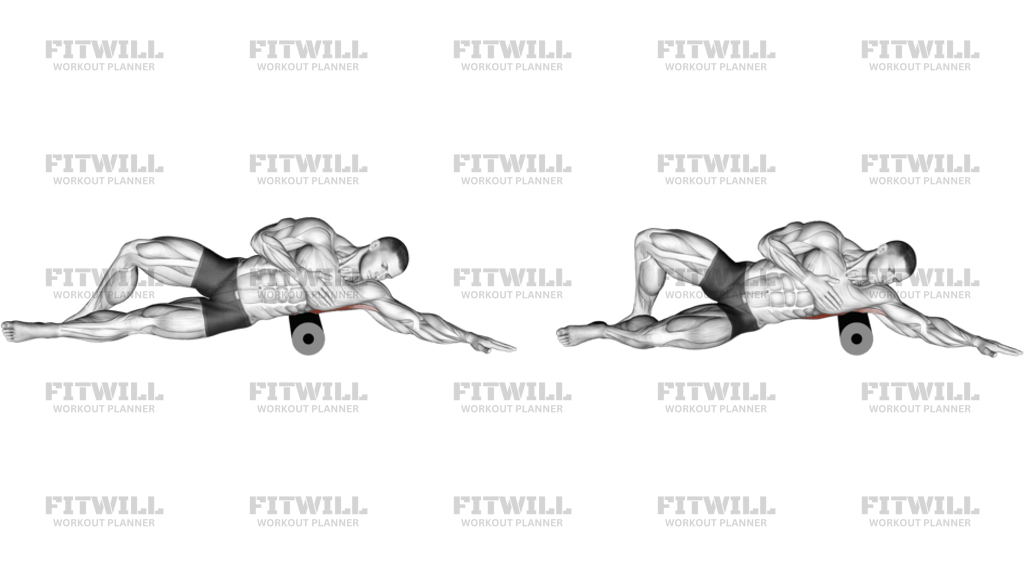
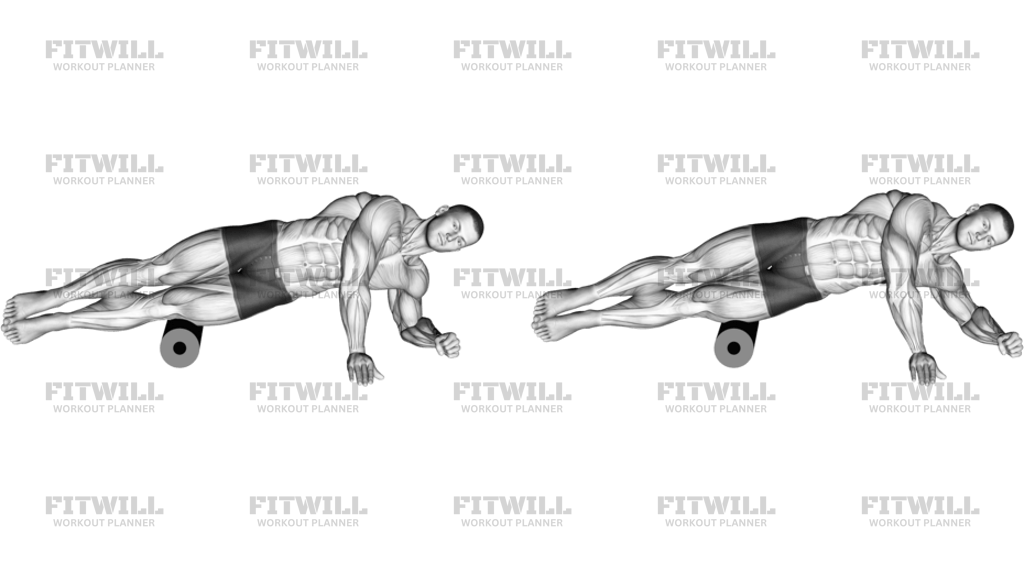
Roll Hip Lat Stretch
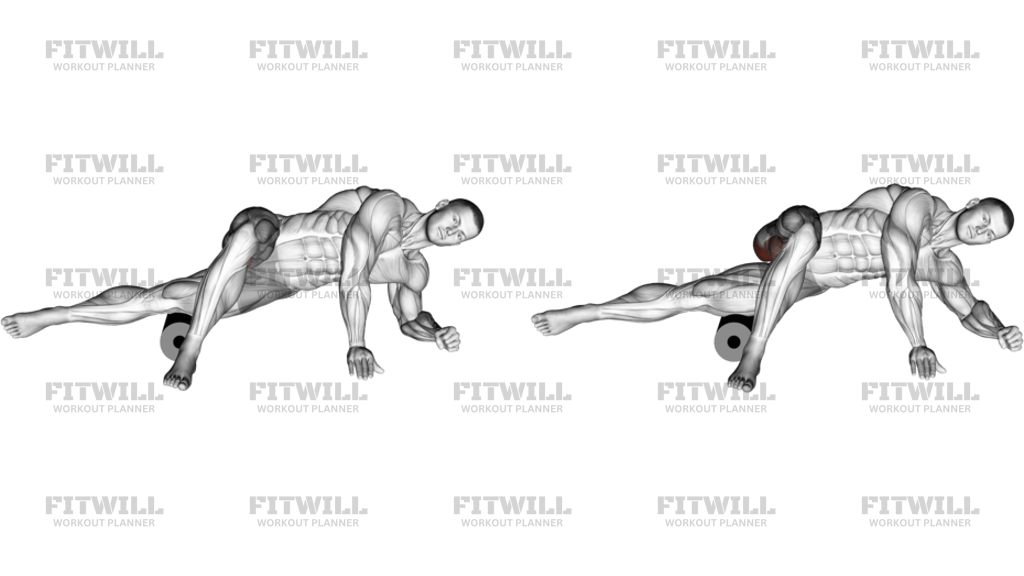
Roll Hip Lat Stretch is a foam-roller mobility drill for the side body, pairing a gentle outer-hip release with a lat and rib-cage stretch. It is built around the long line from the outside of the hip up into the armpit, so the goal is not to grind hard into tissue but to find a controlled position where the side of the trunk can lengthen. The foam roller and mat let you load that area gradually, which makes the stretch easier to regulate than a floor-only variation.
The exercise is especially useful when the latissimus dorsi feels tight after rows, pull-ups, pulldowns, carries, pressing, or overhead work. The upper back, biceps, and forearms help you stay supported on the floor while the main stretch runs through the lat and adjacent side-body muscles. In practical terms, this is a useful cooldown or warm-up mobility option when you want to restore overhead reach, make side bending feel freer, or reduce stiffness along one flank.
Setup matters because a small change in roller position changes the target completely. Place the foam roller under the fleshy outside of the hip or upper thigh, not directly on the hip bone, and support yourself on the mat with the hand and forearm that keep the shoulder stable. Keep the ribs as stacked over the pelvis as the position allows so the stretch stays in the side body instead of dumping into the lower back. If the shoulder feels compressed or the neck starts to shrug, back off and re-set before you keep rolling.
Once you are in position, move slowly and breathe into the side that is lengthening. A few inches of bodyweight shift is usually enough to move the pressure from the outer hip toward the lower ribs and lat. Pause when you find a tight spot, then take one or two calm breaths before easing back and re-checking the line. The best reps feel smooth and repeatable, with no bouncing, no aggressive twisting, and no loss of support through the shoulder.
Use Roll Hip Lat Stretch when you want a controlled mobility drill that can fit before lifting, between sets, or after training. It is a good choice for beginners if the roller pressure stays light and the range stays comfortable, but it should never feel sharp, pinchy, or numb. The right version of the stretch leaves the side body looser, the shoulder better supported, and the trunk easier to organize for the rest of the session.
[ Workout Log & Planner ]
Put your next workout in Fitwill
Keep your plan and training log ready when you are.


Instructions
- Place the foam roller under the fleshy outside of one hip or upper thigh and set the mat so your hands can support you comfortably.
- Plant one forearm and the opposite hand on the mat under your shoulders so the upper body stays stable before you start moving.
- Keep the supporting shoulder active, the neck long, and the ribs stacked as much as the position allows.
- Shift your body weight slowly until the roller starts to travel from the outer hip toward the side waist and lower ribs.
- Stop when you feel a broad stretch through the hip, side body, and lat instead of forcing the torso to twist open.
- Take one or two slow breaths in that position, letting the side of the rib cage expand into the stretch.
- Ease the pressure back a little, then return to the tight spot to find the same line again without bouncing.
- Switch sides and repeat with the same pressure, timing, and range so both sides get equal work.
Tips & Tricks
- Keep the roller on the meaty outer hip, not directly on the bony crest of the pelvis.
- If the shoulder feels jammed, move the supporting hand or forearm a little farther under the shoulder and take some weight off the roller.
- A small shift is usually enough; you do not need a big twist to feel the lat and side rib cage open.
- Exhale slowly as you settle into the tight spot so the side body can lengthen without bracing hard.
- If the lower back starts taking over, reset with less body rotation and more rib control.
- Short holds work better here than long, aggressive grinding through a painful point.
- If the pressure feels too intense, bend the top knee or lighten the load through the foam roller.
- Treat tender spots as places to breathe and soften, not places to bounce or force through.
Frequently Asked Questions
What muscle does Roll Hip Lat Stretch target most?
The latissimus dorsi is the main target, with the outer hip and side rib cage also getting a strong stretch.
Where should the foam roller sit for this stretch?
Place it under the fleshy outside of the hip or upper thigh, not directly on the hip bone.
Should I feel this more in my hip or my lat?
You should feel a line from the outer hip into the side waist and armpit. If one area takes over, shift the roller slightly.
Do I keep my support arm straight or bent?
Either is fine if the shoulder stays active and pain-free. Use the position that lets you keep the trunk organized.
How much should I move while rolling?
Keep it small. A few inches of pressure change is enough to find the tight line without losing support.
Is this okay before overhead lifting?
Yes. It can be useful before pressing, pulling, or overhead work when the side body feels restricted.
What is the biggest mistake with this stretch?
Most people roll too far onto the hip bone or twist so hard that the lower back takes over.
Can beginners use Roll Hip Lat Stretch?
Yes, as long as the pressure stays light and the range stays comfortable. It should feel like a controlled mobility drill, not a forced stretch.