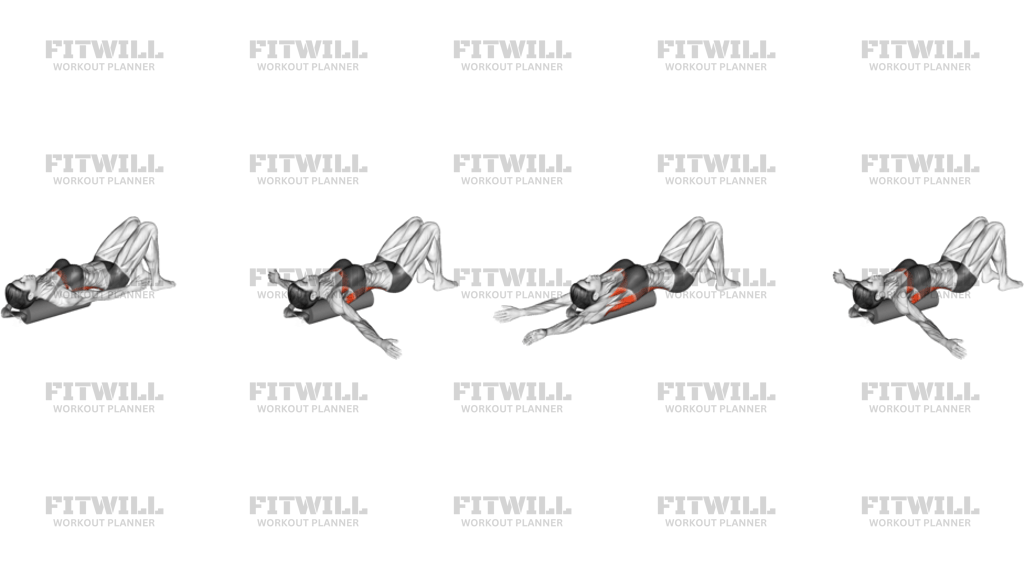
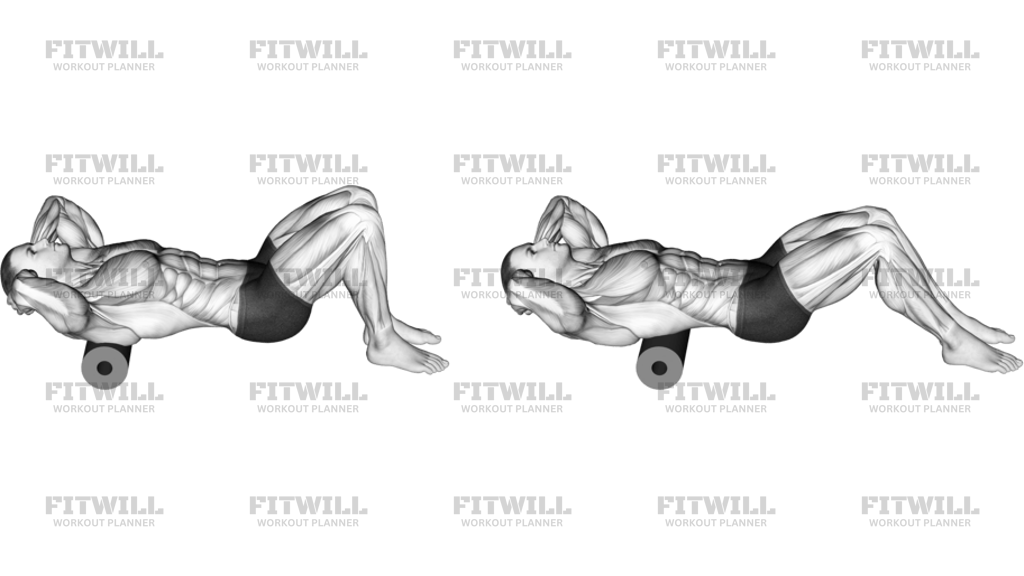
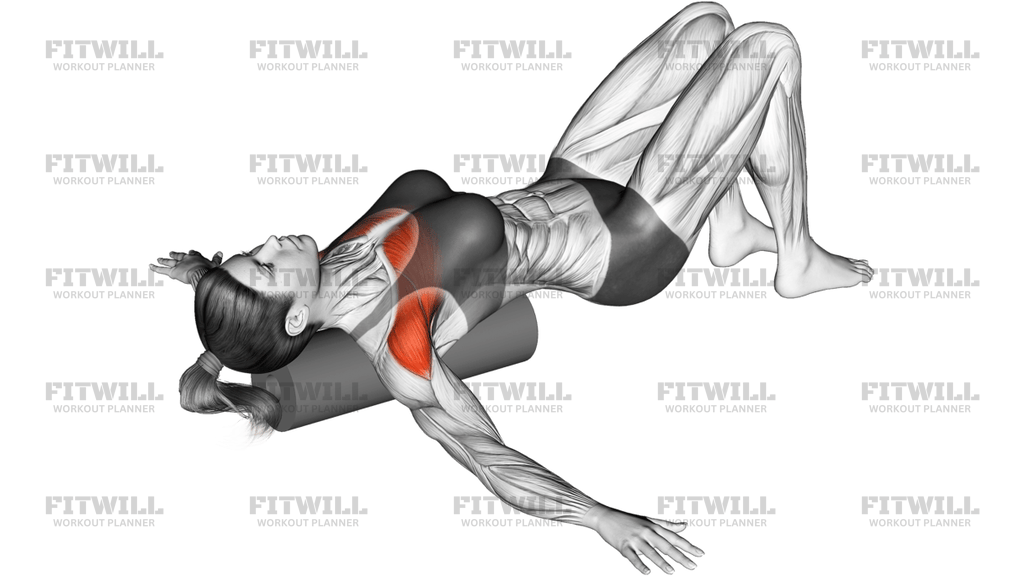
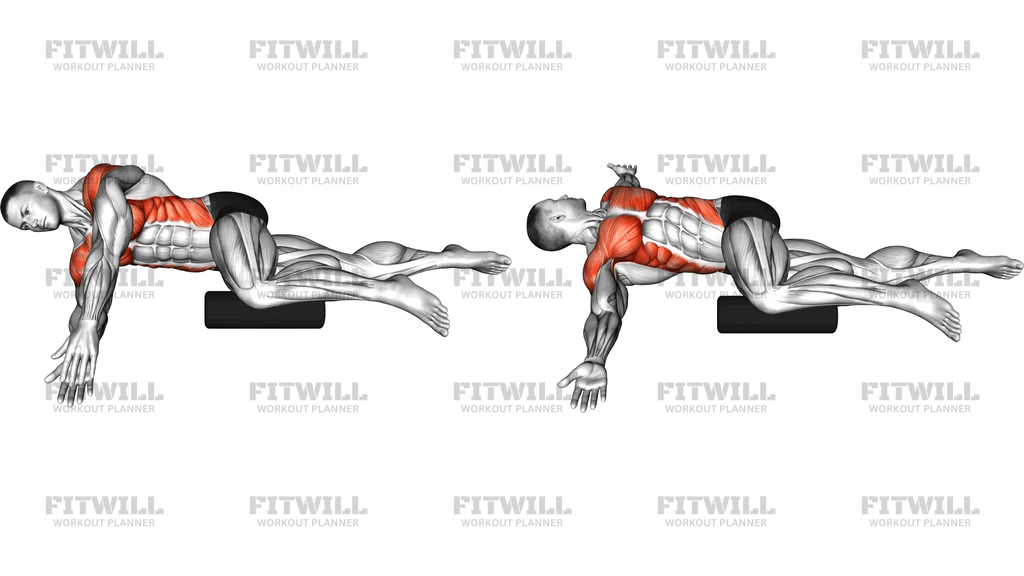
Roll Lat Foam Rolling
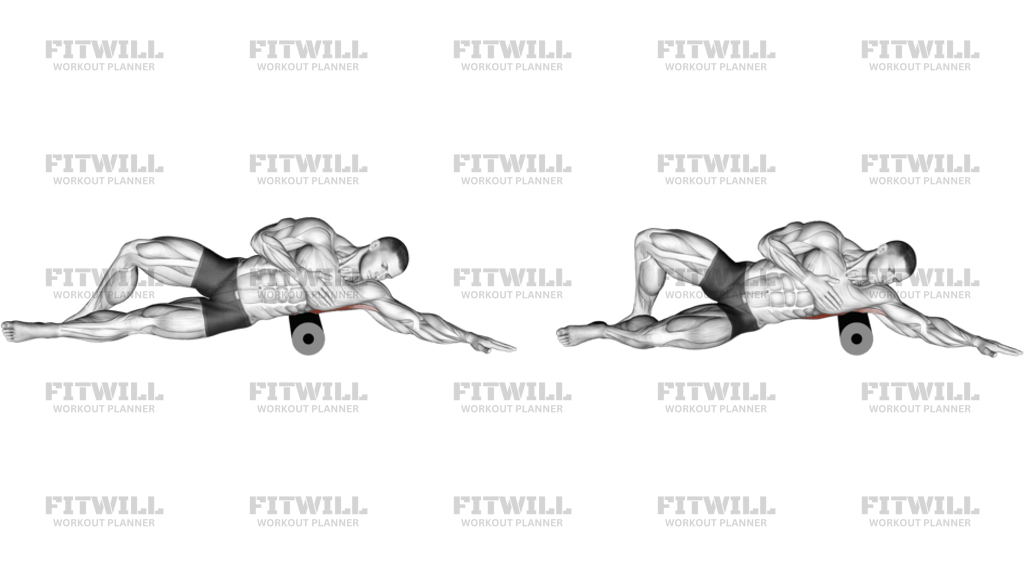
Roll Lat Foam Rolling is a side-lying soft-tissue exercise for the latissimus dorsi and the outer edge of the upper back. The foam roller sits under the side of the torso, usually just below the armpit and along the rib cage, while the body rocks and rolls to search for tight spots in the lat. The goal is not to crush the area with as much pressure as possible, but to create steady, repeatable contact that lets the tissue relax without losing control of the spine and shoulder.
The setup matters because a few inches change where the pressure lands. When the roller is too high, it digs into the shoulder joint; when it is too low, it drifts onto the waist or low back. A good position keeps the ribs stacked, the neck long, and the top arm reaching forward or slightly overhead so the side of the torso opens. The bent top leg and planted foot help you regulate how much bodyweight you place on the roller.
During each pass, move slowly over the side of the rib cage and the back edge of the armpit, then pause on the most tender area for a breath or two before continuing. Small turns of the chest can shift pressure toward different fibers of the lat and the tissue just behind the shoulder. Clean rolling should feel like firm, useful pressure, not sharp pain, numbness, or pinching in the shoulder.
This movement is useful before pulling sessions, overhead work, climbing, swimming, or any training that feels restricted through shoulder flexion and reaching. It can also help if your lats feel stiff after rows, pull-ups, or pressing. Keep the passes short, the breathing slow, and the pressure tolerable so the tissue stays responsive instead of guarding against the roller.
[ Workout Log & Planner ]
Put your next workout in Fitwill
Keep your plan and training log ready when you are.


Instructions
- Place the foam roller under the side of your torso, just below the armpit and along the lat.
- Lie on your side with the top knee bent for balance, the bottom leg long, and your ribs stacked.
- Reach the top arm forward or slightly overhead so the side of the torso can lengthen.
- Support some of your weight with the planted foot and forearm or hand so the pressure feels manageable.
- Roll slowly from the back edge of the armpit down toward the outer ribs in short passes.
- Pause on tight spots for one or two calm breaths instead of grinding back and forth.
- Turn the chest a little forward or back to change which part of the lat is under the roller.
- Keep the neck relaxed and avoid collapsing onto the shoulder joint or twisting into the low back.
- Reset to the starting spot and repeat the same controlled pass before switching sides.
Tips & Tricks
- Slide the roller a little higher or lower until the pressure sits in the lat and not on the shoulder cap.
- Use the bent top leg and planted foot to unload some bodyweight when the pressure gets too sharp.
- Short passes work better than long slides; this area usually responds to slow, targeted pressure.
- A slight reach overhead often opens the side of the rib cage and makes the lat easier to find.
- If the roller lands on the ribs, reduce pressure and shift a touch farther back toward the side of the torso.
- Breathe out into the tight spot so the chest and ribs stop bracing against the roller.
- Keep the movement smooth; bouncing usually makes the tissue clamp down instead of release.
- Stop if you feel numbness, tingling, or a pinching sensation in the shoulder.
Frequently Asked Questions
What does Roll Lat Foam Rolling target?
It mainly targets the latissimus dorsi along the side of the back and the outer edge of the rib cage.
Where should the foam roller sit on my body?
Place it under the side of the torso, usually just below the armpit and behind the shoulder joint, not on the low back.
How much pressure should I use?
Use enough pressure to feel a strong but tolerable release. If you are grimacing or holding your breath, shift some weight off the roller.
Should I roll fast or stay still on tight spots?
Slow passes with short pauses work best. Staying still for a breath or two on a tender area usually helps more than rushing through it.
Do I need to keep my arm overhead the whole time?
No, but reaching the top arm forward or overhead often increases the lat stretch and helps you access different fibers.
Can I use this before pull-ups or overhead pressing?
Yes. It is a common warm-up choice before pulling, climbing, swimming, or any movement that needs easier shoulder flexion.
What should I avoid feeling?
Avoid sharp shoulder pain, tingling, numbness, or pressure directly on the shoulder joint or low back.
How do I make the pressure easier?
Keep more weight on the planted foot and upper arm, and reduce the amount of torso that rests on the roller.