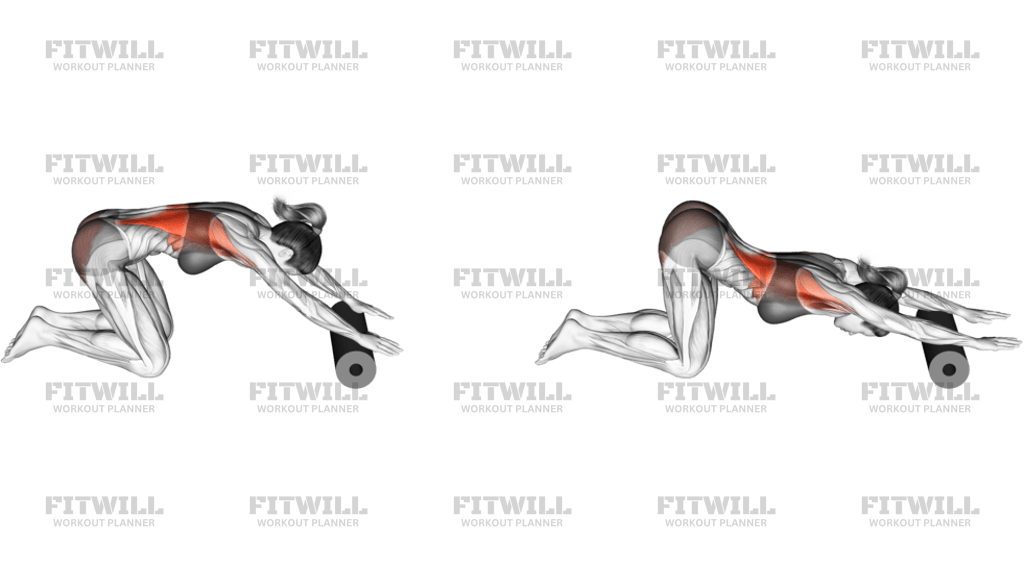
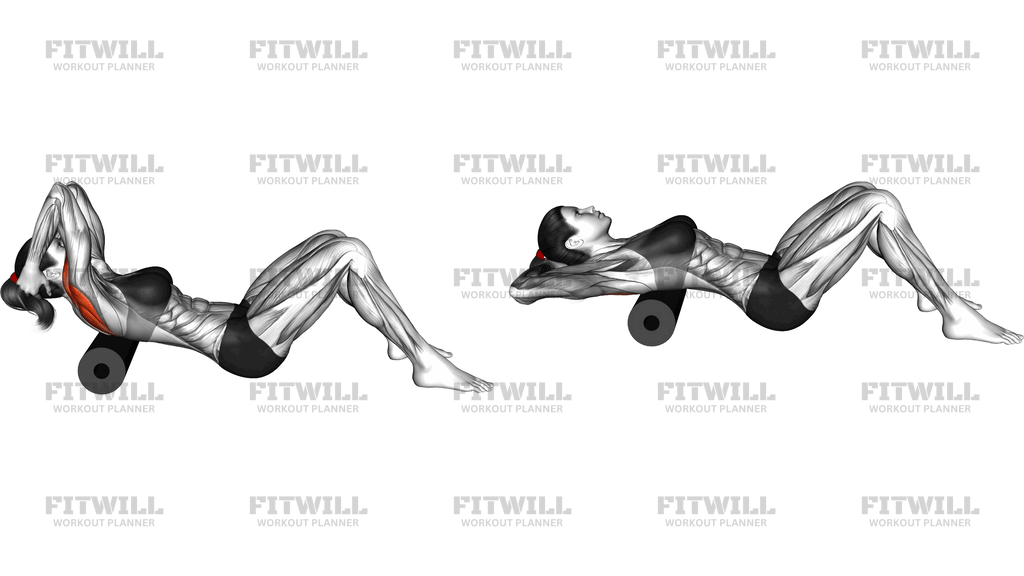
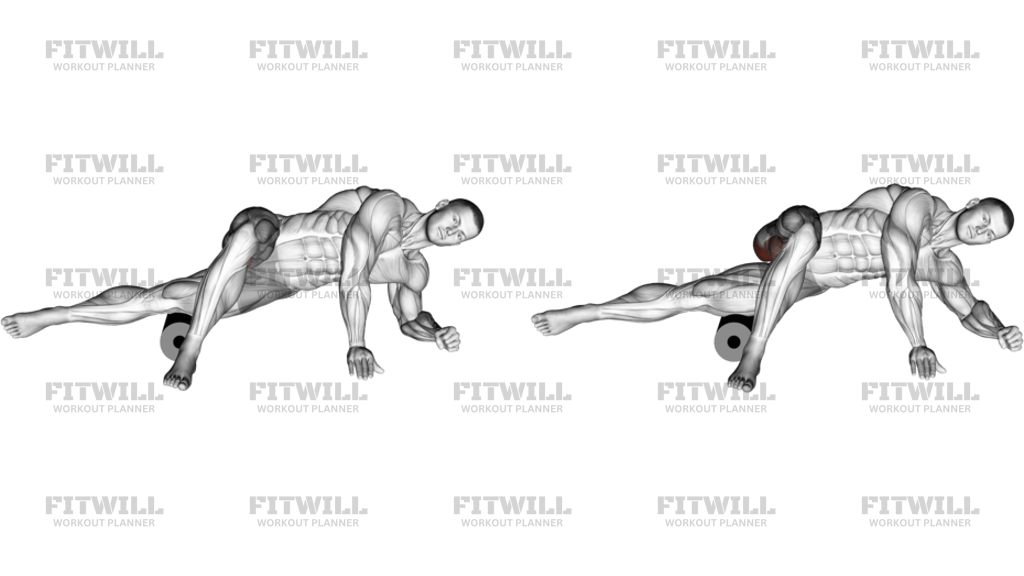
Roll Side Lat Stretch
Roll Side Lat Stretch is a floor-based self-release drill for the latissimus dorsi, the long muscle that runs from the side of the ribs into the upper arm. The foam roller lets you control how much pressure you place under the side of the torso, so the stretch can stay light enough for warm-up work or firm enough to target a stubborn tight spot. The point is not to force a big range. The point is to find smooth pressure along the outside of the ribcage, breathe into it, and let the lat settle.
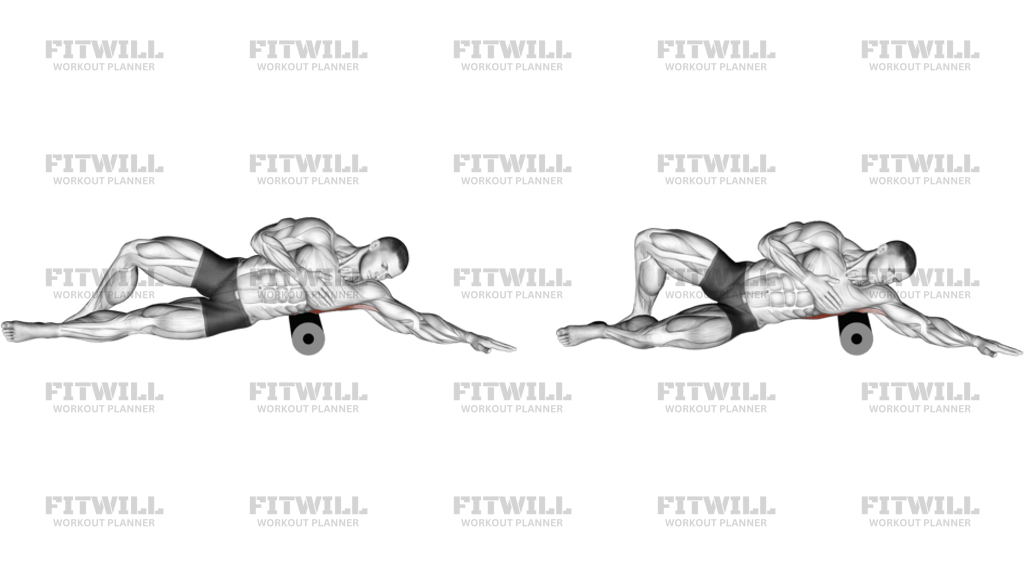
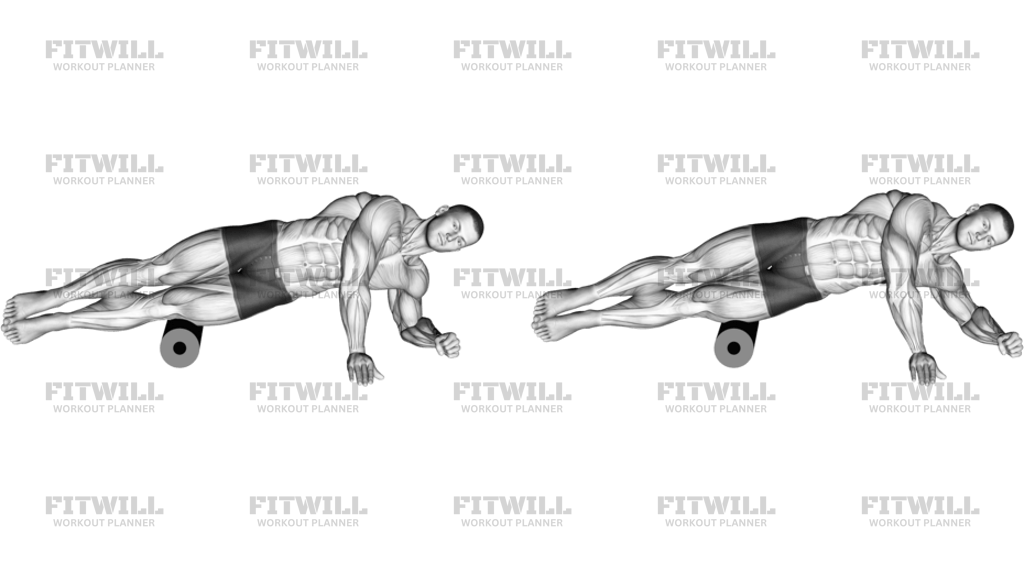
This setup matters because the lat affects overhead reach, shoulder motion, and ribcage position. If the roller sits too close to the spine, the pressure shifts away from the side body. If you roll too far forward, the stretch can drift into the chest or front of the shoulder. The image shows a side-lying position with the torso supported by the roller and the upper arm reaching forward, which helps keep the side of the back organized while the lat is lengthened.
Use short, deliberate passes instead of big rolls. Glide a few inches toward the armpit or down toward the mid-ribs, then pause on the tightest point and breathe out slowly. Keep the neck soft, keep the lower body quiet, and let the ribs soften around the roller without twisting hard onto your back or stomach. A gentle exhale usually does more than pushing harder.
This drill fits well after pulling sessions, overhead work, climbing, swimming, or any workout that leaves the side of the back feeling bound up. It is also useful before pressing or overhead lifting when you want easier shoulder elevation and less rib flare. You should feel a broad stretch along the side of the back and into the shoulder, not a sharp pinch, numbness, or tingling. If the pressure feels wrong, shift the roller slightly, reduce bodyweight, or change the arm angle until the stretch feels clean.
[ Workout Log & Planner ]
Put your next workout in Fitwill
Keep your plan and training log ready when you are.


Instructions
- Lie on your side on the exercise mat with the foam roller under the outside of your ribcage, just below the armpit.
- Stack your legs and use the lower hand or forearm on the floor to help balance your body.
- Reach the top arm forward or slightly overhead so the shoulder opens and the lat stays lengthened.
- Shift only a small amount of bodyweight onto the roller until you feel firm pressure, not a sharp pinch.
- Roll a few inches toward the armpit or toward the mid-ribs, then pause on the tightest spot.
- Exhale slowly and let the ribs soften around the roller while keeping the neck relaxed.
- Keep the pelvis quiet and avoid twisting hard onto your back or stomach.
- Reset the pressure, switch sides, and repeat with the same slow breathing.
Tips & Tricks
- Keep the roller on the side ribcage rather than directly on the spine or on the hip bone.
- A small shift in arm angle can change the stretch from the shoulder joint to the lat line.
- Use more support from the bottom hand if the pressure is too intense to breathe through.
- Short passes usually work better than long rolling sweeps for this kind of release work.
- Let the exhale lengthen the side body instead of trying to pry the position open.
- If the front of the shoulder complains, bring the top arm a little forward and reduce the reach.
- If one spot is extra tight, pause there for a few breaths instead of rolling past it fast.
- Stop if the pressure turns into numbness, tingling, or a sharp joint pinch.
Frequently Asked Questions
What does Roll Side Lat Stretch target most?
It mainly targets the latissimus dorsi along the side of the back, with some work through the tissues around the shoulder blade and upper ribcage.
Where should the foam roller sit during this stretch?
Place it under the outside of the ribcage, just below the armpit. It should not sit directly on the spine or dig into the hip bone.
Why is the top arm reaching forward in the image?
That arm angle keeps the lat lengthened and helps avoid turning the drill into a chest or shoulder stretch.
Can beginners do this stretch?
Yes. Start with very little bodyweight on the roller and breathe through short holds before increasing pressure.
What is the most common mistake?
Rolling too far toward the spine or twisting out of position, which moves the pressure away from the lat and can make the stretch feel awkward.
How do I make the stretch feel less intense?
Support more of your bodyweight with the bottom hand, reduce the roll range, and keep the arm slightly more forward.
When is this stretch most useful?
It is especially helpful after pulling, climbing, swimming, or overhead training when the side of the back feels tight.
Should I roll fast or hold still?
Use short, controlled passes and pause on tight spots. Fast rolling tends to skip the area you are trying to release.