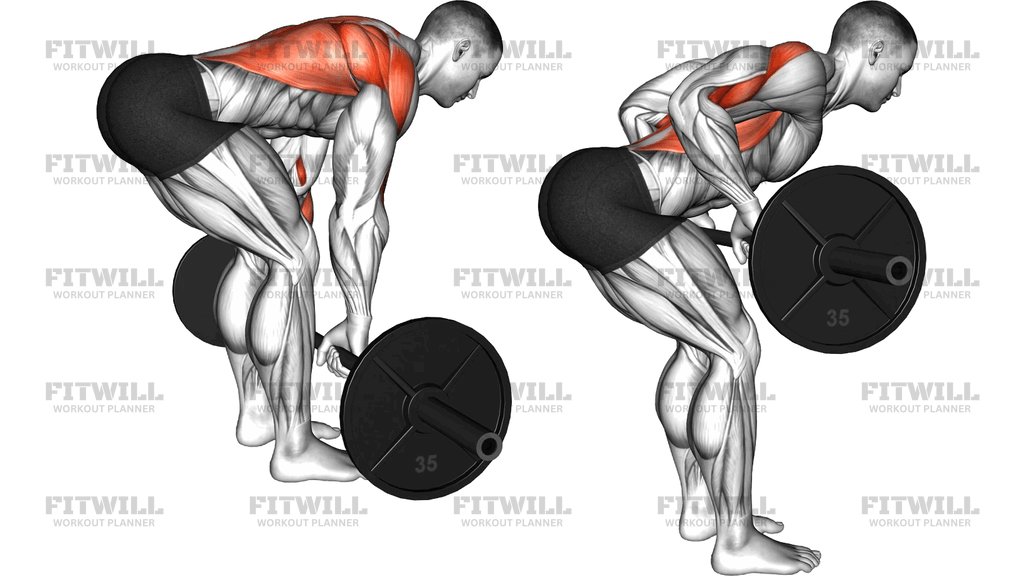
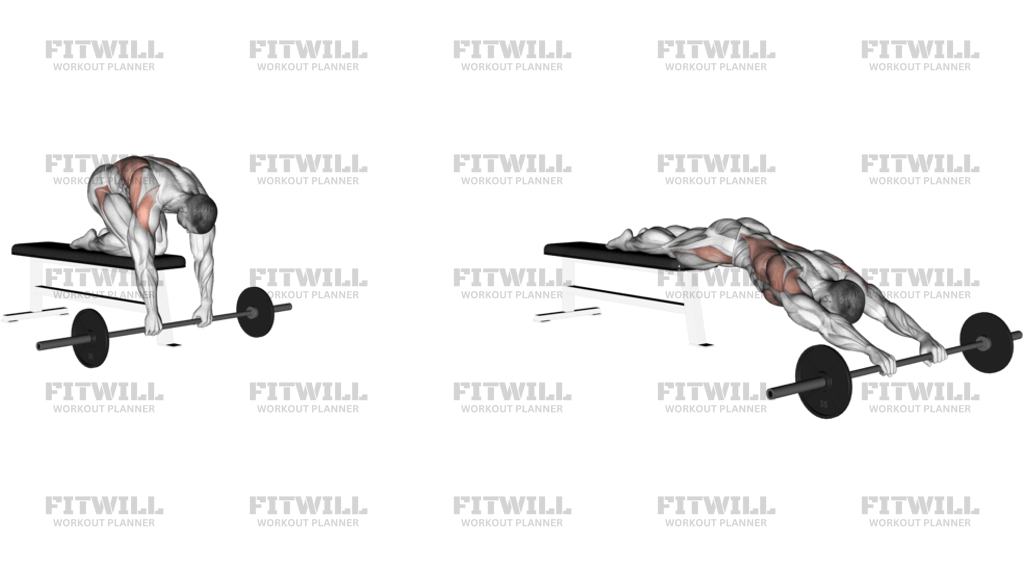
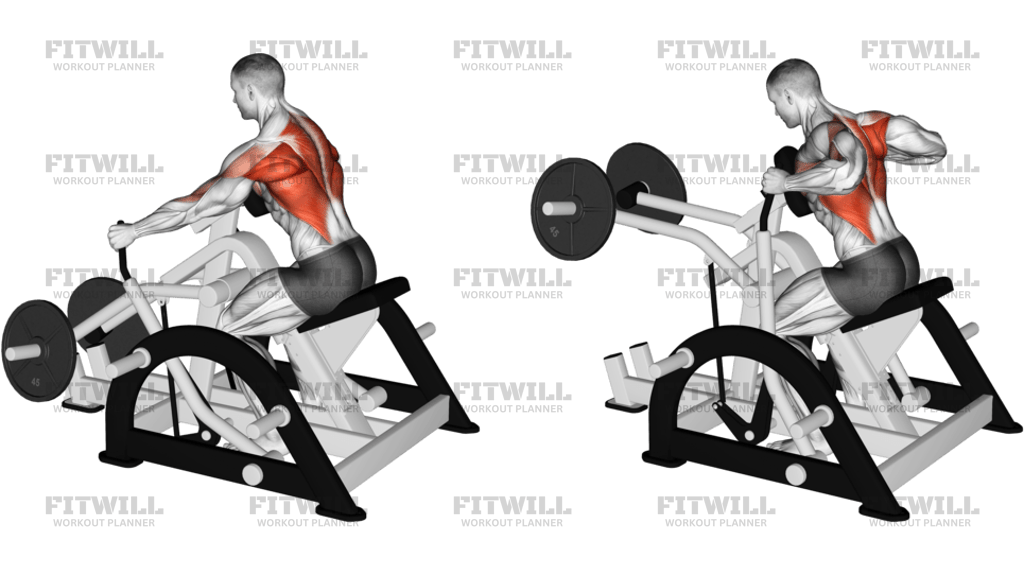
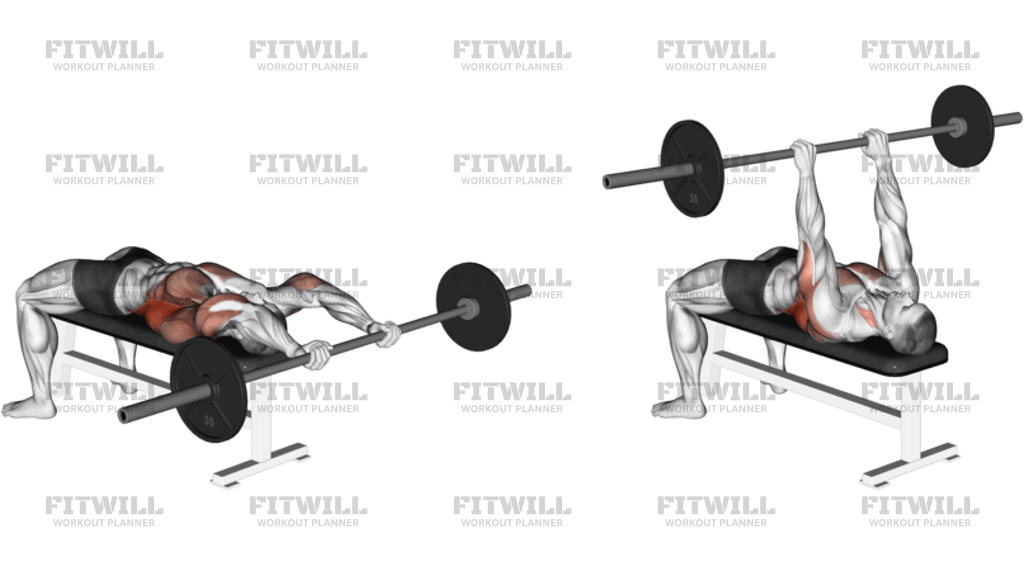
Barbell Standing Ab Rollout
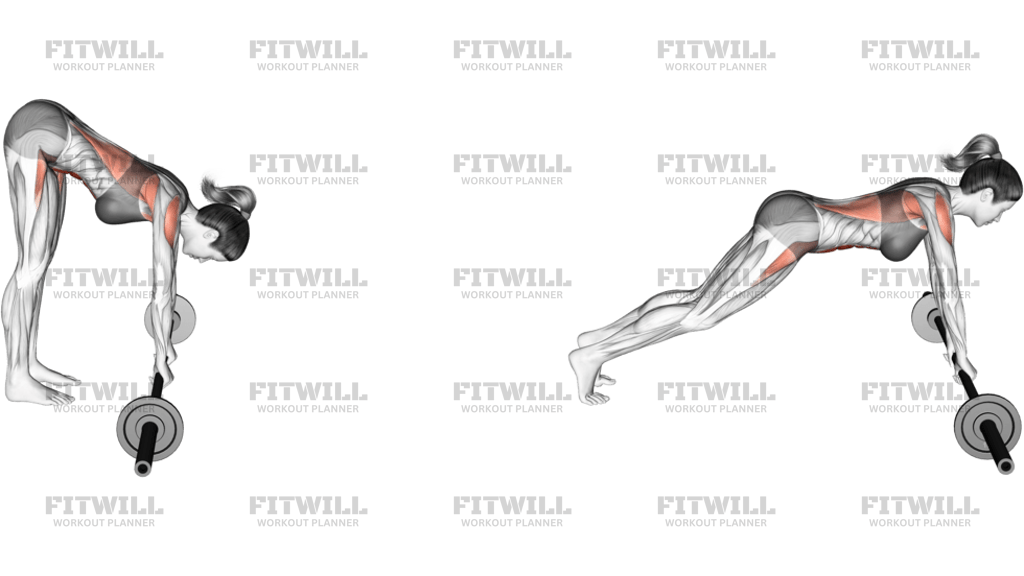
Barbell Standing Ab Rollout is a standing anti-extension exercise that challenges the core, lats, shoulders, and trunk stabilizers while the bar rolls away from and back toward your feet. In the start position you are folded over the bar with a strong hip hinge, then you extend the body into a long plank-like line before pulling yourself back to the hinge. The exercise looks simple, but the difficulty comes from keeping the rib cage, pelvis, and shoulders organized while the lever arm gets longer.
The main training effect is not just abdominal burn. This movement teaches the abs to resist low-back extension, the lats to hold the shoulders in front of the torso, and the glutes to keep the hips from dumping forward. In anatomy terms, the primary work centers on the latissimus dorsi, with strong assistance from the obliques, rectus abdominis, serratus anterior, forearms, and upper back. That is why a clean rollout feels like a full-body brace rather than a loose arm movement.
Setup matters more here than almost anywhere else. The bar should roll smoothly, the feet should be stable, and the hands should be set about shoulder-width so the bar stays centered as it moves. Begin with knees soft, hips back, and shoulders stacked slightly in front of the bar. Keep the arms straight and the neck long. If the ribs flare or the low back arches before the bar has moved very far, the range is already too long for that set.
During the rep, breathe behind the brace instead of holding tension rigidly in the chest. Roll the bar forward only as far as you can keep the pelvis tucked and the torso in one line. The return phase should be just as controlled as the rollout, with the lats and abs drawing the bar back toward the feet instead of collapsing the body back to standing. The goal is a smooth arc, not a bounce off the floor or a dramatic reach.
This is an advanced core and shoulder-control drill that fits best after a warm-up, in a dedicated trunk block, or as accessory work for athletes who need stronger anti-extension mechanics. Start with a short range of motion and build up only when you can keep the shoulders steady, the elbows locked, and the hips from sagging. If you cannot control the finish position, switch to a kneeling rollout or a shorter standing range rather than forcing the full version.
[ Workout Log & Planner ]
Put your next workout in Fitwill
Keep your plan and training log ready when you are.


Instructions
- Place a loaded barbell on a smooth floor and stand over it with your feet about hip-width apart.
- Hinge at the hips, bend your knees slightly, and grip the bar just outside shoulder width with straight arms.
- Set your shoulders slightly in front of the bar, keep your neck long, and pull your ribs down before you move.
- Take a breath and brace your trunk as if you are starting a hard plank.
- Roll the bar forward slowly while keeping your elbows locked and your hips from drifting toward the floor.
- Continue only until your body forms a long line and your low back still feels controlled.
- Pause for a brief moment at the longest point without letting your shoulders shrug or your pelvis tip forward.
- Pull the bar back toward your feet by driving your lats and abs, then finish in the same strong hinge you started with.
Tips & Tricks
- Use bumper plates or another bar setup that rolls smoothly so the path stays predictable.
- Keep your elbows straight from start to finish; any bend usually turns the rep into a partial press and shortens the core challenge.
- Think about pulling the front ribs toward the pelvis before the bar moves so the low back does not take over.
- A slightly wider hand position usually makes the bar easier to control and keeps the shoulders from wobbling side to side.
- Stop the rollout the moment your hips start to sag or your torso can no longer stay rigid in the long line.
- The return should feel like drawing the bar back with the lats and lower abs, not like snapping the body back upright.
- Keep the weight light enough that you can pause at the farthest point without losing position.
- If the shoulders pinch or the lower back arches early, shorten the range before you change the load.
Frequently Asked Questions
What muscle does Barbell Standing Ab Rollout target most?
The core is the main limiter, especially the abs and obliques, with the lats and shoulders working hard to keep the body from collapsing.
Is the standing version beginner-friendly?
Usually no. Most people should learn the pattern with a kneeling rollout or a very short standing range before they try the full version.
How wide should my hands be on the barbell?
About shoulder width or slightly wider works best for most lifters because it keeps the bar centered and easier to control.
Should my elbows bend during the rollout?
No. Keep the arms straight so the movement stays a rollout and not a standing press or row.
How far should I roll the bar away?
Only as far as you can keep the ribs down, the pelvis controlled, and the body from sagging through the low back.
Why do my shoulders feel involved so strongly?
They are helping hold the arms overhead and keep the bar path stable, so some shoulder fatigue is expected.
What should I do if my lower back starts arching?
Shorten the range immediately. If you still cannot control it, switch to a kneeling rollout or reduce the distance further.
How do I progress this exercise safely?
Add range first, then repetitions, then load. A longer controlled reach is usually a better progression than forcing heavier plates too soon.