Roll Seated Single Leg Shoulder Flexor Depressor Retractor
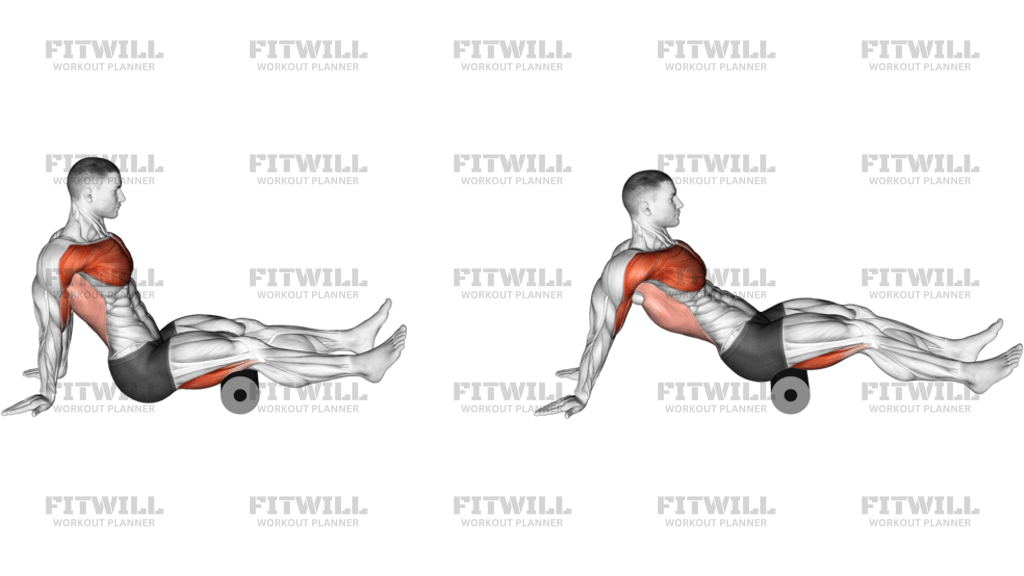
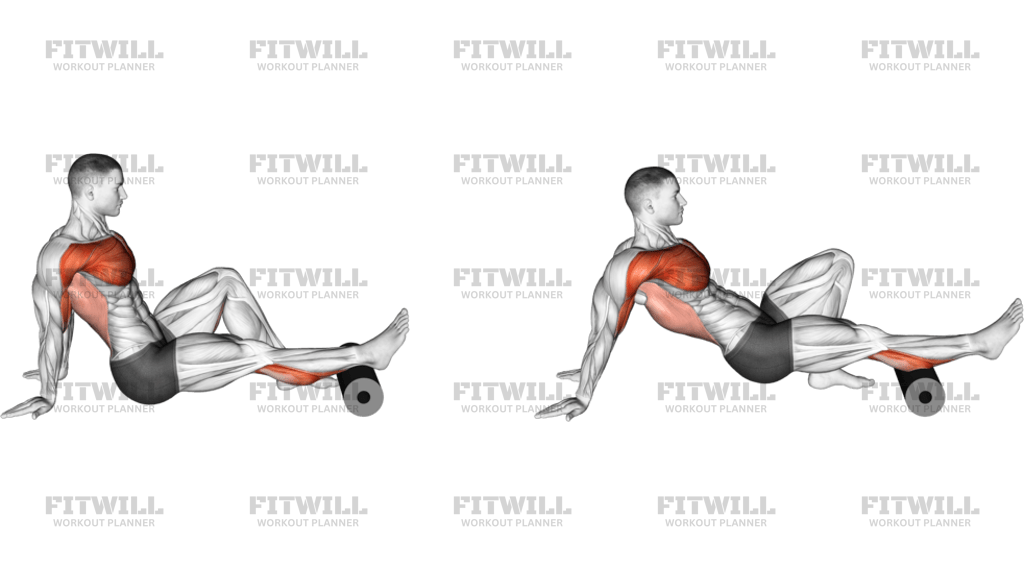
Roll Seated Single Leg Shoulder Flexor Depressor Retractor is a supported floor mobility drill that opens the front of the shoulders while you hold a stable, slightly reclined posture with one leg supported on a foam roller. In the image, the hands stay planted behind the hips, the chest stays lifted, and the torso remains long so the shoulders can stay depressed and retracted instead of collapsing forward. The roller under the working leg adds a small rolling component and gives you a clear cue for keeping the body organized while you move.
This drill is useful after pressing, overhead work, dips, push-ups, or long periods of sitting when the front of the shoulders and upper chest feel tight. It also asks the arms to support bodyweight while the shoulder blades stay set, so it works well as a warm-up reset, a mobility block between sets, or a low-intensity accessory movement. The single-leg setup makes the position easier to control and reduces the chance of the low back or pelvis taking over the repetition.
The main training effect comes from the setup and the quality of the hold, not from forcing a huge range. Keep the palms grounded, the neck long, and the ribs from flaring as you let the shoulder girdle open. The movement should look smooth and deliberate: set the base, keep the chest proud, slide or roll the leg only as far as the shoulders stay stable, then return with the same control. If the shoulders shrug or the lower back arches hard, the range is too aggressive.
Because the exercise is supported and low load, beginners can use it safely, but the hand position and torso angle still matter. If the wrists, front of the shoulder, or low back feel pinchy, bring the hands closer to the hips and shorten the range. Use it to groove shoulder extension, scapular retraction, and upright torso control before harder pressing or athletic work, and keep every rep smooth enough that breathing stays calm.
[ Workout Log & Planner ]
Put your next workout in Fitwill
Keep your plan and training log ready when you are.


Instructions
- Sit on the floor with your palms planted behind your hips and your fingers turned slightly out or to the side.
- Place one heel or lower calf on the foam roller and keep the other knee bent with that foot flat on the floor for support.
- Lift your chest, lengthen your neck, and keep your ribs from flaring before you move the roller.
- Press lightly through both hands to set the shoulders down and back without shrugging.
- Slide the straight leg away by rolling the foam roller forward only until the torso stays steady.
- Pause briefly in the open position while keeping the pelvis quiet and the front of the shoulder controlled.
- Pull the heel back toward you with a smooth return, keeping the hands and shoulders in the same position.
- Reset the torso, re-establish the shoulder set, and repeat for the planned number of reps.
Tips & Tricks
- Keep the hands close enough that you can press the floor without locking the elbows hard behind you.
- Think sternum up and ribs down so the stretch comes from the shoulder girdle, not from a big low-back arch.
- Let the roller glide under the leg; do not kick or bounce the working heel to gain extra range.
- If the front of the shoulder pinches, bring your hands a little closer to your hips and shorten the slide.
- Keep the bent leg as a quiet kickstand instead of letting it twist or drift inward as you move.
- Exhale as the leg rolls away to help keep the rib cage stacked and the neck relaxed.
- Move slowly on the return so the shoulders keep working instead of dropping back into the start position.
- Stop the set if the wrists, elbows, or shoulders start taking over from the torso and support position.
Frequently Asked Questions
What does Roll Seated Single Leg Shoulder Flexor Depressor Retractor train?
It trains shoulder extension control, scapular retraction and depression, and supported upper-body stability.
Why is one leg on the foam roller instead of both legs straight?
The single-leg setup makes the position easier to organize and gives you a clearer way to slide without losing torso control.
Where should I feel the stretch most?
You should feel it across the front of the shoulders and upper chest, with the arms and upper back working to support the position.
Should the foam roller move during the repetition?
Yes. The working leg should slide the roller only as far as you can keep the chest lifted and the shoulders set.
Can beginners do this exercise?
Yes. It is beginner-friendly as long as the range stays short and the hands, shoulders, and ribs stay organized.
What if I feel pressure in my wrists or front shoulders?
Move your hands closer to your hips, lighten the backward lean, and reduce how far you slide the leg.
When is this exercise most useful?
It works well in warm-ups, recovery blocks, or between pressing sets when you want a low-load shoulder opener.
What is the biggest mistake to avoid?
Do not turn it into a backbend. If the ribs flare or the shoulders shrug, shorten the range and reset the support position.