Lever Neck Extension Plate Loaded
Lever Neck Extension Plate Loaded is a machine-based neck strength exercise that trains the muscles on the back of the neck through a short, controlled extension arc. The seated lever and head pad make the movement more guided than a free-weight neck extension, which helps you keep the repetition smooth and reduce unwanted torso motion. It is most useful when the goal is to build neck strength, resilience, and better control around the cervical spine rather than to chase load or speed.
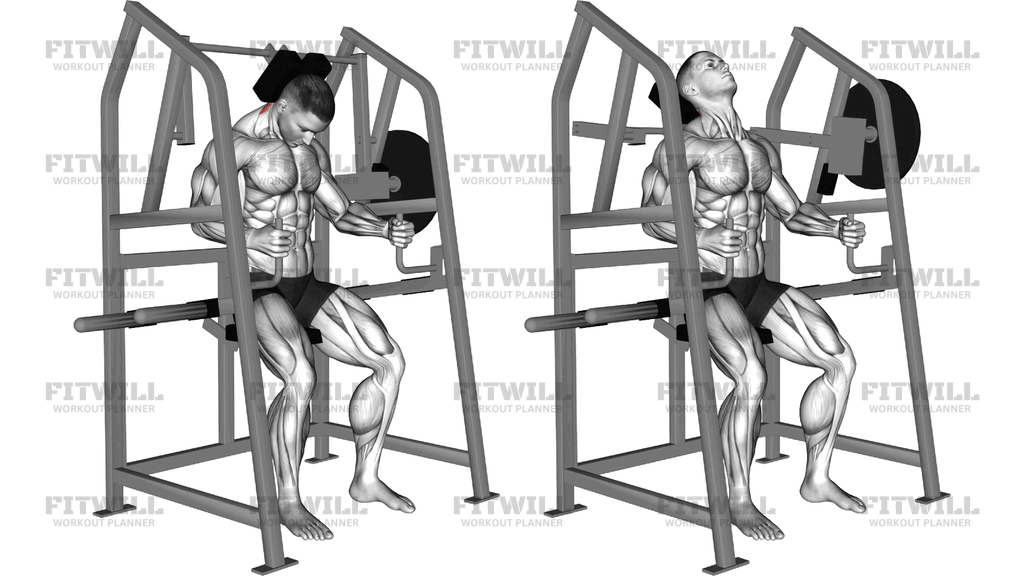
The setup matters because the machine only works well when the head pad sits on the back of the skull and the seat height lets you move from a comfortable flexed start into a clean extension finish. In the image, the lifter stays seated with both hands on the side handles, feet planted, and the torso mostly still while the neck does the work. That body position keeps the effort where it belongs and prevents you from turning the rep into a full-body heave.
A good repetition starts with a slight chin tuck, then a smooth drive backward into the pad until the neck reaches a neutral or only slightly extended top position. The movement should feel deliberate and compact, not explosive. Lower the head back under control until you return to the loaded start position and feel the back of the neck lengthen again. If you have to jerk, shrug, or lean your whole upper body to finish the rep, the load is too heavy or the seat is set wrong.
This exercise is often used as accessory work after the main lifts, in neck-training blocks for contact sports, or as part of a balanced program that includes neck flexion and lateral flexion on other days. Because the cervical spine is sensitive, the best results come from conservative loading, smooth tempo, and pain-free range. Keep the movement strict, stay relaxed through the jaw and shoulders, and stop the set if the rep pattern changes or you feel pinching, tingling, or sharp discomfort.
[ Workout Log & Planner ]
Put your next workout in Fitwill
Keep your plan and training log ready when you are.


Instructions
- Adjust the seat so the head pad sits against the back of your head, just above the base of the skull, and sit tall with your upper back supported by the pad.
- Plant both feet flat, keep your chest lifted, and hold the side handles lightly so your arms steady you without helping the lift.
- Start with your chin slightly tucked and your head in a comfortable flexed position against the pad.
- Drive the back of your head into the pad and extend your neck smoothly until you reach a neutral or only slightly extended top position.
- Pause for a moment at the top without shrugging your shoulders or arching your torso.
- Lower your head back under control until you return to the starting flexed position and feel the back of your neck lengthen.
- Keep the jaw relaxed and breathe out as you extend, then inhale as you lower back to the start.
- Repeat for the planned reps and stop the set if you lose pad contact or have to jerk the machine.
Tips & Tricks
- Set the pad on the skull, not on the soft tissue at the top of the neck.
- Choose a load that lets you move slowly; neck work usually needs less resistance than people expect.
- Think about pushing the head back in a smooth arc, not cranking the chin upward.
- Keep your shoulders depressed and your ribs down so the torso does not turn into a lever.
- Use a controlled tempo on both directions; bouncing into the start position usually means the load is too heavy.
- Stop the range where the neck still feels strong and smooth, even if that is short of your maximum look-up position.
- Hold the side handles only for balance; if you are pulling hard with the arms, the neck is not doing the work.
- Keep the jaw loose and avoid clenching, which can add tension at the base of the skull.
- If the machine setup forces your head forward or back before the set starts, adjust the seat height before adding plates.
Frequently Asked Questions
What muscle does Lever neck Extension (plate loaded) target most?
It primarily trains the neck extensors at the back of the neck, including the muscles that help you extend and stabilize the cervical spine.
Where should the head pad sit on this machine?
The pad should contact the back of your head near the occiput, not the top of your neck or the middle of your skull.
Should my torso move during the rep?
No. Your torso should stay braced and mostly still while the neck moves through the extension arc.
Can beginners do plate-loaded neck extension work?
Yes, but only with very light resistance, a short controlled range, and a machine setup that feels natural on the neck.
What is the most common mistake on this machine?
People usually load it too heavily and start jerking the head or leaning the whole body to finish the rep.
How far should I extend my neck?
Only until you reach a neutral or slightly extended top position that feels smooth and pain-free. You do not need to force a big backward arch.
When should I place this exercise in a workout?
It usually fits best after the main compound lifts or in a dedicated neck accessory block, not before heavy pressing or pulling.
What should I do if I feel pinching at the base of my skull?
Stop the set and check the seat height, pad placement, and range of motion. If the discomfort stays, skip the exercise.
Can I pair this with neck flexion or lateral flexion work?
Yes. It pairs well with other neck directions as long as you keep the load light and recover well between sessions.