Neck Extensor And Rotational Stretch
Neck Extensor And Rotational Stretch is a standing mobility drill that opens the back and side of the neck with a light assisted pull from the hand. It is useful when the upper neck feels stiff from desk work, driving, overhead pressing, or any training that leaves the neck and upper traps holding tension for too long. The goal is not to force range; it is to create a smooth stretch that lets the cervical spine rotate and flex without pinching.
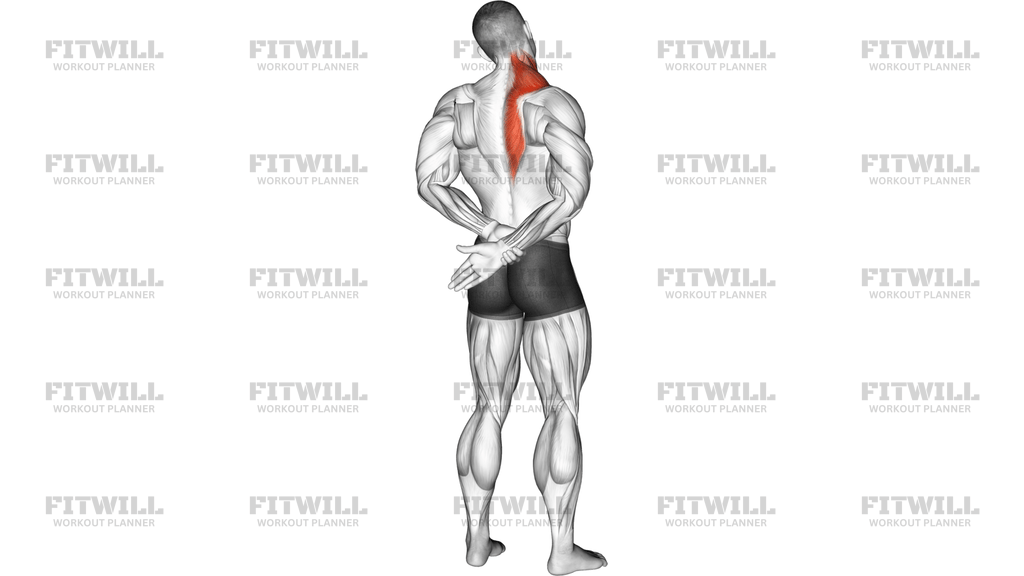
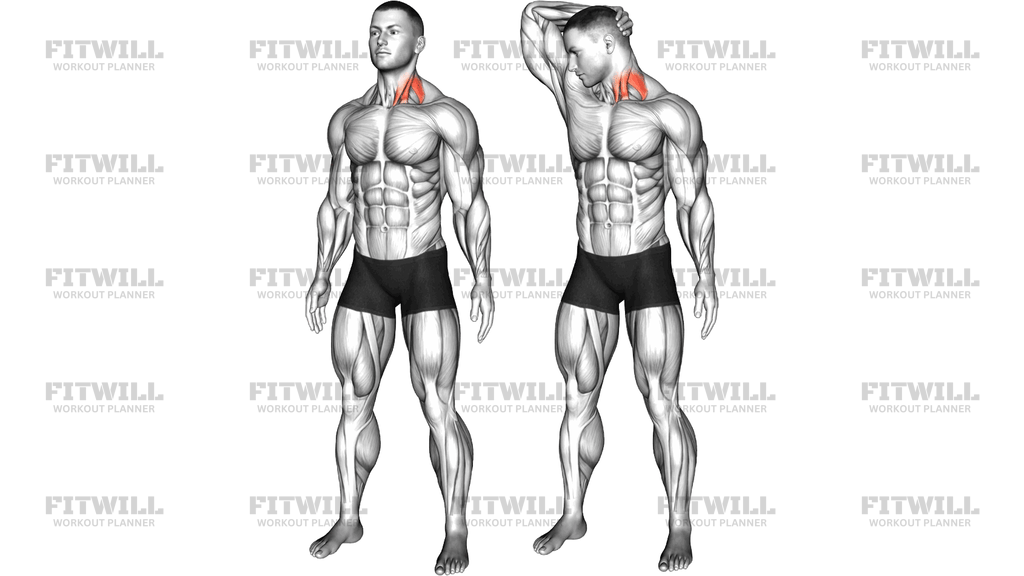
The image shows a simple bodyweight setup with one hand resting behind the head, the elbow lifted, and the opposite arm relaxed at the side. That position matters because it lets you guide the head into a controlled stretch instead of yanking on the neck. A tall torso, relaxed jaw, and quiet shoulders keep the effort where it belongs, along the posterior and lateral neck rather than in the lower back or chest.
Neck Extensor And Rotational Stretch should feel deliberate and easy to control from the first second. Start by standing or sitting tall, then use the hand on the head to gently guide the neck into flexion and rotation until you feel a mild stretch along the back of the neck and upper shoulder line. If the shoulder rises, the chin jams, or the sensation turns sharp, reduce the pull and find a smaller range that still lets the tissue lengthen.
This stretch is most useful after strength training, during a warm-up for pressing or pulling sessions, or at the end of the day when the head and shoulders have been forward for hours. It can also be paired with other neck or thoracic mobility work when you want a calmer upper-body reset. The best version is smooth and repeatable, with no bouncing, no aggressive leverage on the head, and no pressure into pain.
Keep Neck Extensor And Rotational Stretch conservative if you are new to neck mobility work. The neck responds better to steady breathing and small increases in range than to big forced turns. Treat each side separately, match the stretch to what your posture actually needs, and come out of the position slowly so the neck does not rebound back into tension.
[ Workout Log & Planner ]
Put your next workout in Fitwill
Keep your plan and training log ready when you are.


Instructions
- Stand tall with your feet about hip-width apart, ribs stacked over your pelvis, and both shoulders relaxed down away from your ears.
- Place one hand behind the back or side of your head with the elbow pointing out and slightly forward, and let the other arm hang loosely by your side.
- Tuck your chin slightly before you begin so the back of the neck lengthens instead of compressing.
- Gently guide your head down and across toward the opposite side until you feel a mild stretch through the back and side of the neck.
- Keep the shoulder on the stretching side relaxed so the hand moves the head, not the whole upper body.
- Breathe slowly into the stretch and hold the end position without bouncing or pulling harder.
- Ease out of the stretch with control, bringing your head back to neutral before you repeat.
- Repeat on the other side, then finish by returning both hands to your sides and resetting your posture.
Tips & Tricks
- Let the hand guide the head lightly; if you pull hard enough to feel strain in the jaw or upper back, the stretch is too aggressive.
- Keep the opposite shoulder heavy so the neck, not the shoulder girdle, takes the stretch.
- A small chin tuck usually works better than tipping the face straight down, because it targets the back of the neck more cleanly.
- If you feel the stretch mostly in the front of the neck, reduce the rotation and keep the gaze slightly down.
- Hold only long enough to let the tissue soften; this drill works better with calm, repeatable holds than with long forced stretches.
- Use the free hand to touch your collarbone or rib cage if you catch yourself shrugging during the hold.
- In a standing version, keep your knees soft so you do not arch your low back while trying to get more range.
- Stop if the stretch creates sharp pain, dizziness, tingling, or a pulling sensation that shoots into the arm.
Frequently Asked Questions
What does Neck Extensor And Rotational Stretch target?
It mainly stretches the muscles along the back and side of the neck, especially the cervical extensors and the upper fibers that tighten when the head sits forward.
Do I need an exercise mat for Neck Extensor And Rotational Stretch?
No. The image shows a standing version, so a mat is optional unless you prefer to sit or kneel while holding the stretch.
How hard should I pull on my head?
Only enough to guide the position. If the hand is yanking the neck forward or creating pressure in the jaw, back off and make the range smaller.
Should my elbow be high or low?
Keep the elbow lifted but relaxed, not jammed straight up. That gives you a clean hand position without shrugging the shoulder.
Where should I feel the stretch most?
You should feel it along the back and side of the neck and into the upper shoulder line, not as a sharp pinch in the spine.
Can beginners do Neck Extensor And Rotational Stretch safely?
Yes, as long as they use a small range and light hand pressure. Beginners usually do better with short holds and a very calm return to neutral.
What is the most common mistake with Neck Extensor And Rotational Stretch?
The biggest mistake is shrugging the shoulder and cranking the head harder to chase range. That usually turns the stretch into neck compression instead of length.
When should I use this stretch?
It works well after pressing or pulling work, or any time the neck feels stiff from posture. It is also useful as part of a warm-up if you need to move with a looser upper neck.