Neck Side Stretch
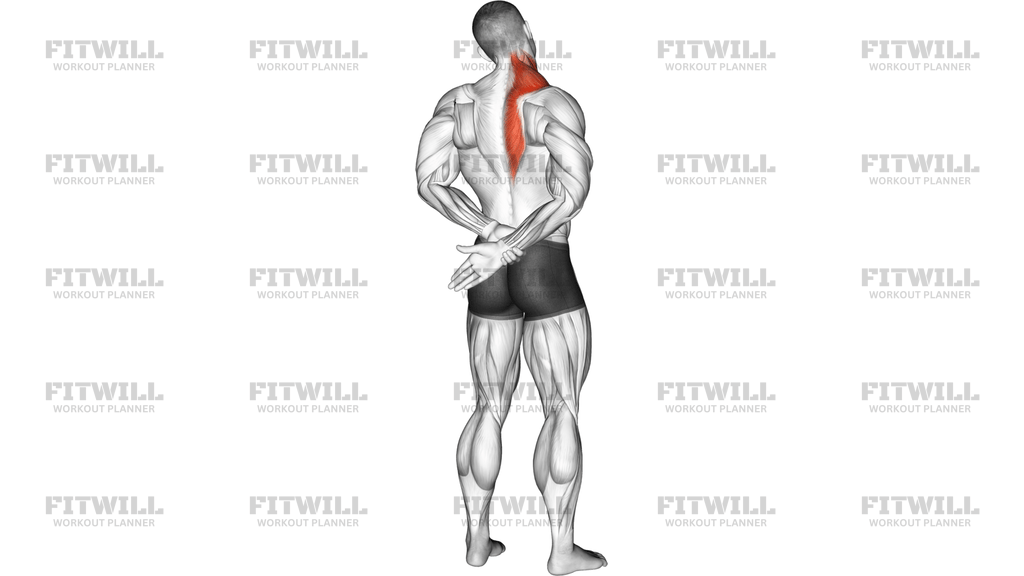
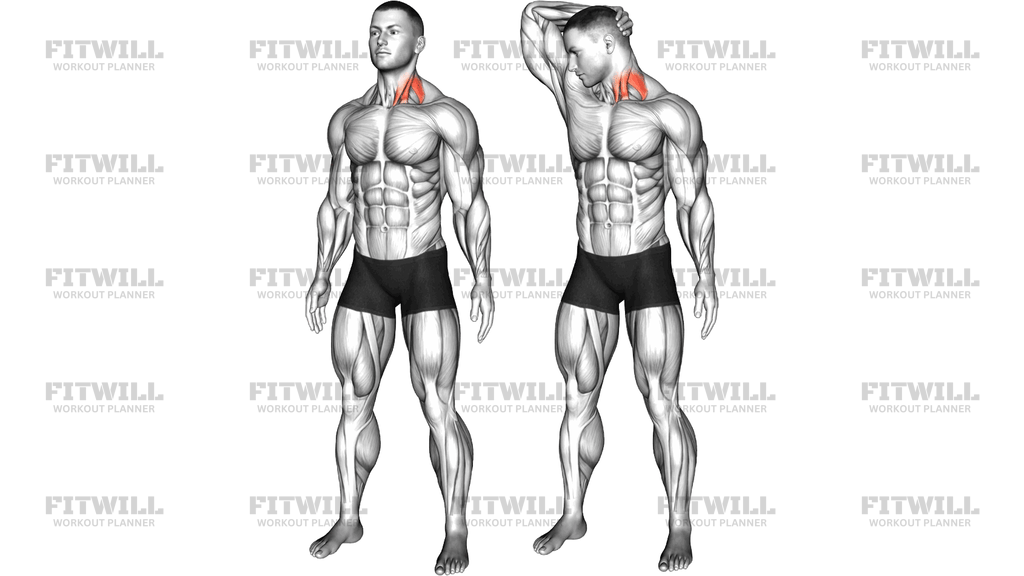
Neck Side Stretch is a simple standing neck mobility drill that targets the tight tissue along the side of the neck and upper shoulder. The image shows the head gently tipped to one side with the shoulders held back and down, which is the key setup for getting a clean stretch instead of just collapsing the neck forward. It is useful after long periods of desk work, driving, pressing volume, or any session that leaves the upper traps and neck feeling crowded.
The exercise is most effective when the torso stays tall and quiet. Keep the chest open, ribs stacked over the pelvis, and both shoulders away from the ears before you start the tilt. The behind-the-back arm position helps anchor the shoulder girdle so the stretch comes from the side of the neck rather than from shrugging the shoulder upward or twisting the torso. That small detail matters more than trying to force a bigger range.
As you move into the stretch, think about creating space from the collarbone to the jawline. The head should drift slowly toward one shoulder until you feel a mild pull along the opposite side of the neck and into the upper trap or levator scapulae area. The stretch should feel long and controlled, never sharp, pinchy, or electric. A calm exhale usually lets the neck soften a little more than forcing the tilt with your hand.
This is best used as a short recovery or mobility piece, not a strength movement. It fits well in a warm-up, between upper-body sets, or at the end of training when you want to reduce neck stiffness and restore normal head position. Because the range is small and the muscles are sensitive, the goal is smooth repetition, steady breathing, and symmetrical work on both sides rather than chasing an extreme end position.
[ Workout Log & Planner ]
Put your next workout in Fitwill
Keep your plan and training log ready when you are.


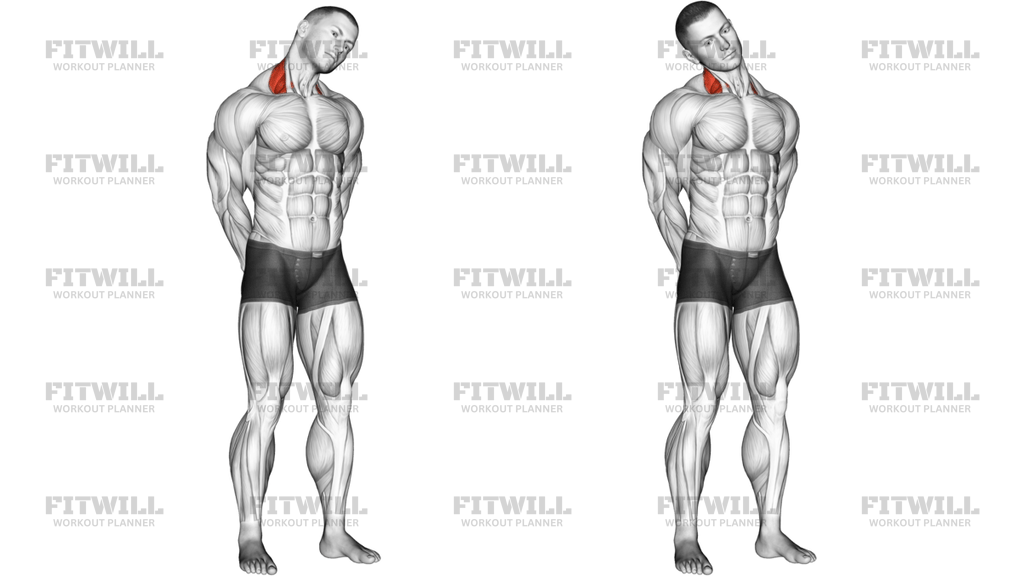
Instructions
- Stand tall with your feet about hip-width apart and let your arms move behind your body.
- Clasp your hands low behind your back, or hold one wrist behind the hip, so the shoulders stay open and down.
- Set your chin level and lengthen the back of your neck before you begin the tilt.
- Keep the chest facing forward and gently anchor the opposite shoulder down.
- Slowly tip one ear toward the shoulder until you feel a mild stretch along the side of the neck.
- Do not pull hard with the hand or rotate the torso to fake a bigger range.
- Breathe out and hold the end position for 15 to 30 seconds without bouncing.
- Return your head to center under control, reset posture, and repeat on the other side.
Tips & Tricks
- Keep the opposite shoulder heavy; if it rides up, the stretch shifts away from the neck and into a shrug.
- A small tilt is usually enough. Forcing the ear too far toward the shoulder often turns the stretch into a side-bend of the whole torso.
- Use the behind-the-back hand position to stop the shoulder from drifting forward and to keep the chest open.
- Keep your eyes on the horizon or slightly down instead of turning your head, or you will add rotation to the stretch.
- Exhale slowly through the hold to reduce jaw, trap, and scalene tension.
- If you feel a pinch at the base of the skull, back off a few degrees and keep the chin slightly tucked.
- Do both sides for the same amount of time, even if one side feels tighter than the other.
- This should feel like a clean lengthening sensation, not a sharp pull, nerve tingling, or burning pain.
Frequently Asked Questions
What does the Neck Side Stretch work?
It mainly stretches the upper trapezius, levator scapulae, and other side-neck tissues that tighten when the shoulders live high.
Do I need the hands behind my back for this stretch?
It is not mandatory, but the behind-the-back position helps keep the shoulder from coming forward and gives you a cleaner side-neck stretch.
Should I pull my head with my hand?
No. Light guidance is fine, but pulling hard often compresses the neck and makes the stretch feel worse instead of better.
Why am I feeling this more in my upper trap than my neck?
Your shoulder is probably drifting upward. Lower the shoulder first, then tilt the head a little less aggressively.
Can I do Neck Side Stretch seated?
Yes. Seated is often easier if you want to keep the torso still, especially at a desk or after upper-body training.
How long should I hold each side?
A 15 to 30 second hold is enough for most people, and you can repeat it if the neck feels especially tight.
What is a common mistake with this stretch?
Turning it into a shrug, twisting the chest, or pulling too hard are the biggest errors because they reduce the side-neck stretch.
Is this safe if I have neck pain?
Gentle, pain-free stretching is usually fine, but sharp pain, numbness, or symptoms that travel into the arm should be checked before you keep stretching.