Jump Squat
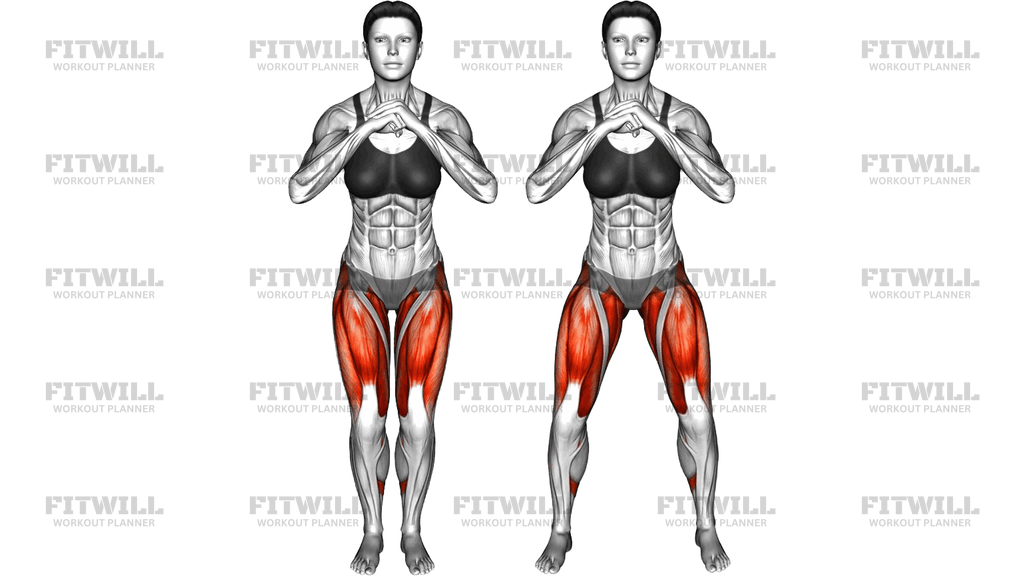
Jump Squat is a bodyweight plyometric squat used to build lower-body power, reactivity, and landing control. It places the main demand on the glutes and thighs while also asking the hamstrings, core, and lower back to keep the trunk organized as you explode off the floor and absorb the landing.
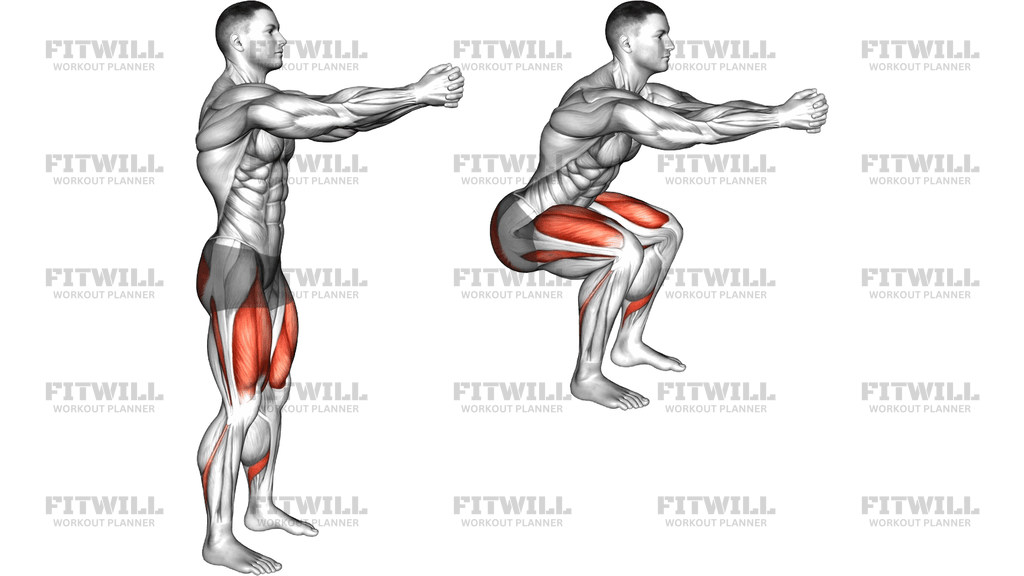
The exercise is simple in appearance but the details matter. A clean Jump Squat starts with a stable athletic stance, usually about shoulder width, with the chest tall, ribs stacked over the pelvis, and the feet rooted before you leave the ground. That loading position is where you create tension. If the setup is sloppy, the jump becomes noisy, rushed, and hard to repeat.
From the bottom of the squat, drive through the whole foot, extend the hips and knees together, and leave the floor with enough power to feel springy rather than forced. The arms can swing naturally to help create momentum, but the jump should still come from the legs and hips. At the top, stay tall for a brief moment rather than tucking your knees or throwing the torso forward.
The landing is just as important as the takeoff. Touch down quietly on the midfoot and heel, let the knees bend to absorb force, and keep them tracking in line with the toes. Each rep should look crisp and repeatable, not like a long series of hard impacts. If the landing gets loud or the knees cave, the set has gone too far or the squat depth is too deep for the current level.
Jump Squat works well in warm-ups, athletic conditioning, or power-focused lower-body sessions where explosive effort matters more than load. It is also useful as a bodyweight option when you want a simple way to train speed and coordination without machines or equipment. Beginners can use a smaller jump and shallower squat, while more advanced lifters can focus on sharper takeoff, cleaner landings, and consistent rhythm without turning the set into cardio-bounce reps.
[ Workout Log & Planner ]
Put your next workout in Fitwill
Keep your plan and training log ready when you are.


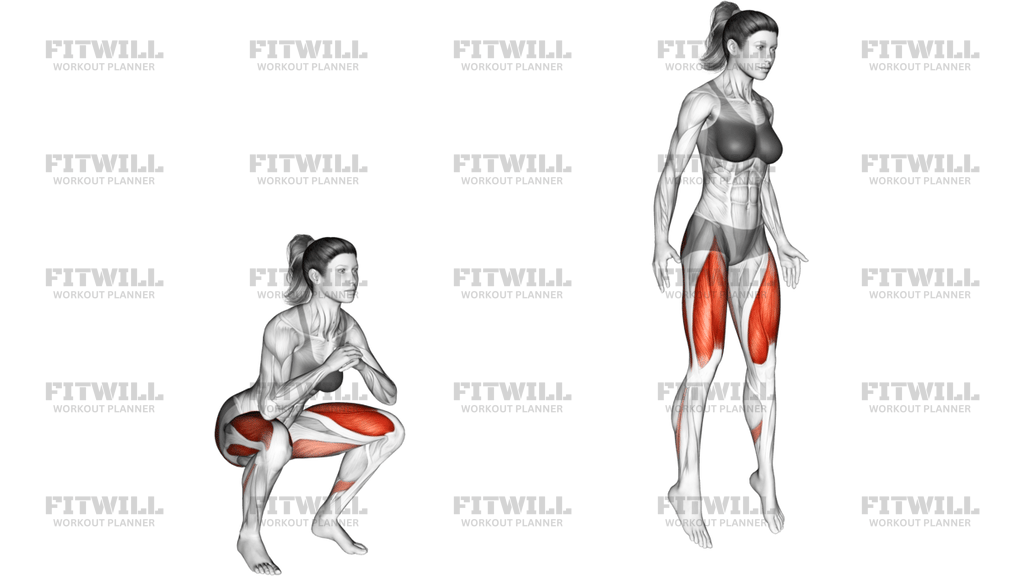
Instructions
- Stand with your feet about shoulder width apart, toes slightly turned out, and your arms relaxed at your sides.
- Lower into a shallow squat by sending your hips back and down while keeping your chest lifted and your heels planted.
- Brace your core at the bottom so your torso stays stacked before you jump.
- Drive forcefully through the whole foot and swing the arms naturally as you jump straight up.
- Extend the hips, knees, and ankles together so the takeoff feels fast and athletic.
- Land softly on the midfoot and heel with your knees bent and tracking over your toes.
- Absorb the landing with control, then flow directly into the next rep if your balance is solid.
- Reset between reps if the landing gets noisy, your torso leans too far forward, or your knees cave inward.
Tips & Tricks
- Keep the squat shallow enough that every rep still feels springy; a half squat is usually better than sinking too deep before the jump.
- Use your arms for rhythm, but do not hurl them so hard that your chest collapses or you lose balance on the landing.
- Think about pushing the floor away instead of trying to tuck your knees up.
- Land quietly. If the impact is loud, shorten the jump and soften the knee bend on the way down.
- Keep the knees in line with the second or third toe during both the loading phase and the landing.
- Stop the set when jump height drops or your torso starts pitching forward to chase more height.
- Keep the heels down during the squat and only leave the floor when you are driving out of the bottom.
- Use short sets so the movement stays explosive instead of turning into repeated pogo jumps.
- Exhale as you leave the floor, then reset your breath before the next rep if you are pausing between jumps.
- Wear stable shoes and choose a non-slip surface so the landing stays consistent.
Frequently Asked Questions
What does Jump Squat train most?
It mainly trains lower-body power, with the glutes and thighs doing most of the work while the core helps keep the torso stable.
How deep should I squat before jumping?
Use a shallow athletic squat, not a deep bodyweight squat. The best loading position is one you can explode out of without losing speed.
Should my feet stay flat during the whole rep?
Your heels should stay down during the squat, then your feet leave the floor as you jump. On landing, return through the midfoot and heel so you can absorb the impact cleanly.
What is the biggest mistake with Jump Squat?
The most common mistake is chasing height with a sloppy landing. If your knees cave or the rep gets loud, the jump is too aggressive for your current control.
Is Jump Squat more for strength or cardio?
It is mainly a power and conditioning movement. It can raise your heart rate, but the goal should be crisp explosive reps, not nonstop bouncing.
Can beginners do this exercise?
Yes, but they should keep the jump small and the squat shallow until they can land quietly and keep the knees tracking well.
How many reps should I use?
Jump Squat usually works best in low rep sets so each jump stays fast and controlled. Once the reps slow down, the set is usually over.
Can I do this if I do not want to jump very high?
Yes. A low jump with a clean landing is better than a high jump with poor mechanics, especially when you are using it for warm-up or technique work.