Landmine Lever Bent-Over Row Two Arms
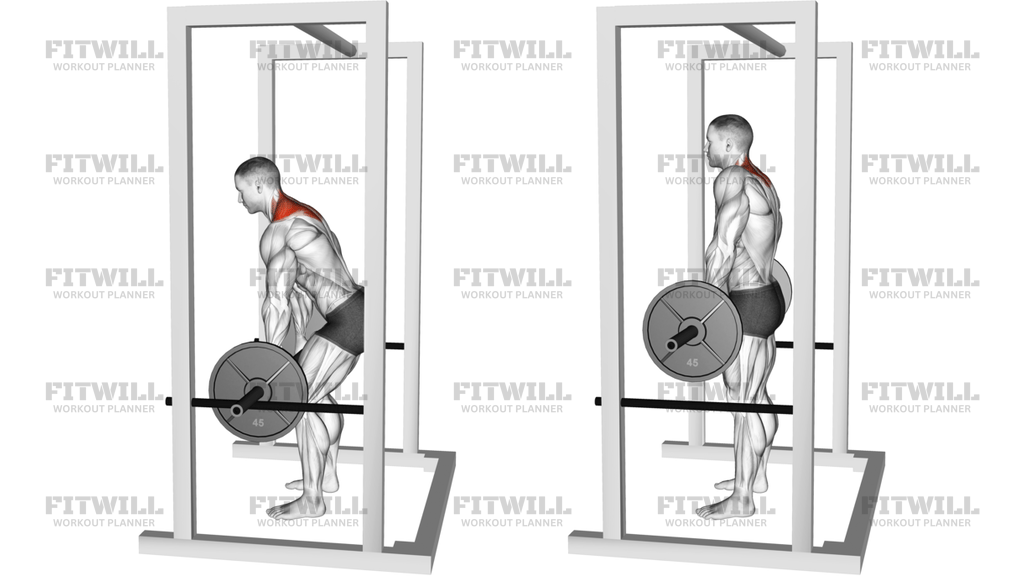
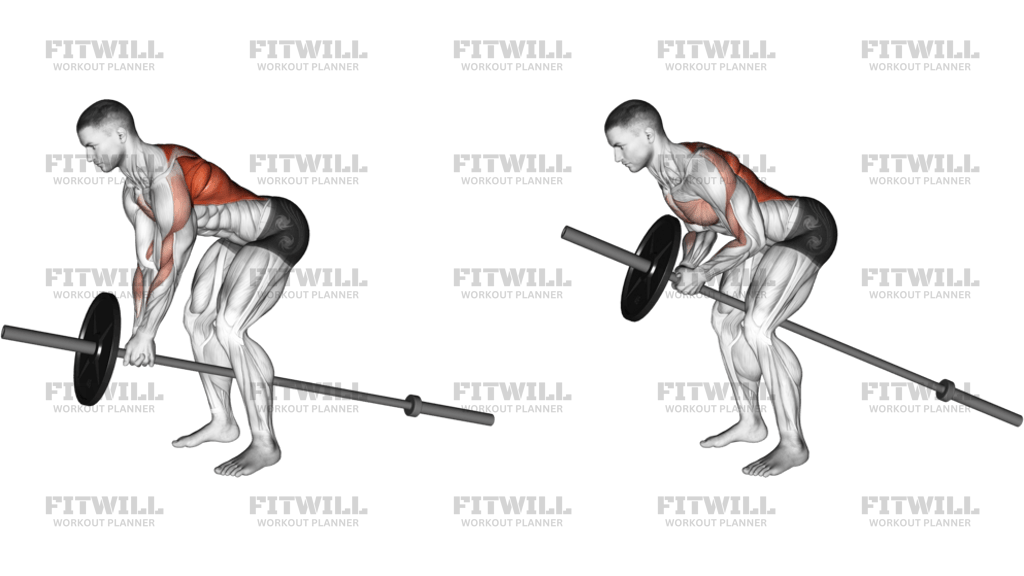
Landmine Lever Bent-Over Row Two Arms is a two-handed horizontal pulling exercise built around a barbell anchored at one end. The moving end sits low in front of you, so the row follows a fixed arc that is easier to control than a free barbell row while still demanding a strong hinge, a stable trunk, and clean elbow drive. It is especially useful when you want to train the upper back and lats without needing a bench or cable stack.
The setup matters more here than on many other rows. Your feet should be grounded, your knees softly bent, and your hips pushed back far enough that your torso is inclined forward without rounding. Gripping the bar close to the loaded end keeps the leverage manageable and puts the emphasis on the back rather than on swinging the torso. If you start with your chest collapsed or your hips too low, the bar path will drift and the lower back will take over.
Each repetition should begin from a dead, controlled hang and finish with the elbows driving back toward the torso. Pull the bar toward the lower ribs or upper abdomen, then let it travel back down until the arms are long again while the torso stays fixed. Think about moving the elbows, not yanking with the hands. A brief squeeze at the top is useful, but the real goal is to keep the shoulders from shrugging and the spine from changing shape as the load moves.
Landmine Lever Bent-Over Row Two Arms fits well in strength programs, hypertrophy work, and accessory blocks after heavier presses or deadlifts. The traps, rhomboids, lats, and biceps all assist, but the main training effect comes from repeating a clean hinge-row pattern under tension. Beginners can use it with light plates and a shorter range, while experienced lifters can make it harder by slowing the lowering phase and keeping the torso completely still. If the bar starts to jerk, the low back rounds, or the shoulders rise toward the ears, the set is too heavy or the hinge is losing position.
[ Workout Log & Planner ]
Put your next workout in Fitwill
Keep your plan and training log ready when you are.


Instructions
- Stand over the anchored end of the barbell with your feet about hip to shoulder width apart and the loaded sleeve in front of you.
- Hinge your hips back, keep a soft bend in your knees, and lower your torso until it is angled forward with a long neutral spine.
- Take a close two-handed grip on the bar just inside the plate, with your wrists straight and your shoulders set away from your ears.
- Let your arms hang straight so the bar starts low in front of your shins or knees, depending on your torso angle.
- Brace your midsection and inhale before the pull so your torso stays fixed when the load leaves the floor line.
- Drive your elbows back and slightly out, pulling the bar toward your lower ribs or upper abdomen.
- Squeeze your shoulder blades together at the top without standing up or shrugging.
- Lower the bar slowly until your arms are straight again and your shoulders can reach forward under control.
- After the final rep, guide the bar back down, release the grip only when the weight is settled, and stand up by extending your hips.
Tips & Tricks
- Keep the hinge fixed for the whole set; if your chest keeps rising, the row is turning into a partial deadlift.
- Pull to the lower ribs, not the chest, so the elbows stay on a useful row path instead of flaring into a shrug.
- Use a close grip on the sleeve or handle so the bar stays centered and the load does not twist you sideways.
- Let the shoulder blades reach forward a little on the way down, then row them back without rounding the low back.
- A brief pause at the top makes the upper back work harder than bouncing the bar off the starting position.
- If the bar keeps drifting into your thighs, raise your torso slightly and shorten the range rather than heaving the weight.
- Keep your neck long and look a few feet ahead of you on the floor instead of craning your head up.
- Choose plates that let you keep the descent slow; if the lowering phase snaps down, the set is too heavy.
- If your grip fails before your back does, reduce load or use chalk so the row stays controlled.
Frequently Asked Questions
What muscles does Landmine Lever Bent-Over Row Two Arms work most?
It mainly trains the traps and upper back, with the lats, rhomboids, rear shoulders, and biceps helping to drive and stabilize the pull.
Can beginners perform this exercise?
Yes. Start with light plates and a short, clean row path so you can keep the hinge stable and learn to pull without jerking your torso.
Where should I hold the bar on Landmine Lever Bent-Over Row Two Arms?
Hold the bar close to the loaded end with both hands side by side or nearly side by side, keeping your wrists straight and your grip even.
Should my torso stay fixed during the rep?
Yes. Your torso should keep the same hinge angle while the elbows move; if your chest bounces up and down, the lower back is taking over.
Where should the bar travel?
Pull it toward the lower ribs or upper abdomen. That keeps the row path close to the body and makes it easier to load the upper back instead of the shoulders.
Why does Landmine Lever Bent-Over Row Two Arms feel easier on the back than a free barbell row?
The anchored end creates a fixed arc, which usually makes the path smoother and easier to control while still letting you train a strong pull.
What should I do if I feel it mostly in my lower back?
Raise your torso a little, reduce the load, and shorten the range until the pull comes from the elbows and upper back instead of from standing up the weight.
Can I use Landmine Lever Bent-Over Row Two Arms after deadlifts or presses?
Yes. It works well as accessory pulling work after big lower-body or pressing lifts because it trains the upper back without needing a cable stack.