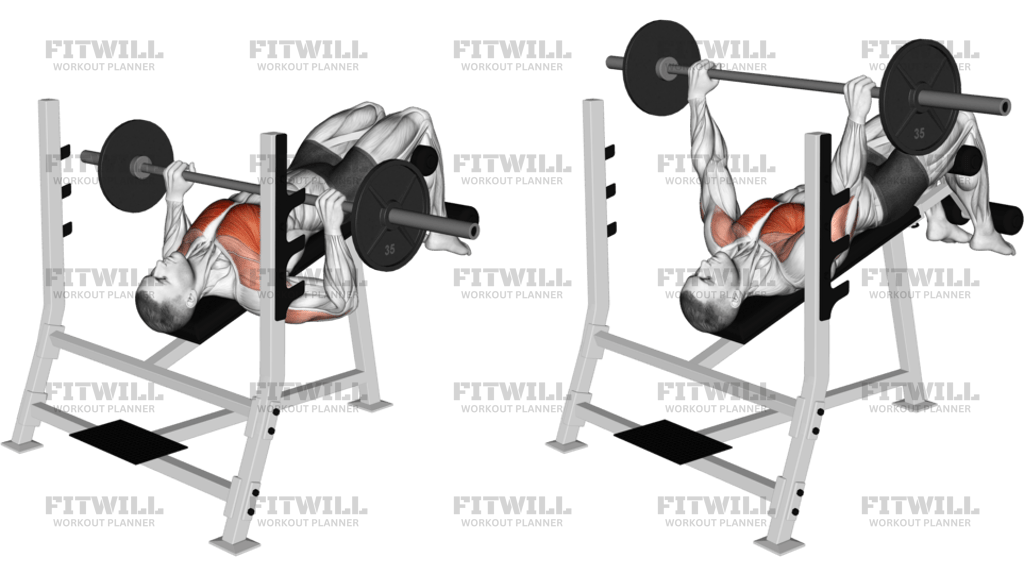
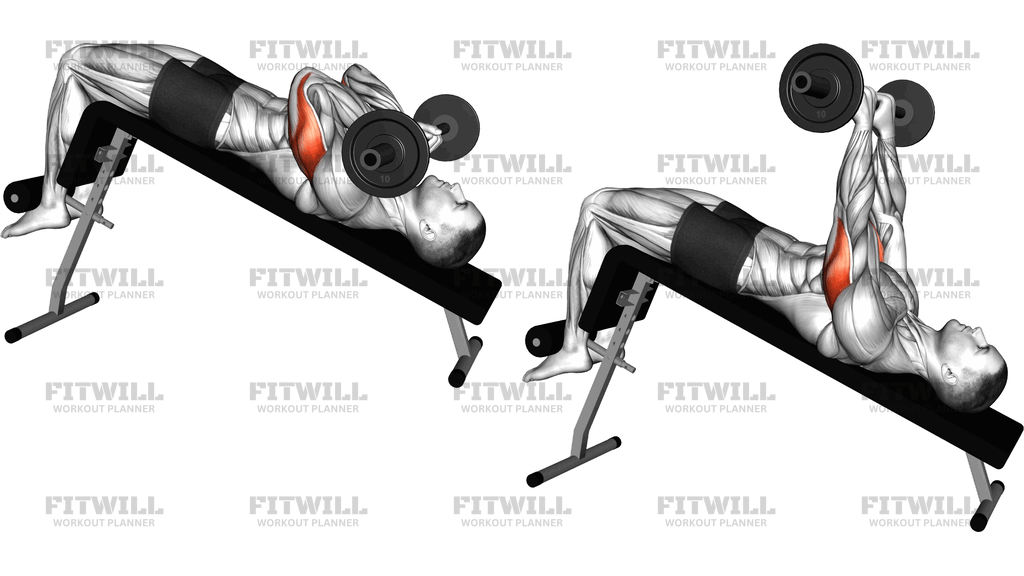
Barbell Incline Close-Grip Bench Press
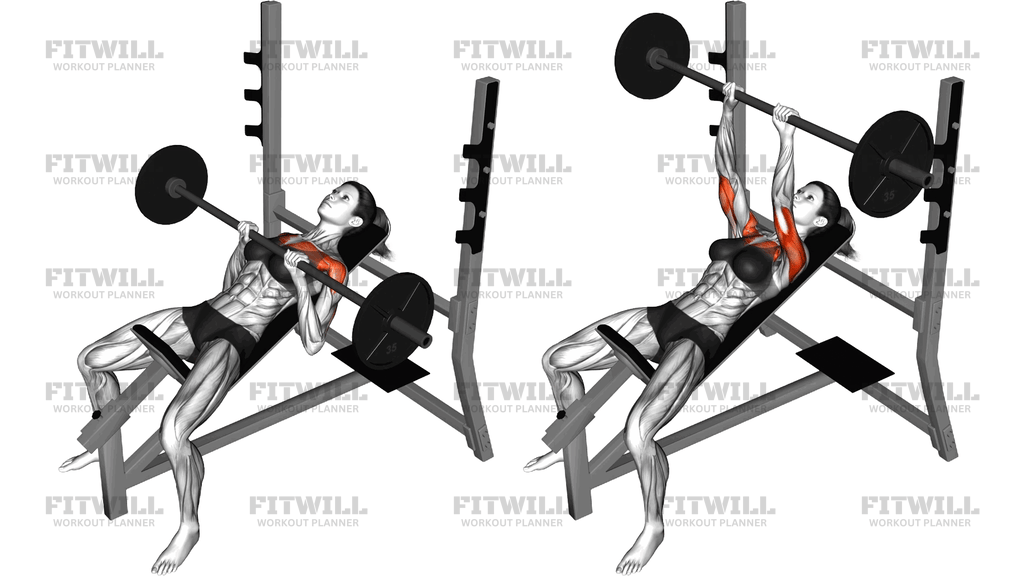
Barbell Incline Close-Grip Bench Press is a pressing variation that shifts more work toward the triceps while still involving the upper chest, front delts, forearms, and trunk for stability. The incline bench changes the pressing angle, and the narrower hand position changes how the elbows track and how the bar leaves the rack. That combination makes the exercise feel different from a standard flat close-grip bench press: the movement is still a heavy barbell press, but the setup and bar path need to stay tight so the triceps can do the bulk of the work.
The exercise is most useful when you want a triceps-biased compound press that still lets you train with a barbell and build pressing strength under control. Because the grip is narrower, the wrists, forearms, and elbow position matter more than in a wider bench press. A stable upper back, a consistent arch, and planted feet keep the torso fixed on the incline bench so the bar can move cleanly instead of drifting forward or bouncing off the chest.
In anatomy terms, the primary effort comes from the triceps brachii, with the anterior deltoids, forearm flexors, and rectus abdominis helping stabilize the bar and torso. The incline angle usually puts the bar on a touch higher path than a flat press, so the lifter should lower it with control toward the upper chest or upper sternum area, then press back up without letting the elbows flare hard or the shoulders roll forward. That keeps the movement focused and makes the lockout more triceps-driven.
Good execution is about repeatable positioning. Set the bench to a moderate incline, take a close but comfortable grip, unrack the bar with straight wrists, and keep the shoulder blades retracted and down against the pad. Each rep should start from a stable top position, descend under control, touch or hover at the same chest target, and press back to full elbow extension without losing scapular tension. If the grip is too narrow, the wrists and elbows usually complain before the triceps get a clean training effect.
Use this exercise as an accessory press, a triceps-strength builder, or a pressing variation when you want a more elbow-dominant stimulus than a standard incline bench press. It is effective with moderate loads and disciplined tempo, especially when the goal is strength transfer, triceps development, or cleaner lockout mechanics. The set should finish with the same body position it started with: shoulders packed, feet grounded, and the bar under control rather than chased with momentum.
[ Workout Log & Planner ]
Put your next workout in Fitwill
Keep your plan and training log ready when you are.


Instructions
- Set an incline bench to a moderate angle and lie back with your upper back, head, and hips supported on the pad.
- Plant both feet firmly on the floor and keep your shoulder blades pulled back and down before you unrack the bar.
- Take a close grip that is just inside shoulder width, with straight wrists and the bar centered over your upper chest.
- Unrack the bar to full arm extension and hold it steady above the shoulders.
- Lower the bar slowly toward the upper chest or upper sternum while keeping the elbows tucked close to the body.
- Lightly touch the chest or stop just above it, then press the bar upward by extending the elbows and driving the bar back over the shoulder line.
- Keep the upper back tight and avoid letting the elbows flare or the shoulders roll forward as you press.
- Exhale as you drive the bar up, then inhale and reset at the top before the next repetition.
- After the final rep, bring the bar back to the rack with control before letting go of your upper-back tension.
Tips & Tricks
- Use a grip that is narrow enough to emphasize the triceps but not so narrow that your wrists fold back or your elbows pinch inward.
- Keep the incline moderate; a very steep bench turns the movement into more of a shoulder press and usually shortens the triceps emphasis.
- Lower the bar to the same chest target on every rep so the press starts from a predictable position.
- Stack the bar over the wrist and elbow at the top so the forearms stay vertical instead of drifting backward.
- Keep the shoulder blades pinned to the bench; if they slide forward, the chest pops up and the press becomes less stable.
- Use a controlled descent and a firm press instead of bouncing off the chest or softening the torso to get the bar moving.
- If your elbows flare wide, bring the grip in slightly and think about driving them toward your ribs on the way down.
- Choose a load that lets you reach full lockout without a hip bridge, leg drive surge, or wrist collapse.
- If your triceps fatigue before your chest or shoulders, that is normal for this variation; do not turn it into a wide-grip incline press to chase extra weight.
Frequently Asked Questions
What does the Barbell Incline Close-Grip Bench Press target most?
It primarily targets the triceps, with the upper chest and front delts helping drive the press.
How is this different from a regular incline bench press?
The closer grip shifts more of the effort to elbow extension, so the triceps work harder and the elbows stay tighter to the body.
Where should the bar touch on the incline?
Lower it toward the upper chest or upper sternum area, not high on the neck and not down toward the lower ribs.
How close should my hands be on the bar?
A grip just inside shoulder width is usually enough to bias the triceps without forcing the wrists or elbows into an awkward position.
Can I keep my elbows flared on this press?
No. A tucked elbow path keeps the load centered over the triceps and usually feels stronger and safer on the shoulders.
Is a steep incline better for this exercise?
Usually not. A moderate incline preserves the pressing angle while keeping the triceps emphasis clearer than a very steep bench.
Can beginners use this variation?
Yes, if they start light and learn to keep the shoulders pinned, wrists stacked, and bar path consistent.
What usually causes wrist discomfort here?
A grip that is too narrow or a bar that sits too far back in the palm can bend the wrists and make the press feel unstable.