Kettlebell Alternating Press On Floor
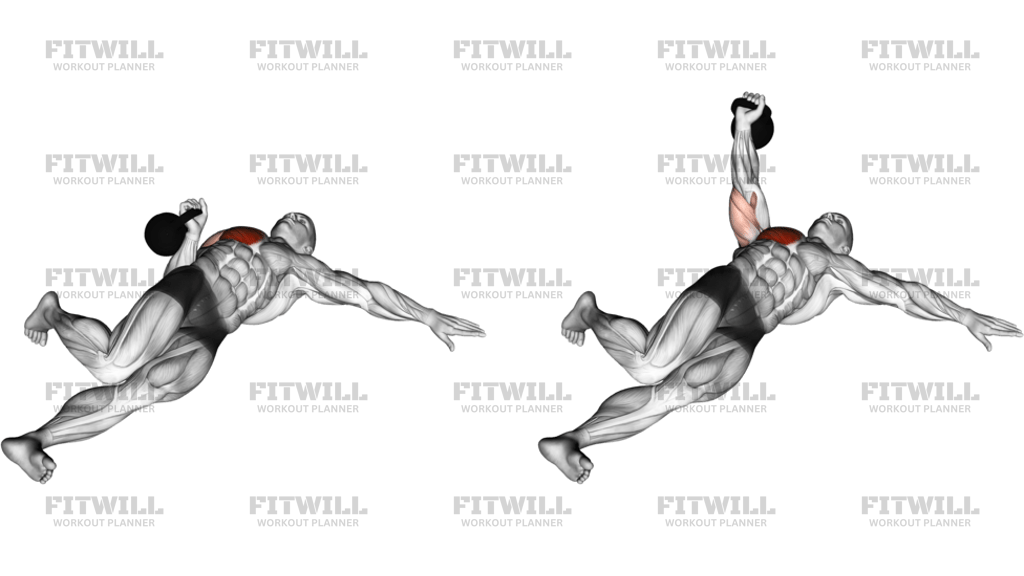
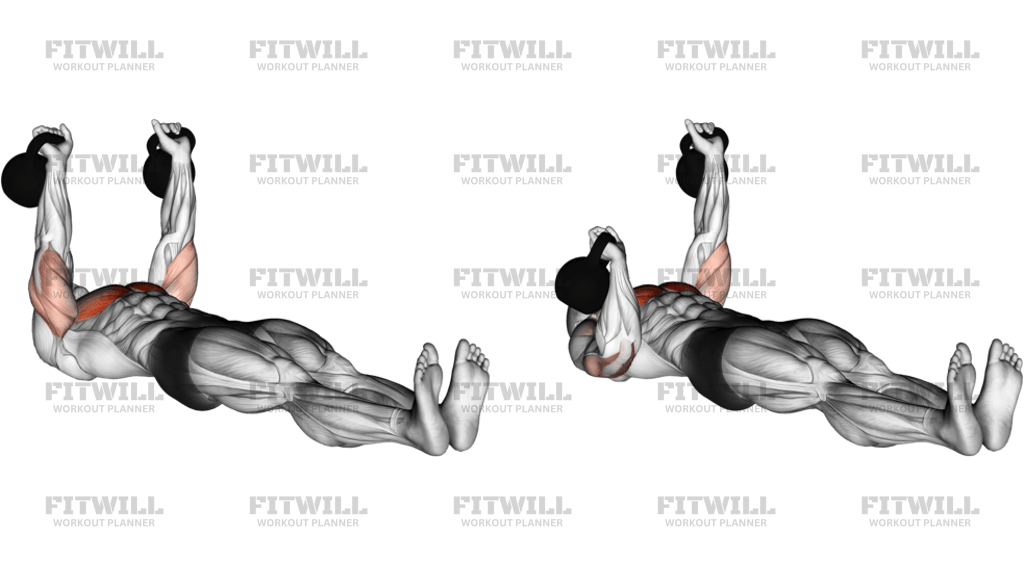
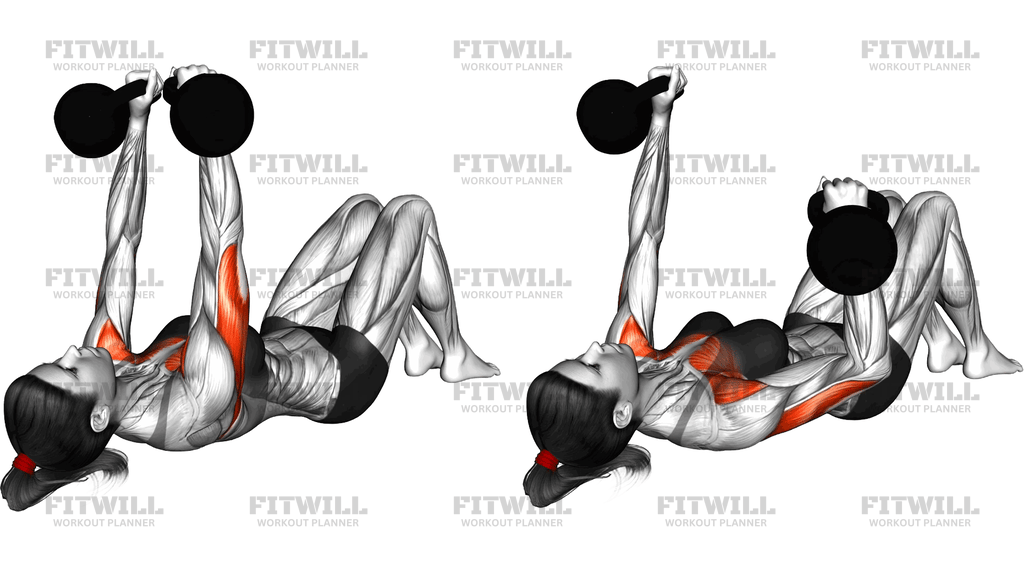
Kettlebell Alternating Press On Floor is a floor-based pressing exercise performed lying on your back with a kettlebell in each hand, or with the hands working in an alternating pattern if the implementation uses one side at a time. The floor shortens the pressing range, which makes this a useful way to train upper-body force production without the shoulder traveling into a deep stretch. It is still a real pressing movement: the chest, front delts, triceps, and trunk all have to stay organized while one arm works and the other remains controlled.
The floor changes the mechanics in a meaningful way. When your upper arm meets the ground, the rep stops before the shoulder drops too far back, which reduces the chance of losing position at the bottom. That makes the exercise especially useful for lifters who want a stable press pattern, want to limit shoulder irritation from deep range pressing, or need a variation that forces clean lockout strength and symmetrical control from side to side.
Start by lying flat with both shoulders pinned to the floor, feet planted, and the kettlebells set over the wrists so the forearms stay vertical. The non-pressing arm should stay stacked and quiet while the working arm drives straight up. The goal is not to twist into the rep or chase extra range, but to keep the ribcage down, the shoulder packed, and the press path clean from the floor to a hard lockout.
Each repetition should finish with the elbow fully extended, the wrist over the shoulder, and the kettlebell balanced above the chest rather than drifting toward the face or shoulder line. Lower the bell under control until the upper arm touches the floor lightly, then switch sides or continue the alternating pattern as prescribed. A smooth reset between sides matters here: if the torso rotates, the rep stops being a floor press and turns into a compensation drill.
This exercise works well as a strength accessory, a warm-up press, or a lower-risk variation when you want pressing volume without heavy barbell loading. It can also expose side-to-side differences because the floor removes cheating from leg drive and reduces how much momentum you can hide in the rep. Choose a load that lets both shoulders stay even, the wrists stay stacked, and the alternation remain deliberate from the first rep to the last.
[ Workout Log & Planner ]
Put your next workout in Fitwill
Keep your plan and training log ready when you are.


Instructions
- Lie on your back on the floor with your knees bent, feet flat, and a kettlebell in each hand held above the chest.
- Pin both shoulder blades to the floor and stack each wrist over its elbow so the forearms stay vertical.
- Set the non-working arm in a stable lockout position while the other arm prepares to press.
- Brace your ribs down and keep your lower back from arching as you begin the first rep.
- Press one kettlebell straight up until the elbow is fully extended and the bell sits over the shoulder.
- Pause briefly at the top without letting the torso twist or the shoulder shrug forward.
- Lower the kettlebell under control until the upper arm touches the floor lightly.
- Switch sides or alternate as prescribed, keeping each rep smooth and even.
- Exhale on the press and reset your breath before the next repetition.
Tips & Tricks
- Keep the wrists stacked over the elbows so the kettlebell stays balanced instead of folding back into the wrist.
- Let the upper arm touch the floor softly; do not bounce the rep off the ground.
- Keep the non-pressing shoulder pinned to the floor so the working side does not drag the torso into rotation.
- Use a grip that keeps the kettlebell handle centered in the palm, not jammed into the fingers.
- Stop the descent when the upper arm meets the floor, since extra range is not available in this variation.
- Choose a load that lets you alternate evenly; if one side speeds up or twists, the weight is too heavy.
- Keep your chin neutral and avoid pushing your head into the floor during the press.
- Drive the bell to a true vertical lockout rather than forward toward the face.
Frequently Asked Questions
What muscles does Kettlebell Alternating Press On Floor work?
It mainly trains the chest, triceps, and front shoulders, with the core and upper back helping stabilize the torso and shoulder blades.
Why do I do this press on the floor instead of a bench?
The floor limits the bottom range, which makes the press more stable and reduces how far the shoulder drops into extension.
Should both kettlebells move at the same time?
No. The alternating version keeps one arm locked out while the other presses, which makes the torso work harder to stay square.
How low should the kettlebell go on each rep?
Lower it until the upper arm lightly touches the floor. That is the bottom position for this variation.
Can beginners use the kettlebell alternating floor press?
Yes, if the load is light enough to keep the ribs down and the torso from twisting when one arm presses.
What is the most common form error in this exercise?
Letting the pressed shoulder roll forward or rotating the torso to help the bell finish the rep.
Does this replace a full bench press?
No. It is a shorter-range pressing accessory, best used to build control, lockout strength, and shoulder-friendly pressing volume.
How should I breathe during alternating reps?
Take a brace before the press, exhale as you drive the kettlebell up, and reset your breath before switching sides.