Kettlebell Thruster
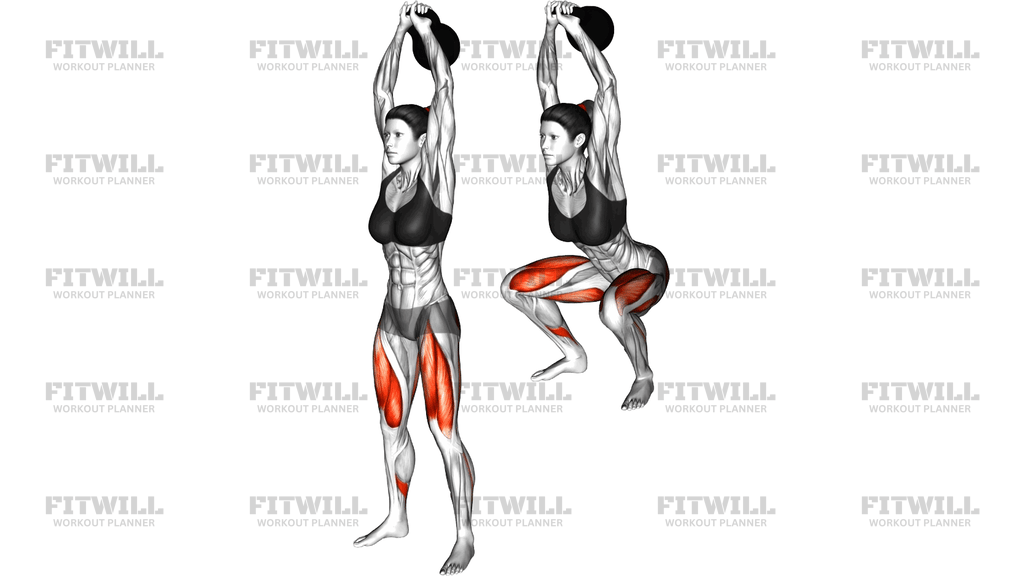
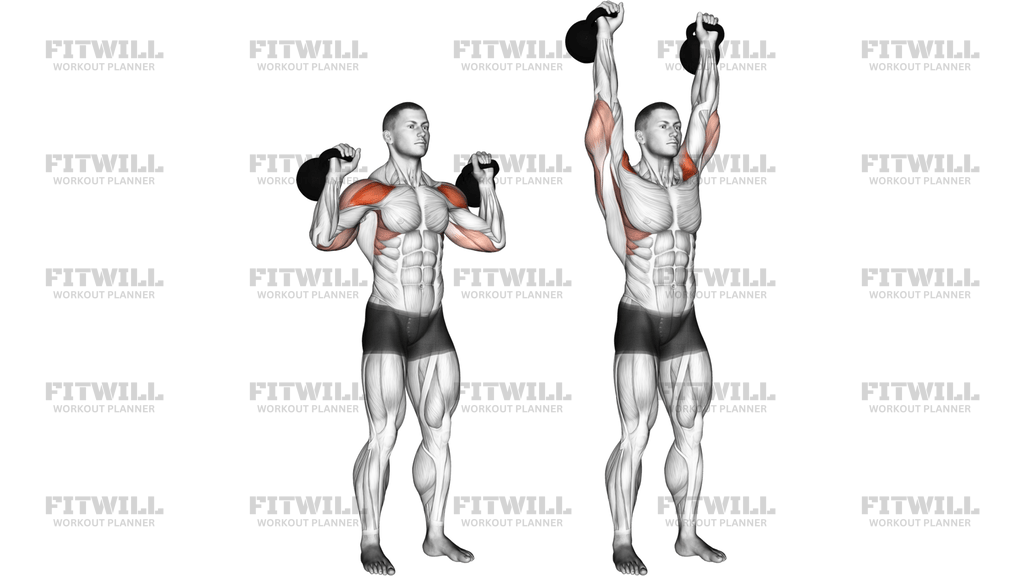
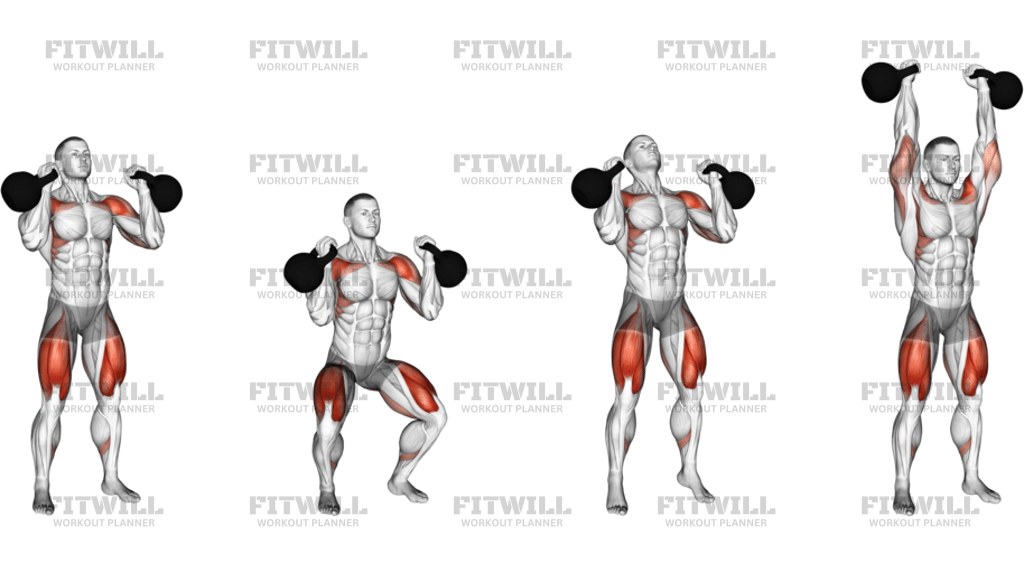
Kettlebell Thruster is a full-body kettlebell movement that combines a front squat with a strong overhead press. In this version, the bells stay in a front-rack position at the shoulders, then you drive up out of the squat and finish by pressing both kettlebells overhead. The exercise builds shoulder strength, leg drive, trunk stability, and coordination in one continuous rep.
The setup matters because the front rack changes everything about the lift. If the kettlebells sit too far forward, the torso folds and the press becomes a grind. If the elbows drop, the bells drift and the wrists take over. A good thruster keeps the chest lifted, elbows slightly forward, feet planted, and the load stacked over the middle of the body through the squat and press.
This exercise is most effective when the squat and press stay linked but not rushed. Descend under control until the thighs reach a comfortable depth, then drive through the floor and transfer that force straight into the press as you stand. The best reps feel smooth: legs start the rep, the core stabilizes the torso, and the shoulders finish the overhead lockout without leaning back or bouncing the bells.
Because the kettlebells move overhead, the movement asks for clean shoulder mechanics and a stable midline. It is useful for general strength, conditioning, and power-endurance work, especially when you want a compound pattern that challenges the legs and upper body together. Keep the range pain-free, use a load you can control for every rep, and stop the set if the rack position, squat depth, or overhead finish starts to break down.
[ Workout Log & Planner ]
Put your next workout in Fitwill
Keep your plan and training log ready when you are.


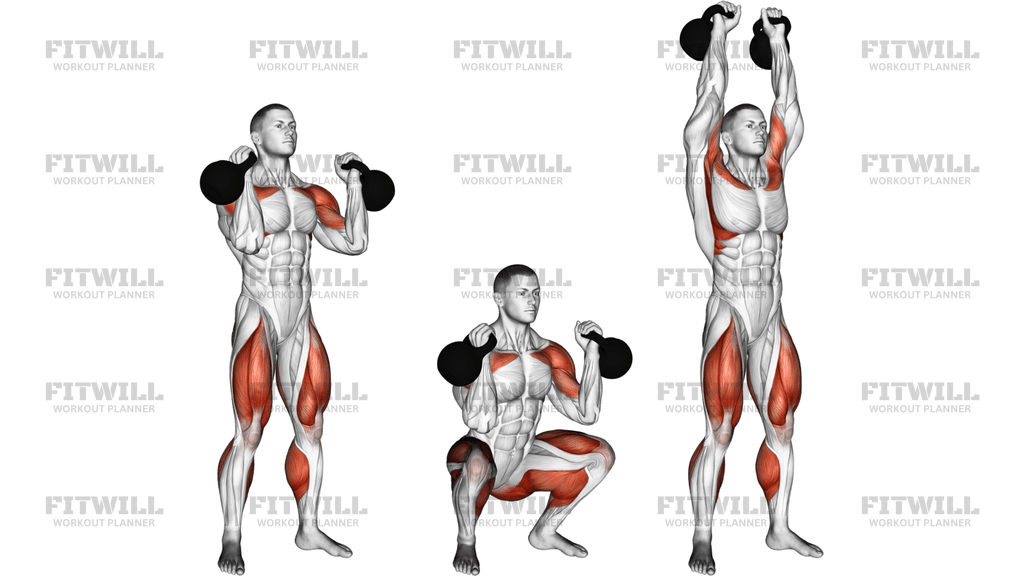
Instructions
- Stand with your feet about shoulder-width apart and clean or rack a kettlebell in each hand at shoulder height, palms facing in and wrists straight.
- Let the bells rest on the outside of your forearms, keep your elbows slightly in front of your ribs, and lift your chest without flaring your lower back.
- Brace your midsection, set your eyes forward, and keep your weight balanced across the whole foot before you start the descent.
- Sit into a controlled squat by sending your hips back and down while your knees track in line with your toes.
- Lower until your thighs reach a comfortable depth and keep both kettlebells pinned in the front rack instead of letting them drift forward.
- Drive through your heels and stand up powerfully, using the leg drive to help the torso rise out of the squat.
- As you finish standing, press both kettlebells overhead in one smooth path until your arms are straight and the bells are stacked over your shoulders and hips.
- Lower the bells back to the front-rack position with control, then repeat for the next rep without bouncing out of the bottom.
- Breathe in as you descend, exhale as you stand and press, and reset fully if you lose the rack position or arch your back.
Tips & Tricks
- Keep the kettlebells close to your shoulders; if the bells drift away from the body, the press turns into a front raise.
- Think of the squat as the power source and the press as the finish, not two separate jerky reps.
- Let your elbows stay slightly forward in the rack so the bells rest on the forearms instead of hanging from the wrists.
- Do not lean back to force the overhead finish; the ribs should stay stacked over the pelvis as you press.
- Use a depth you can own with both bells fixed in place, even if that is a partial squat at first.
- Keep your heels grounded and your knees tracking over the toes so the rise out of the squat stays stable.
- Choose kettlebells that let you press cleanly without turning the rep into a push press driven by a big knee rebound.
- If one shoulder tires sooner than the other, lower the load rather than twisting to finish the rep.
- A controlled lowering phase helps preserve the rack position and protects the wrists and shoulders from sloppy catches.
Frequently Asked Questions
What muscles does the Kettlebell Thruster work most?
It primarily hits the shoulders, with strong work from the quads, glutes, triceps, and upper back during the squat-to-press sequence.
Can beginners perform this exercise?
Yes, if they start with light kettlebells and a squat depth they can control without losing the front-rack position.
Should I squat and press at the same time?
The squat and press are linked, but the press should finish as you stand up rather than being forced from the bottom of the squat.
Where should the kettlebells sit in the rack position?
They should rest against the forearms and shoulders with the elbows slightly forward, not hanging out in front of the body.
What is the most common mistake?
Rounding forward in the squat or leaning back to finish the press usually means the load is too heavy or the rack position is off.
Can I do this one arm at a time instead?
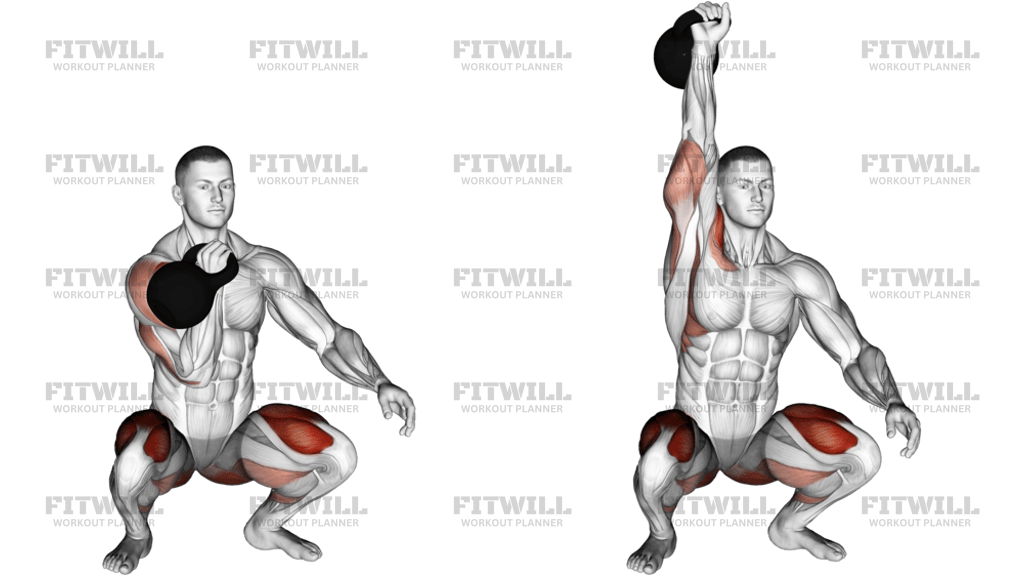
Yes, a single-arm thruster is a useful variation, but the bilateral version in this image demands more core bracing and symmetry.
How heavy should the kettlebells be?
Use a load that lets you keep the front rack, squat depth, and overhead finish clean for every rep without compensating.
Do I need full squat depth for the thruster?
No, go only as deep as you can while keeping your heels down, chest up, and kettlebells stable in the rack.