Kettlebell Goblet Squat
Kettlebell Goblet Squat is a front-loaded squat variation that keeps the weight close to your chest while you sit down between your heels. The goblet hold makes the exercise easier to organize than a barbell squat because the load naturally encourages a tall torso, active core, and clean knee tracking. That makes it useful for building quad strength, lower-body control, and squat mechanics at the same time.
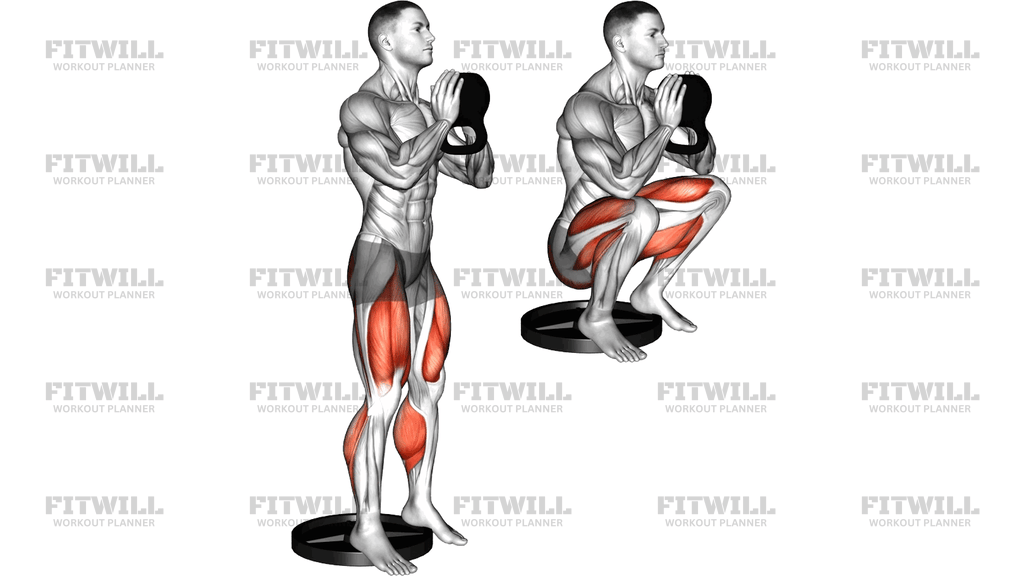
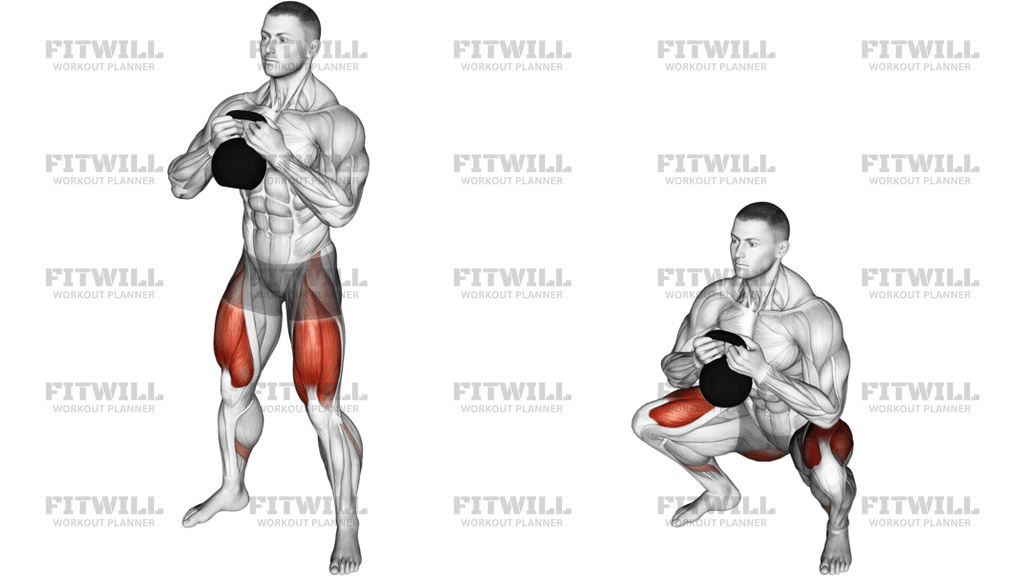
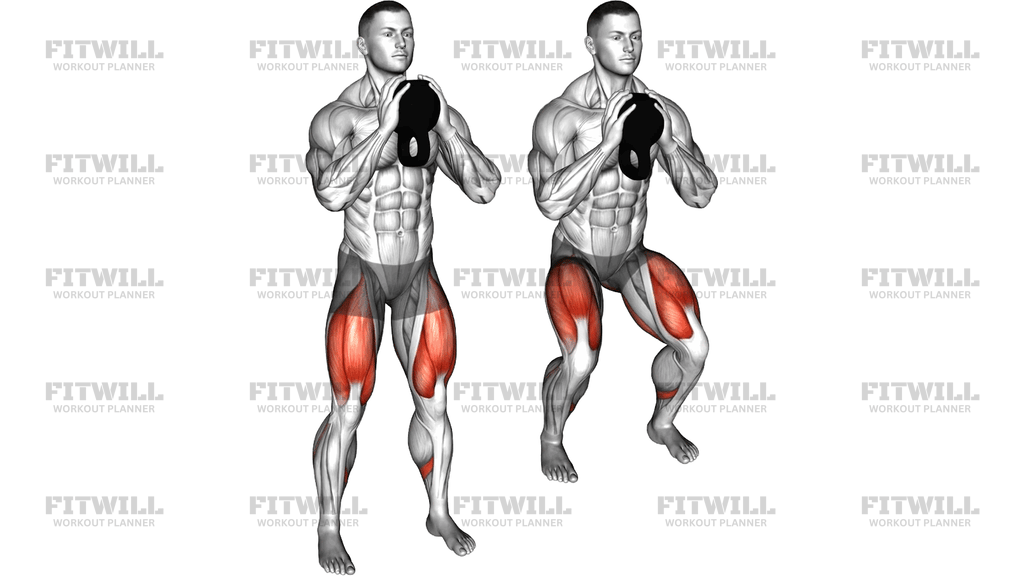
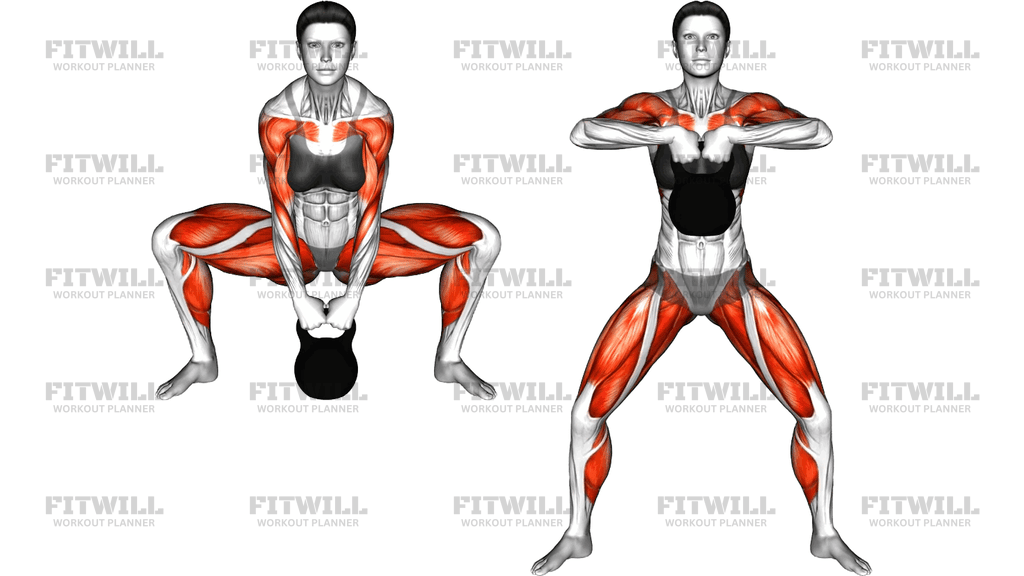
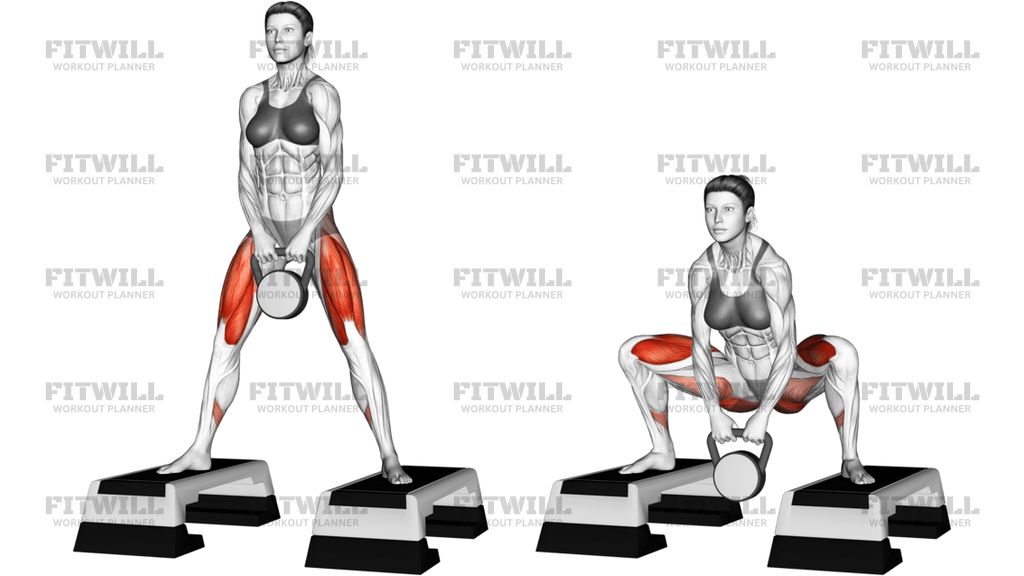
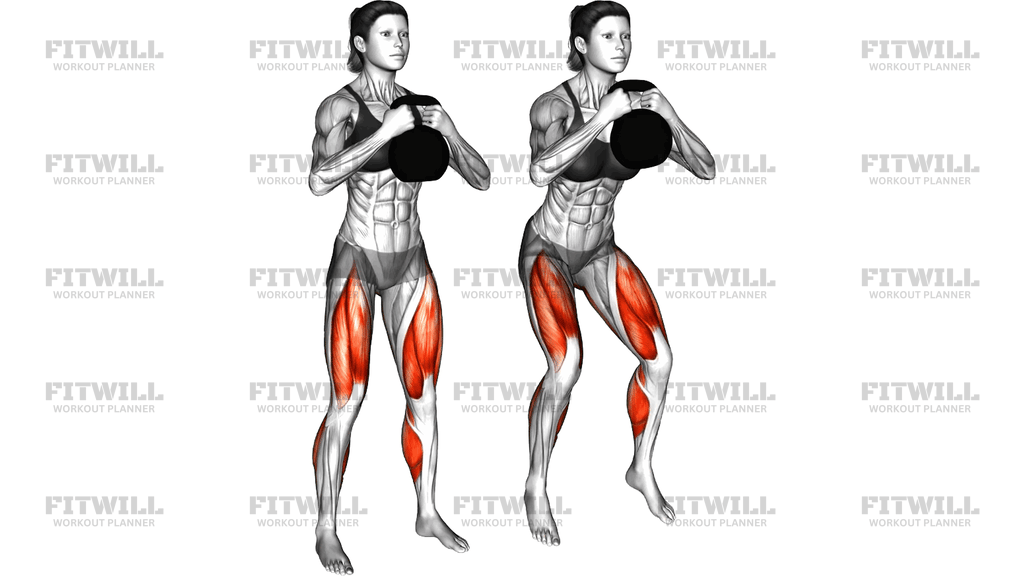
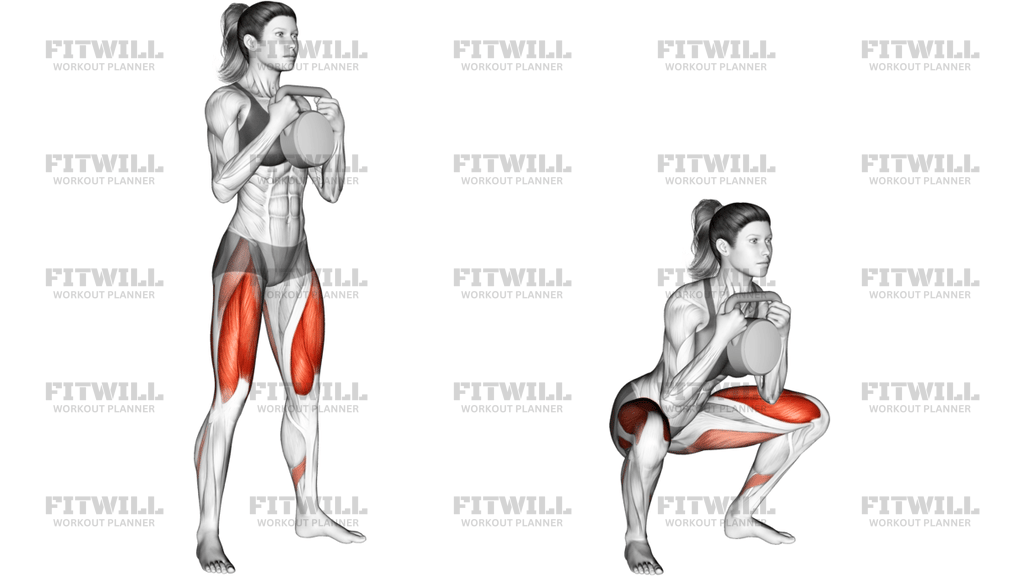
The image shows the bell held high under the chin with the elbows pointed down and slightly in front of the ribs. That rack position matters because it helps you stay braced and upright as you descend. If the kettlebell drifts away from the chest, the squat usually turns into a forward fold and the thighs, hips, and trunk stop working together.
This movement trains the quads heavily, while the glutes, adductors, upper back, forearms, and deep core stabilize the torso and keep the chest from collapsing. A good rep begins with the feet planted, the ribs stacked over the pelvis, and the knees allowed to travel naturally over the toes as you lower. The bottom position should feel balanced, not dumped into the hips or rocked onto the toes.
On the way up, drive the floor away and keep the bell pinned to the chest so the torso rises with the hips. The elbows should stay between the knees or just inside them, depending on your stance and mobility, but they should not shove the knees inward. Breathing should help the brace: inhale to set the trunk before you descend, then exhale as you pass the hardest part of the ascent.
Use this exercise as a primary squat pattern, a lower-body accessory, or a teaching tool when you want squat depth without the setup demands of a barbell. It is also a practical option for beginners, provided the load is light enough to keep the torso tall and the heels grounded. If you lose the upright position, shorten the range slightly or reduce the kettlebell weight before chasing more depth.
Fitwill
Log Workouts, Track Progress & Build Strength.
Achieve more with Fitwill: explore over 9600 exercises with images and videos, access built-in and custom workouts, perfect for both gym and home sessions, and see real results.
Start your journey. Download today!




Instructions
- Stand with your feet about shoulder width or slightly wider, toes turned out a little, and hold the kettlebell by the horns at chest height.
- Keep the bell close to your sternum, elbows pointed down, and forearms vertical so the load stays stacked over your midfoot.
- Take a breath, brace your trunk, and keep your ribs down before you start the descent.
- Sit your hips down between your heels while bending the knees and letting them track in line with the toes.
- Lower until your thighs reach a comfortable deep squat position without losing the tall torso or lifting the heels.
- Pause briefly at the bottom if you can keep tension, then drive upward by pressing the floor away.
- Keep the kettlebell pinned to your chest as you rise so the torso and hips come up together.
- Exhale through the hardest part of the ascent, then reset your stance and breathing before the next rep.
Tips & Tricks
- Keep the kettlebell high and close; if it hangs away from the body, the chest usually tips forward.
- Think about dropping straight down between the heels instead of reaching the hips far back like a hinge.
- Let the knees travel forward and outward as needed so the torso can stay upright.
- If your heels pop up, reduce depth or widen your stance slightly before adding load.
- Use the elbows as a position check: they should stay down and inside the knees, not flare wide and pull the shoulders forward.
- A slower lowering phase makes it easier to feel the quads and stay balanced through the bottom.
- Choose a kettlebell you can hold comfortably in the front rack position without shrugging the shoulders.
- Stop the set when the chest drops or the knees cave inward, even if the reps technically look unfinished.
Frequently Asked Questions
What muscles do kettlebell goblet squats work most?
They mainly train the quads, with strong help from the glutes, adductors, upper back, forearms, and deep core.
Why hold the kettlebell at chest height?
The front-loaded hold encourages a more upright torso and makes it easier to keep the squat organized and balanced.
How deep should I squat in the goblet position?
Go as deep as you can while keeping the heels down, the chest tall, and the kettlebell tight to the body.
Should my elbows touch my knees at the bottom?
They can come between or lightly inside the knees, but don’t force contact if it changes your torso position or pushes the knees inward.
Is this a good squat for beginners?
Yes. The goblet hold is one of the easiest ways to learn squat depth, posture, and brace control with light loading.
What is the most common mistake in this exercise?
Letting the kettlebell drift away from the chest and turning the squat into a forward fold.
How do I make the exercise easier?
Use a lighter kettlebell, reduce the depth slightly, or take a wider stance if ankle mobility limits your squat.
How do I progress kettlebell goblet squats?
Increase the kettlebell load gradually, improve control in the bottom position, or add a brief pause without losing posture.