Barbell Power Jerk
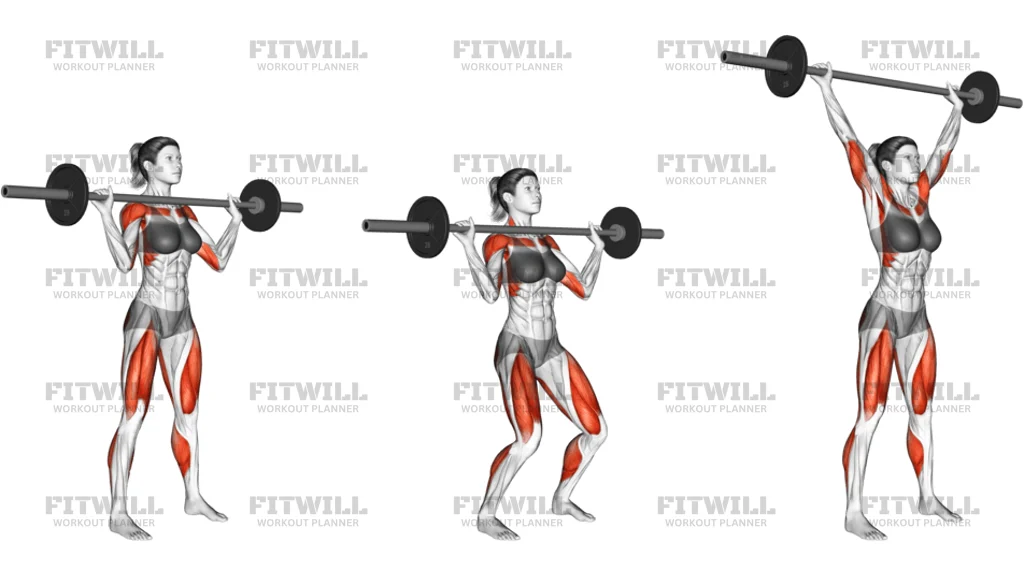
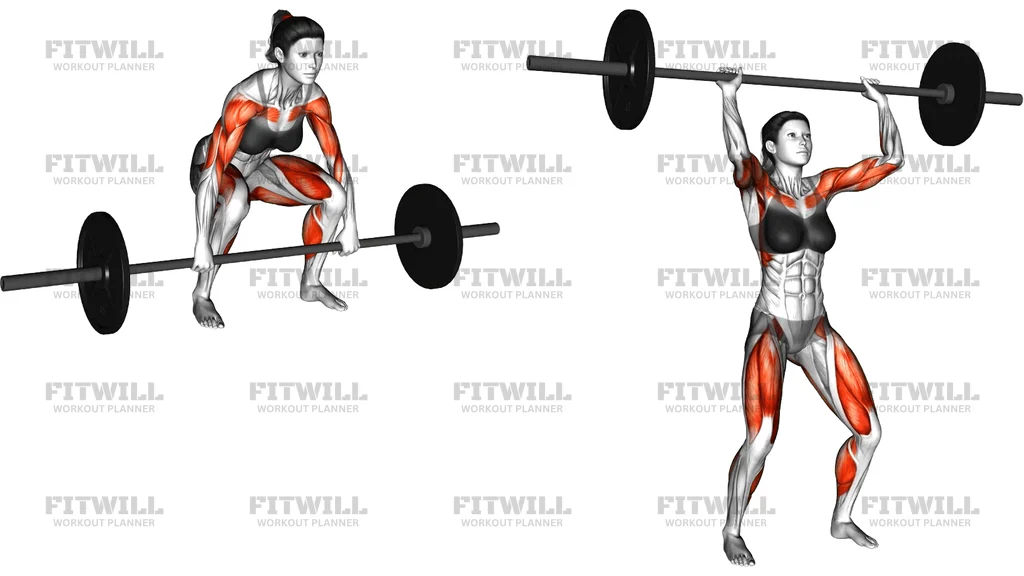
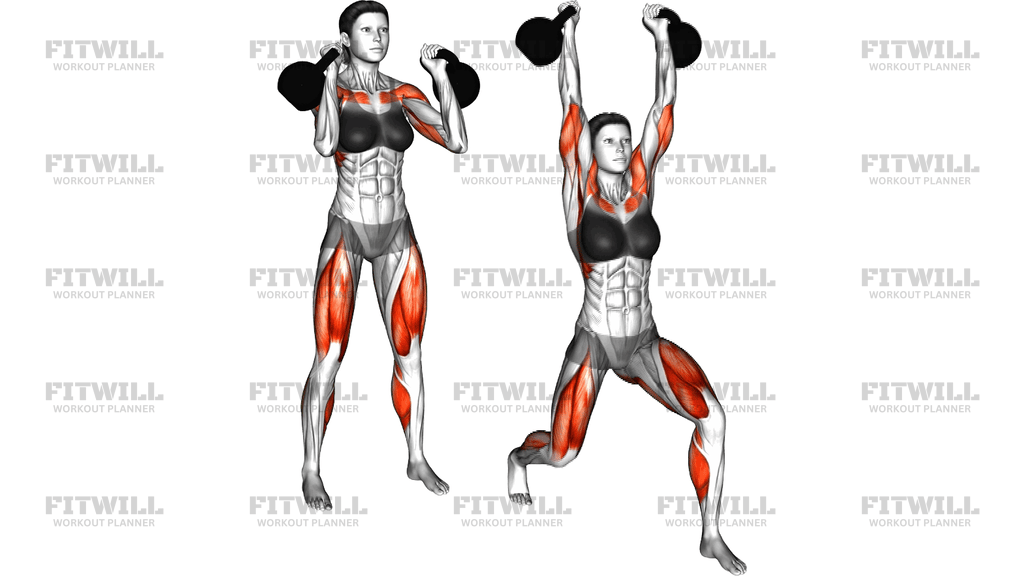
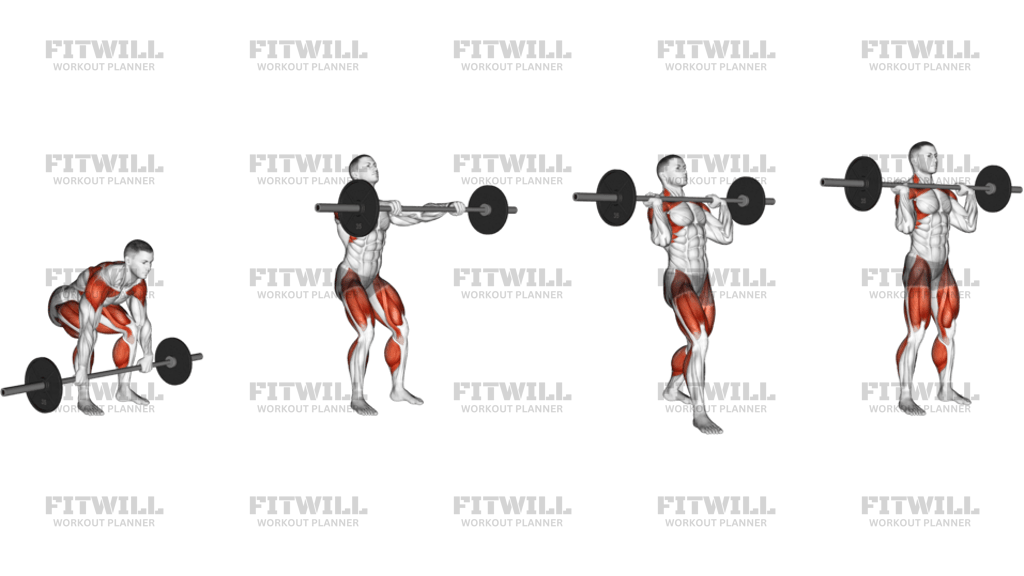
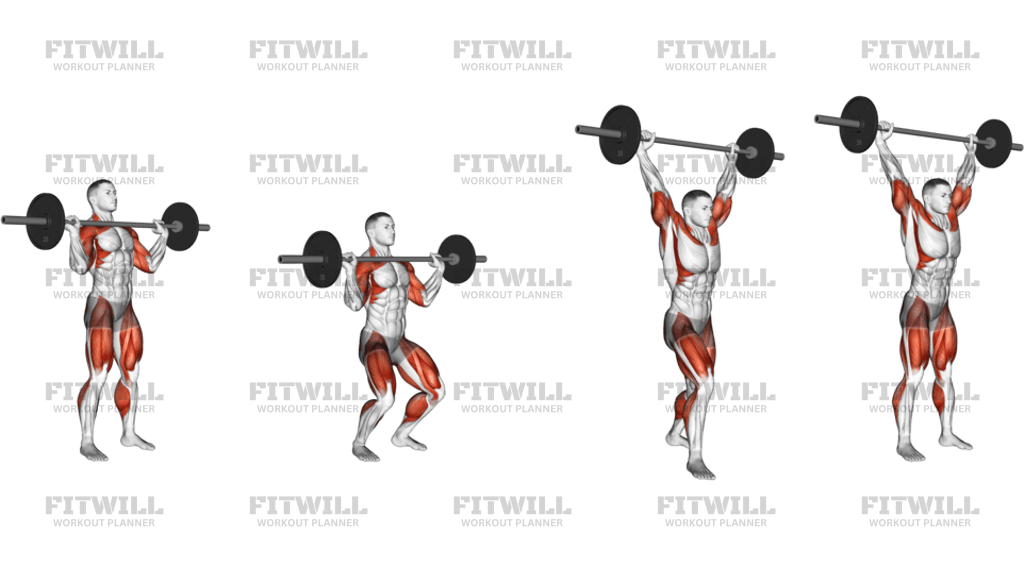
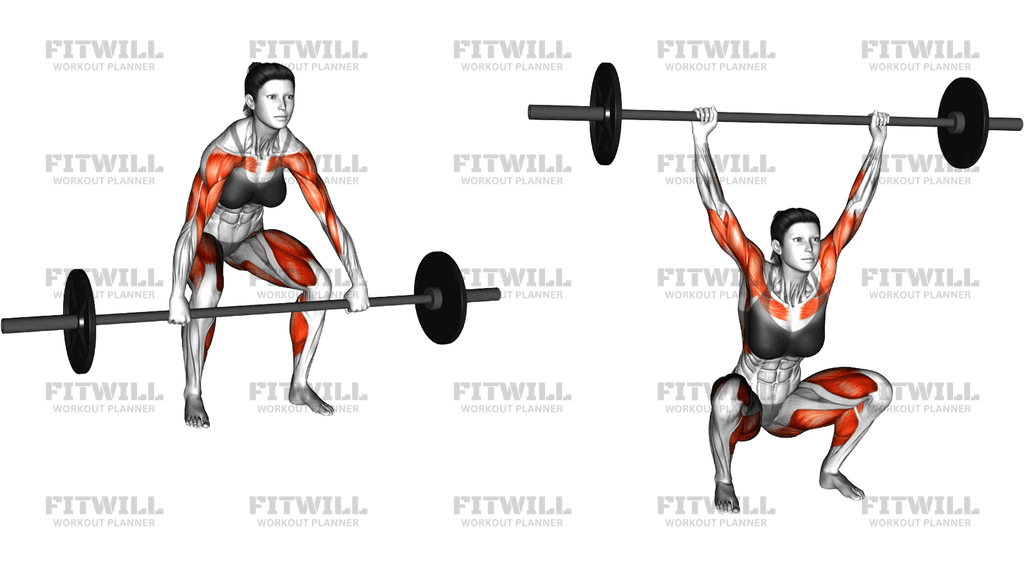
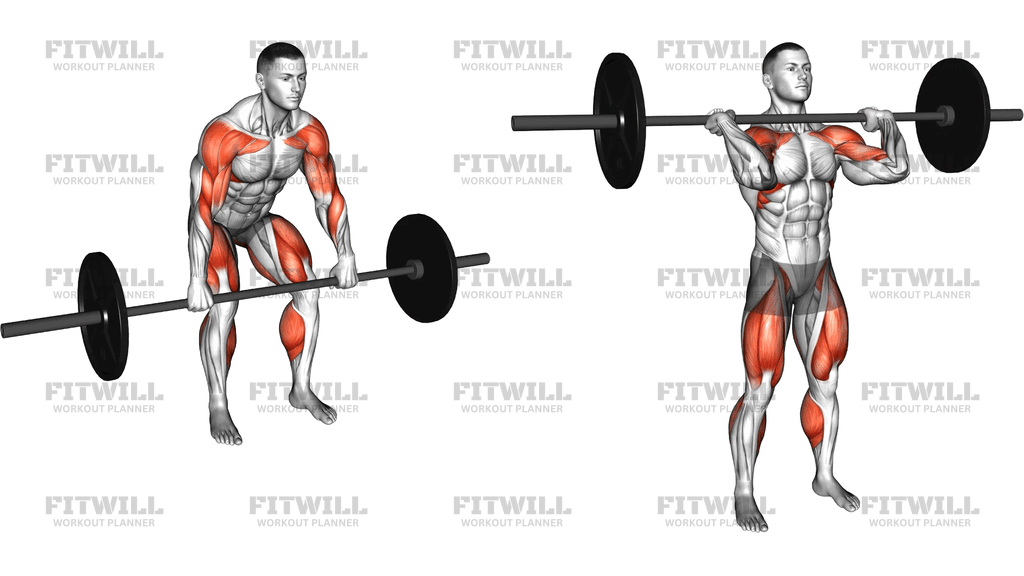
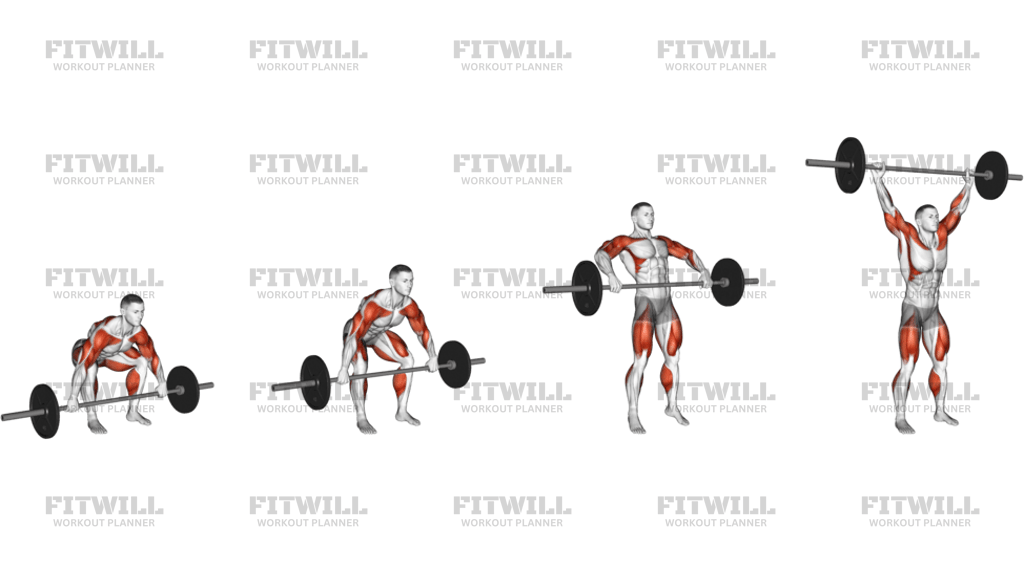
Barbell Power Jerk is an Olympic lifting variation built around a fast dip, a violent upward drive, and a quick re-bend under the bar to catch it overhead. In the image, the bar starts in the front rack, the torso stays tall through the dip, and the finish is an overhead lockout with the body stacked under the load. That sequence makes the exercise a direct test of leg drive, timing, shoulder stability, and the ability to stabilize a heavy barbell over the midfoot.
The movement trains more than just the shoulders. A good Barbell Power Jerk asks the quads, glutes, calves, upper back, triceps, and trunk to work together so the bar leaves the rack cleanly and ends up fixed overhead without a wobble. Because the receiving position is athletic rather than a full split, it is especially useful for lifters who want explosive overhead power while keeping the foot repositioning compact.
The setup matters because the bar has to travel straight up from a solid front rack. Hold the bar across the front of the shoulders with the elbows slightly forward, hands just outside shoulder width, and the feet about hip width apart. Keep the ribs stacked over the pelvis so the dip stays vertical instead of turning into a squat or a backbend. If the rack collapses or the torso leans, the drive will leak force and the catch will drift forward.
Each rep should feel like dip, drive, and then a quick drop under the bar. Push straight down a few inches, keep the heels planted, and then explode upward through the floor so the bar floats long enough for you to punch under it. Catch it with the arms locked, head through, and the feet reset in a short power stance or quarter-squat. Once the bar is stable over the shoulders and hips, stand tall to finish the rep and then lower it back to the front rack under control.
Barbell Power Jerk is useful in strength blocks, power sessions, and weightlifting work where the goal is crisp overhead force rather than slow grinding reps. Use a load that lets you keep the dip vertical, the bar path close, and the catch stable on every repetition. If the bar drifts forward, the feet land wide and messy, or the overhead position feels soft, the load is too heavy or the timing has broken down. Treat every rep as a clean reset rather than a press-out.
[ Workout Log & Planner ]
Put your next workout in Fitwill
Keep your plan and training log ready when you are.


Instructions
- Set the bar in the front rack across the shoulders, with your hands just outside shoulder width and your elbows slightly forward.
- Stand with your feet about hip width apart, squeeze your glutes, and stack your ribs over your pelvis before you start the dip.
- Take a short breath and bend the knees and ankles straight down a few inches without letting the chest fold forward.
- Drive hard through the full foot so the bar rises vertically off the shoulders instead of drifting in front of you.
- As the bar floats, punch yourself under it by re-bending the knees and moving the feet into a short power stance.
- Catch the bar overhead with locked elbows, the head pushed through, and the bar centered over the shoulders and midfoot.
- Hold the overhead position long enough to show control, then stand fully tall to finish the rep.
- Lower the bar back to the front rack under control, reset your feet and breathing, and repeat for the planned reps.
Tips & Tricks
- Keep the dip shallow and vertical; if it turns into a front squat, the bar will lose speed before the drive starts.
- Treat the lift as a leg drive and catch, not a shoulder press. The arms finish the lockout after the bar has already been accelerated.
- If your heels pop up in the dip, the bar is usually too heavy or you are dipping too deep.
- Land with the bar still stacked over the middle of the foot. If it finishes in front of you, the rack or the drive is off.
- Keep the elbows from dropping in the front rack. A soft rack makes the bar feel heavier before it even leaves the shoulders.
- Move the feet just enough to make room for the catch. A huge stomp usually means the bar was not driven vertically.
- Use a smaller load if you cannot re-bend quickly under the bar and secure the lockout before settling into the stance.
- Lower the bar with control instead of dropping straight into the next rep; each reset should start from a stable front rack.
Frequently Asked Questions
What muscles does Barbell Power Jerk train most?
It emphasizes the quads, glutes, calves, triceps, upper back, and core because all of them help drive the bar and stabilize it overhead.
Is Barbell Power Jerk the same as a push press?
No. A push press uses the legs to drive the bar overhead, while Barbell Power Jerk adds a quick re-bend so you can catch the bar higher and with less pressing.
How deep should the dip be in Barbell Power Jerk?
Only a few inches. The knees and ankles bend, but the torso should stay tall and the dip should look like a straight drop, not a squat.
Do my feet have to move during the catch?
Usually yes, but only a small amount. The goal is a compact power stance so you can receive the bar overhead without stepping into a full split.
Why does the bar drift forward on Barbell Power Jerk?
The most common causes are a forward lean in the dip, a soft front rack, or pushing the bar with the arms instead of driving it straight up with the legs.
Can beginners learn Barbell Power Jerk?
Yes, but they should start with an empty bar or very light load and practice the dip, drive, and overhead catch separately before adding speed.
What if my front rack mobility is limited?
Use a lighter load, open your grip slightly, and work on elbow position and thoracic extension. If the rack collapses, the jerk will be unstable overhead.
How should I lower the bar after each rep?
Bring it back to the front rack under control, absorb the bar with the elbows and legs, and reset before the next dip so you do not bounce into the following rep.